
Yes, banana peels are fantastic for the compost bin. They break down quickly and add valuable nutrients to your pile.
Why
Banana peels are rich in potassium and phosphorus, making them a great green nitrogen-rich addition to your compost. They decompose relatively fast, especially when cut into smaller pieces. While concerns often arise regarding pesticide residue on the skins, the tiny amount present on a single peel is easily broken down by microbial activity in a healthy, active compost pile and poses no threat to your finished compost.
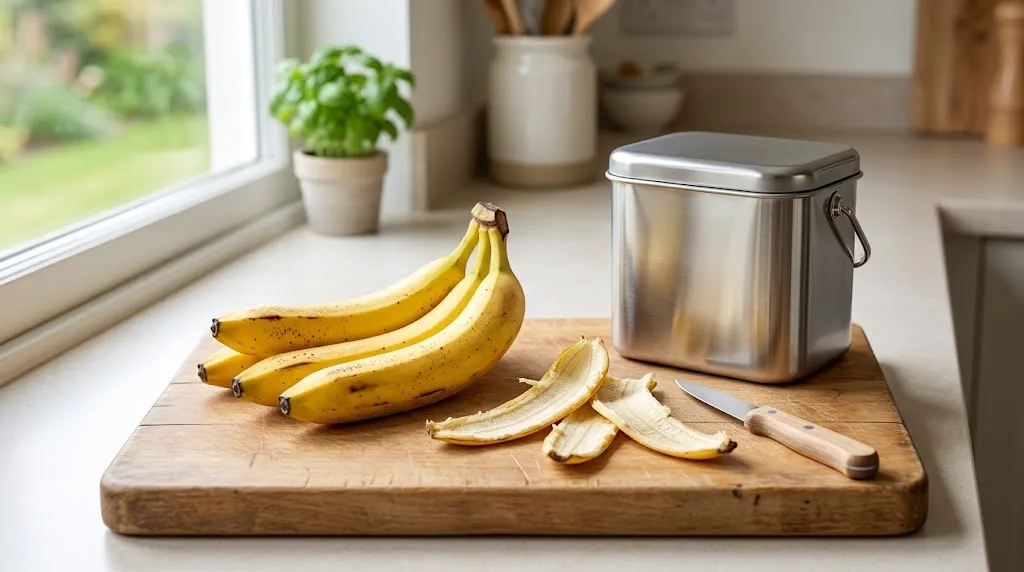
Quick facts
| Carbon to nitrogen | About 25:1 |
|---|---|
| Hot pile | 2-4 weeks |
| Cold pile | 2-3 months |
| Worm bin | Yes · Chop into smaller pieces for faster consumption |
| Bokashi | Yes · Great addition, chop first to speed up fermentation |
| City green bin | Usually accepted; check local rules |
| Prep | Remove plastic sticker and chop into smaller pieces |
| Mix with | Mix with carbon-rich brown materials |
| Pest risk | Medium · Can attract fruit flies if left exposed on the surface |
How to compost banana peels
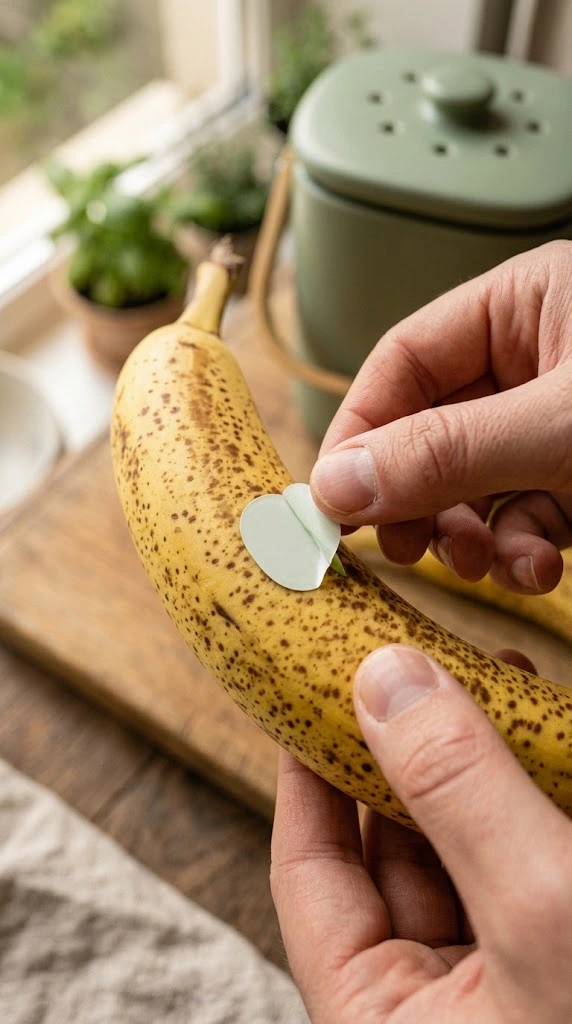
- Peel off any produce stickers before adding the peels.
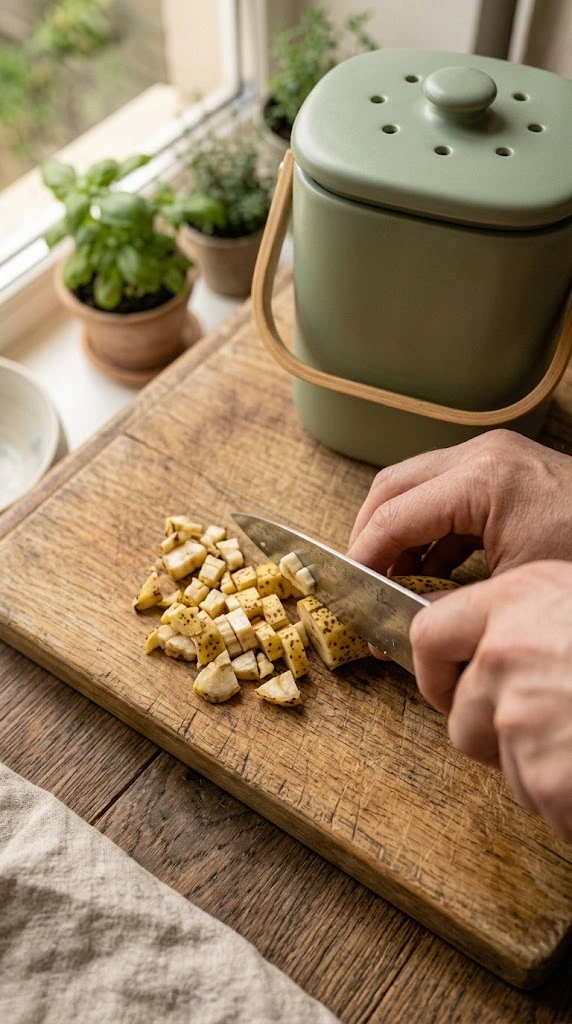
- Chop or tear the peels into smaller pieces to speed up decomposition.
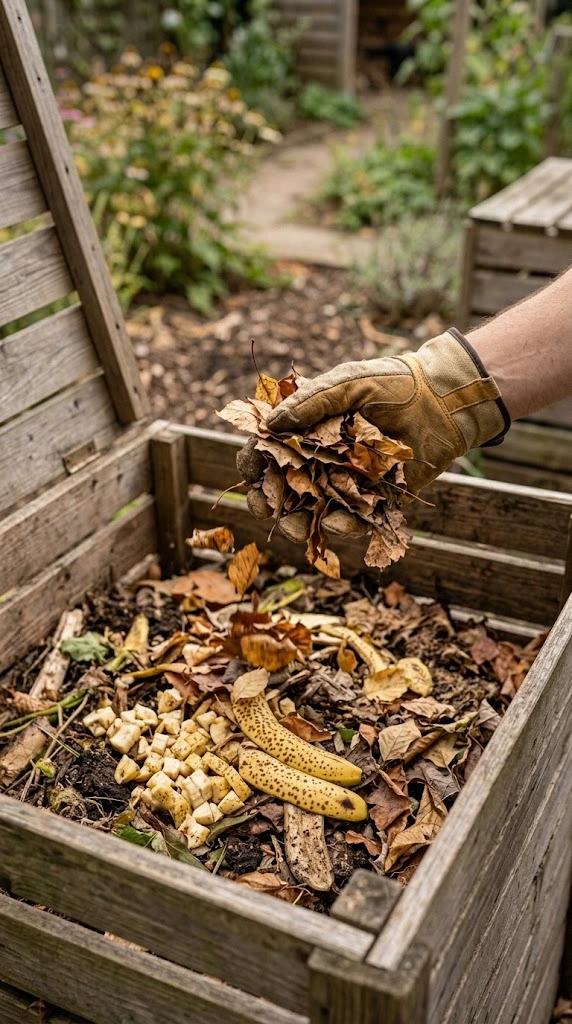
- Add the peels to your compost bin, burying them beneath brown materials.
- Turn your pile regularly to maintain good aeration and moisture levels.
How much banana peels can you add to compost?
You can add banana peels regularly to your home compost pile, but they should make up only a small fraction of your total green materials to maintain a balanced carbon-to-nitrogen ratio. Aim to mix a handful of chopped peels into a much larger volume of dry browns like shredded leaves or cardboard. If you notice a sour odor, slimy patches, or an influx of fruit flies, you have likely added too much moisture and nitrogen at once, so stop adding peels and mix in more browns.
Which types of banana peels can you compost?
- Fresh yellow peels: Yes. These are standard kitchen scraps that decompose quickly in a balanced pile. Chop them up first to accelerate the breakdown process.
- Overripe or black peels: Yes. Slightly bruised or completely black peels break down even faster because the decomposition process has already started. Just ensure they are free of mold if you are worried about spores.
- Organic banana peels: Yes. These are ideal for composting because they contain no synthetic pesticide residues. They still benefit from being chopped into smaller pieces before burial.
- Whole frozen peels: Yes. Freezing peels is a great way to store them until you have enough for a batch. The freezing process bursts cell walls, making them break down extremely fast once thawed.
Watch out for
- Remove any plastic stickers from the peels before tossing them in.
- Large whole peels can take longer to break down and might attract fruit flies.
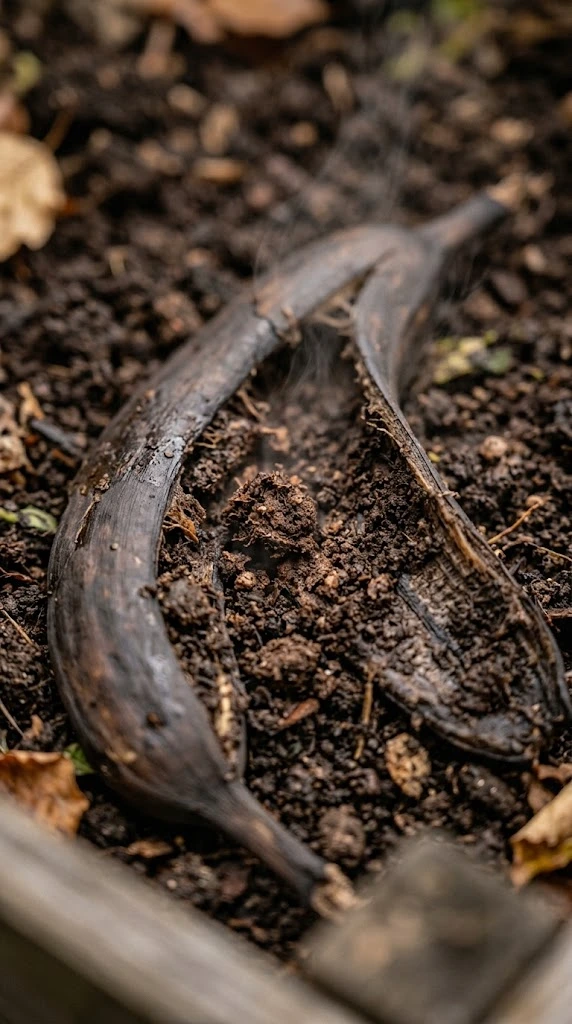
Other ways to use banana peels
- Burying them directly in your garden soil as a natural fertilizer
- Soaking them in water to create a nutrient-rich plant tea
- Throwing them in the trash if composting is unavailable
Troubleshooting banana peels in compost
- Peels are taking months to decompose fully. Whole peels naturally take longer to break down. Chop or tear them into smaller pieces and turn your pile regularly to increase oxygen.
- Fruit flies are swarming around the top of the bin. Exposed peels release sweet aromas that attract pests. Always bury fresh peels deep inside the pile and cover them with a thick layer of brown materials.
- The peel pieces are becoming slimy and causing bad odors. Sliminess indicates too much moisture and a lack of oxygen. Mix in dry carbon materials like wood shavings or dry leaves and turn the pile.
Myths about composting banana peels
- Myth: Banana peels cannot be composted because they contain harsh chemical pesticides. Truth: While conventional peels carry trace pesticide residues, active microbial populations in a healthy compost pile easily break them down without harming the finished compost.
- Myth: You can leave plastic produce stickers on the peels because they will melt away. Truth: Produce stickers are made of plastic or treated paper with synthetic adhesives that do not compost. They will persist in your pile for years and contaminate your garden.
Can banana peels go in a green bin or recycling?
Most municipal green waste and curbside food scrap collection programs gladly accept banana peels along with other fruit and vegetable waste. Before tossing them into your municipal bin, make sure to peel off any plastic produce stickers or tape, as sorting facilities reject loads contaminated with plastics. Because municipal composting rules and accepted materials vary significantly by region, always check your local waste management website to confirm current curbside collection guidelines.
Does composting banana peels attract pests?
Composting banana peels can sometimes draw unwanted visitors, specifically fruit flies and other small insects. The sweet scent of ripening fruit combined with exposed moisture makes them an inviting target if left sitting on the surface of your compost pile. To prevent this, always bury the peels deep within the pile and ensure they are covered with a thick layer of dry brown materials to block the appealing aroma.
- Remove produce stickers before adding peels.
- Chop peels into smaller pieces to accelerate decomposition.
- Bury the peels deep beneath dry leaves or browns.
- Use a covered compost bin to keep pests away.
Common questions
Do I need to remove the stickers from banana peels?
Yes, always peel off the little plastic or paper produce stickers before tossing banana peels into your compost bin. Stickers do not break down and will remain as litter in your finished compost.
Will banana peels attract fruit flies to my compost?
They can attract fruit flies if left exposed on top of the pile. To prevent this, simply bury the banana peels beneath a layer of brown materials like dry leaves, shredded paper, or finished compost.
Should I cut up banana peels before composting them?
Cutting or tearing the peels into smaller pieces is not strictly required, but it significantly speeds up the breakdown process by exposing more surface area to microbes.
Are banana peels biodegradable?
Yes. Banana peels are soft and wet and biodegrade in about 2-4 weeks in a hot pile. On the ground outside a pile they can take much longer, so don’t toss them on trails.
Rules vary by town and by composting method. When in doubt, check with your local composting or waste program.