
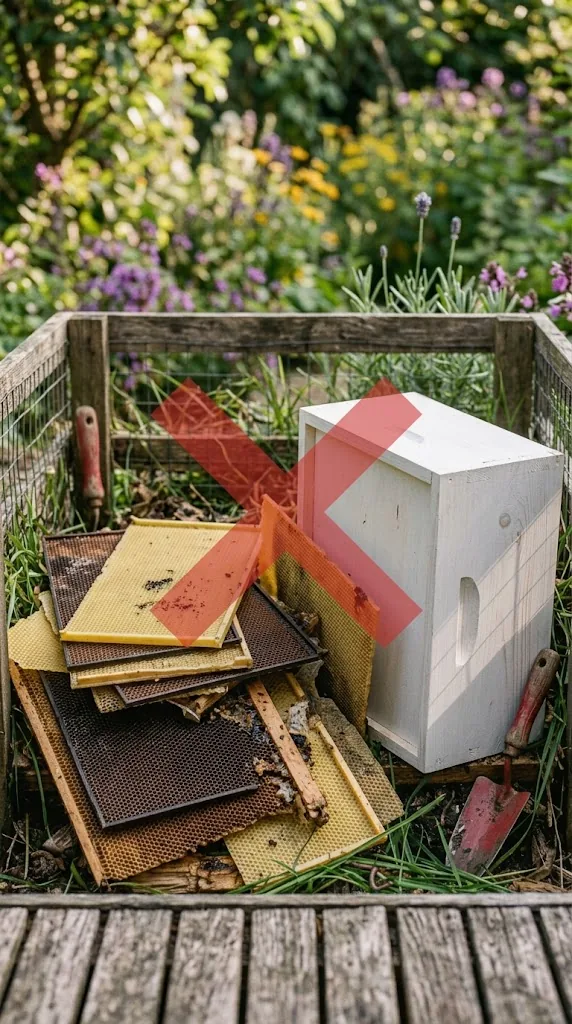
You can compost wooden and natural parts of a beehive, but plastic components and treated lumber must be removed and discarded.
Why
Beehives are typically made from a mix of natural wood, propolis, beeswax, and sometimes synthetic parts like plastic foundation sheets or painted exterior wood. The natural wooden frames, comb, and wax break down very well in a home compost system, serving as rich carbon and trace wax additions. However, exterior paints, chemical wood treatments, and plastic components will not biodegrade and can introduce toxins into your compost. You must carefully separate the organic materials from the artificial hardware before adding them to your pile.
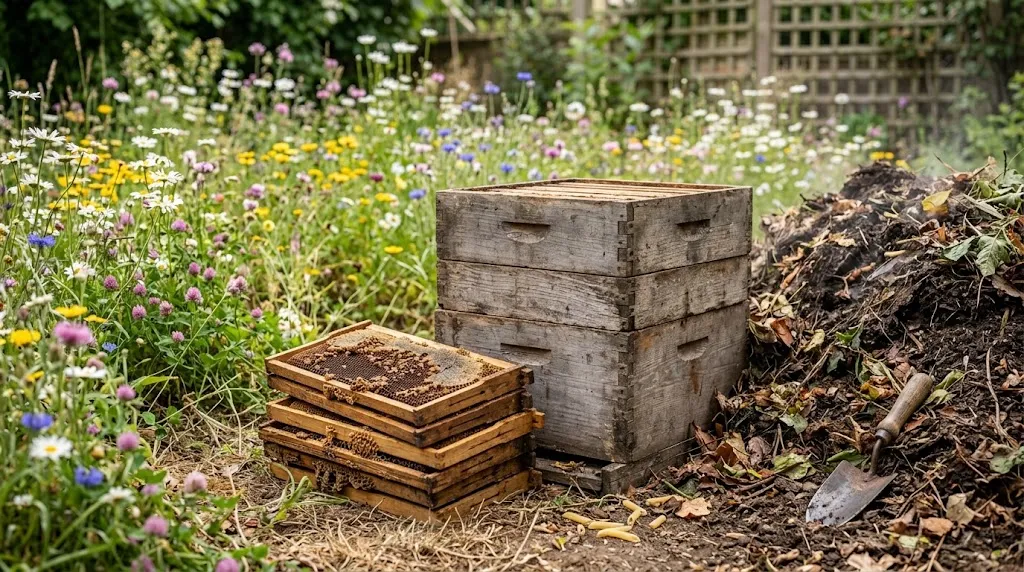
Quick facts
| Carbon to nitrogen | Varies |
|---|---|
| Hot pile | 3-6 months |
| Cold pile | 6-12 months |
| Worm bin | Sometimes · Remove wax first; avoid diseased hives. |
| Bokashi | Sometimes · Can ferment wood and wax scraps. |
| City green bin | Check local rules |
| Prep | Remove all hardware and disease-free wood only. |
| Mix with | Mix with green waste. |
| Pest risk | Low · Keep buried to avoid attracting bees. |
How to compost beehives
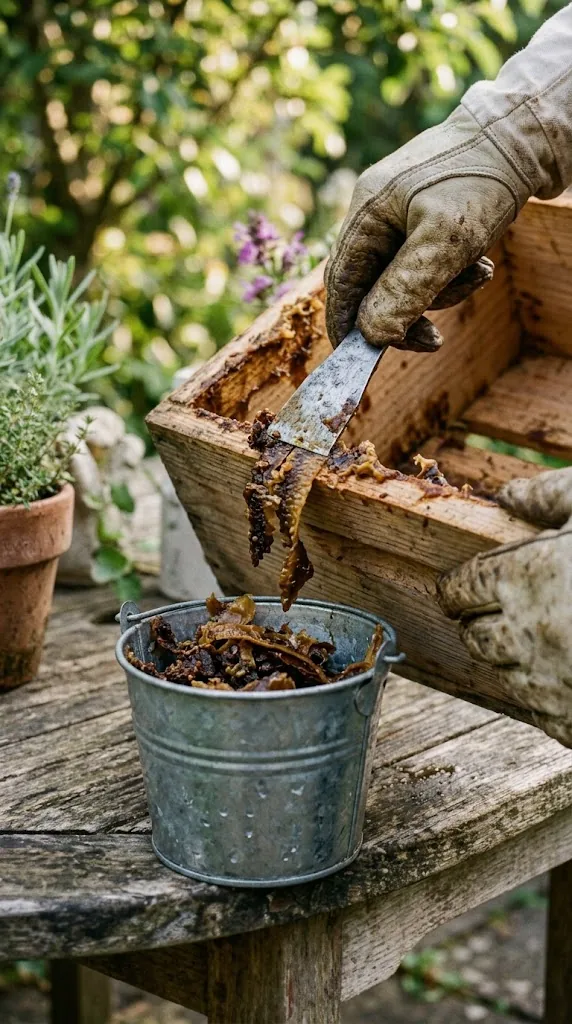
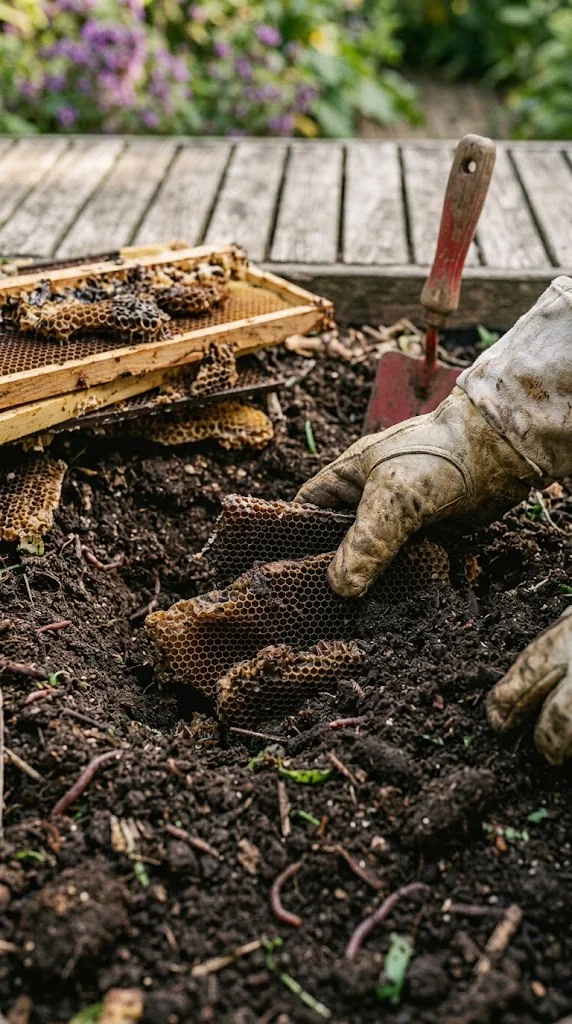
- Scrape away and collect excess beeswax and propolis to add directly to the pile.
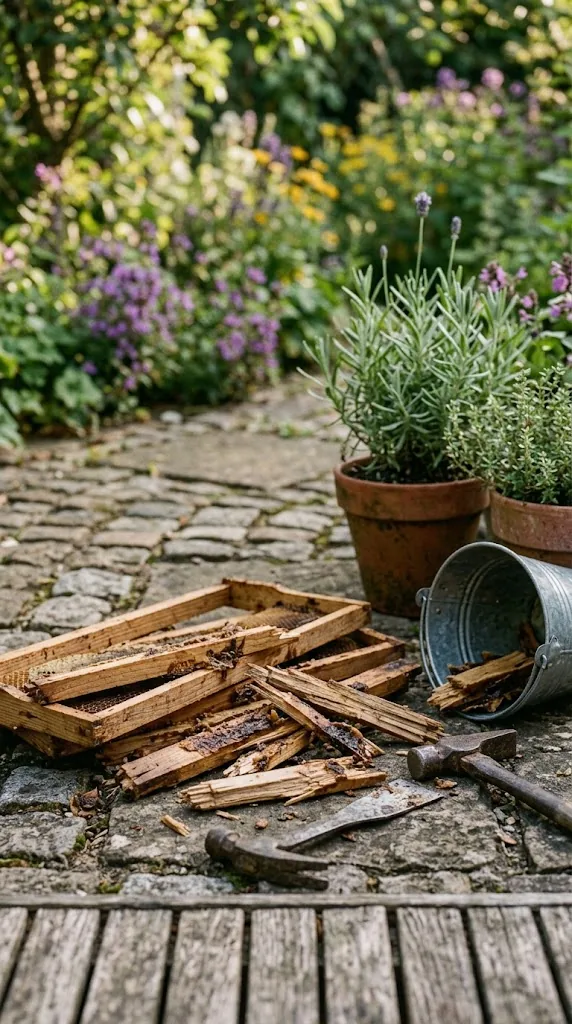
- Break down untreated wooden frames and boxes into smaller pieces to speed up decomposition.
- Peel out and discard any plastic foundation sheets or coated plastic frames in the trash.
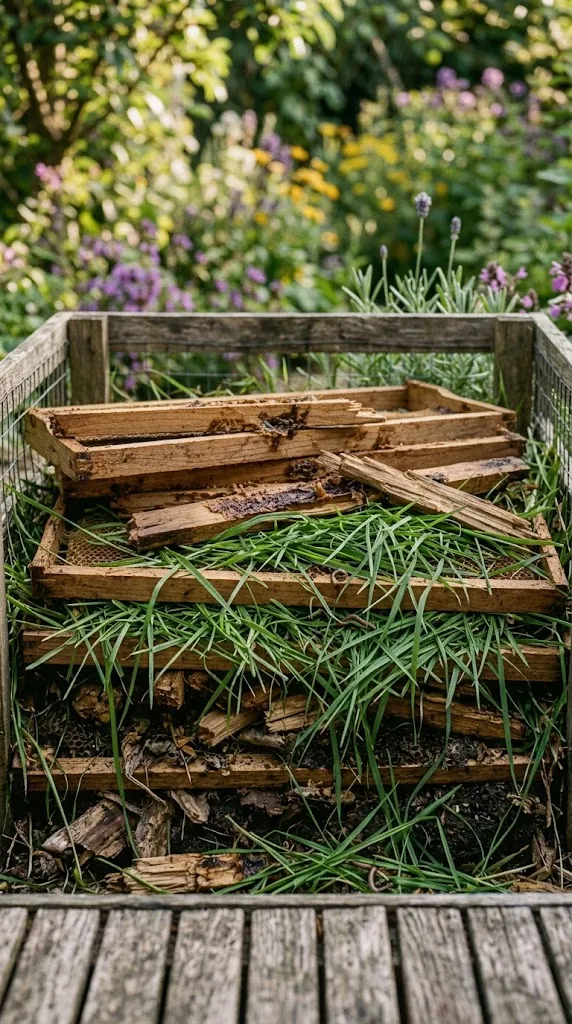
- Layer the wood pieces with nitrogen-rich green materials like grass clippings or fresh food scraps.
How much beehives can you add to compost?
You should limit beehive additions to no more than ten percent of your total pile volume at any one time. Because untreated wood is a dense carbon source, balance every pound of wood with three pounds of nitrogen-rich greens like kitchen scraps or fresh manure. If you notice the pile temperature dropping significantly or the wood pieces remaining completely unchanged after several months, you have likely added too much carbon and need to increase your nitrogen inputs to restart the decomposition process.
Which types of beehives can you compost?
- Untreated cedar or pine frames: Yes. These natural woods break down effectively and provide excellent structure for your compost pile.
- Painted or stained hive bodies: No. Exterior paints and chemical stains contain heavy metals or synthetic resins that contaminate your finished compost.
- Plastic foundation sheets: No. These are made from non-biodegradable polymers and must be removed to prevent microplastic pollution in your soil.
- Propolis and beeswax: Yes. These organic resins are highly beneficial but should be buried deep to avoid attracting scavengers.
Watch out for
- Never compost hives from colonies that died of contagious diseases like American Foulbrood.
- Remove all metal wire, staples, and plastic parts before composting.
- Avoid composting wood that has been treated with chemical preservatives or exterior paint.
What to do instead
- Reuse undamaged wooden hive boxes for future beekeeping
- Scrap metal recycling for frames and entrance reducers
- Standard trash for plastic foundation sheets and treated lumber
Troubleshooting beehives in compost
- Persistent ant infestations Ensure all honey residue is thoroughly washed off or buried at least twelve inches deep in the center of the pile.
- Extremely slow decomposition Break the wooden components into smaller chips or sawdust to increase the surface area available for microbial activity.
- Foul odors from rotting comb Cover the area with a thick layer of finished compost or dry leaves to neutralize the scent and discourage pests.
Myths about composting beehives
- Myth: All wooden hive parts are safe to compost because they are natural. Truth: Many hives are treated with fungicides or wood preservatives to withstand weather, which can be toxic to soil organisms.
- Myth: Beeswax will melt and ruin the compost pile structure. Truth: Beeswax is a natural lipid that microbes can break down; it will not harm the pile if added in moderate, well-mixed quantities.
Can beehives go in a green bin or recycling?
Most municipal green waste programs do not accept wooden beehive components because they are considered construction and demolition debris rather than yard waste. You must remove all plastic, metal hardware, and treated wood before attempting to place any remaining natural wood in a municipal bin. Always check your local sanitation department website, as some regions strictly prohibit any apiary-related materials due to the risk of spreading bee diseases like American Foulbrood to local pollinator populations.
Does composting beehives attract pests?
Composting beehive components can attract pests due to the presence of residual honey, pollen, and sweet-smelling beeswax. Rodents like mice and rats, as well as ants and wasps, are strongly drawn to these sugary, high-energy food sources left behind in the comb and frames. If left exposed on the surface of your compost pile, these sweet odors will quickly signal a feast to local wildlife and insects, potentially turning your bin into a magnet for unwanted critters.
- Scrape excess honeycomb and propolis into the center of the pile rather than leaving them near the edges.
- Bury the organic wax and comb deep beneath a thick layer of nitrogen-rich greens and carbon browns.
- Completely remove all plastic and synthetic foundation sheets that might trap lingering, sticky residues.
- Use a secure, pest-resistant enclosed composting bin to physically block rodents from accessing the hive materials.
Common questions
Can I compost old honeycomb?
Yes, old comb containing wax and propolis breaks down well, though it can attract pests if left exposed on top of the pile. Bury it deeper in the compost to deter animals.
What should I do with a hive from a diseased colony?
You should not compost hives exposed to serious pathogens like American Foulbrood. Local agricultural extension offices often recommend burning or deeply burying these materials to prevent spreading disease.
Are plastic beehive components compostable?
No, plastic frames and foundation sheets are made of synthetic polymers that do not biodegrade. They must be separated and thrown in the regular trash.
Are beehives biodegradable?
Untreated wooden hive boxes, frames and beeswax are biodegradable over months to years. Painted or treated wood, plastic foundation and metal parts are not.
Rules vary by town and by composting method. When in doubt, check with your local composting or waste program.