
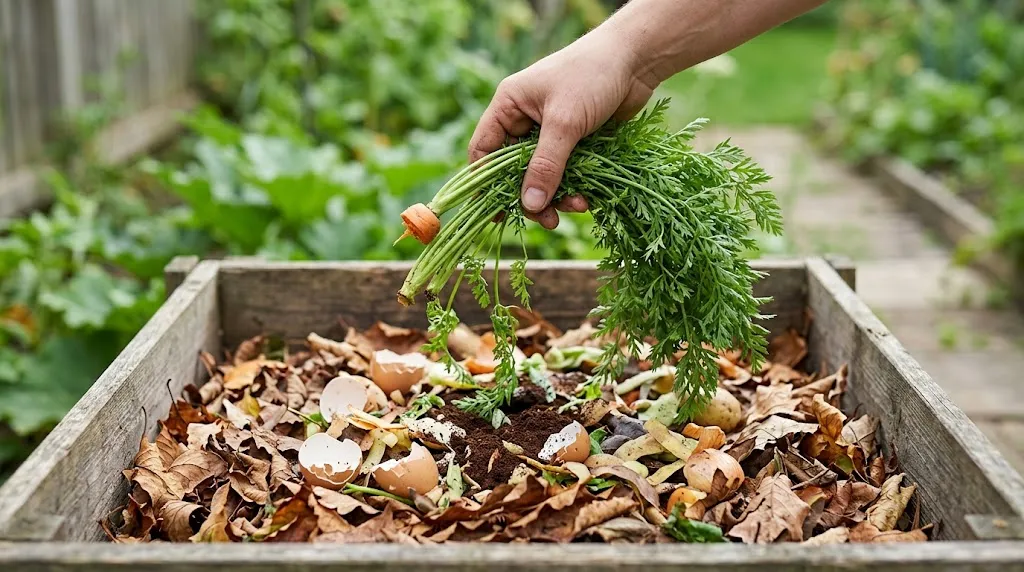
Yes, carrot tops are great for your compost bin and break down quickly. They add valuable moisture and nitrogen to your pile.
Why
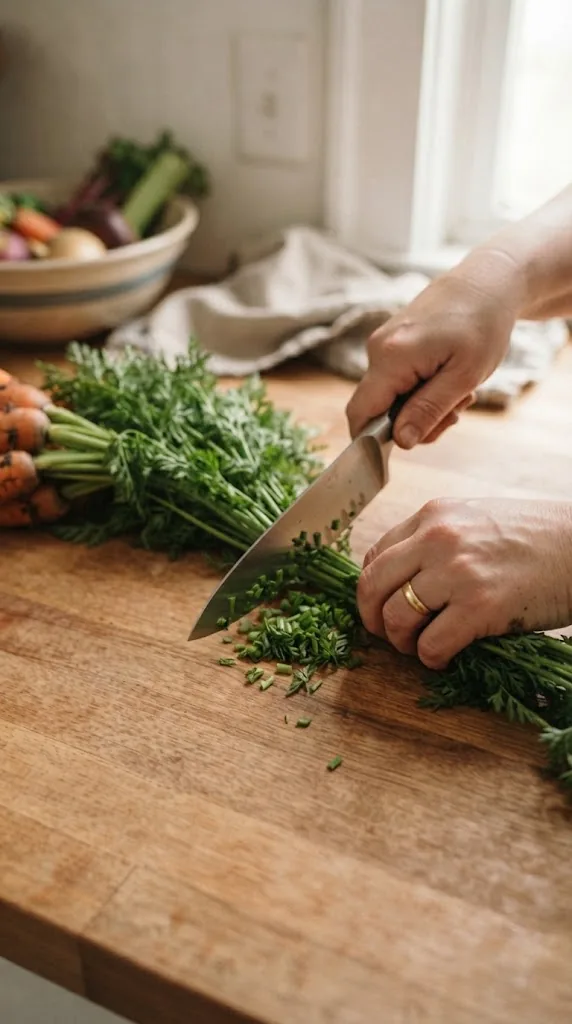
Carrot tops are considered a green material because they are rich in nitrogen and moisture, which helps fuel the microbial activity needed for decomposition. To ensure the best results in your compost pile, cut or chop the greens into smaller pieces to speed up the process. They will integrate seamlessly into both hot and cold composting systems, balancing out your drier brown materials like fallen leaves or shredded cardboard.
Quick facts
| Carbon to nitrogen | About 25:1 |
|---|---|
| Hot pile | 1-3 weeks |
| Cold pile | 1-3 months |
| Worm bin | Yes · Excellent worm food; chop to speed decomposition. |
| Bokashi | Yes · Great addition to bokashi buckets. |
| City green bin | Accepted in most municipal green waste programs. |
| Prep | Remove any rubber bands or plastic ties. |
| Mix with | Balance with dry leaves, straw, or wood chips. |
| Pest risk | Low · Bury deep in the pile to avoid fruit flies. |
How to compost carrot tops
- Rinse the carrot tops to remove any residual dirt or sand.
- Chop the greens into smaller lengths to accelerate breakdown.
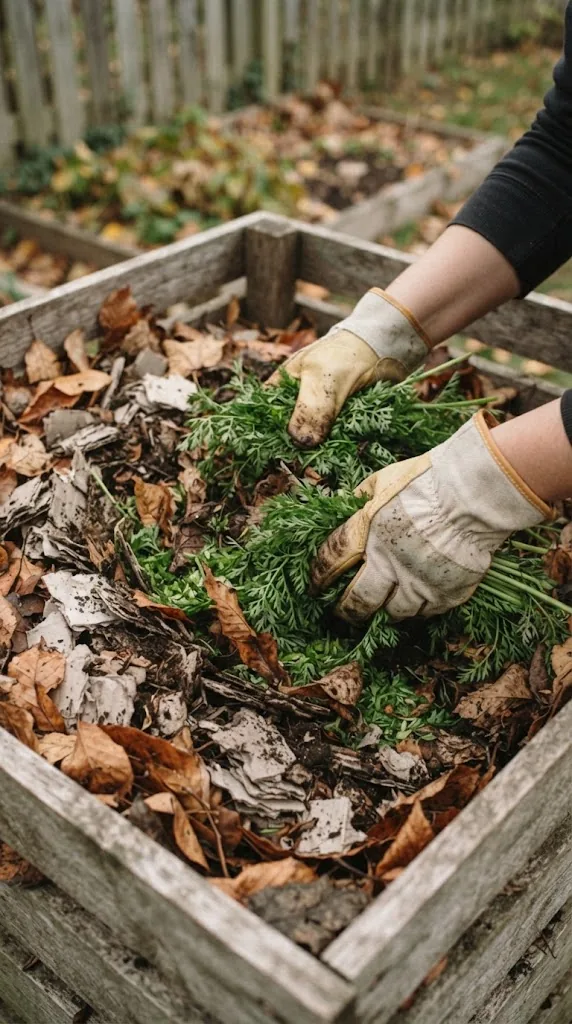
- Mix the tops thoroughly with carbon-rich brown materials.
- Maintain a balanced pile moisture level.
How much carrot tops can you add to compost?
Carrot tops can make up about ten to fifteen percent of your overall green waste volume in a healthy home compost pile. Because they are moisture-heavy nitrogen sources, you should balance every single shovel of chopped greens with roughly two to three shovels of dry carbon materials like shredded paper or autumn leaves. If your pile starts smelling sour, feels excessively soggy, or slumps into a dense, slimy sludge, you have added far too many carrot tops at once.
Which types of carrot tops can you compost?
- Fresh crisp carrot tops: Yes. These vibrant greens break down quickly and add plenty of beneficial moisture to your active pile. Just remember to chop them into smaller sections first.
- Wilted or yellowed greens: Yes. Slightly aged or limp tops decompose even faster than fresh ones because their cellular walls are already breaking down.
- Carrot tops attached to whole carrots: Sometimes. While the greens are great, whole roots left attached will take a very long time to rot unless they are cut up into small chunks.
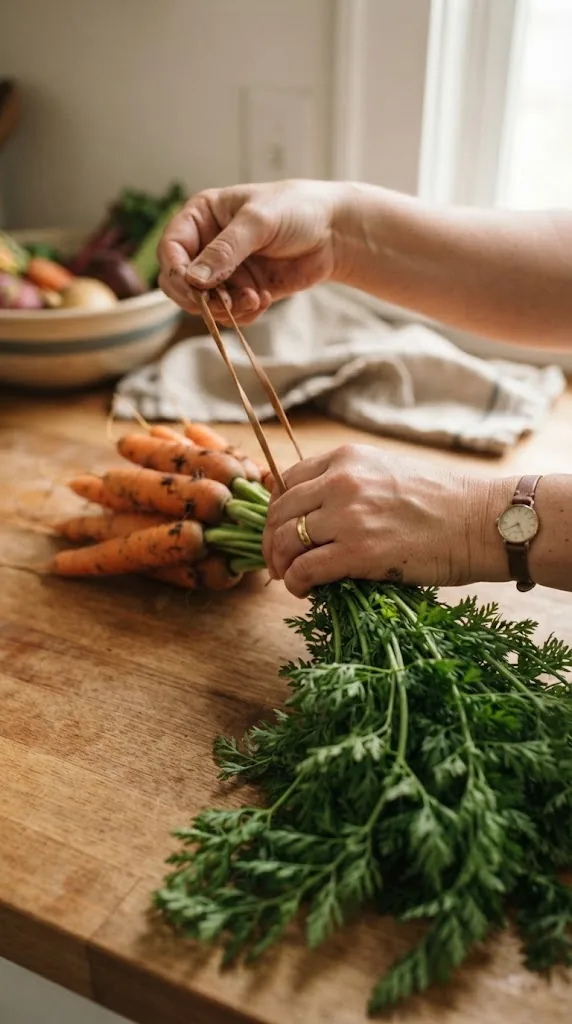
- Greens tied with plastic twists: No. Synthetic ties and rubber bands do not decompose and will contaminate your finished compost if you forget to snip them off.
Watch out for
- Remove any attached rubber bands or twist ties before composting.
- Ensure the greens are not treated with heavy pesticides if sourcing from conventional farms.
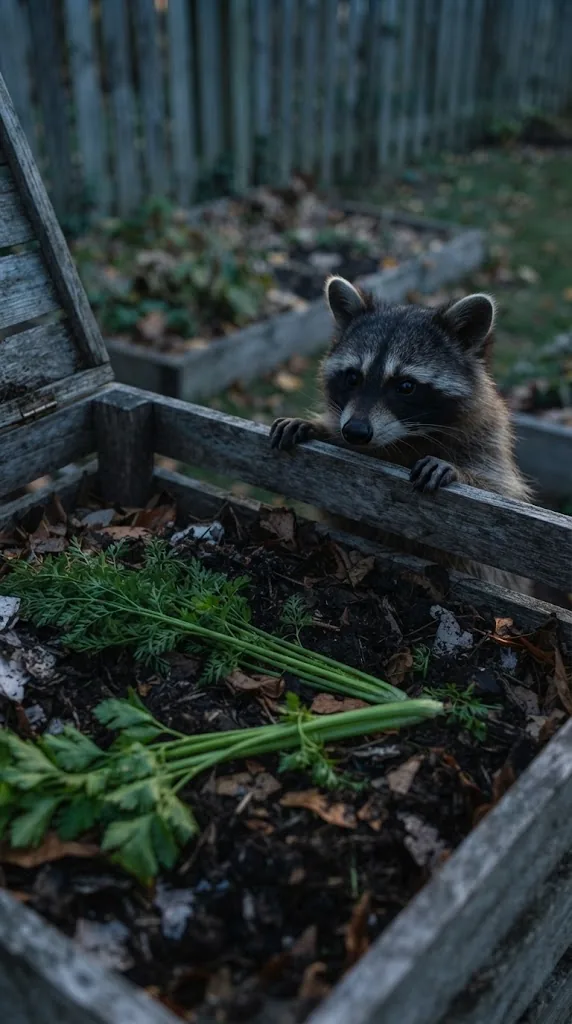
Other ways to use carrot tops
- Feed them to backyard chickens or rabbits as a treat.
- Blend them into homemade pestos or chimichurri sauces.
- Place them in your municipal green waste bin.
Troubleshooting carrot tops in compost
- The carrot tops are matting together into a wet, slimy layer. Break up the clump with a pitchfork and thoroughly mix in dry carbon materials like straw or sawdust to restore proper airflow.
- Small gnats or fruit flies are hovering around the top of the bin. Bury the greens deeper within the center of the compost pile and cover the exposed surface entirely with a thick layer of brown matter.
- The greens are refusing to break down and still look fresh after weeks. Chop the carrot tops into shorter pieces and ensure your compost pile has enough overall moisture and heat to stimulate microbial action.
Myths about composting carrot tops
- Myth: Carrot tops are roots, so they must be treated like tough woody taproots in the bin. Truth: Carrot tops are delicate leafy greens with a high water content, meaning they decompose much faster than dense root vegetables.
- Myth: Leaving carrot tops on top of the soil will naturally mulch the garden without issues. Truth: Leaving loose greens scattered on the surface can attract unwanted scavenging pests and dry out instead of composting properly.
Can carrot tops go in a green bin or recycling?
Municipal green waste and curbside food scrap collection programs almost universally accept carrot tops alongside other garden trimmings and kitchen vegetable scraps. Before tossing them into your green bin, make sure to remove any synthetic twist ties, rubber bands, or plastic packaging sleeves. Because municipal composting rules and accepted materials can vary significantly depending on your specific region, it is always a good idea to check your local waste management guidelines first.
Does composting carrot tops attract pests?
Adding carrot tops to your compost pile does not typically attract pests. Because they are a nitrogen-rich green material rather than a pungent food waste, they do not give off strong odors that draw critters like rodents or flies. Furthermore, incorporating these greens into your pile and using them effectively as part of a well-balanced mixture helps cover more odorous food scraps, keeping your overall compost system discreet and unappealing to scavengers.
- Chop greens into smaller pieces to help them integrate quickly.
- Mix the tops thoroughly with dry carbon-rich brown materials.
- Cover the layers completely to maintain a neutral surface.
Common questions
Can I compost carrot tops if they are wilted?
Yes, wilted or even slightly yellowed carrot tops are completely safe to compost. In fact, they break down even faster than fresh, crisp greens because the cellular structure has already started to weaken.
Do carrot tops attract pests to the compost pile?
Raw vegetable greens like carrot tops rarely attract pests on their own if they are properly mixed into the center of the pile and covered with brown materials. Avoid leaving them sitting openly on top of the bin.
Can I feed carrot tops to my worms in a vermicomposting bin?
Yes, composting worms love tender green leaves like carrot tops. Chop them up slightly and add them in moderation alongside your other kitchen scraps.
Are carrot tops biodegradable?
Yes. Carrot tops are soft greens and biodegrade in about 1-3 weeks, one of the quickest scraps you can add.
Rules vary by town and by composting method. When in doubt, check with your local composting or waste program.