
You can compost coconuts, but the hard shells take an extremely long time to break down unless processed properly.
Why
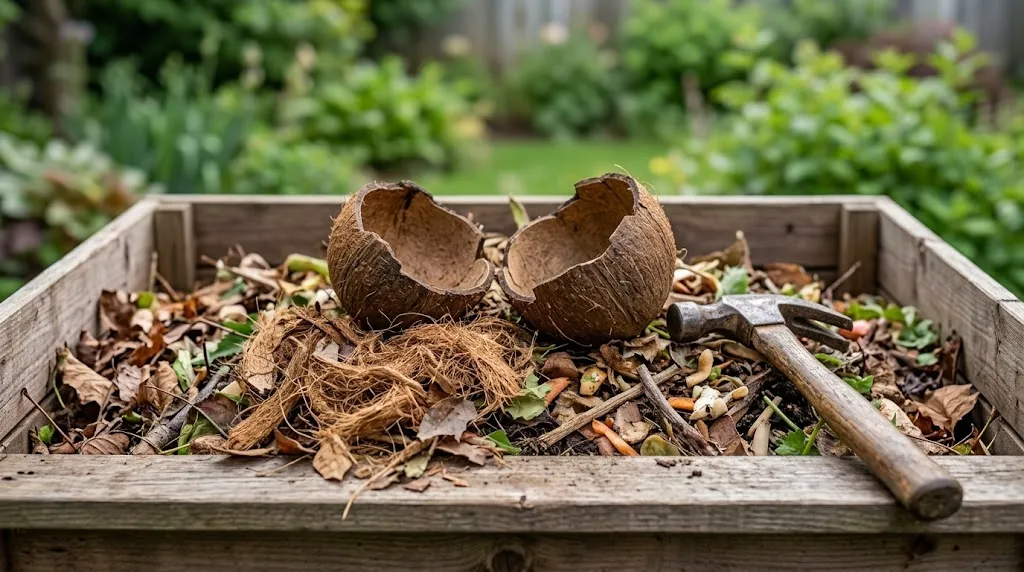
Coconut husks and shells are extremely high in lignin and carbon, making them stubborn browns that resist natural decomposition. While the white coconut meat is rich in oils and acts as a green, it can attract pests if not buried deep in the pile. Whole coconut shells can take years to break down in a standard backyard setup. To successfully compost them, you must crack the hard outer shells into small pieces, shred the fibrous husks, and add them to a hot, active compost pile.
Quick facts
| Carbon to nitrogen | Varies |
|---|---|
| Hot pile | 1-2 years |
| Cold pile | Years |
| Worm bin | Sometimes · Only shredded coir in small amounts |
| Bokashi | Sometimes · Only small pieces of tender meat |
| City green bin | Usually accepted; check local rules |
| Prep | Crush shells and shred husks completely |
| Mix with | Mix with high-nitrogen green waste |
| Pest risk | Medium · Meat attracts pests; bury deep or avoid |
How to compost coconuts
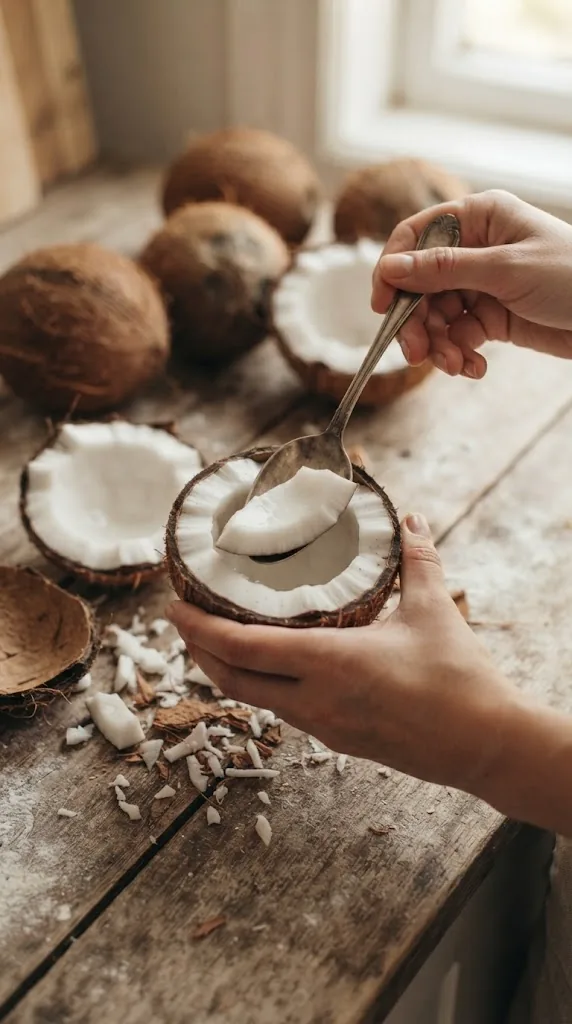
- Remove the soft meat and inner liquid to avoid attracting pests.
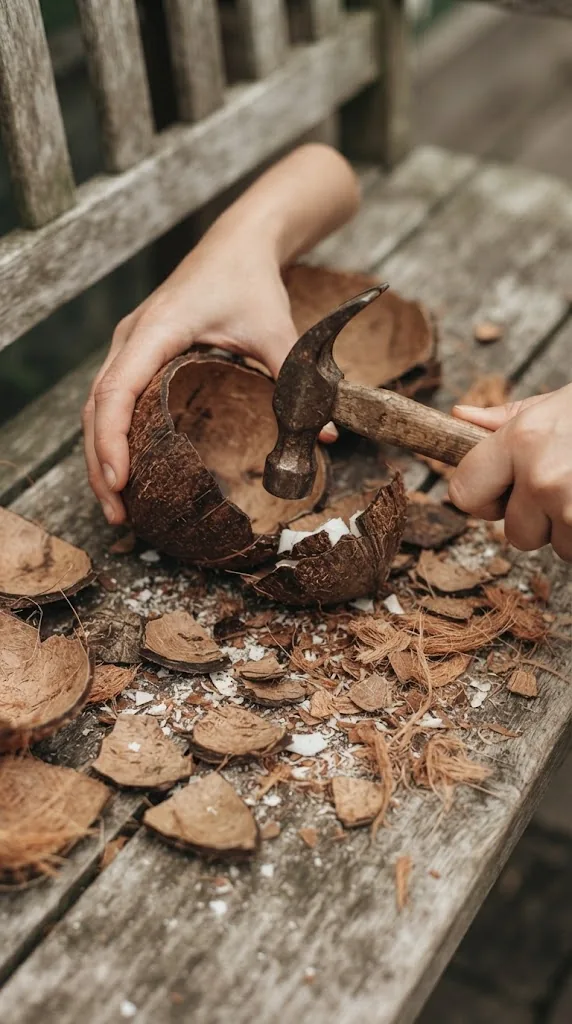
- Break the hard outer shell and fibrous husk into very small pieces using a hammer or garden shredder.
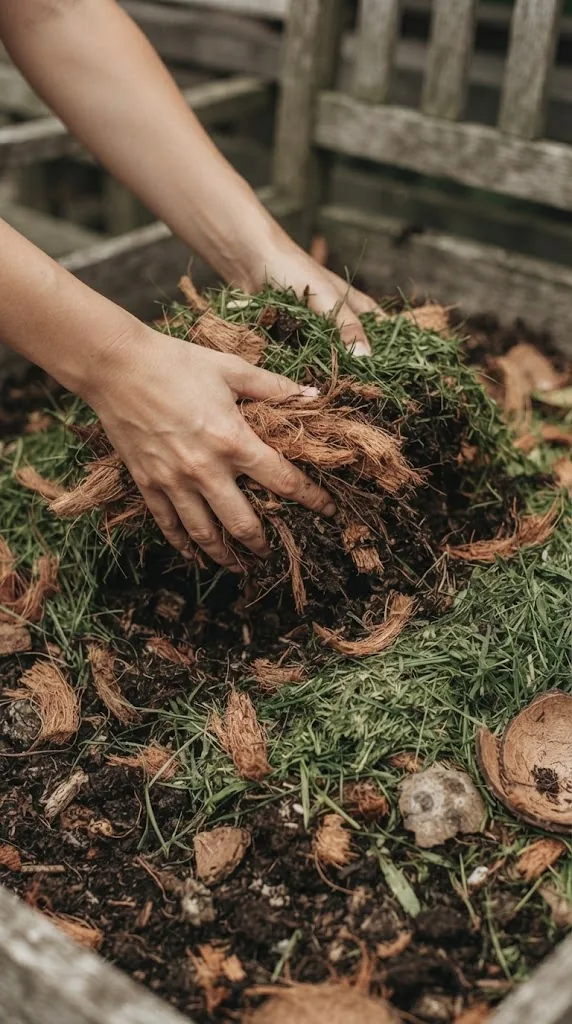
- Mix the shredded coconut material thoroughly with high-nitrogen greens like fresh grass clippings.
- Maintain a moist, well-aerated hot compost pile to speed up the slow breakdown process.
How much coconuts can you add to compost?
You can add crushed coconut husks and shells to make up about five to ten percent of your total brown material volume in a well-managed bin. Because they are extremely carbon-heavy and lignin-rich, always balance every single part with high-nitrogen greens like fresh grass clippings or manure. If you notice the pile stopping its heating process, turning excessively acidic, or seeing large chunks remaining unchanged for months, you have added far too much coconut matter.
Which types of coconuts can you compost?
- Fresh coconut meat: Sometimes. The high oil content can attract pests easily, so it must be buried deep inside a hot pile in small quantities.
- Shredded coconut husks: Sometimes. These act as tough browns but require mechanical shredding into tiny pieces to break down within a reasonable timeframe.
- Hard coconut shells: Sometimes. They are extremely durable and take years to decompose unless crushed into powder or very fine fragments.
- Desiccated coconut flakes: No. Commercial baking flakes are often heavily processed and salted or sugared, which disrupts microbial life and attracts ants.
Watch out for
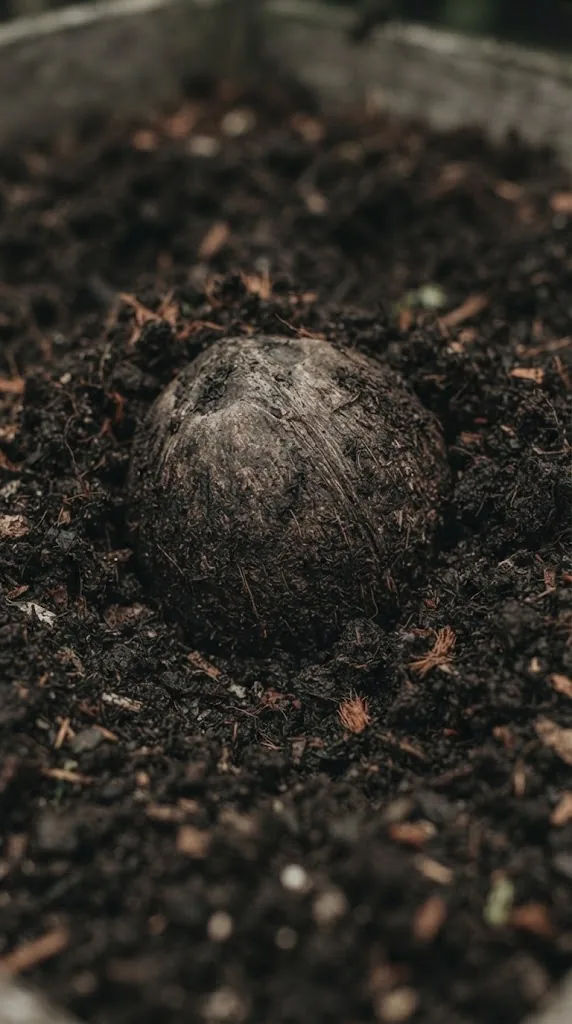
- Whole or large coconut pieces will last for years in your bin without degrading.
- Exposed coconut meat can attract rodents, flies, and other unwanted backyard pests.
- High lignin content means they will acidify your compost slightly if added in massive quantities.
What to do instead
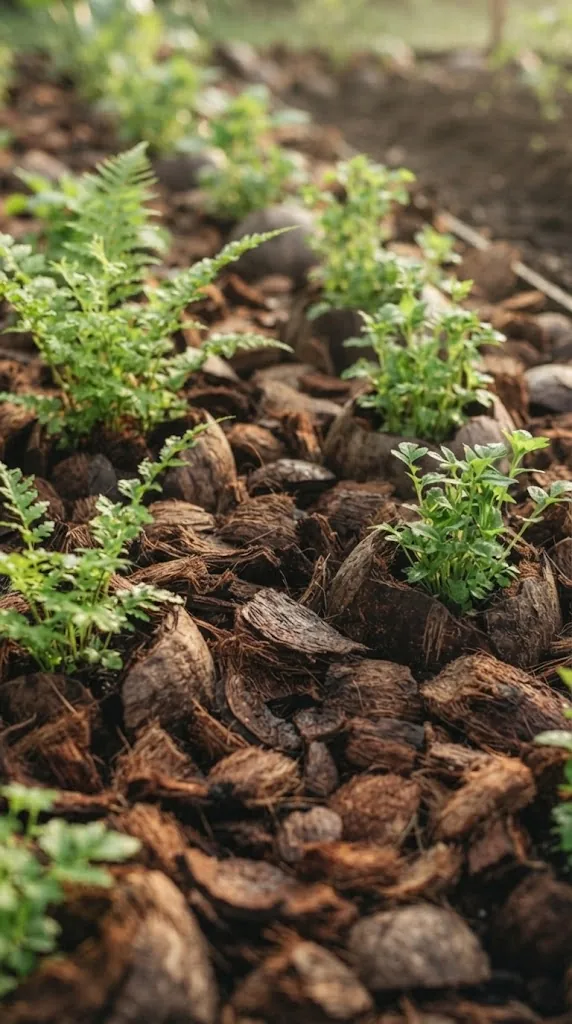
- Use broken coconut shells as natural garden mulch or orchid planters.
- Add crushed husks to heavy clay soil to improve aeration.
- Dispose of whole shells in your municipal yard waste bin if they accept woody debris.
Troubleshooting coconuts in compost
- Coconut pieces are not breaking down at all after many months. Remove the pieces, smash them with a heavy hammer into much smaller fragments, and return them to a hotter pile.
- Rodents are digging into the compost bin around the coconut. Ensure all soft coconut meat is completely removed before composting and bury the remaining shell fragments deep in the center.
- The compost pile has become overly acidic and slowed its decomposition. Mix in a handful of agricultural lime or wood ash to neutralize the pH imbalance caused by excessive lignin.
Myths about composting coconuts
- Myth: Throwing a whole coconut into the compost pile will eventually break down naturally. Truth: Whole coconuts feature water-tight, tough outer structures that can remain virtually unchanged in a backyard pile for several years.
- Myth: Coconut shells act as a balanced green and brown material on their own. Truth: Coconut shells are almost entirely pure carbon and require large amounts of nitrogen-rich greens to decompose properly.
Can coconuts go in a green bin or recycling?
Municipal green waste and yard debris programs often accept woody coconut husks and hard shells because commercial industrial facilities utilize heavy shredding machinery and extremely high-heat composting methods that easily process stubborn lignin. However, you should always remove any leftover soft white meat and plastic or sticker labels before tossing them into your curbside bin. Always check your specific local municipal waste guidelines first, as rules regarding woody tropical fruits vary significantly by region.
Does composting coconuts attract pests?
Composting coconuts can attract pests such as rodents, flies, and other unwanted backyard visitors if the materials are handled incorrectly. The primary culprit is the white coconut meat, which is rich in oils and nutrients that draw animals searching for food. Because coconut husks and shells break down very slowly, exposed food remnants or improperly buried pieces remain accessible for a long period, increasing the likelihood of an infestation in an open compost bin.
- Remove all soft coconut meat and inner liquid before adding any part to the bin.
- Bury crushed coconut fragments deep inside the center of a hot compost pile.
- Cover the coconut material thoroughly with high-nitrogen greens and other browns to mask odors.
Common questions
Can I put whole coconuts in my compost bin?
No, whole coconuts will take years to decompose. You must smash them into small pieces and shred the husk before adding them to the pile.
Are coconut coir bricks compostable?
Yes, coconut coir is a fantastic brown material for composting once it is rehydrated and broken up, though it is usually reused as a soil amendment first.
Will coconut oil attract pests to my compost?
Yes, high fat and oil content in general can attract rodents and scavengers, so it is best to use only the fibrous husk and shell rather than fatty coconut meat.
Are coconuts biodegradable?
Yes. Coconut meat breaks down quickly, but the shell and husk are very tough fiber and can take 1-3 years or more. Shredding them is the only way to speed it up.
Rules vary by town and by composting method. When in doubt, check with your local composting or waste program.