
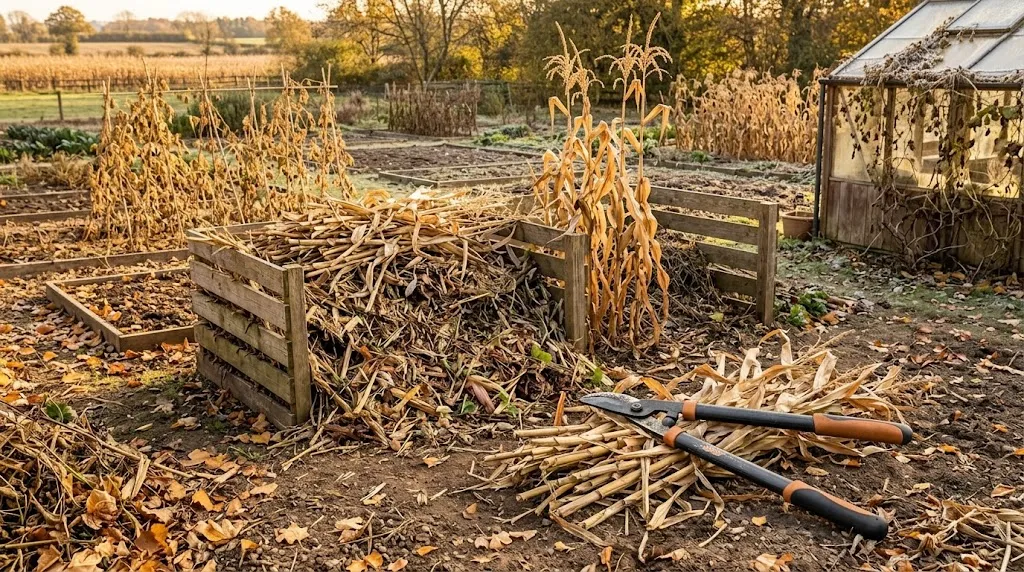
Yes, you can compost corn stalks, though they are quite woody and take a long time to break down. It is best to chop them into small pieces before adding them to your pile.
Why
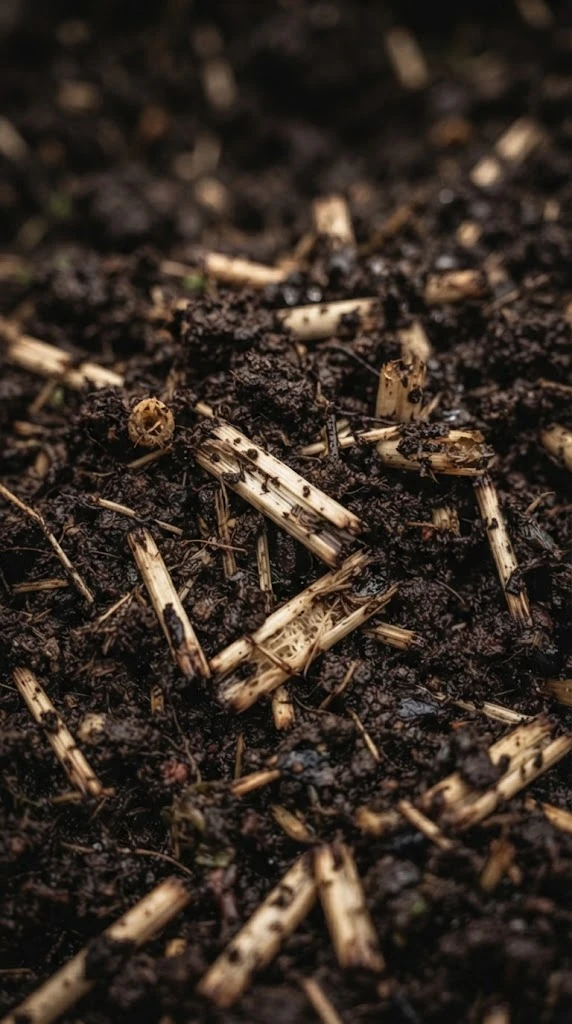
Corn stalks are a classic brown material, rich in carbon. Because they are fibrous and tough, they decompose slowly in a standard backyard compost pile. To speed up the process, you should break them down mechanically by shredding, chopping, or running them over with a lawnmower. If you leave them whole, they may remain in your bin for over a year. They are excellent for adding bulk and structure to a pile, which helps improve aeration and drainage for the other materials.
Quick facts
| Carbon to nitrogen | About 60:1 |
|---|---|
| Hot pile | 3-6 months |
| Cold pile | 6-12 months |
| Worm bin | Sometimes · Only small, finely chopped pieces. |
| Bokashi | Yes · Chop well to fit in the bin. |
| City green bin | Usually accepted; check local rules |
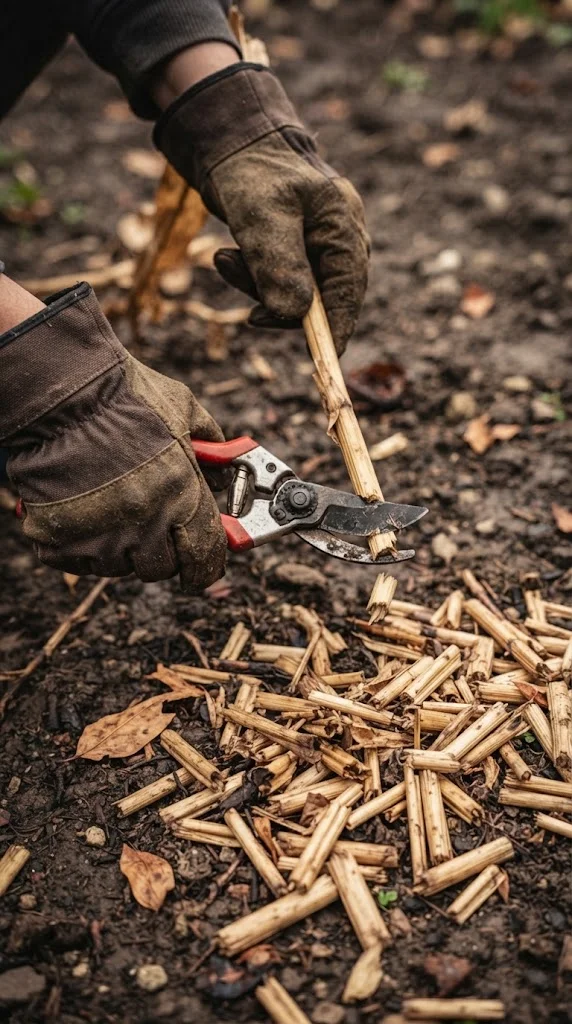
| Prep | Chop into small pieces to speed decay. |
| Mix with | Mix with nitrogen-rich greens like grass clippings. |
| Pest risk | Low · Keep buried inside the pile to deter mice. |
How to compost corn stalks
- Remove the stalks from the garden after harvest.
- Use a chipper, lawnmower, or garden shears to chop stalks into 1-2 inch pieces.
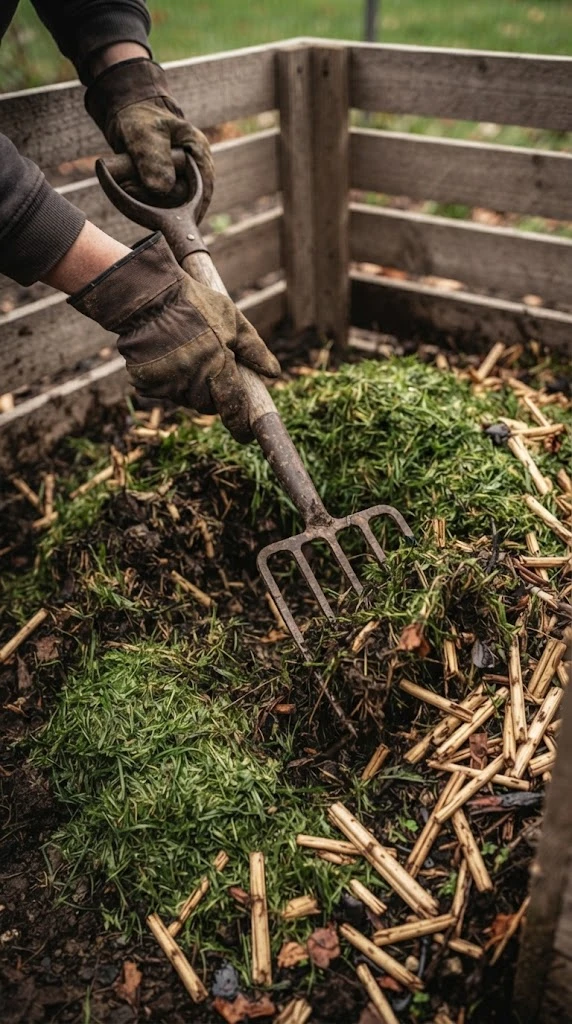
- Mix the chopped stalks thoroughly with nitrogen-rich green materials.
- Water the pile to keep it moist, which aids in the breakdown of tough fibers.
- Turn the pile regularly to introduce oxygen and speed up decomposition.
How much corn stalks can you add to compost?
Corn stalks should make up no more than ten to fifteen percent of your total carbon material at any given time. Because they are bulky and woody, adding too many at once can create large air pockets that dry out the pile and stall decomposition. Always balance every bucket of chopped stalks with equal parts nitrogen-rich greens like fresh grass clippings. If your pile stops heating up or the stalks remain completely unchanged after several weeks, you have likely added too much bulk.
Which types of corn stalks can you compost?
- Fresh green stalks: Yes. Green stalks contain slightly more moisture and break down a bit faster than dry ones, though they still count as browns.
- Dried brown stalks: Yes. These are classic high-carbon materials that provide excellent structural bulk and aeration to dense compost piles.
- Ears and husks attached: Sometimes. Husks compost easily, but leftover corn cobs and kernels can attract pests and should be avoided or chopped extensively.
- Pest-infested stalks: No. Stalks carrying fungal diseases or heavy insect damage can survive low-heat home piles and infect your next garden.
Watch out for
- Do not compost stalks that show signs of disease or heavy pest infestation.
- Avoid adding stalks treated with heavy pesticides or herbicides.
- Whole stalks can act as a physical barrier that prevents heat from building up in the center of the pile.
- They may attract rodents if not properly buried or mixed into the center of the pile.
Other ways to use corn stalks
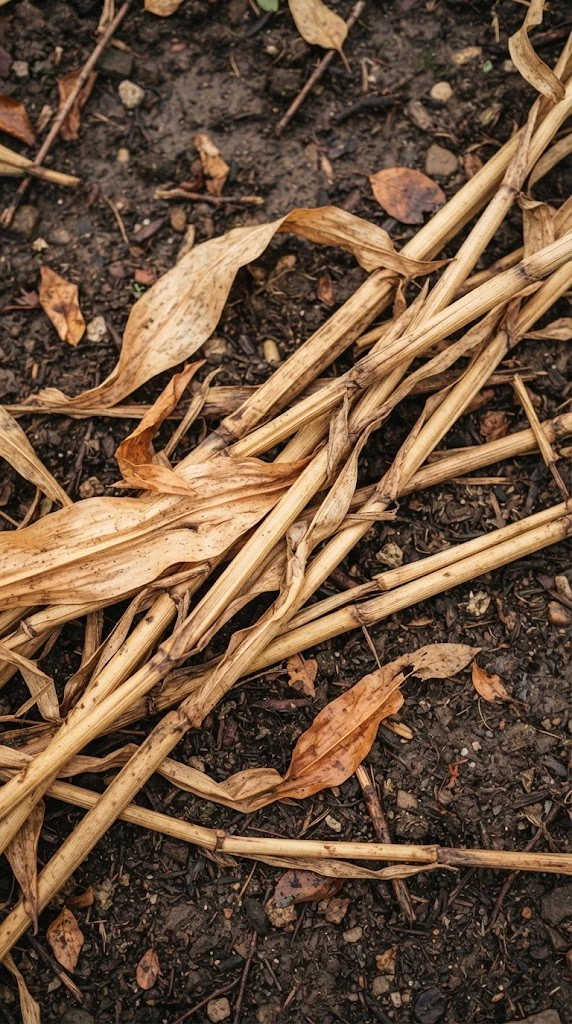
- Use as mulch in garden beds to suppress weeds.
- Bundle them for use as decorative autumn garden features.
- Check if your municipal yard waste program accepts woody garden debris.
Troubleshooting corn stalks in compost
- Stalks are taking over a year to decompose completely. Chop the material into smaller one-inch pieces using a lawnmower and ensure the pile stays consistently moist and well-turned.
- Large whole stalks are creating dry air pockets in the center. Pull the long stalks out, shred them thoroughly, and thoroughly blend them with wet nitrogen materials to restore proper moisture balance.
- Rodents are nesting inside the loose pile of stalks. Break down the structural gaps by crushing the stalks and bury them deep within the center of a hot, active compost pile.
Myths about composting corn stalks
- Myth: Leaving corn stalks whole in the pile helps aerate it naturally. Truth: Whole stalks actually create massive structural gaps that let too much air in, drying out the pile and preventing proper microbial heating.
- Myth: Corn stalks are considered green materials because they come from a growing plant. Truth: Mature stalks are dry, fibrous, and heavily lignified, making them a potent carbon-rich brown material.
Can corn stalks go in a green bin or recycling?
Most municipal green waste and curbside yard debris programs readily accept corn stalks, especially during autumn harvest cleanups. Before tossing them into your municipal bin, remove any plastic tags, garden twine, or metal stakes used for support. Because some cities have strict rules regarding woody agricultural waste or potential plant diseases, you should always check your local waste management guidelines to confirm whether oversized stalks need to be bundled or cut down first.
Does composting corn stalks attract pests?
Corn stalks can potentially attract rodents such as rats and mice if they are not properly managed in your compost pile. While the stalks themselves are woody and fibrous rather than food-based, they often provide ideal hiding places, nesting material, and pathways for pests seeking shelter in and around the bin. Furthermore, if the stalks are mixed carelessly with exposed food scraps or left sitting on top of the pile in large, whole pieces, they create structural gaps that allow pests easy access to more appealing food sources.
- Chop or shred stalks into small pieces to remove hollow hiding spaces for rodents.
- Bury the stalks deep within the center of the compost pile rather than leaving them on top.
- Mix chopped stalks thoroughly with nitrogen-rich green materials to accelerate breakdown.
- Keep your compost bin covered securely to prevent mice and rats from entering.
Common questions
Can I put whole corn stalks in my compost bin?
You can, but they will take a very long time to decompose. It is highly recommended to chop them up first.
Are corn stalks considered a green or brown material?
They are a brown material because they are high in carbon and dry, woody fiber.
Will corn stalks attract pests to my compost?
If they are clean and dry, they are unlikely to attract pests. However, ensure they are buried deep in the pile to avoid any issues.
Are corn stalks biodegradable?
Yes. Corn stalks are biodegradable plant fiber, but they are woody and take 6-12 months. Chopping or shredding them speeds things up a lot.
Rules vary by town and by composting method. When in doubt, check with your local composting or waste program.