
You should not put dog poop in a standard home compost pile because it contains harmful pathogens and parasites that can survive the process.
Why
Dog waste is classified as pet waste from a carnivorous animal, meaning it can harbor dangerous bacteria like E. coli, Salmonella, and Giardia. Standard backyard compost piles rarely reach the sustained high temperatures required to safely kill these pathogens. Furthermore, adding pet waste to soil intended for growing food crops risks contaminating vegetables and herbs with diseases that can make humans sick. Special commercial systems or dedicated non-food composting methods are typically required to handle it safely.
Quick facts
| Carbon to nitrogen | Not applicable |
|---|---|
| Hot pile | Does not break down safely |
| Cold pile | Does not break down safely |
| Worm bin | No · Parasites survive and risk worm health. |
| Bokashi | No · Pathogens persist and pose health risks. |
| City green bin | Check local rules; usually prohibited. |
| Prep | Do not compost. |
| Mix with | Do not add to compost piles. |
| Pest risk | High · Attracts flies and scavengers carrying pathogens. |
How to get rid of dog poop
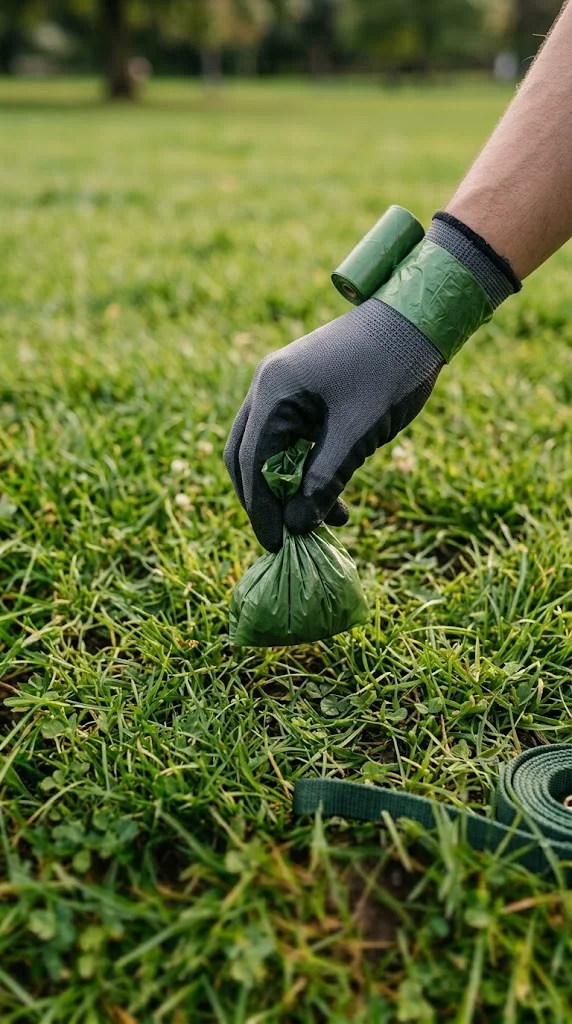
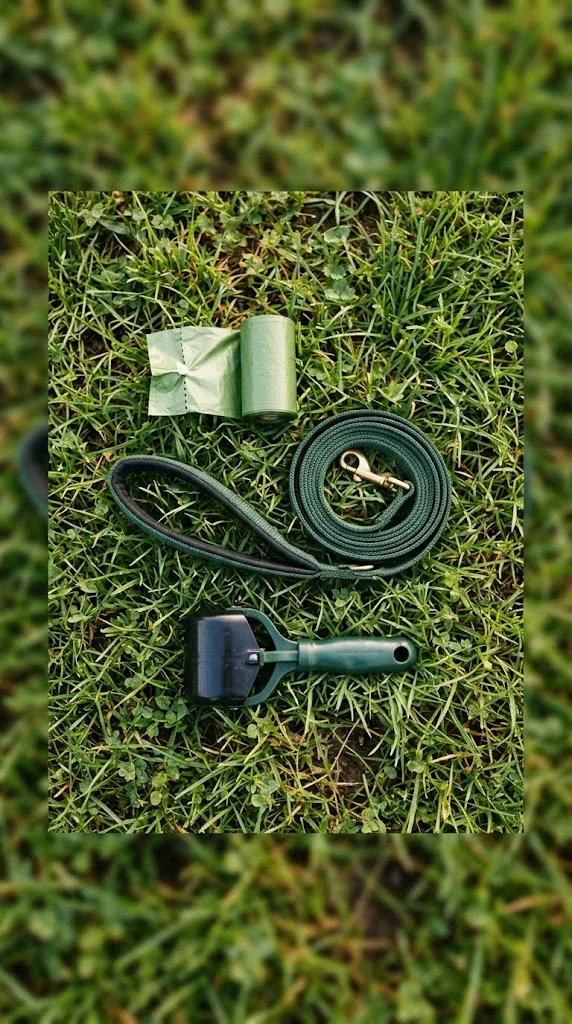
- Scoop the waste using a biodegradable bag or a designated shovel.
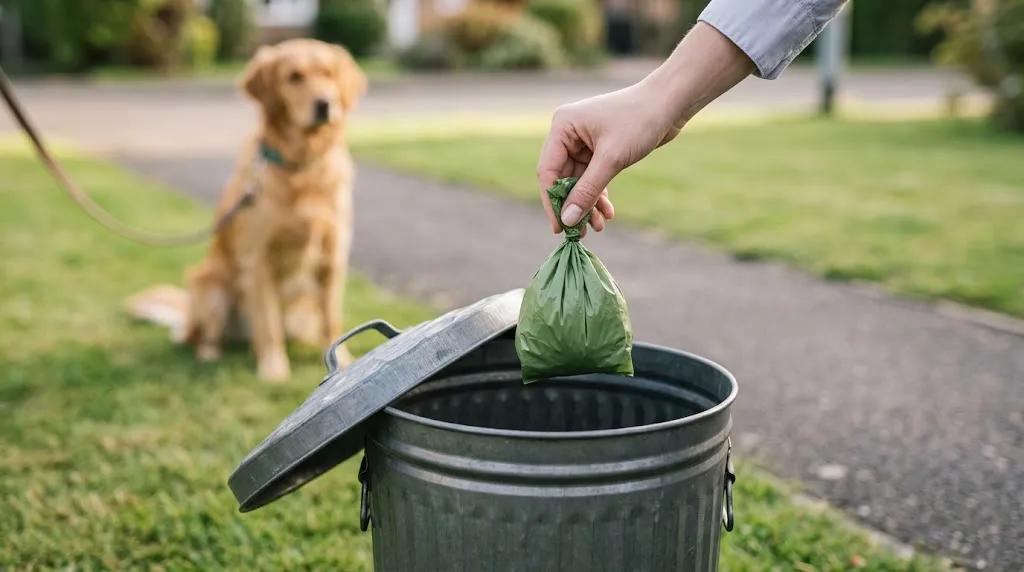
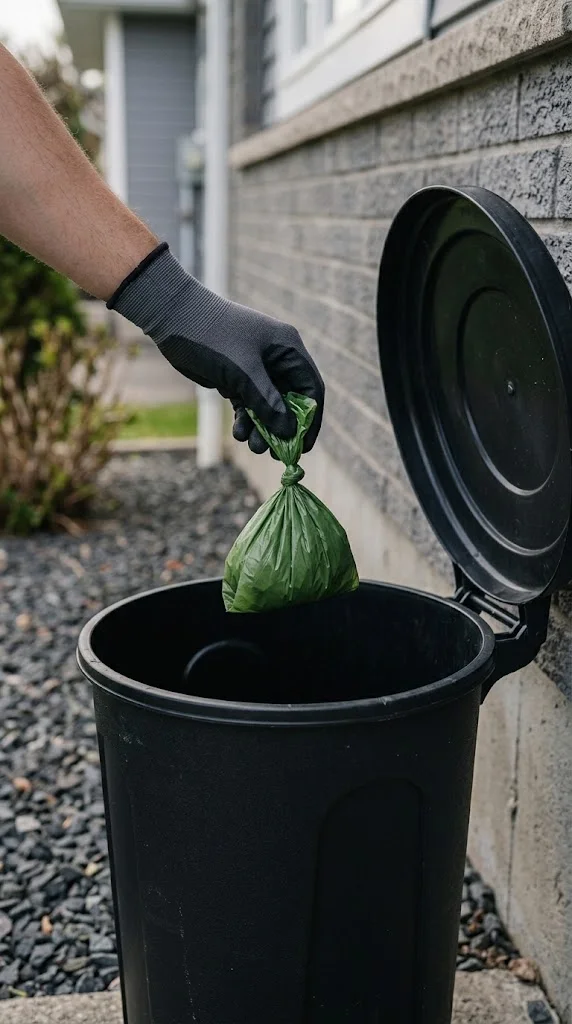
- Dispose of the waste securely in your household trash bin.
- Check for local pet waste collection services or specialized municipal green waste programs in your area.
- Wash your hands and tools thoroughly after handling pet waste.
Which types of dog poop can you compost?
- Raw dog waste: No. Fresh feces from a carnivorous pet contain harmful bacteria and parasites that home compost piles cannot safely eliminate.
- Dog waste in biodegradable bags: No. Even if the bag breaks down, the pathogens inside the waste remain alive and dangerous for home soil applications.
- Herbivore pet waste (e.g. rabbit or hamster): Sometimes. Waste from plant-eating pets lacks the same high-risk human pathogens as carnivore waste, but still requires careful handling and high heat.
Watch out for
- Do not use compost containing pet waste on vegetable gardens or fruit trees.
- Avoid flushing bags labeled flushable unless specifically approved by your local plumbing and sewer guidelines.
- Keep pet waste away from standard backyard compost bins and worm farms.
What to do instead
- Dispose of it in the regular household trash
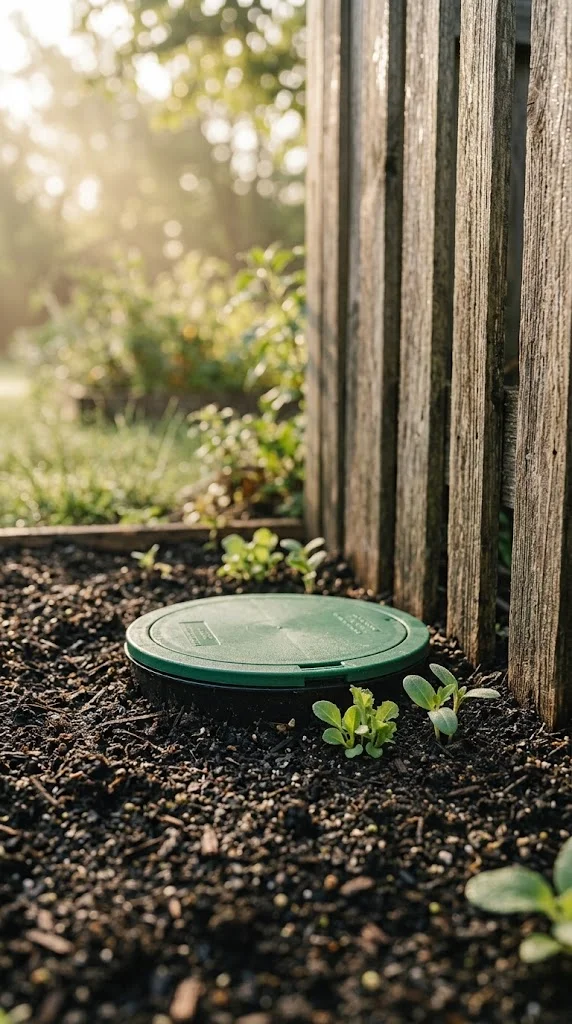
- Use a dedicated in-ground pet waste digester
- Utilize a municipal pet waste composting program if available
Myths about composting dog poop
- Myth: Dog poop is just like farm manure and can be safely composted the same way. Truth: Livestock manure comes from herbivores and behaves differently than waste from carnivorous pets, which harbors dangerous parasites and pathogens.
- Myth: A hot compost pile will always kill all bacteria and germs in dog waste. Truth: Backyard piles rarely maintain the exact, sustained high temperatures required over a long duration to completely eliminate canine pathogens.
- Myth: Compostable bags make dog poop safe to add to a standard backyard bin. Truth: While the bag material may degrade, the enclosed waste still contains live pathogens that contaminate your pile and soil.
Can dog poop go in a green bin or recycling?
Municipal green waste programs and curbside food-waste collection bins generally do not accept dog poop because standard municipal composting facilities often lack the specialized processing required for pet waste. A few specific municipalities offer dedicated pet waste collection programs or green waste streams for it. Always check your local waste management guidelines before placing any pet waste in public bins, and ensure you remove any non-compostable plastic bags if specialized drop-off is permitted.
Common questions
Can I compost dog poop if I use a hot composter?
Even in hot composters, it is difficult to maintain the exact high temperatures needed for the long duration required to safely eliminate all dangerous pathogens found in carnivorous pet waste.
Can I use dog waste compost on flowers and lawns?
It is generally advised to only use pet waste compost on non-edible ornamental plants and lawns, never on edible gardens, to avoid the risk of disease transmission.
What about compostable dog poop bags?
While the bags themselves may break down in industrial facilities, the dog waste inside still poses pathogen risks that most standard home composting systems cannot safely manage.
Is dog poop biodegradable?
Yes, dog poop biodegrades, but it carries parasites and pathogens that survive a normal home pile. That is why it needs a dedicated pet waste system, not your garden compost.
Rules vary by town and by composting method. When in doubt, check with your local composting or waste program.