
You can only compost dryer lint if it comes from natural fibers like cotton, wool, or linen. If your clothes contain synthetic materials like polyester, nylon, or spandex, the lint will contain microplastics that should not go into your compost.
Why
Dryer lint is essentially a collection of tiny fibers shed from your clothing during the drying process. If you wear 100% natural fiber clothing, the lint is a carbon-rich material that breaks down easily in a compost pile. However, most modern clothing is made from synthetic blends or contains plastic-based elastic. These synthetic fibers do not biodegrade and will persist in your finished compost as microplastic pollution, which can eventually enter the soil and water supply. If you are unsure about the fiber content of your laundry, it is safer to dispose of the lint in the trash.
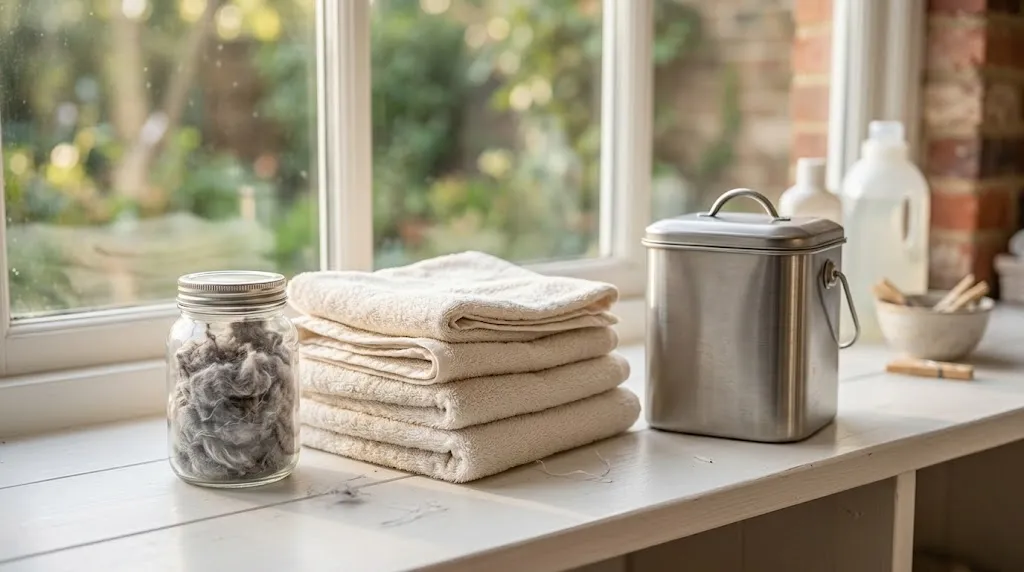
Quick facts
| Carbon to nitrogen | Varies |
|---|---|
| Hot pile | 1-3 months |
| Cold pile | 3-6 months |
| Worm bin | Sometimes · Only natural fibers in small amounts. |
| Bokashi | Sometimes · Only natural fibers; synthetics will persist. |
| City green bin | Check local rules; only natural fibers accepted. |
| Prep | Ensure lint is from 100% natural fibers. |
| Mix with | Mix thoroughly to prevent matting in the pile. |
| Pest risk | Low · No attraction, but keep secure from wind. |
How to compost dryer lint
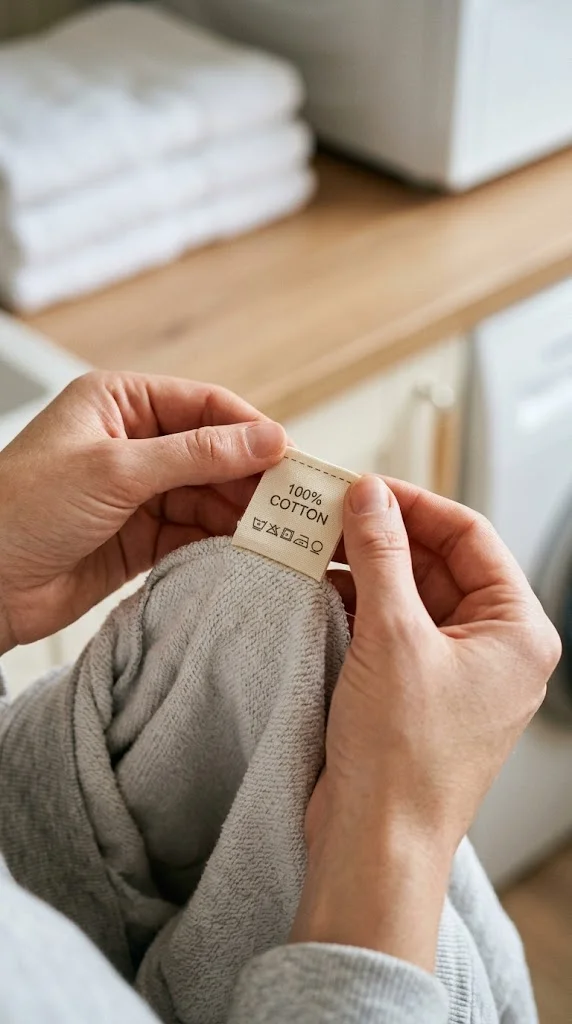
- Check the tags on your clothing to ensure they are 100% natural fibers.
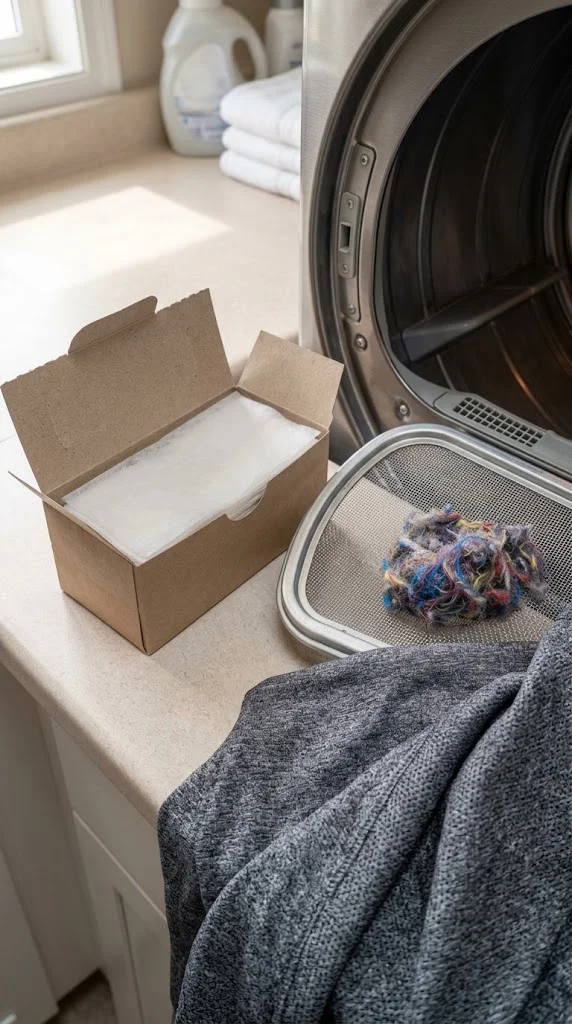
- Collect the lint from your dryer screen after each load.
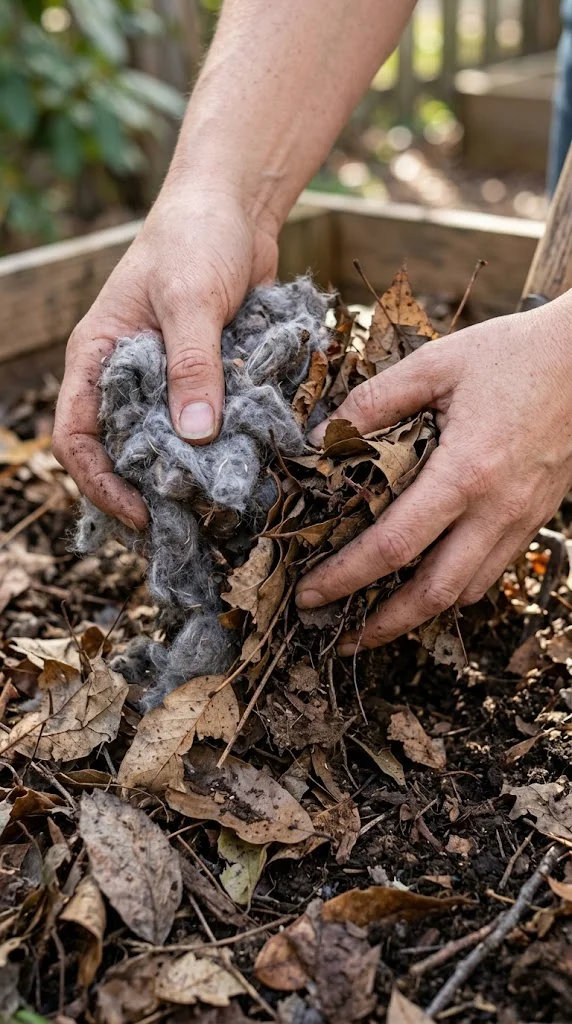
- Add the lint to your compost pile as a brown carbon source.
- Mix the lint thoroughly into the pile to prevent it from matting together.
How much dryer lint can you add to compost?
You should treat dryer lint as a concentrated brown material, limiting it to about one or two handfuls per compost bin addition. Because it is highly compressed, it can easily create dense clumps that block airflow. Always balance these additions with a generous amount of nitrogen-rich green waste like kitchen scraps or fresh grass clippings. If you notice the pile becoming slimy or developing a matted, felt-like layer on the surface, you have added too much and need to turn the pile immediately.
Which types of dryer lint can you compost?
- 100% Cotton lint: Yes. Pure cotton fibers are organic and break down efficiently in a healthy, active compost pile.
- Wool lint: Yes. Wool is a protein-rich natural fiber that decomposes well, though it may take slightly longer than cotton.
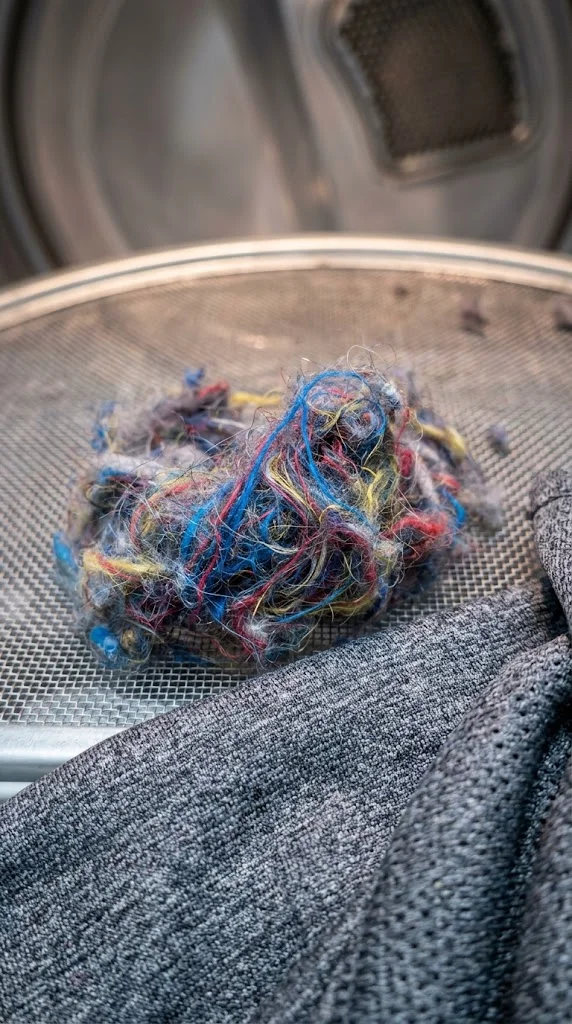
- Polyester blend lint: No. Synthetic fibers like polyester are essentially plastic and will remain in your soil indefinitely as microplastics.
- Lint with dryer sheet residue: No. Chemical fragrances and synthetic softeners from dryer sheets can introduce unwanted toxins into your compost ecosystem.
Watch out for
- Avoid lint from synthetic fabrics like polyester, acrylic, or nylon.
- Do not compost lint if you use dryer sheets, as they contain synthetic chemicals and fragrances.
- Ensure the lint is free from pet hair if your pets have been treated with chemical flea or tick preventatives.
What to do instead
- Use it as stuffing for small craft projects.
- Stuff into cardboard tubes to create fire starters.
- Dispose of in the trash if synthetic.
Troubleshooting dryer lint in compost
- Lint matting into solid clumps Break the lint apart with your fingers before adding it to the bin and mix it thoroughly with coarser materials like twigs or straw.
- Slow decomposition Ensure the pile has adequate moisture and nitrogen, as lint is very dry and carbon-heavy, requiring a balanced environment to break down.
- Surface crusting Avoid dumping large piles of lint in one spot; instead, sprinkle it thinly across the surface and incorporate it into the top few inches.
Myths about composting dryer lint
- Myth: All dryer lint is organic because it comes from clothing. Truth: Most modern clothing contains synthetic polymers, meaning the lint is often made of plastic rather than natural fibers.
- Myth: Lint is a great way to add bulk to a compost pile. Truth: While it adds carbon, lint is too dense to provide the necessary structure for aeration and should be used sparingly.
Can dryer lint go in a green bin or recycling?
Most municipal green waste or curbside composting programs do not accept dryer lint, even if it is from natural fibers. Industrial composting facilities often screen out small, lightweight materials like lint because they can contaminate the final product or blow away during processing. Always check your local waste management guidelines before placing lint in your green bin. If your municipality does not explicitly list dryer lint as an accepted item, it is best to dispose of it in your regular household trash.
Does composting dryer lint attract pests?
Dryer lint does not attract pests. Because it is essentially a collection of dry, carbon-rich fibers devoid of food odors or nutritional value, it holds no interest for rodents, insects, or other animals. In fact, adding dryer lint to your compost pile can actually help deter pests. By using the fluffy lint as a dry cover layer over fresh food scraps and other odorous materials, you help mask enticing smells and create a physical barrier that keeps flies and scavengers away from your bin.
- Collect lint exclusively from natural fiber clothing loads.
- Spread the lint evenly as a top layer over fresh food scraps.
- Mix the lint into the pile to prevent matting and improve aeration.
- Ensure the lint is free from chemical residues like dryer sheet additives.
Common questions
Can I compost lint if I use dryer sheets?
No, you should avoid composting lint if you use dryer sheets, as they are often coated in synthetic fragrances and chemicals that you do not want in your soil.
How do I know if my lint is synthetic?
If your clothes are made of polyester, nylon, spandex, or acrylic, the lint produced will contain microplastics. Only lint from 100% cotton, wool, linen, or hemp is safe to compost.
Will lint attract pests to my compost?
Generally no, but if the lint is heavily saturated with pet hair or food odors, it might attract unwanted attention. Keep it buried deep in the pile to be safe.
Is dryer lint biodegradable?
Lint from cotton, wool or linen is biodegradable. Most household lint is mixed with polyester, nylon or acrylic fibers, which are microplastics and do not biodegrade.
Rules vary by town and by composting method. When in doubt, check with your local composting or waste program.