
You can compost leather belts only if they are made from 100 percent genuine, untreated leather without synthetic coatings.
Why
Leather is an animal-based protein and is technically biodegradable, meaning microorganisms will eventually break it down. However, most modern leather is heavily tanned using chromium or other harsh chemical agents, dyed, and finished with plastic coatings or synthetic stitching. These treatments prevent the leather from decaying naturally in a standard backyard compost bin and can leach heavy metals into your soil. Only untreated, vegetable-tanned leather should ever be considered for home composting, and even then, it takes a very long time to decompose completely.
Quick facts
| Carbon to nitrogen | Varies |
|---|---|
| Hot pile | 1-2 years |
| Cold pile | Does not break down |
| Worm bin | No · Too tough for worms to process. |
| Bokashi | Sometimes · Only vegetable-tanned leather breaks down slowly. |
| City green bin | Check local municipal rules regarding leather. |
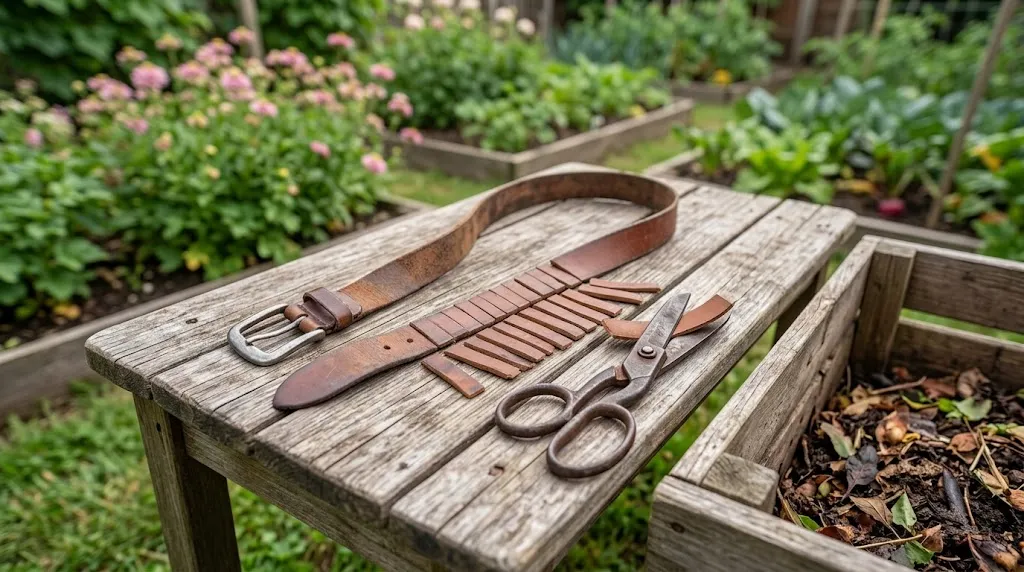
| Prep | Remove metal buckle and cut into tiny strips. |
| Mix with | Mix thoroughly with high-nitrogen materials. |
| Pest risk | Low · Not appealing to typical compost pests. |
How to compost leather belts
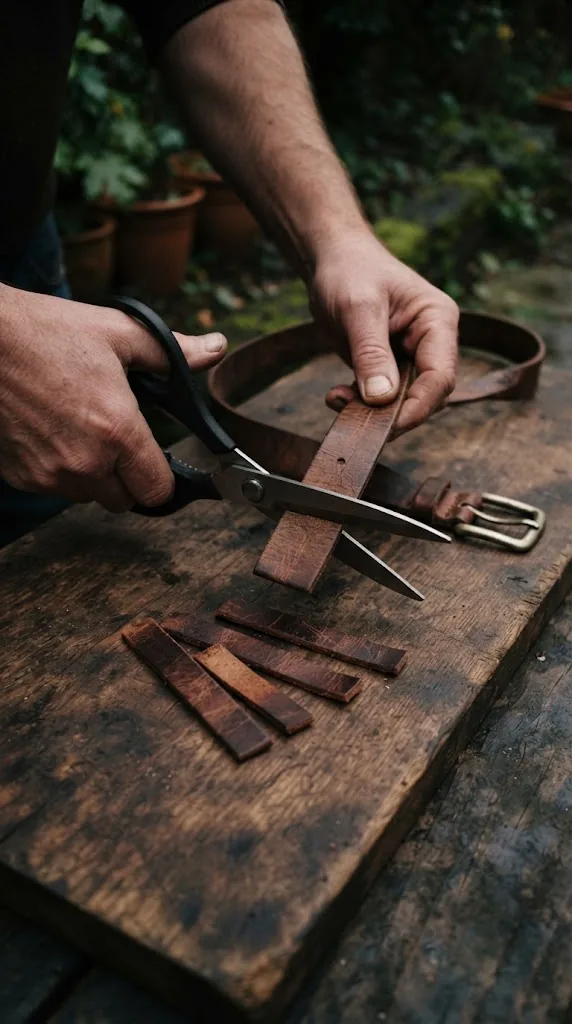
- Cut the leather belt into small strips or tiny pieces to maximize surface area for microbes.
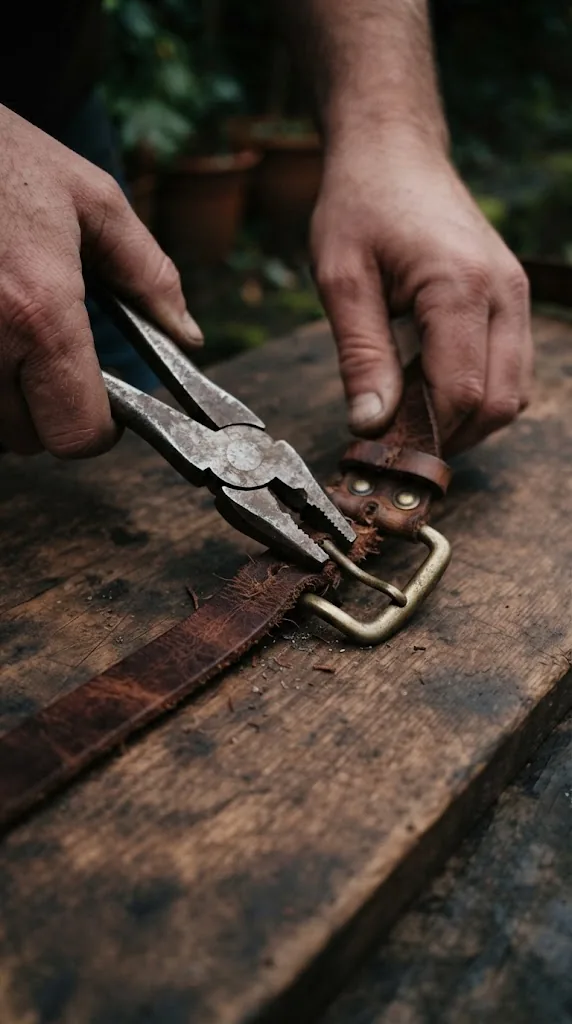
- Remove any metal buckles, grommets, rivets, and synthetic thread stitching.
- Bury the pieces deep inside a hot, active compost pile to encourage faster microbial breakdown.
- Keep the pile consistently moist and well-aerated to speed up the slow decomposition process.
How much leather belts can you add to compost?
You should treat leather as a rare, supplemental addition rather than a primary ingredient. Limit yourself to one or two belts per year, cut into small pieces, to avoid overwhelming your pile. Because leather is a nitrogen-rich protein, always balance it with a large volume of carbon-rich browns like dry leaves or wood chips. If you notice the pile becoming slimy or emitting a foul, ammonia-like odor, you have likely added too much protein and need to increase your brown material ratio immediately.
Which types of leather belts can you compost?
- Vegetable-tanned leather: Yes. This is the only type suitable for home composting as it uses natural tannins instead of heavy metals.
- Chrome-tanned leather: No. This process uses chromium salts that are toxic to soil microbes and can contaminate your garden beds.
- Patent or coated leather: No. These belts are finished with plastic or synthetic resins that will not break down and will leave microplastics in your compost.
- Suede: Sometimes. Only compost if it is untreated and free of chemical dyes, though it often contains hidden synthetic stabilizers.
Watch out for
- Avoid composting chemically tanned or chrome-tanned leather, as it contains heavy metals.
- Discard any metal hardware, plastic coatings, and synthetic stitching before adding it to the bin.
- Watch out for extremely slow breakdown times that can outlast your patience in a cold pile.
What to do instead
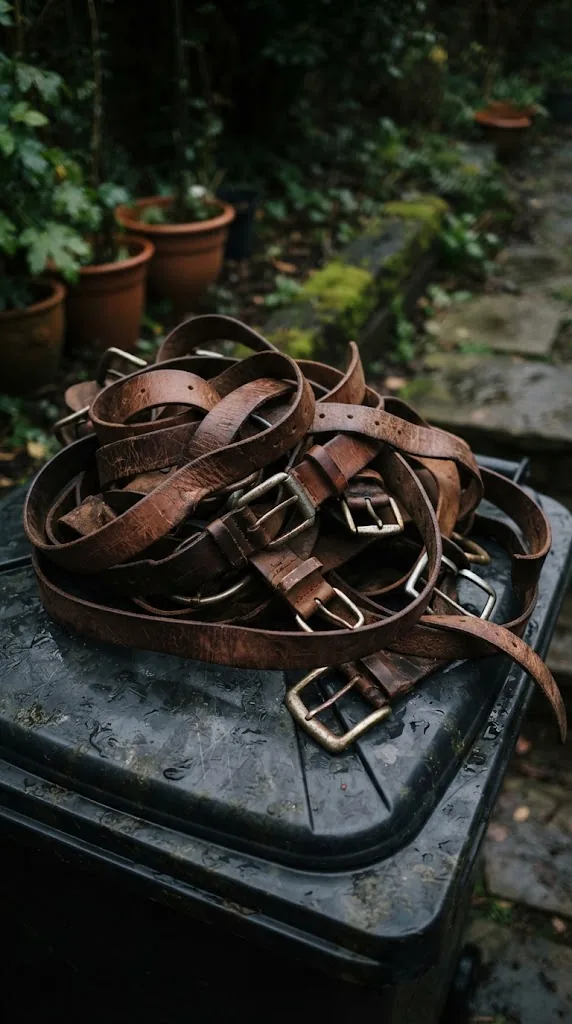
- Donate wearable belts to secondhand shops or charitable organizations.
- Repurpose old leather into craft projects, patches, or wrap handles.
- Dispose of chemically treated leather belts in the regular household trash.
Troubleshooting leather belts in compost
- The leather pieces remain intact after several months. The pieces were likely too large or the pile temperature was too low; remove them, chop them smaller, and restart in a hotter, more active pile.
- The leather develops a thick layer of fuzzy mold. Surface mold is a normal part of the breakdown process for proteins, but you can bury the pieces deeper to hide the growth and maintain aesthetics.
- The leather creates a tough, matted layer in the pile. Ensure you mix the leather strips thoroughly with bulky carbon materials like straw or twigs to prevent the pieces from clumping together and blocking airflow.
Myths about composting leather belts
- Myth: All animal products are safe to compost. Truth: While leather is animal-based, most modern commercial leather is heavily processed with chemicals that are harmful to a healthy compost ecosystem.
- Myth: Leather breaks down just as fast as vegetable scraps. Truth: Leather is extremely durable by design and can take years to decompose, whereas vegetable scraps typically break down in a few weeks.
Can leather belts go in a green bin or recycling?
Most municipal green-waste or curbside food-scrap programs do not accept leather belts. These facilities are designed for organic plant matter and food waste, and the chemical treatments in leather can violate their strict contamination standards. You must remove all metal buckles and synthetic components before checking your local waste management website. If they do not explicitly list leather as an acceptable item, you should dispose of the belt in your regular household trash rather than risking the contamination of the municipal compost stream.
Does composting leather belts attract pests?
Composting leather belts does not typically attract pests like rodents, flies, or raccoons. Because leather is a tough animal protein rather than a sweet or pungent food waste, it lacks the strong aromas that usually draw scavengers. Furthermore, burying small, cut-up strips of untreated leather deep inside your compost pile and using it beneath layers of brown materials helps hide any faint smells, keeping unwanted pests completely away from your bin.
- Cut the leather into tiny pieces to ensure rapid breakdown.
- Remove all metal hardware and synthetic stitching.
- Bury the leather strips deep inside the center of the pile.
- Cover the pile with a thick layer of carbon-rich browns.
Common questions
Can I compost a leather belt if I remove the metal buckle?
Yes, removing the metal buckle is necessary, but you also need to ensure the leather itself is untreated and vegetable-tanned. Most belts feature chemical tanning and synthetic stitching that will not break down properly.
Why does leather take so long to compost?
Leather is a dense protein structure derived from animal hide. Tanning processes specifically alter the hide to make it durable and resistant to rotting, which naturally makes it very difficult for compost microbes to digest.
Are faux leather belts compostable?
No, faux leather is typically made from polyurethane or polyvinyl chloride, which are synthetic plastics. These materials will never biodegrade in a compost bin and will instead fragment into microplastics.
Are leather belts biodegradable?
Only vegetable-tanned leather is biodegradable, and slowly. Most belts are chrome-tanned, coated or bonded leather, which barely breaks down and may leach chromium.
Rules vary by town and by composting method. When in doubt, check with your local composting or waste program.