
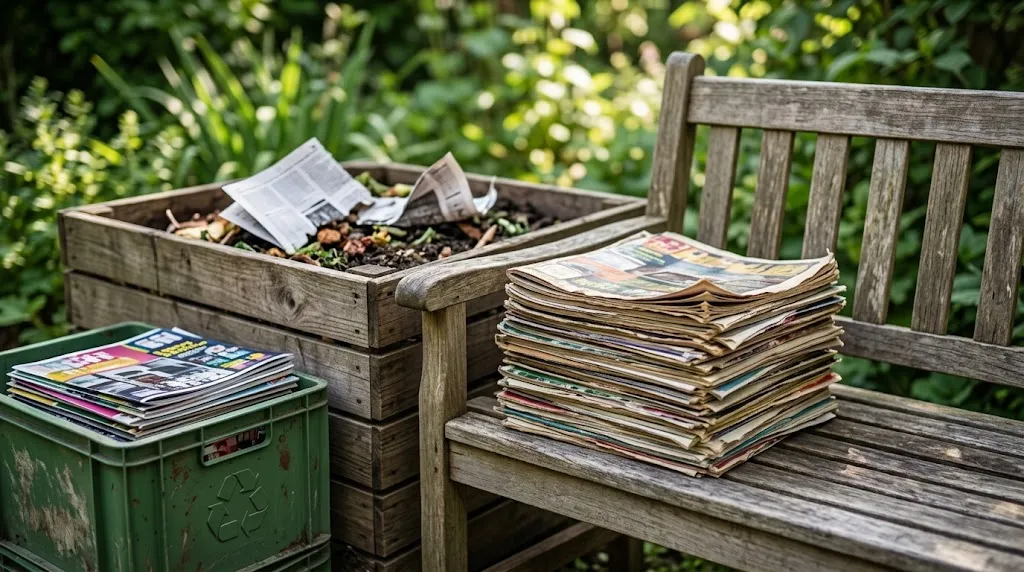
You can compost some magazines depending on the type of paper and ink used, but glossy magazines are generally not recommended for home compost bins.
Why
Magazines are typically printed on slick, glossy paper coated with clay or plastics and use heavy petroleum-based inks. While older or plain newsprint magazines may break down slowly in a compost pile, the glossy coatings hinder microbial activity and can introduce harmful chemicals and heavy metals like lead or zinc into your garden soil. If you do choose to compost magazines, they must be uncoated, printed with soy or vegetable-based inks, and thoroughly shredded to speed up the slow breakdown process.
Quick facts
| Carbon to nitrogen | Varies depending on paper type |
|---|---|
| Hot pile | 3-6 months |
| Cold pile | slowly over 6-12 months |
| Worm bin | Sometimes · Small amounts of non-glossy paper only |
| Bokashi | Yes · Fine for fermentation, then bury |
| City green bin | Usually accepted; check local rules |
| Prep | Remove all plastic coatings and staples |
| Mix with | Mix with 2-3 parts green nitrogenous material |
| Pest risk | Low · Avoid piling high concentrations of paper alone |
How to compost magazines
- Check the paper type to ensure pages are matte and uncoated.
- Remove any staples, plastic inserts, or subscription cards.
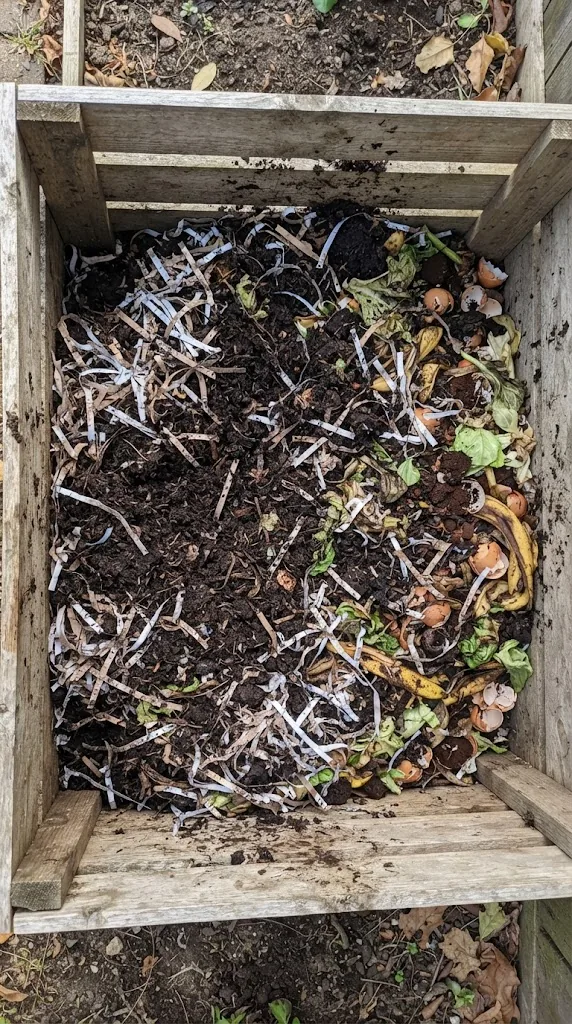
- Shred the remaining paper into small strips to accelerate decomposition.
- Mix the shredded paper thoroughly into a balanced compost pile to avoid matting.


How much magazines can you add to compost?
Magazines should make up no more than five to ten percent of your total carbon material to prevent smothering the pile. Add a handful of shredded pages at a time, mixing them thoroughly with nitrogen-rich greens like grass clippings or kitchen scraps. If you notice thick, grey paper mats forming or the pile completely stalls out in decomposition, you have added far too much paper at once.
Which types of magazines can you compost?
- Glossy promotional catalogs: No. These are heavily coated in clay and plastic polymers which will not decompose in a home pile.
- Matte newsprint magazines: Yes. Uncoated paper stock breaks down relatively easily when adequately shredded and mixed.
- Soy-ink printed periodicals: Sometimes. They are safe from heavy metals, but the paper thickness still requires fine shredding to avoid matting.
Watch out for
- Glossy and clay-coated papers do not break down easily.
- Petroleum-based colored inks can leach toxins into your compost.
- Large chunks of paper will mat together and block airflow.
What to do instead
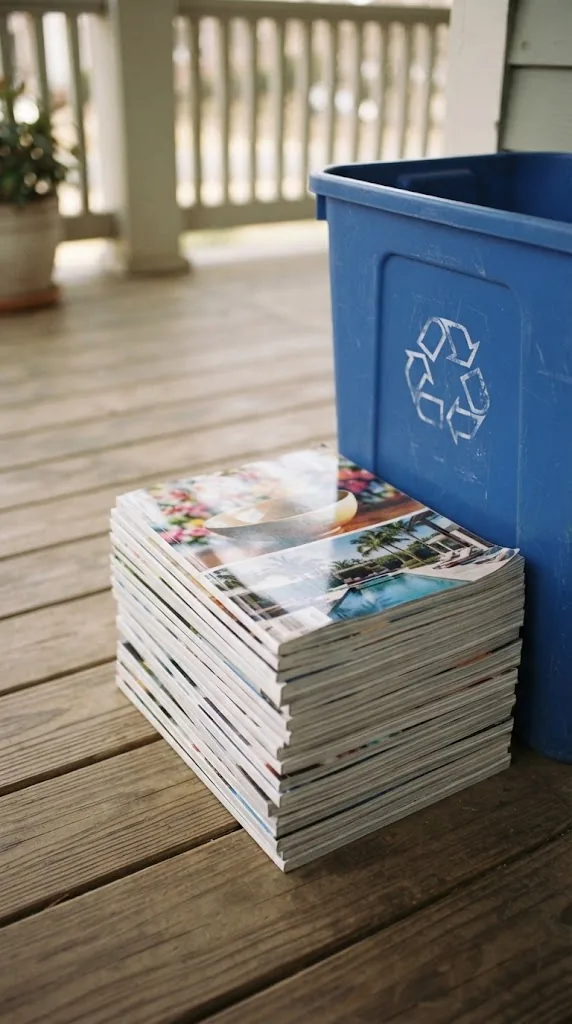
- Place them in your household recycling bin.
- Donate them to local schools, doctor offices, or nursing homes.
- Pass them along to friends or neighbors.
Troubleshooting magazines in compost
- Shredded pages clump together into dense, soggy blocks that block airflow. Tear the paper into smaller individual strips and thoroughly tumble or turn your pile to integrate them with coarser browns.
- Pages take many months to show any signs of physical breakdown. Run the pages through a cross-cut shredder and ensure your compost pile maintains higher moisture and heat levels.
Myths about composting magazines
- Myth: All colorful magazine inks are completely safe and organic. Truth: Many traditional commercial inks contain petroleum derivatives and heavy metal pigments that you should keep out of vegetable gardens.
- Myth: Leaving staples in the magazine will naturally add iron nutrients to the soil. Truth: Standard steel staples do not break down in a standard compost timeframe and will remain sharp in your finished compost.
Can magazines go in a green bin or recycling?
Most municipal green waste or food-waste collection programs prefer that you keep glossy paper out of compost bins, directing them instead to curbside recycling streams. Before tossing magazines into your recycling bin, remember to strip off any attached plastic wrap, promotional cards, or thick metal spines. Always check your local waste management guidelines, as recycling rules regarding mixed paper types can vary significantly by municipality.
Does composting magazines attract pests?
Adding shredded magazines to your compost pile does not attract pests. Because paper is a carbon-rich brown material, it does not emit strong food odors that draw animals or insects. In fact, using shredded magazines as a top cover layer helps effectively hide food scraps and block appealing smells, deterring common pests like flies and rodents from investigating your bin.
- Shred the magazines finely to create a dense, uniform layer.
- Spread a generous layer of shredded paper directly over fresh food scraps.
- Ensure all smelly kitchen waste is completely buried underneath the paper.
- Maintain proper pile moisture to help the paper quickly blend into the compost.
Common questions
Can I put glossy magazines in my home compost?
No, glossy magazines contain clay coatings and synthetic varnishes that do not decompose well in home composting systems and can introduce unwanted chemicals to your garden.
Are the staples an issue in the compost pile?
Yes, standard steel staples will not break down in a home compost pile. You should manually remove all staples before adding any paper material to your bin.
Are magazine inks toxic for compost?
Many modern inks are soy or vegetable-based and relatively safe, but older or heavily saturated color printing often uses heavy metals that you should avoid putting into soil meant for growing food.
Are magazines biodegradable?
Partly. Uncoated magazine paper biodegrades in months, but the glossy clay and plastic coatings on many pages break down very slowly and can leave residue.
Rules vary by town and by composting method. When in doubt, check with your local composting or waste program.