
You can compost pillows only if they are filled with 100 percent natural materials like feathers, down, wool, or kapok, and stripped of synthetic covers and zippers.
Why
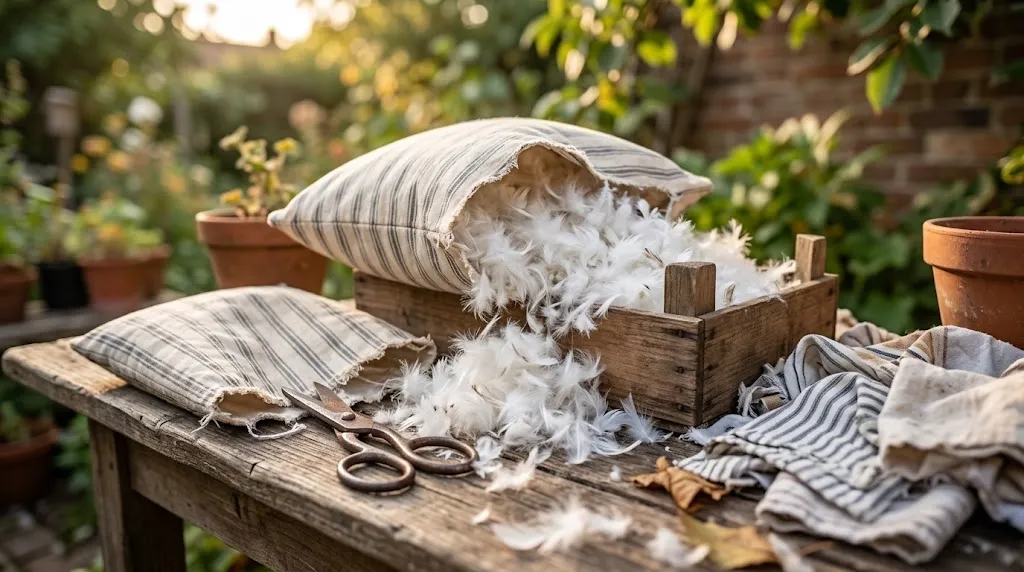
Whether a pillow can go in your compost bin depends entirely on its contents. Pillows stuffed with organic fibers such as feathers, down, wool, or cotton will break down naturally over time. However, the vast majority of modern pillows are filled with synthetic polyester fiberfill or memory foam, which will not decompose and will ruin your compost. Even natural-fill pillows often feature synthetic sewing thread, zippers, and outer shells that must be removed entirely before adding the filling to the pile.
Quick facts
| Carbon to nitrogen | Varies |
|---|---|
| Hot pile | 6-12 months |
| Cold pile | 1-2 years |
| Worm bin | No · Synthetic materials and large feathers are not suitable for worms. |
| Bokashi | Sometimes · Only natural fibers like wool or down; avoid synthetic materials. |
| City green bin | Usually not accepted; check local municipal guidelines. |
| Prep | Remove synthetic covers, zippers, and foam; shred natural fillings. |
| Mix with | Mix with nitrogen-rich green waste to aid decomposition. |
| Pest risk | Low · Keep buried deep in the pile to avoid attracting scavengers. |
How to compost pillows
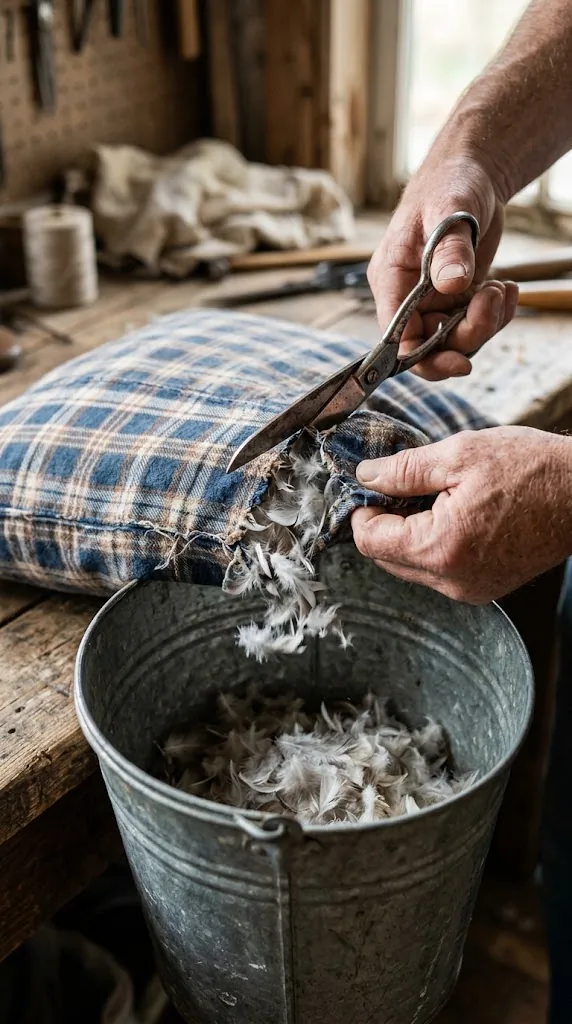
- Cut open the pillowcase or shell carefully using scissors.
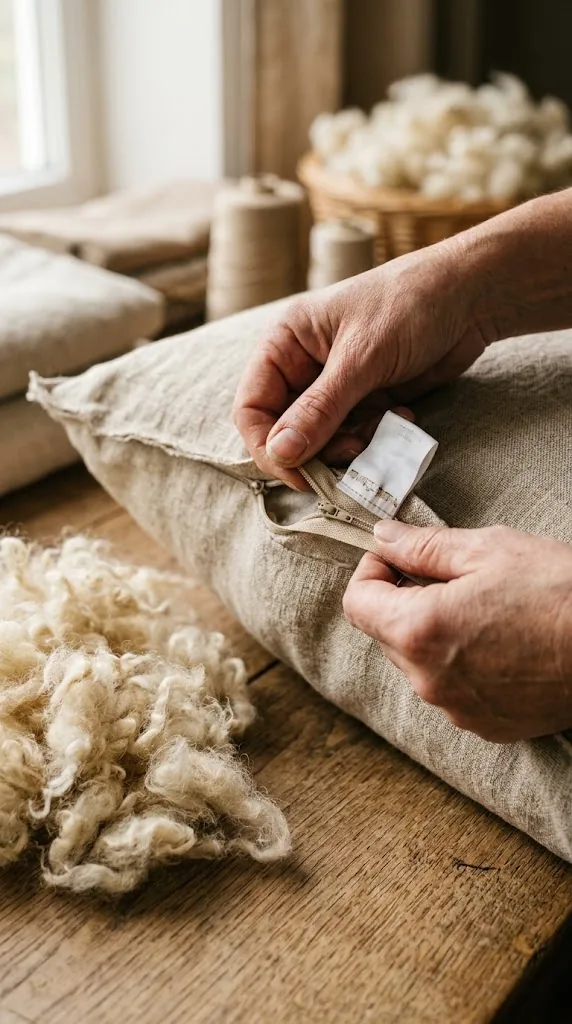
- Separate the filling, removing all synthetic fibers, foam pieces, zippers, and heavy stitching.
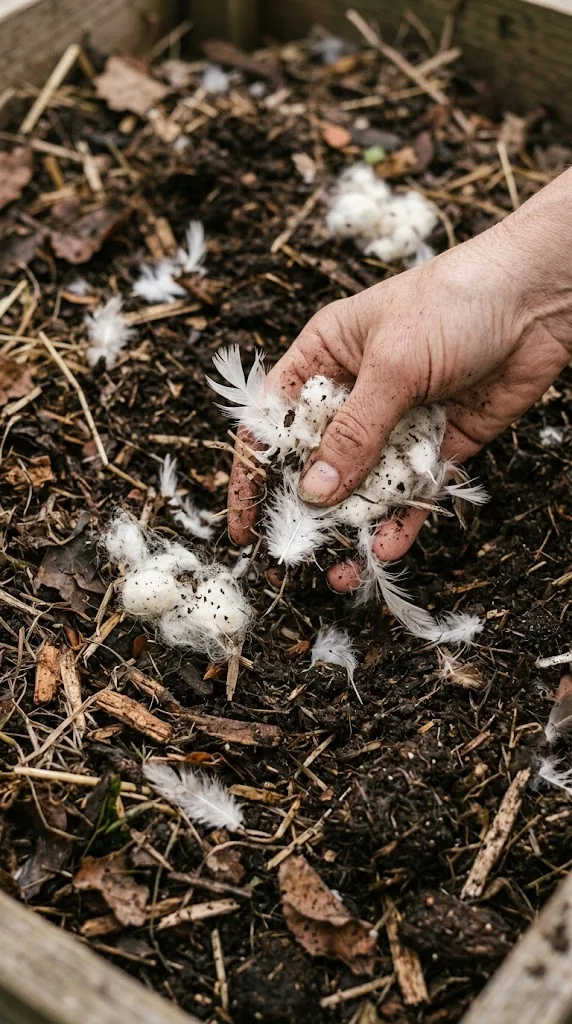
- Add natural fills like feathers, down, or cotton to your compost pile in small batches.
- Mix and turn the pile frequently to help dense natural fillings incorporate and break down.
How much pillows can you add to compost?
Add natural pillow fillings in small amounts, limiting them to no more than five percent of your total pile volume at any one time. Because feathers, down, and wool are extremely dense nitrogen-rich materials, they require pairing with a massive surplus of dry carbon-rich brown matter like shredded leaves or dry wood chips. If you notice a persistent foul odor, heavy clumping, or an influx of scavenging insects, you have added far too much protein at once.
Which types of pillows can you compost?
- Down and Feather Pillows: Sometimes. Natural plumage breaks down successfully over several months, but you must completely remove synthetic shell fabrics, plastic piping, and polyester sewing threads before adding the filling.
- Polyester Fiberfill Pillows: No. Synthetic polyester is plastic and will never decompose in a home compost pile, leaving permanent microplastic pollution in your finished soil.
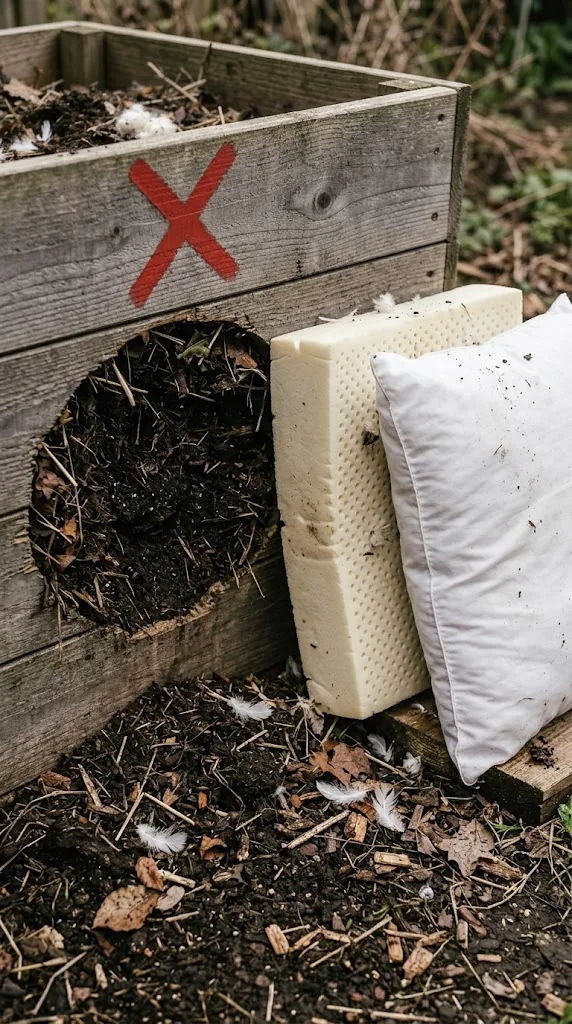
- Memory Foam Pillows: No. Polyurethane foam blocks do not break down biologically and can release harmful chemical residues as they slowly degrade into smaller synthetic fragments.
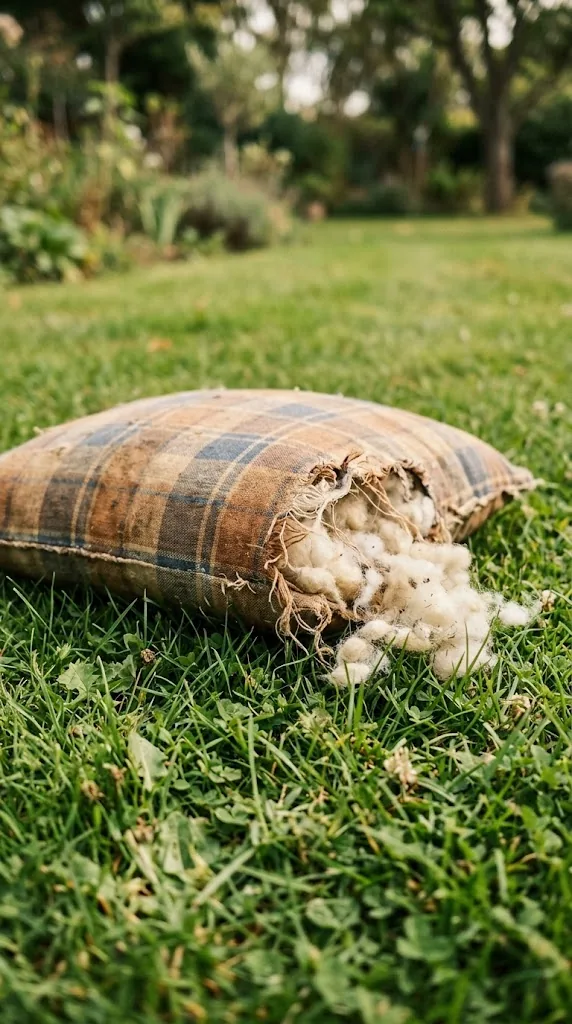
- Organic Wool Pillows: Sometimes. Pure untreated wool stuffing is entirely biodegradable and adds rich nitrogen to your bin, provided it lacks chemical flame retardants and synthetic backing.
- Kapok Fiber Pillows: Sometimes. Kapok is a natural plant-based silky fiber harvested from seed pods that decomposes well, though its light and fluffy nature requires careful mixing to prevent matting.
Watch out for
- Never compost synthetic fills like polyester, memory foam, or microgel.
- Remove all plastic zippers, synthetic tags, and polyester thread before composting.
- Feather and down fillings can take a very long time to decompose and may attract pests if not buried well.
What to do instead
- Donate clean, gently used pillows to local animal shelters.
- Repurpose old pillow stuffing for craft projects or pet beds.
- Check for textile recycling programs in your area.
Troubleshooting pillows in compost
- Natural feather and down fillings clump together into dense, impermeable mats that repel moisture and stop decomposing. Pull the clumps apart by hand into tiny tufts before adding them, and thoroughly blend them with coarse carbon materials to maintain adequate airflow.
- Decomposing protein-rich feathers and wool emit a strong, unpleasant sulfur or barnyard odor. Immediately bury the clumps deep in the center of the active pile and cover the surface with a thick layer of finished compost or dry carbon material to neutralize the smell.
- Mice or rats burrow into the compost bin specifically to investigate the feather or wool stuffing. Stop adding animal-based fillings entirely until the current batch breaks down, and secure your bin with fine hardware cloth to block rodent entry.
Myths about composting pillows
- Myth: All pillows marked as natural or organic can go directly into the compost bin without any preparation. Truth: Even organic pillows usually feature heavy-duty synthetic stitching, zippers, and cotton-poly blend covers that must be completely stripped away.
- Myth: Feathers decompose rapidly because they look light and delicate. Truth: Feathers are made of tough keratin protein which makes them remarkably resilient and slow to break down, often taking up to a full year to vanish.
Can pillows go in a green bin or recycling?
Municipal green waste bins and commercial curbside food-waste collection programs almost universally reject old pillows, regardless of whether the stuffing is natural or synthetic. Industrial composting facilities rely on rapid processing windows and cannot spend labor removing hidden synthetic threads, foam pieces, or zippers from textile waste. You should check your local municipal waste authority guidelines, as most areas require you to throw unwanted pillows into the standard household trash or drop them off at designated textile recycling centers.
Does composting pillows attract pests?
Composting natural pillow fillings such as feathers, down, and wool can sometimes attract pests if they are not managed properly. Because these materials are rich in proteins and take a long time to decompose, they may draw scavengers like rodents, raccoons, and flies to your compost pile. To prevent unwanted animals from investigating your bin, it is crucial to properly process the materials and bury them deep within the center of the active compost pile where they are less accessible.
- Bury natural feather and down fillings deep within the center of the compost pile.
- Cover the organic fills thoroughly with a thick layer of carbon-rich brown materials.
- Avoid adding synthetic fills or contaminated fabrics that can linger and draw scavengers.
- Turn the pile frequently to accelerate breakdown and discourage pests from settling.
Common questions
Can I compost memory foam pillows?
No, memory foam is a synthetic polyurethane material that will not biodegrade and must be thrown in the trash.
Are down and feather pillows good for compost?
Yes, feathers and down are natural protein sources that act as a slow-release nitrogen and carbon mix, though they take a long time to break down.
What should I do with the outer fabric of the pillow?
If the outer shell is made of 100 percent cotton or linen without synthetic treatments, you can cut it up and compost it, but discard synthetic blends.
Are pillows biodegradable?
Only the natural parts. Feather, down, wool, cotton and kapok fills biodegrade over months. Polyester fiberfill and memory foam are plastic and are not biodegradable.
Rules vary by town and by composting method. When in doubt, check with your local composting or waste program.