
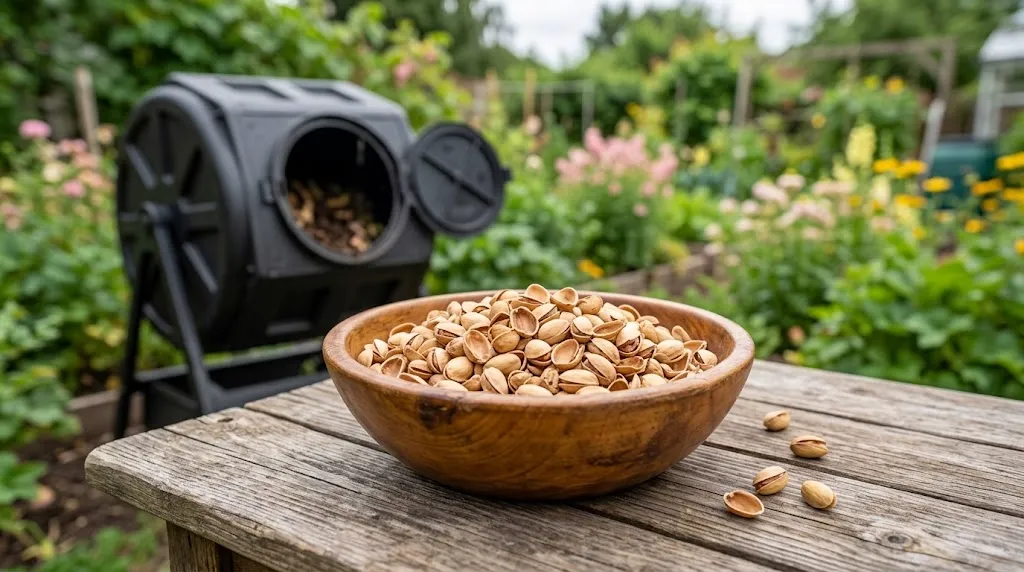
You can compost pistachio shells and nuts, but whole nuts and salted shells require careful handling to avoid pests and salt buildup.
Why
Pistachio shells are extremely hard and take a very long time to break down in a standard backyard compost pile, often acting more like brown carbon material once crushed. Pistachio nuts themselves are rich in oils and fats, which can attract rodents and unwanted pests if not buried properly in the center of the pile. Furthermore, heavily salted pistachio shells can introduce excess sodium into your compost, potentially harming sensitive plants. To compost them effectively, it is best to crush the shells finely and ensure the nuts are unsalted or thoroughly rinsed.
Quick facts
| Carbon to nitrogen | Varies |
|---|---|
| Hot pile | 6-12 months |
| Cold pile | 1 year or more |
| Worm bin | No · Shells are too hard and slow for worms to process. |
| Bokashi | Yes · Rinse off salt first to avoid harming beneficial microbes. |
| City green bin | Usually accepted; check local municipal guidelines. |
| Prep | Rinse off salt and crush shells to speed decomposition. |
| Mix with | Mix with nitrogen-rich greens to balance the carbon. |
| Pest risk | Medium · Salt attracts rodents; rinse thoroughly and bury deep. |
How to compost pistachios
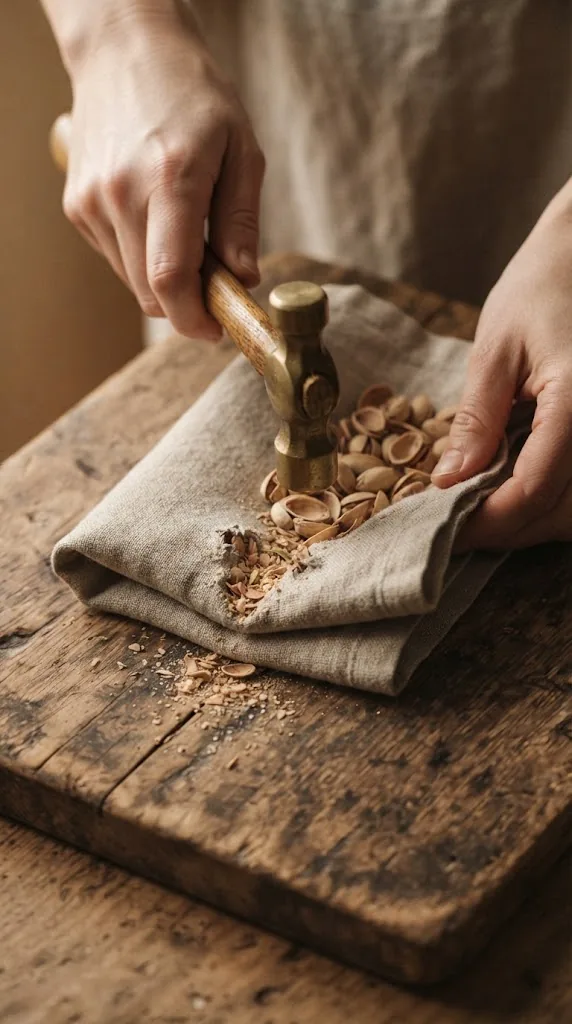
- Crush pistachio shells into smaller pieces using a hammer or heavy tool to speed up breakdown.
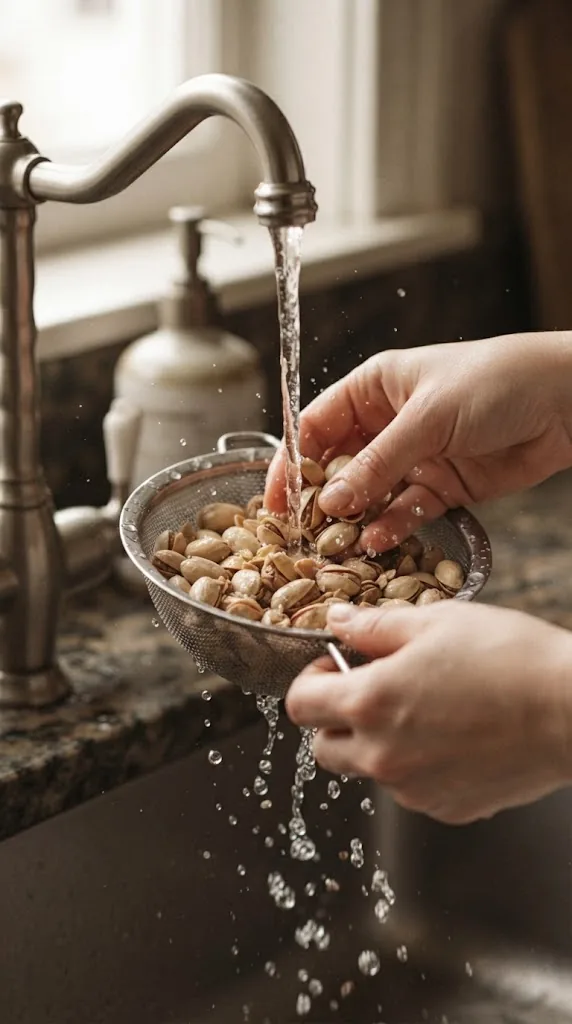
- Rinse salted shells in water to remove excess sodium before adding them to the bin.
- Bury the pistachio nuts deep inside the active center of your compost pile to deter pests.
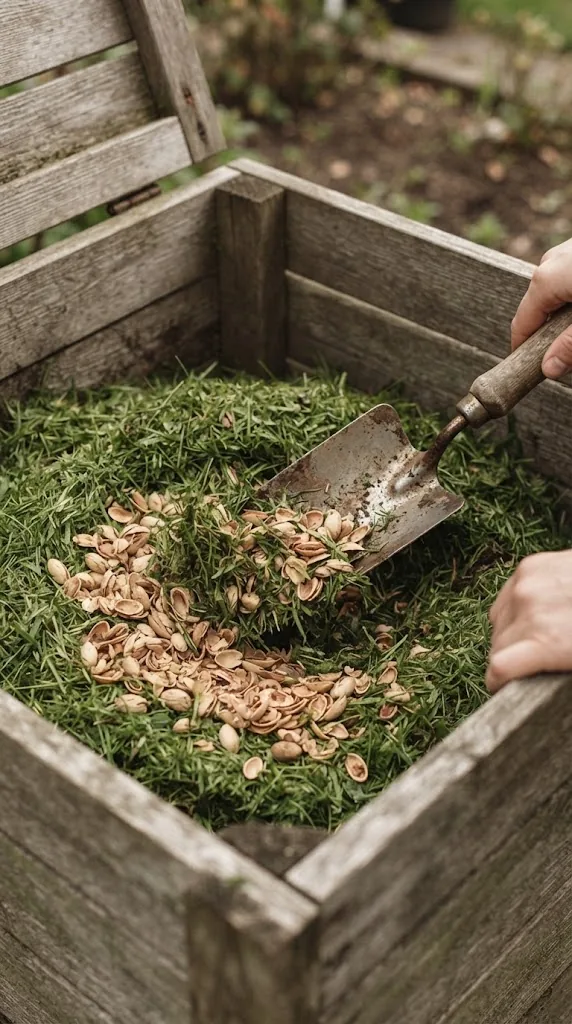
- Mix the shells thoroughly with plenty of green nitrogen-rich materials like grass clippings.
How much pistachios can you add to compost?
Pistachios should make up no more than two to three percent of your total compost volume at any given time. Add a handful or two of crushed shells per batch to prevent them from overwhelming the pile. Always balance them with a generous handful of green nitrogen-rich materials like fresh grass clippings or vegetable scraps. If you notice a sudden spike in unwanted pests or if the pile begins to smell stale and oily, you have added too many nuts at once.
Which types of pistachios can you compost?
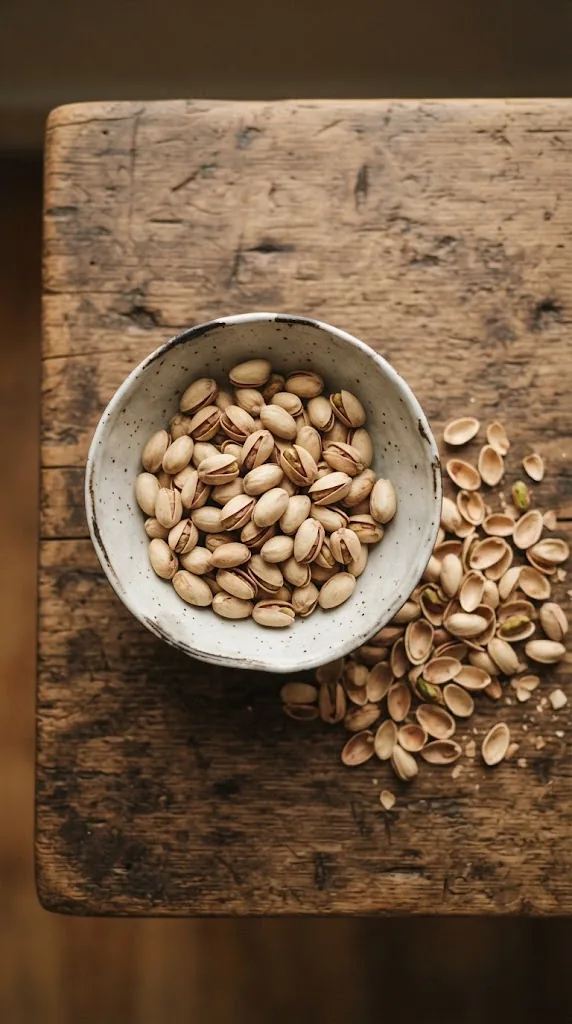
- Raw unsalted pistachios in shell: Sometimes. These are the safest variant to compost because they lack harmful sodium coatings, though the hard shells still require crushing to break down in a reasonable timeframe.
- Roasted and salted pistachios: Sometimes. The heavy sodium content can harm sensitive garden plants and disrupt beneficial soil microbes. You must rinse the shells thoroughly in water before adding them to your bin.
- Pistachio butter or paste: No. The concentrated oils and smooth texture will quickly coat your compost materials, blocking airflow and creating an irresistible beacon for local rodents.
- Flavored or chili-coated pistachios: No. Artificial flavorings, heavy oils, and spices can alter the pH balance of your compost and introduce chemical residues that harm beneficial earthworms.
Watch out for
- Salt on roasted pistachios can inhibit microbial activity and harm plants.
- Whole nuts attract mice, rats, and raccoons to your compost bin.
- Uncrushed shells can take years to fully decompose in the pile.
What to do instead
- Toss heavily salted pistachio shells into the regular trash.
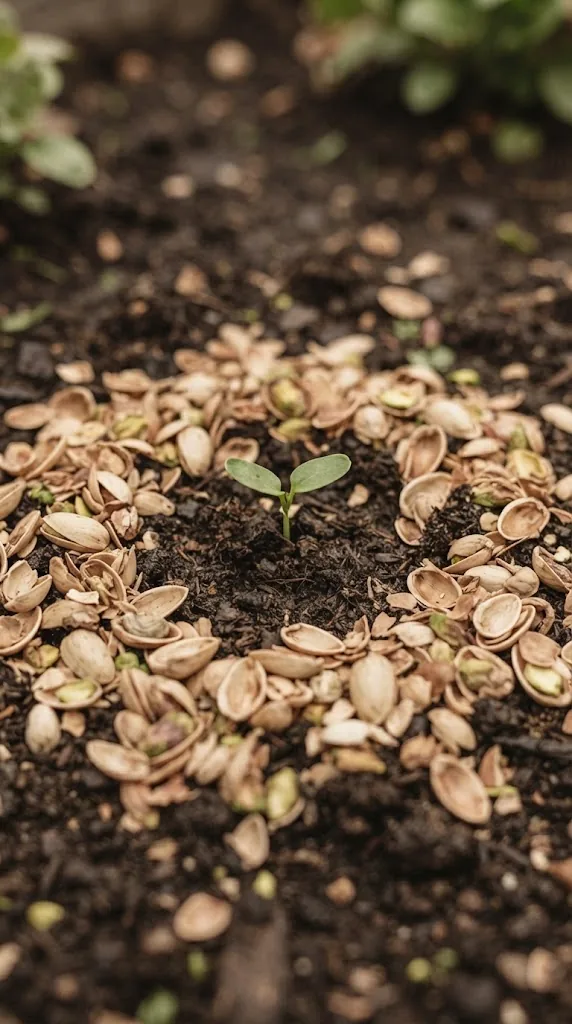
- Use crushed, unsalted shells as a natural mulch or soil aeration amendment.
Troubleshooting pistachios in compost
- Uncrushed shells are taking years to decompose and remain sharp in the finished compost. Sift your finished compost to separate out the hard shell fragments, then run them through a heavy-duty garden shredder or smash them thoroughly with a hammer before returning them to a fresh pile.
- Rodents are digging into the compost bin specifically around the areas where pistachio nuts were added. Stop adding whole nuts immediately, dig up any exposed remnants, and ensure future additions are buried at least twelve inches deep in the very center of an active, hot pile.
- The pistachio area of the pile is developing a greasy, anaerobic sludge that smells unpleasant. Turn the affected section immediately to restore oxygen flow, and mix in dry brown materials like shredded autumn leaves or cardboard to absorb the excess oils.
Myths about composting pistachios
- Myth: Because pistachio shells are organic wood-like material, they will naturally break down just like normal tree twigs in a compost pile. Truth: Pistachio shells are chemically treated by nature to resist moisture and microbial invasion to protect the seed, making them significantly tougher and slower to degrade than standard yard waste.
- Myth: Roasting and salting pistachios thoroughly destroys any stubborn plant pathogens or oils that might otherwise attract pests to the compost bin. Truth: Cooking actually concentrates the natural nut oils and fats within the kernel, making them even more appealing to scavenging rodents and raccoons than raw nuts.
Can pistachios go in a green bin or recycling?
Most municipal green waste or curbside food scrap collection programs accept pistachio shells and nuts, especially industrial facilities that utilize high-heat composting methods capable of breaking down tough woody materials quickly. Before tossing them into your municipal bin, remove any plastic packaging, twist ties, or non-compostable seasoning packets. Because local composting rules and processing capabilities vary significantly by municipality regarding woody shells and high-fat foods, always check your local waste management guidelines to confirm acceptable items.
Does composting pistachios attract pests?
Yes, composting pistachio nuts and shells can attract unwanted pests to your compost bin. The rich oils and fats found in the nuts are a major drawing card for rodents and scavengers such as mice, rats, and raccoons. If these fatty food scraps are left exposed on the surface of the pile, they easily release strong odors that quickly signal a meal to local wildlife and neighborhood critters.
- Bury pistachio nuts deep inside the active center of your compost pile.
- Crush the hard shells finely to prevent large pieces from remaining accessible.
- Cover all food waste thoroughly with plenty of brown carbon materials.
- Keep heavily salted or flavored nuts out of the bin entirely.
Common questions
Can I compost salted pistachio shells?
You can, but you should rinse off excess salt first. Too much sodium can harm the beneficial microbes in your compost and negatively affect plant growth later.
Why do pistachio shells take so long to compost?
Pistachio shells are extremely dense and lignified, meaning they are built to protect the seed from harsh environmental conditions. Crushing them significantly shortens this timeline.
Will pistachios attract pests to my bin?
Yes, the high fat and protein content of the nuts can attract rodents. Always bury pistachio food waste beneath layers of other compost materials.
Are pistachio shells biodegradable?
Yes. Pistachio shells are natural plant material, but they are hard and can take 1-2 years whole. Crushing them speeds breakdown to a few months.
Rules vary by town and by composting method. When in doubt, check with your local composting or waste program.