
Yes, you can compost potatoes, but they break down best when chopped up or cooked first to prevent them from sprouting in your pile.
Why
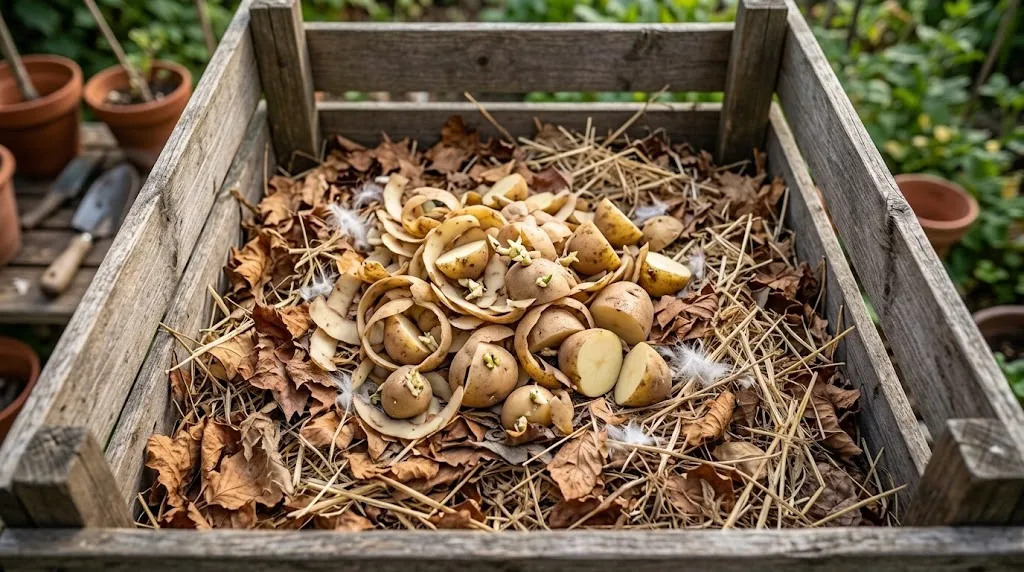
Potatoes are rich in moisture and nitrogen, making them a great addition to your compost pile as a green material. However, whole raw potatoes have a high water content and tough skin, which allows them to sit in a bin for months without degrading, or worse, sprout into unwanted potato plants. Chopping them into smaller pieces, mashing cooked leftovers, or adding them to an active hot compost pile will significantly speed up the decomposition process and prevent garden pests from being attracted to the sugary starches.
Quick facts
| Carbon to nitrogen | About 25:1 |
|---|---|
| Hot pile | 2-4 weeks |
| Cold pile | 3-6 months |
| Worm bin | Sometimes · Small amounts only, chopped into small pieces. |
| Bokashi | Yes · Excellent for bokashi fermentation. |
| City green bin | Usually accepted; check local rules. |
| Prep | Chop into small pieces to prevent sprouting. |
| Mix with | Mix with dry carbon-rich materials like leaves or straw. |
| Pest risk | Medium · Bury deep in the pile to avoid attracting rodents. |
Why a whole potato can grow back in your bin
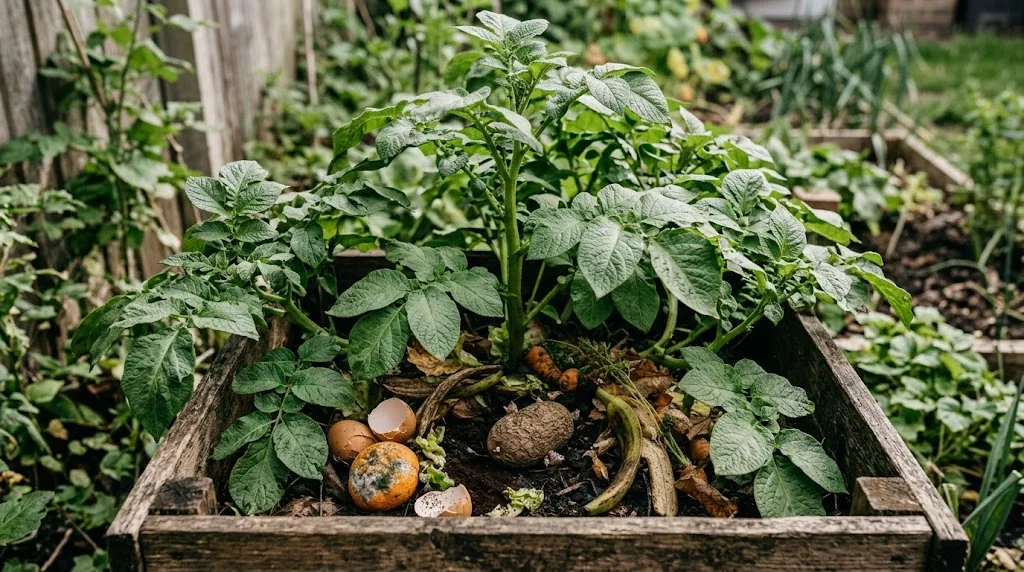
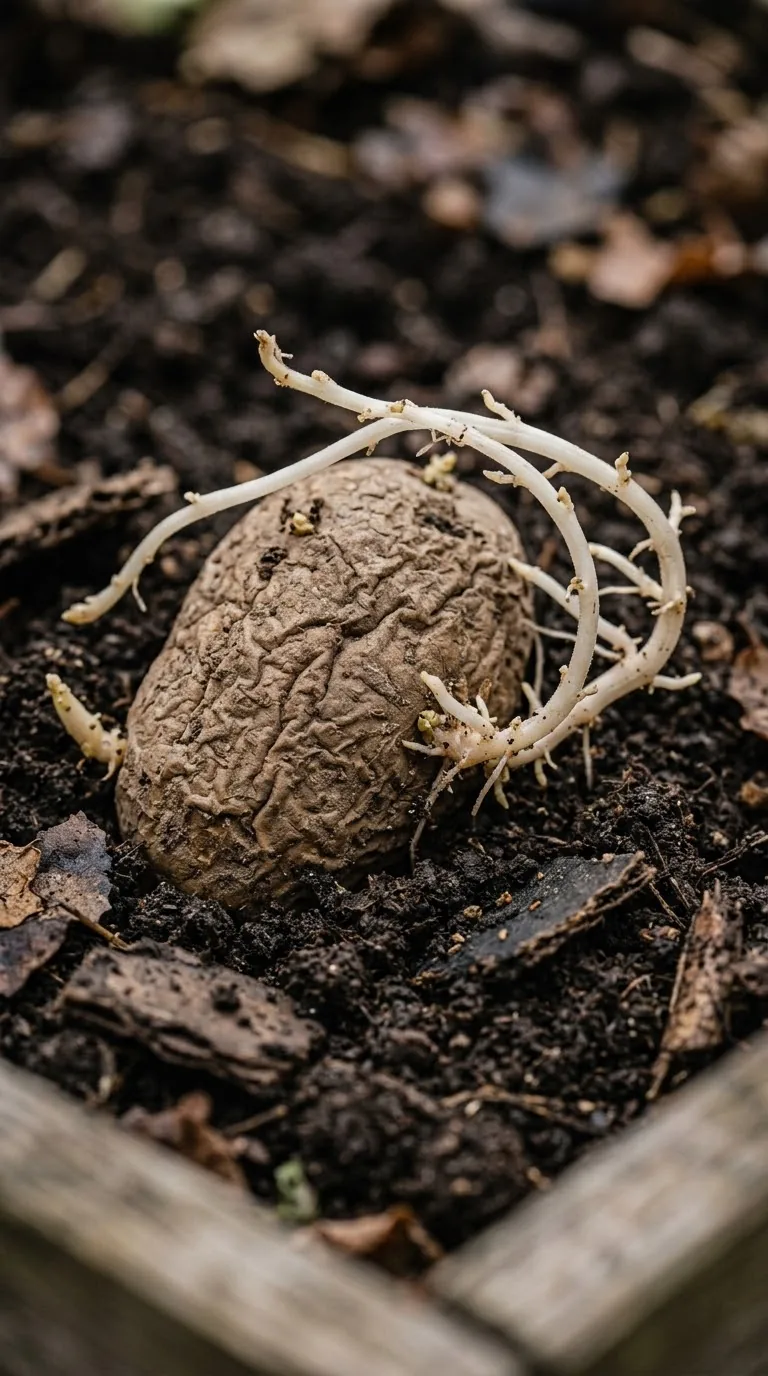
A whole raw potato isn’t really dead. It’s a living storage stem packed with starch, and each of its eyes is a bud waiting for the right moment to grow. A compost bin is dark, damp, full of nutrients and often warm, which is everything a sprouting potato wants. So instead of rotting, it can send up shoots and leafy stems right there in your pile, using up nutrients you were saving for the garden.
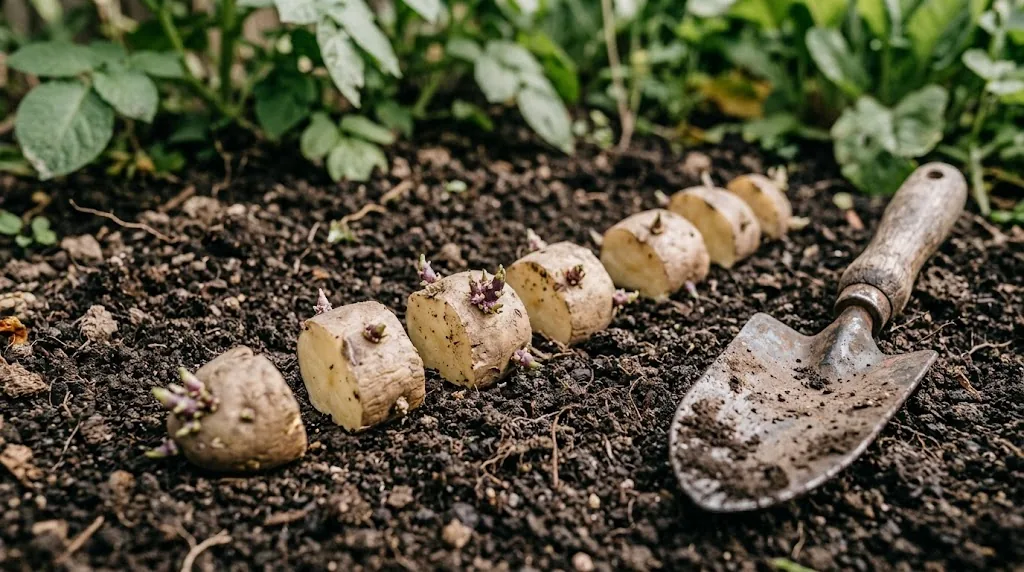
Cutting a potato in half isn’t enough, because farmers plant big chunks with an eye on them. Chop it finely so the pieces don’t have enough stored energy to make a plant, or cook it first, since mashed and baked leftovers can’t sprout. Stopping volunteer plants matters for another reason too: late blight, the disease behind the Irish potato famine, can survive the winter in living potatoes and then spread to potatoes and tomatoes.
How to compost potatoes
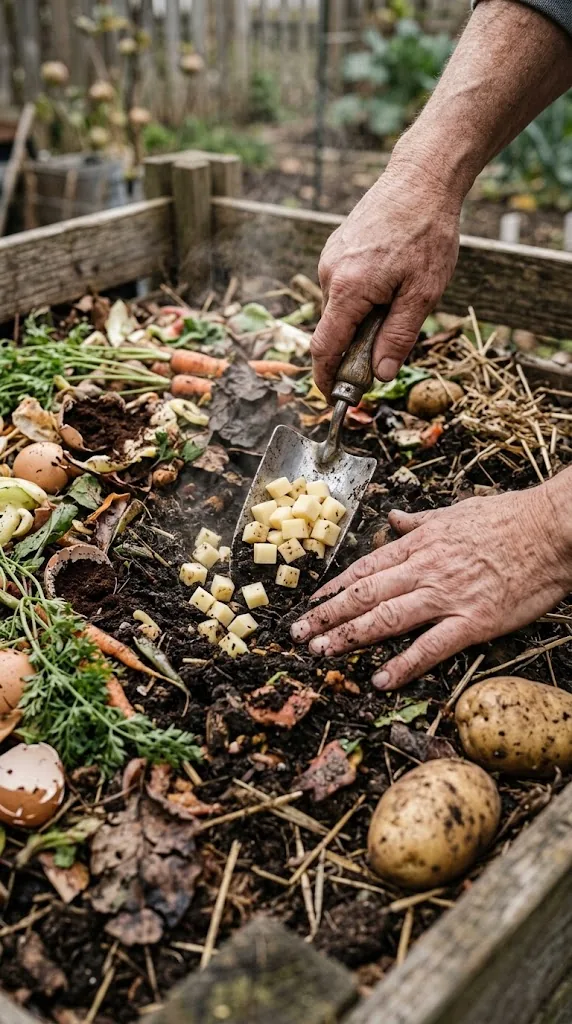
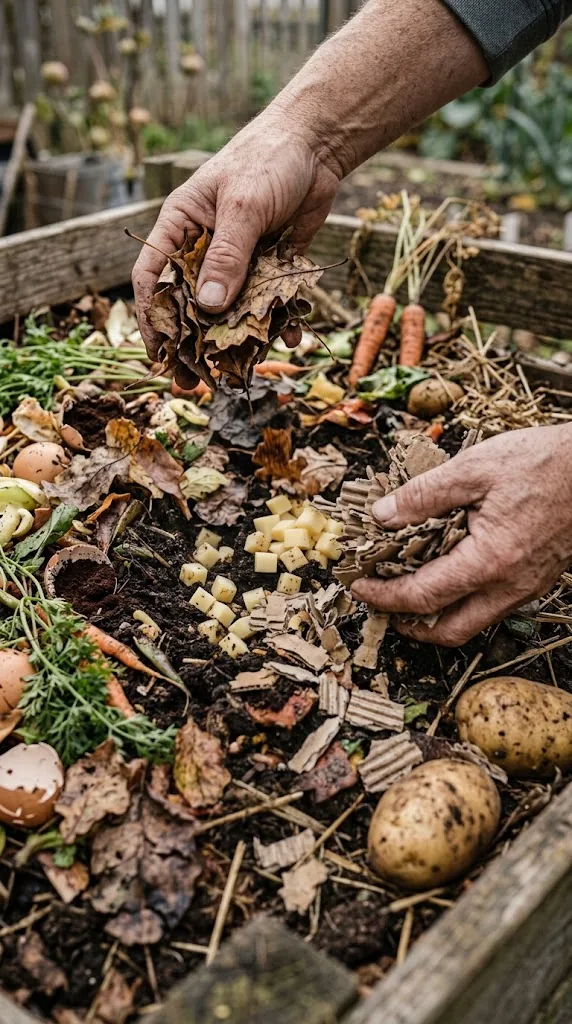
- Chop raw potatoes into small pieces or slices to speed up breakdown.
- Bury the potato pieces in the center of the pile to deter pests.
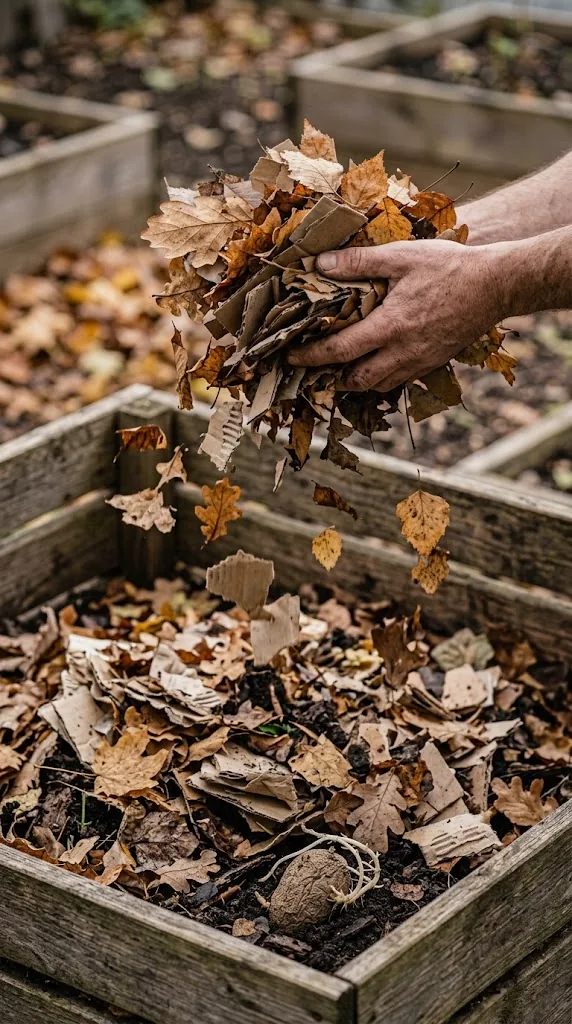
- Balance the high moisture with plenty of dry brown materials like dried leaves or shredded cardboard.
- Turn the compost regularly to ensure proper aeration and quick decomposition.
How much potatoes can you add to compost?
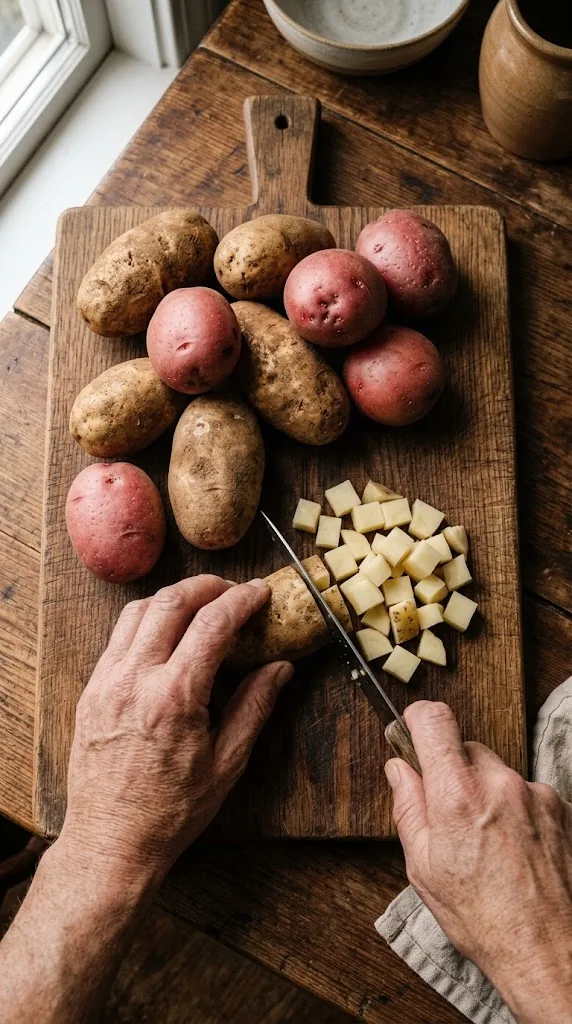
Potatoes should make up no more than ten to fifteen percent of your total compost volume at any one time to maintain a healthy balance. Pair every handful of chopped potato scraps with roughly two to three parts dry brown materials like shredded paper or autumn leaves to absorb excess moisture. If you notice your pile becoming soggy, developing a sour odor, or attracting an unusual number of fruit flies, you have likely added too much potato waste.
Which types of potatoes can you compost?
- Raw whole potatoes: Sometimes. Whole raw potatoes are technically compostable but will sit in your bin for months or sprout into new plants unless you chop them up first.
- Cooked mashed potatoes: Yes. Mashed or baked potatoes break down extremely fast due to the pre-softened structure, provided they are not overly greasy or heavily salted with butter.
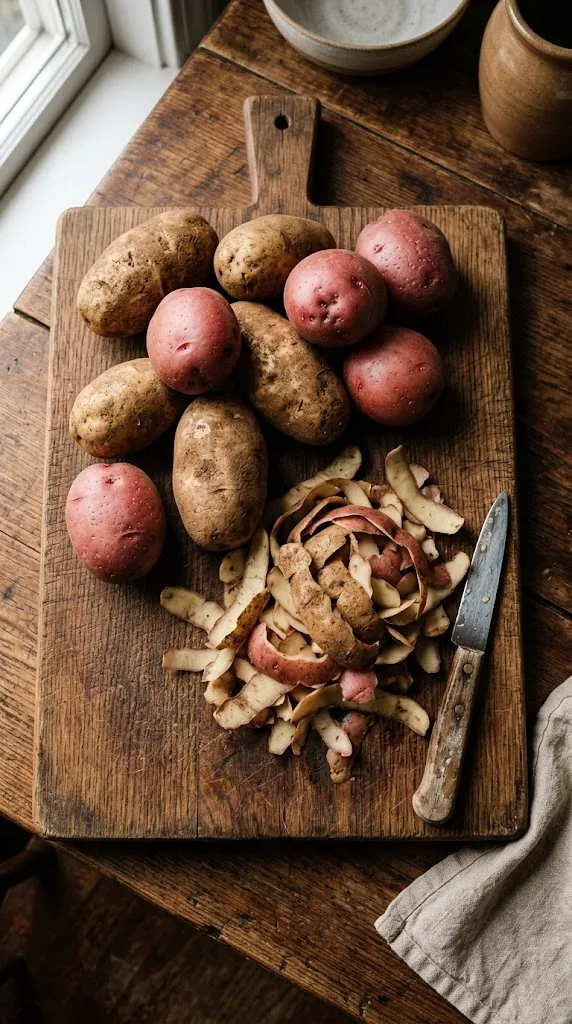
- Potato peels: Yes. Peels decompose rapidly because they are thin, but you should bury them to prevent them from drying into leathery strips that resist breakdown.
- Rotting or diseased potatoes: No. Spoiled tubers carrying fungal blights or severe bacterial rot should be kept out of backyard piles to avoid spreading plant diseases to your garden.
Watch out for
- Whole potatoes can easily sprout and grow inside your compost bin.
- Large quantities of rotting potatoes can attract rodents, flies, and other pests.
- Raw potato peelings may carry plant diseases if added to backyard compost.
Other ways to use potatoes
- Feed cooked potato scraps to backyard chickens.
- Repurpose sprouted potatoes by planting them in a garden bed or grow bag.
- Discard severely rotted or spoiled potatoes in your municipal green waste bin.
🦃 Cleaning up after Thanksgiving? See the full Thanksgiving leftovers composting list: what goes in, what needs a hot pile, and what to keep out.
Troubleshooting potatoes in compost
- Potatoes are sprouting inside the compost bin instead of breaking down. Chop the potatoes into very small pieces or microwave them briefly before adding them to kill the eyes and prevent unwanted growth.
- The potato pieces are turning into a slimy, foul-smelling sludge. Mix in a generous amount of dry brown materials like wood shavings or shredded cardboard, and turn the pile to restore proper airflow.
- Rodents are digging through the compost in search of the potato chunks. Bury the potato pieces deep in the center of the active pile and consider switching to a secure, latching compost tumbler.
- Potato pieces are taking months to show any signs of decomposition. Break the pieces down further with a shovel or garden fork and move them to the hottest core of your active compost pile.
Myths about composting potatoes
- Myth: Raw potato peels can instantly introduce devastating garden blights into your home compost. Truth: While diseased store-bought potatoes can carry pathogens, standard kitchen peels from healthy table potatoes rarely cause widespread garden infection in a properly managed hot pile.
- Myth: You can toss an entire sack of spoiled potatoes directly into the center of your bin all at once. Truth: Dumping large quantities of wet potatoes at one time will suffocate the pile, destroy the carbon-nitrogen balance, and create a massive pest magnet.
Can potatoes go in a green bin or recycling?
Most municipal green waste programs and curbside food scrap collection services gladly accept raw potatoes, cooked potato leftovers, and potato peels. When tossing potatoes into your municipal bin, make sure to remove any plastic produce bags, rubber bands, or foil wrappings first. Commercial industrial composting facilities operate at much higher temperatures than backyard bins, meaning they easily process whole potatoes and diseased tubers without attracting pests. Always check your local municipal waste guidelines to confirm specific rules.
Does composting potatoes attract pests?
Adding large quantities of rotting potatoes to your compost pile can definitely attract unwanted pests such as rodents, flies, and other scavengers. Potatoes are rich in moisture and sugary starches, which create a strong, appealing food source for these animals as the tubers break down. Whole raw potatoes or large chunks sitting near the surface of an open bin are especially prone to drawing pests.
- Chop raw potatoes into small pieces or slices to speed up breakdown.
- Bury the potato pieces deep in the center of the active pile.
- Balance the high moisture with plenty of dry brown materials.
- Use a closed compost bin or tumbler to keep scavenging animals out.
Common questions
Can I compost raw potato peels?
Yes, raw potato peels compost very well because they are thin and break down much faster than whole potatoes. Chop them up slightly and mix them thoroughly with dry carbon materials.
Will potatoes sprout in my compost pile?
Yes, whole potatoes or large pieces with eyes can easily take root and grow inside a compost pile. To prevent this, chop them finely, cook them first, or bury them deep within a hot compost pile.
Can I compost cooked potatoes with butter or oil?
You can compost small amounts of cooked potatoes, but heavy fats, oils, and butters should be avoided. Large amounts of grease will slow down decomposition and attract unwanted pests to your bin.
Are potatoes biodegradable?
Yes. Potatoes and potato peels biodegrade fast, in about 2-4 weeks when chopped. Whole potatoes may sprout before they rot, so cut them up first.
Rules vary by town and by composting method. When in doubt, check with your local composting or waste program.