
Yes, you can compost pumpkin seeds in both backyard and industrial compost bins.
Why
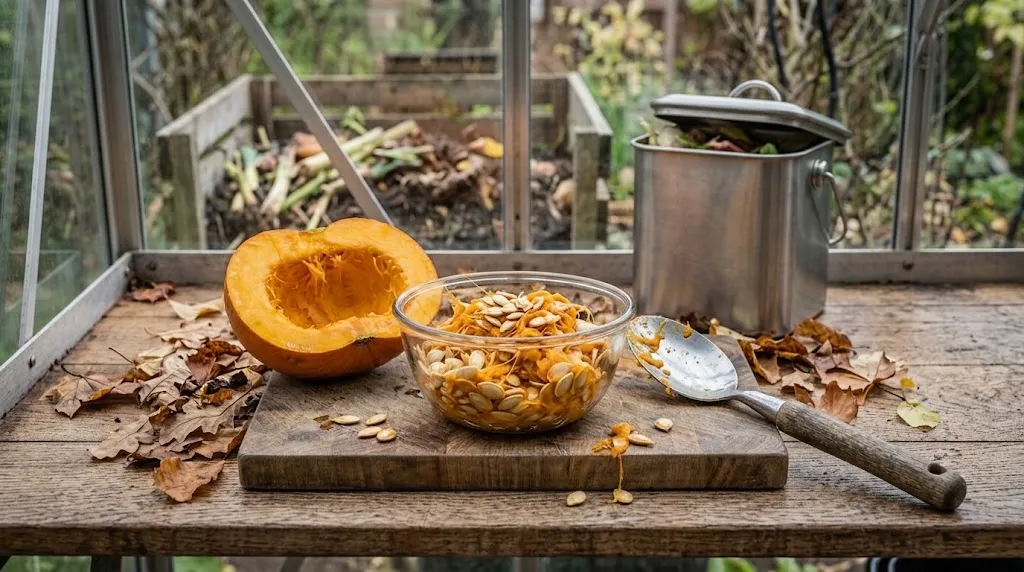
Pumpkin seeds are organic kitchen scraps that break down relatively quickly when added to a balanced compost pile. Because they are rich in nitrogen, they act as a green material that helps fuel microbial activity. To ensure they compost efficiently and do not attract unwanted pests, it is best to bury them deep within the pile or crush them slightly before tossing them in. Both raw and roasted seeds will decompose, though roasted or salted seeds may take slightly longer or attract scavengers if left on the surface.
Quick facts
| Carbon to nitrogen | Varies |
|---|---|
| Hot pile | 2-4 weeks |
| Cold pile | 1-3 months |
| Worm bin | Sometimes · Add in small amounts; may sprout if not crushed. |
| Bokashi | Yes · Ferments well along with other kitchen scraps. |
| City green bin | Usually accepted; check local rules |
| Prep | Crush or roast to prevent sprouting. |
| Mix with | Mix with carbon-rich brown materials like leaves or paper. |
| Pest risk | Medium · Bury deeply in the pile to avoid attracting rodents. |
How to compost pumpkin seeds
- Rinse off any excess oil or heavy salt if they were roasted.
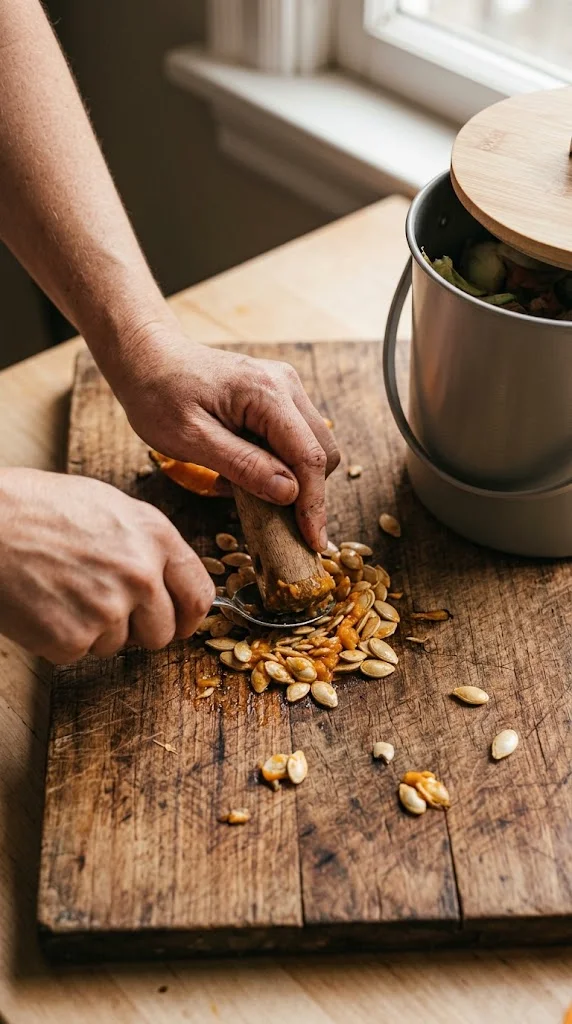
- Crush or chop the seeds slightly to speed up the breakdown process.
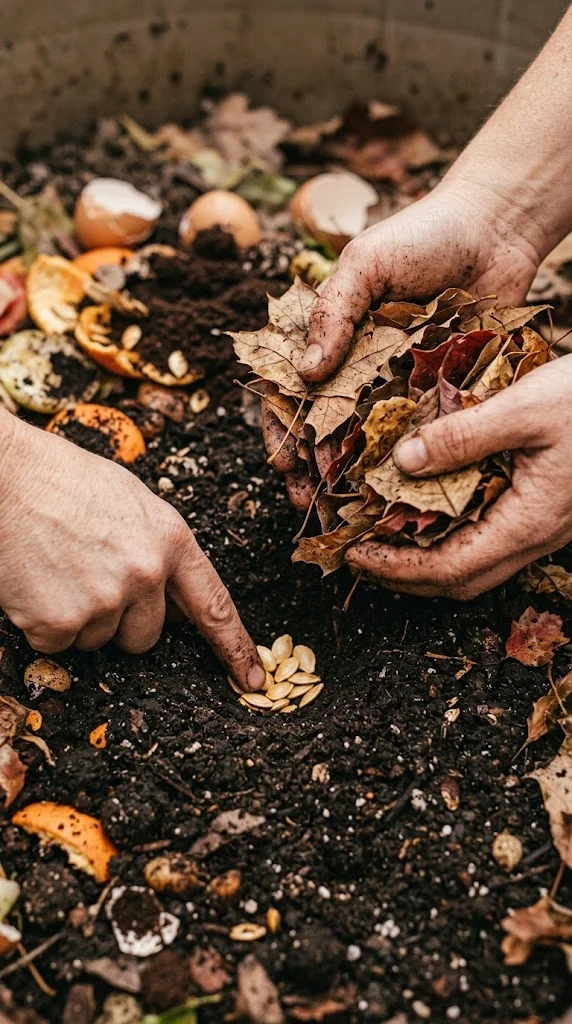
- Bury the seeds deep within the center of the active compost pile.
- Cover the seeds with carbon-rich brown materials like dry leaves or shredded paper.
How much pumpkin seeds can you add to compost?
You can safely add pumpkin seeds to your home compost pile in moderation, ideally mixing them in as a minor green component rather than dumping an entire carved pumpkin's worth at once. Limit additions to a cup or two per batch, always pairing them with a generous handful of carbon-rich brown materials like dry leaves or cardboard. If you notice a sour odor, slimy patches, or an influx of pests around your pile, you have likely added too many oily seeds at once.
Which types of pumpkin seeds can you compost?
- Raw pumpkin seeds: Yes. Fresh seeds decompose readily in a balanced pile, though they have a small potential to sprout if conditions are too cool.
- Roasted pumpkin seeds: Yes. Cooking alters the structure slightly, but they still break down well. Just ensure they are not heavily salted or oiled.
- Salted or seasoned seeds: Sometimes. A light coating is fine, but heavy salt content can disrupt microbial activity and strongly attract unwanted rodents.
- Carved pumpkin guts with seeds: Yes. The pulpy stringy mass provides great moisture and green material, helping the seeds decompose faster together.
Watch out for
- Salt and oil in large amounts can harm beneficial soil microbes.
- Whole seeds left on the surface may attract rodents and other backyard pests.
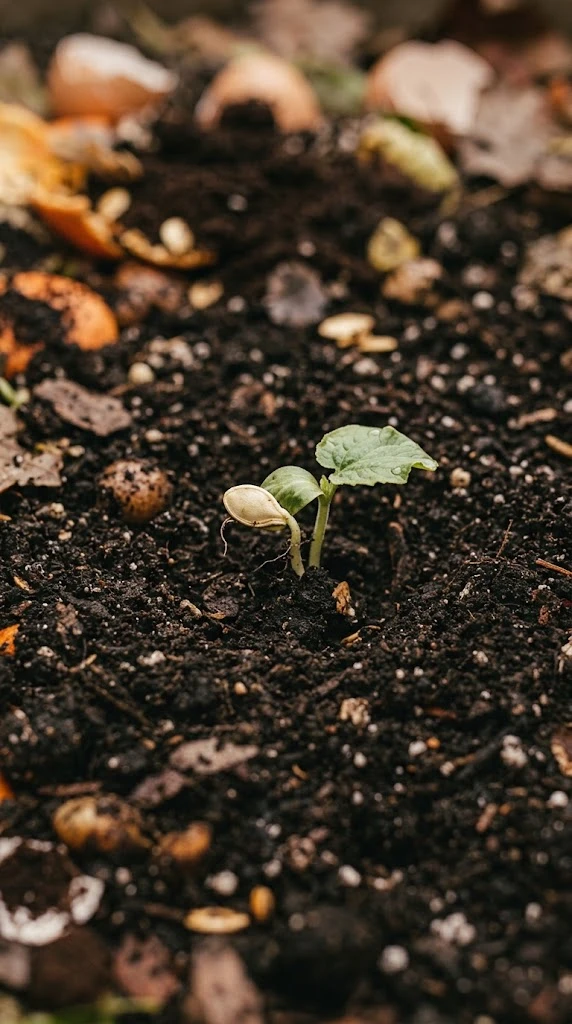
- Raw seeds might sprout if the compost pile is cool or inactive.
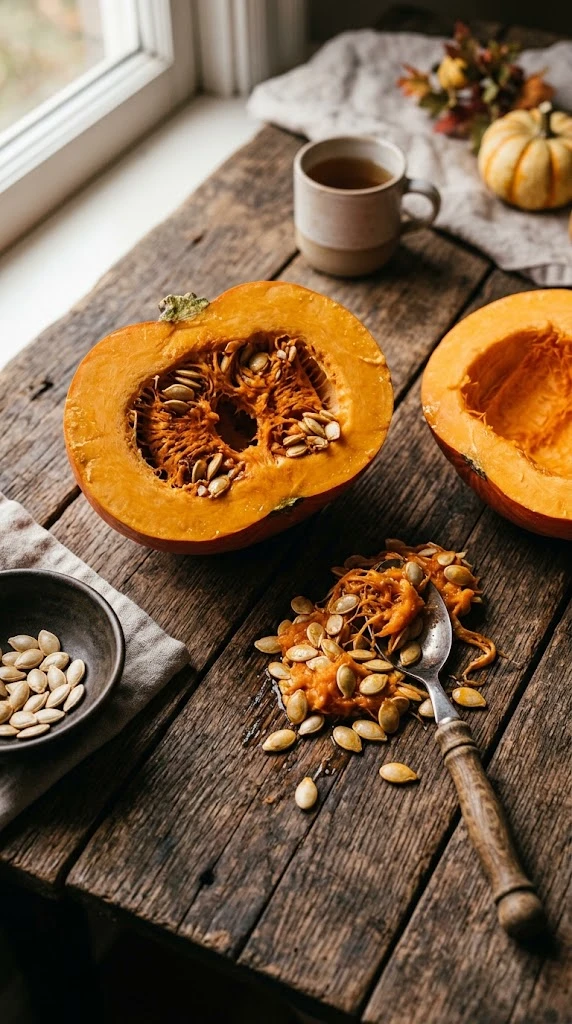
Other ways to use pumpkin seeds
- Roast and eat them as a healthy snack
- Save them to plant in your garden next spring
- Feed raw seeds to backyard chickens
Troubleshooting pumpkin seeds in compost
- Seeds are sprouting inside a cool compost pile. Crush the seeds before adding them or turn your pile more frequently to generate the internal heat needed to kill viability.
- Rodents are digging into the pile for the seeds. Bury the seeds deep within the center of the active pile and cover them immediately with a thick layer of brown materials.
- Seeds are taking too long to break down. Chop or crush the seeds into smaller pieces with a sharp knife or blender to give microbes easier access to the interior.
Myths about composting pumpkin seeds
- Myth: Pumpkin seeds are too hard and woody to ever decompose in a backyard pile. Truth: While they take a few weeks longer than soft fruit scraps, soil microbes and fungi naturally break down their organic shells over time.
- Myth: Salting pumpkin seeds preserves them so they will never rot in compost. Truth: While heavy salt can temporarily inhibit local microbes, rain and watering will eventually dilute the salt and allow decomposition to proceed.
Can pumpkin seeds go in a green bin or recycling?
Municipal green waste and curbside food-scrap collection programs generally accept pumpkin seeds without any issues, especially when they are mixed into yard trimmings or food-waste carts. You should remove any heavy plastic packaging, rubber bands, or non-compostable decorative elements before tossing them in. Because municipal composting rules vary by region regarding oils, dairy, and cooked foods, always check your local waste management guidelines to confirm acceptable items.
Does composting pumpkin seeds attract pests?
Whole pumpkin seeds left on the surface of your compost pile can indeed attract unwanted backyard pests such as rodents, mice, and scavenging animals. Because the seeds are rich in oils and nutrients, they provide an appealing food source for these critters. However, you can easily prevent pest issues by properly managing how you add the seeds to your pile, ensuring they are never left exposed on top where animals can easily smell and reach them.
- Crush or chop the seeds slightly before adding them to speed up decomposition.
- Bury the pumpkin seeds deep within the center of the active compost pile.
- Cover the buried seeds thoroughly with carbon-rich brown materials like dry leaves.
- Use an enclosed or tumbling compost bin if you have persistent rodent problems.
Common questions
Will pumpkin seeds sprout in my compost pile?
Raw seeds can sometimes sprout if your compost pile is cool, moist, and inactive. Maintaining a hot compost pile or crushing the seeds beforehand will prevent them from germinating.
Can I compost roasted or salted pumpkin seeds?
Yes, but you should add them in moderation. Excess salt and heavy oils can disrupt the moisture balance and harm beneficial microorganisms in a small backyard bin.
Do pumpkin seeds attract pests to the compost?
They can attract mice, rats, or squirrels if left exposed on top of the pile. Always bury food scraps deep inside the compost and cover them with brown materials to deter pests.
Are pumpkin seeds biodegradable?
Yes. Pumpkin seeds biodegrade in a few weeks in an active pile. Seeds from a cool pile may sprout instead, so bury them in the hot center.
Rules vary by town and by composting method. When in doubt, check with your local composting or waste program.