
You can compost vegetable soup in small amounts, provided it does not contain meat, heavy oils, or dairy.
Why
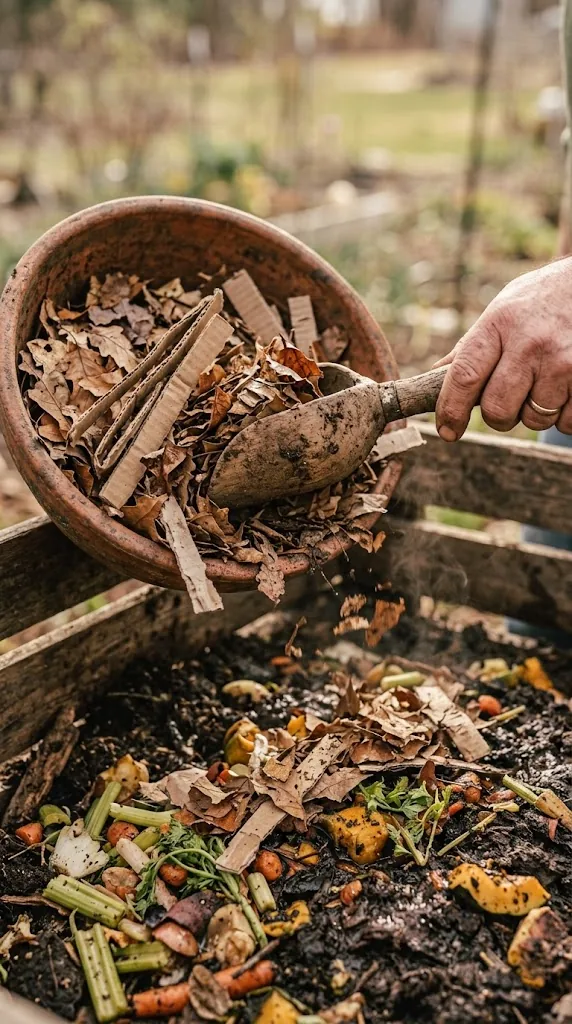
Vegetable soup is mostly water and organic plant matter, which can add valuable moisture and nitrogen to your compost pile. However, if the soup contains added fats, oils, butter, or meat broths, it can attract pests like rodents and create foul odors during decomposition. Plain, broth-based vegetable soups without heavy seasoning can be added to a hot, active compost pile if they are thoroughly mixed with plenty of dry brown materials like leaves or cardboard to balance the excess moisture.
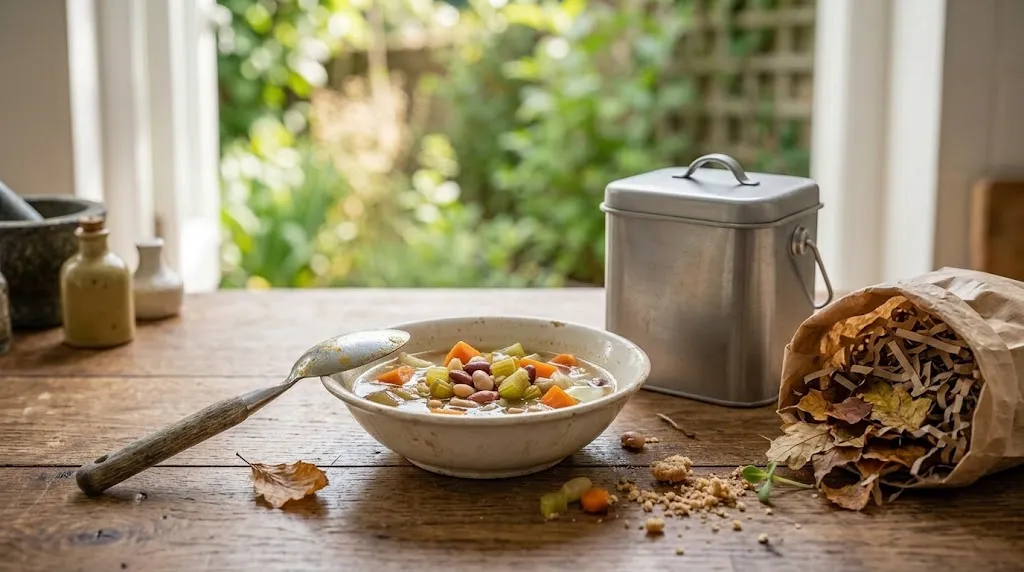
Quick facts
| Carbon to nitrogen | About 20:1 |
|---|---|
| Hot pile | 1-2 weeks |
| Cold pile | 3-6 months |
| Worm bin | Sometimes · Avoid oily or creamy soups; small amounts only. |
| Bokashi | Yes · Excellent for vegetable soup; fermentation handles it well. |
| City green bin | Usually accepted; check local rules. |
| Prep | Strain liquid and chop solids into small pieces. |
| Mix with | Mix with plenty of dry carbon-rich materials. |
| Pest risk | Medium · Cover with dry leaves to prevent smells and flies. |
How to compost vegetable soup
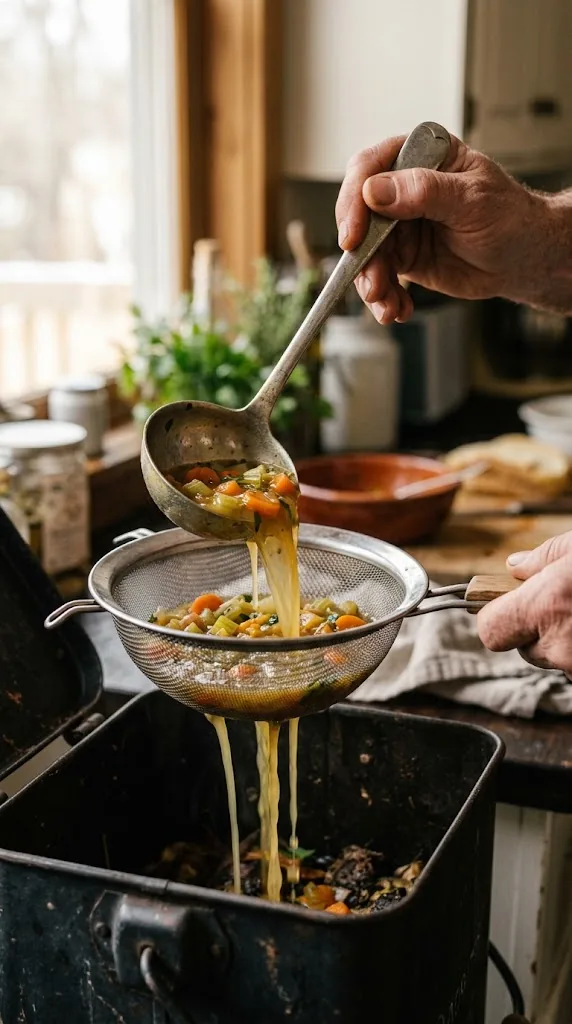
- Drain off excess liquid if the soup is overly watery to prevent the compost pile from becoming soggy.
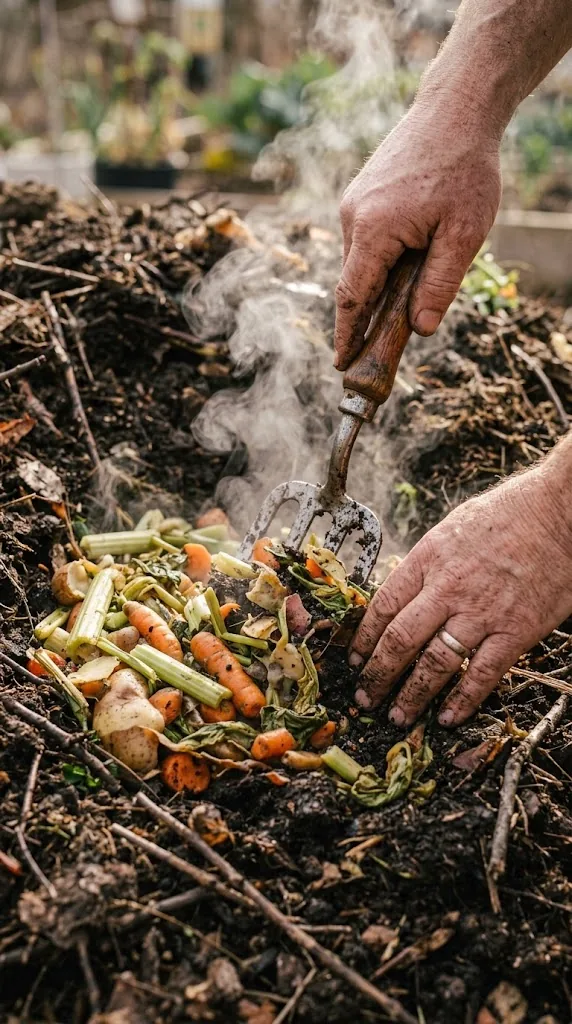
- Mix the soup thoroughly into the center of an active, hot compost pile rather than leaving it on the surface.
- Cover the spot with a generous layer of carbon-rich brown materials like dry leaves or wood chips.
- Turn the pile regularly to ensure proper aeration and quick breakdown.
How much vegetable soup can you add to compost?
You can safely add about one to two cups of plain vegetable soup to an active home compost pile per week, depending on the overall volume of your bin. Always balance this liquid addition with at least four parts dry browns, such as shredded cardboard or dry leaves, to absorb the excess moisture. If the pile starts emitting a sour odor, feels soggy to the touch, or begins sagging heavily, you have added too much soup and need to immediately mix in more carbon materials.
Which types of vegetable soup can you compost?
- Clear vegetable broth soup: Yes. Plain broth with cooked vegetables breaks down rapidly as long as excess liquid is drained.
- Cream-based vegetable soup: No. Dairy fats coat organic matter, restrict airflow, and strongly attract scavenging pests.
- Oily or buttery minestrone: No. Added cooking oils and butter slow down decomposition and create foul odors in standard bins.
- Salty canned vegetable soup: Sometimes. High sodium levels can harm beneficial soil microbes, so use in very small, well-diluted quantities.
Watch out for
- Avoid adding soups containing heavy oils, butter, or cream, as fats slow down decomposition and attract pests.
- Keep meat-based broths out of standard backyard bins to prevent unwanted wildlife.
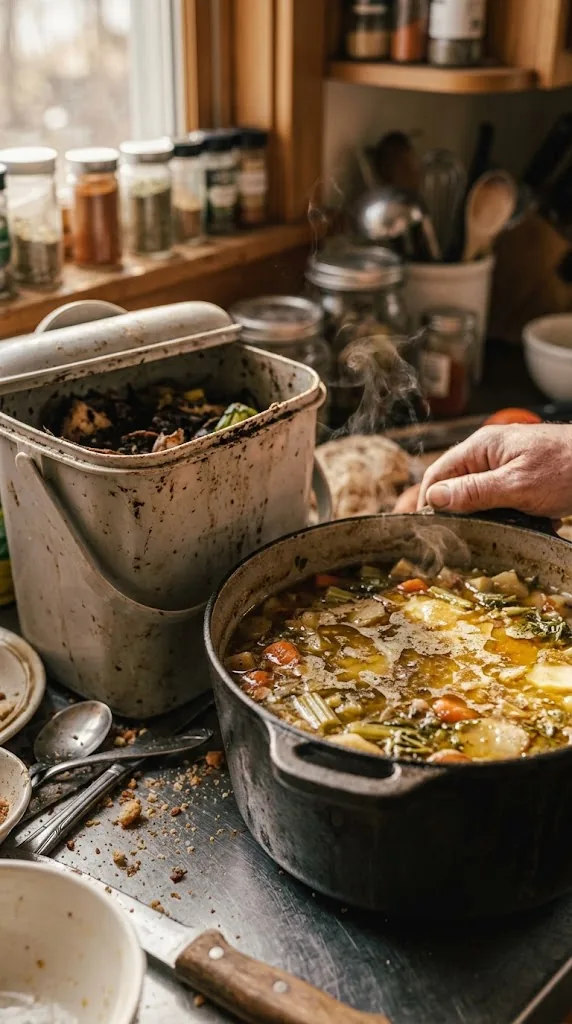
- Do not add too much liquid at once, as waterlogging will suffocate beneficial microbes and cause anaerobic odors.
What to do instead
- Feed small amounts of the plain vegetables to backyard chickens if the soup is not salty.
- Strain and use the vegetable solids as a base for stocks.
- Discard it in the regular trash if it contains too much oil or dairy.
🦃 Cleaning up after Thanksgiving? See the full Thanksgiving leftovers composting list: what goes in, what needs a hot pile, and what to keep out.
Troubleshooting vegetable soup in compost
- The compost pile develops a sour smell around the soup spot. This indicates anaerobic conditions from too much moisture. Turn the pile immediately and mix in dry wood shavings or leaves.
- Raccoons or rodents are digging into the compost bin. You likely added soup containing oils or left it near the surface. Bury future additions deep in the center and secure your bin lid.
- The surrounding material becomes a soggy, muddy sludge. Stop adding liquid foods and fork in large handfuls of dry brown matter to restore proper aeration and structure.
Myths about composting vegetable soup
- Myth: All soups are entirely plant-based and safe for any composting method. Truth: Even vegetable soups often contain hidden butter, cream, heavy oils, or meat stocks that disrupt backyard composting.
- Myth: Pouring liquid soup directly over the top of the pile helps moisten dry leaves. Truth: Surface pouring creates a pungent crust that attracts pests and suffocates the aerobic microbes needed for breakdown.
Can vegetable soup go in a green bin or recycling?
Municipal green bins and curbside food-waste collection programs generally accept vegetable soups, provided they do not contain excessive packaging or non-compostable materials. However, because liquid soup can spill easily and create messes in collection trucks, many programs prefer that you strain out the solid vegetables or thicken the mixture with dry scraps first. Always consult your local waste management guidelines to confirm whether liquid foods are permitted in your specific green waste stream.
Does composting vegetable soup attract pests?
Adding vegetable soup to your compost pile can attract pests such as rodents, raccoons, and flies if it contains certain ingredients or is improperly managed. While plain vegetable soup is mostly plant matter, any added fats, oils, butter, or meat broths will draw wildlife with strong odors and high-calorie nutrition. Leaving the soup on the surface of the pile rather than mixing it in deeply creates an immediate beacon for scavenging animals looking for an easy meal.
- Avoid composting soups that contain heavy oils, butter, cream, or meat broths.
- Drain off excess liquid before adding the vegetable soup to prevent a soggy pile.
- Mix the soup thoroughly into the center of an active, hot compost pile.
- Cover the area completely with a thick layer of carbon-rich brown materials like dry leaves or wood chips.
Common questions
Can I compost vegetable soup with noodles or rice?
Yes, cooked grains and pasta can go into the compost pile in small quantities, but bury them deep to avoid attracting pests.
Will soup make my compost too wet?
Soup contains a high amount of liquid, which can easily waterlog a small bin. Always balance it with plenty of dry brown materials.
Can I put canned vegetable soup in the compost?
You can compost the food inside the can, but make sure to thoroughly rinse and recycle the metal container itself.
Is vegetable soup biodegradable?
Yes. The vegetables and broth biodegrade in 1-3 weeks. The issue is not breakdown but the oil, cream and liquid that can sour a pile.
Rules vary by town and by composting method. When in doubt, check with your local composting or waste program.