
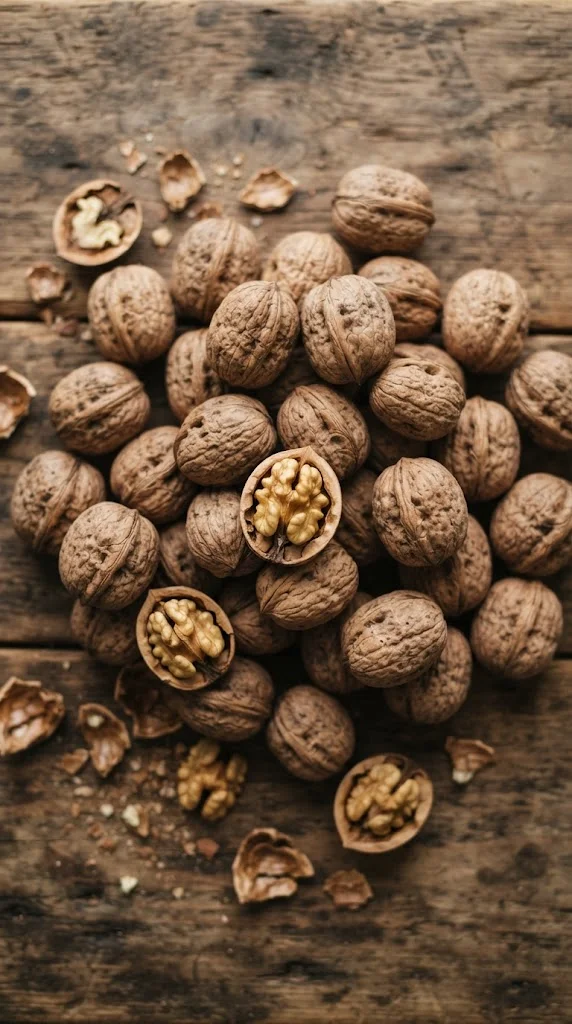
Yes, walnuts and their shells can be composted, but whole walnuts in the shell take an extremely long time to break down unless crushed first.
Why
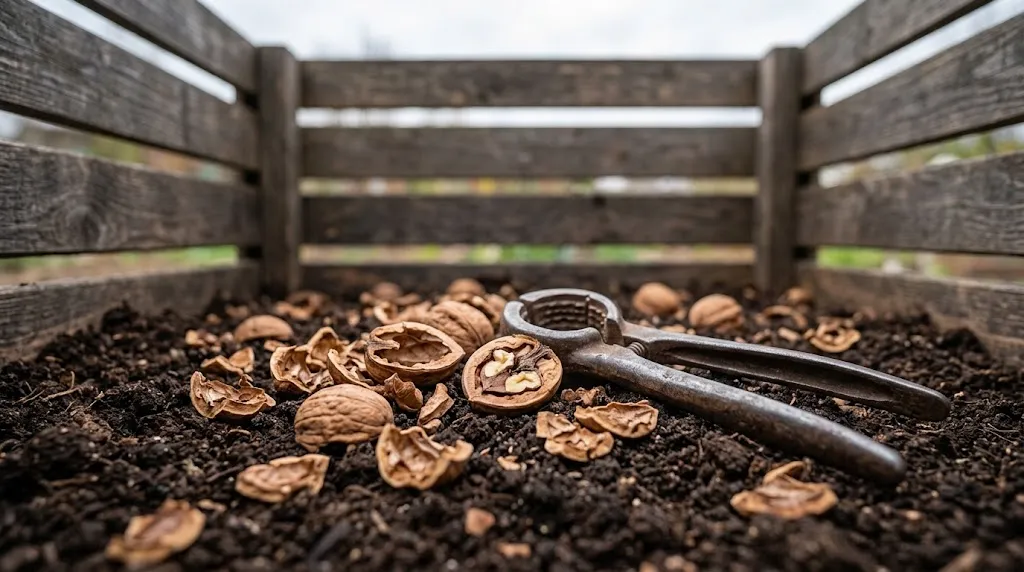
Walnut shells are extremely hard and lignified, making them act more like wood chips than typical food waste. If added whole, they can take years to decompose. Furthermore, fresh walnut green husks and certain parts of the tree contain juglone, a natural compound that can inhibit plant growth, though it generally breaks down during proper composting. Crushing the shells and ensuring your pile stays active and moist will speed up the breakdown process significantly, turning them into a rich carbon source.
Quick facts
| Carbon to nitrogen | About 30:1 |
|---|---|
| Hot pile | 3-6 months |
| Cold pile | 6-12 months |
| Worm bin | Sometimes · Small amounts of crushed shells only; avoid green husks |
| Bokashi | Yes · Ferment safely before burying |
| City green bin | Usually accepted; check local rules |
| Prep | Crush shells and avoid green husks containing juglone |
| Mix with | Mix with high-nitrogen greens to balance |
| Pest risk | Low · Hard shells do not typically attract pests |
How to compost walnuts
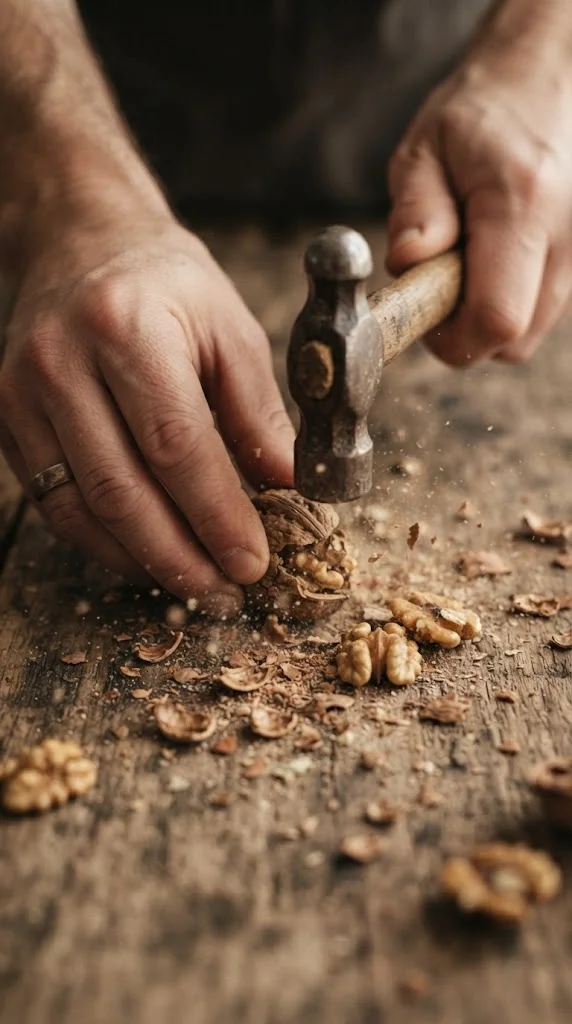
- Crush or smash the walnut shells with a hammer or run them over before adding them to the pile.
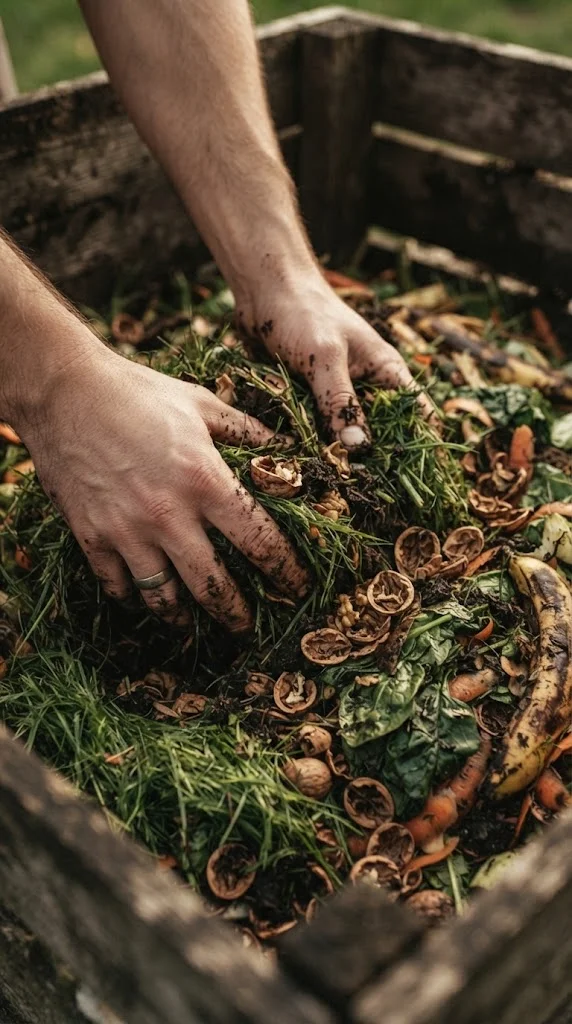
- Mix the crushed shells thoroughly into the carbon-rich brown layer of your compost.
- Balance the dense material with plenty of nitrogen-rich green waste like grass clippings or vegetable scraps.
- Turn the compost pile regularly to aerate it and speed up the breakdown of the hard woody material.
How much walnuts can you add to compost?
Walnuts and their shells should make up no more than five to ten percent of your total compost volume due to their woody nature. Pair them with a generous amount of nitrogen-rich greens like grass clippings or kitchen scraps to maintain a balanced carbon-to-nitrogen ratio. If you notice the pile becoming densely matted or refusing to heat up, you have added too much bulk carbon and need to mix in finer green materials.
Which types of walnuts can you compost?
- Raw shelled walnuts: Yes. These break down relatively quickly as regular brown material, provided they are not heavily salted.
- Whole walnuts in shell: Sometimes. They require aggressive crushing beforehand, otherwise they will remain intact in your garden for years.
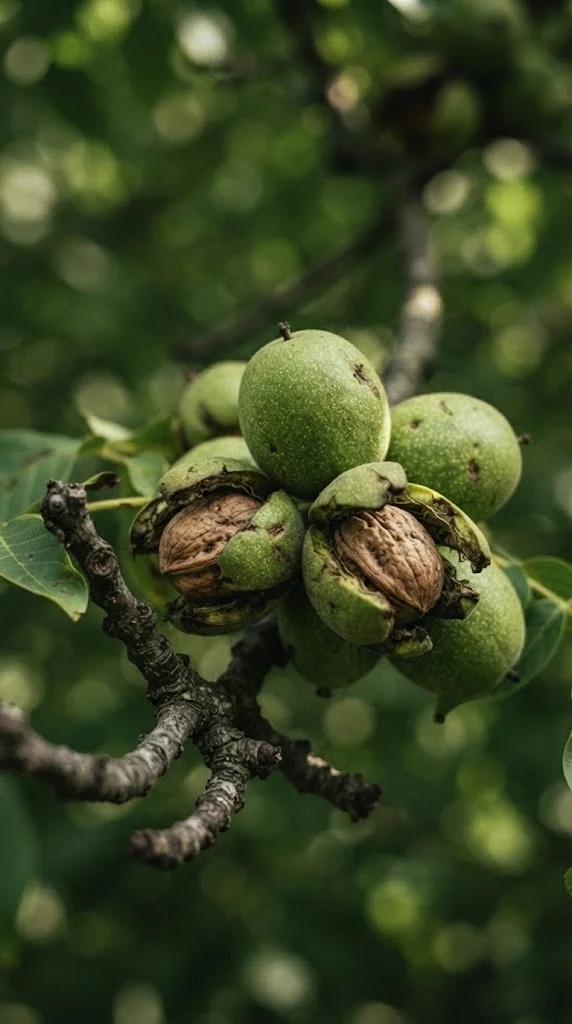
- Green walnut husks: Sometimes. Fresh husks contain high concentrations of juglone and should be aged separately or used sparingly in hot piles.
- Roasted and salted walnuts: No. High sodium levels and added oils can disrupt microbial activity and attract unwanted scavengers.
Watch out for
- Whole shells can easily take three to five years to decompose if left intact.
- Fresh green walnut husks contain high levels of juglone, which can harm sensitive plants if the compost is not fully finished.
- Avoid adding salted or flavored walnut shells, as added oils and heavy sodium can disrupt your compost balance.
What to do instead
- Use crushed walnut shells as mulch for pathways or around acid-loving trees.
- Add them to the bottom of large potted plants for drainage.
- Dispose of large quantities in your regular municipal yard waste bin.
Troubleshooting walnuts in compost
- Walnut shells are not breaking down at all after several months. Sift them out of the pile, crush them into much smaller fragments with a hammer, and reintroduce them.
- The compost pile has a distinct chemical smell and plants are struggling. Juglone from fresh green husks may be present; let the compost cure fully for several extra months before use.
- The pile is developing dense, impenetrable pockets of woody debris. Break up the clumps with a garden fork and thoroughly intermix nitrogen-rich green waste to restore aeration.
Myths about composting walnuts
- Myth: Walnut shells will poison all plants in your garden forever. Truth: Juglone breaks down naturally through oxidation and microbial action during the composting process, especially in a warm, active pile.
- Myth: You can toss whole walnuts straight into the center of the bin. Truth: Whole shells are exceptionally durable and will act like pebbles unless physically crushed prior to adding them.
Can walnuts go in a green bin or recycling?
Municipal green waste and yard debris bins generally accept whole or crushed walnuts, including shells and husks, because industrial composting facilities easily process woody carbon. Be sure to remove any plastic packaging, mesh bags, or foil wrappers before tossing them in. Since municipal rules regarding food waste and heavy carbon items vary by region, always check your local waste management guidelines to confirm whether yard waste collection accepts large nut shells.
Does composting walnuts attract pests?
Composting walnuts does not typically attract pests like rodents or insects because they lack the strong odors or moisture found in typical food waste. When added to your compost pile, crushed walnut shells and meats blend into the carbon-rich brown layer. Using these hard materials to thoroughly cover smelly kitchen scraps and food waste helps mask enticing food odors, keeping pests away from your bin.
- Crush the hard shells finely before adding them to your pile.
- Use the crushed walnut material as a thick top layer over fresh food scraps.
- Mix the dense carbon layer thoroughly into the pile to hide food odors completely.
Common questions
Do walnut shells harm plants due to juglone?
Juglone is present in walnuts, but standard composting and microbial activity typically break it down within a few weeks. Finished compost containing walnut shells is generally safe for most garden plants.
Can I put whole walnuts in a worm bin?
No, earthworms cannot break down hard nut shells. Stick to soft organic scraps for vermicomposting and reserve nuts for a hot outdoor pile.
How can I make walnut shells break down faster?
Crush them into as small pieces as possible using a hammer or heavy object, and maintain a hot, well-aerated compost pile with plenty of moisture.
Are walnut shells biodegradable?
Yes, but they are among the slowest nut shells to break down, often years when whole. Crushed shells in a hot pile go much faster.
Rules vary by town and by composting method. When in doubt, check with your local composting or waste program.