
You can compost wooden kitchen spoons only if they are made from 100% untreated wood and broken down into small pieces.
Why
Wooden spoons can be composted because they are organic material, but their ability to break down quickly depends heavily on their treatment. Spoons that have been treated with varnishes, chemical sealants, or lacquers will not decompose properly and can leach unwanted chemicals into your compost. Furthermore, solid wooden utensils are very dense and take years to rot in a standard backyard bin unless they are chopped, chipped, or heavily weathered beforehand. Hot compost piles with active microbial life will digest untreated wood much faster than cold piles.
Quick facts
| Carbon to nitrogen | High carbon content |
|---|---|
| Hot pile | 3-6 months |
| Cold pile | 1-2 years |
| Worm bin | Sometimes · Small amounts, finely chopped |
| Bokashi | Yes · Works well with fermentation |
| City green bin | Check local rules; varnish/glue may be prohibited |
| Prep | Ensure untreated wood; chop into small pieces |
| Mix with | Mix with nitrogen-rich food scraps |
| Pest risk | Low · Low risk if buried deep in pile |
How to compost wooden kitchen spoons
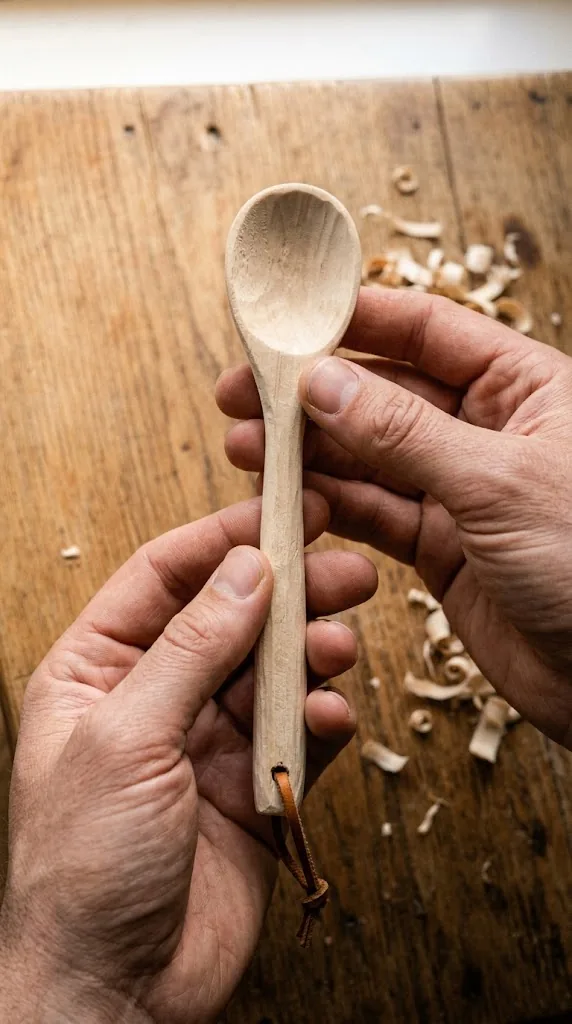
- Check that the spoon is 100% untreated wood with no varnishes or plastic coatings.
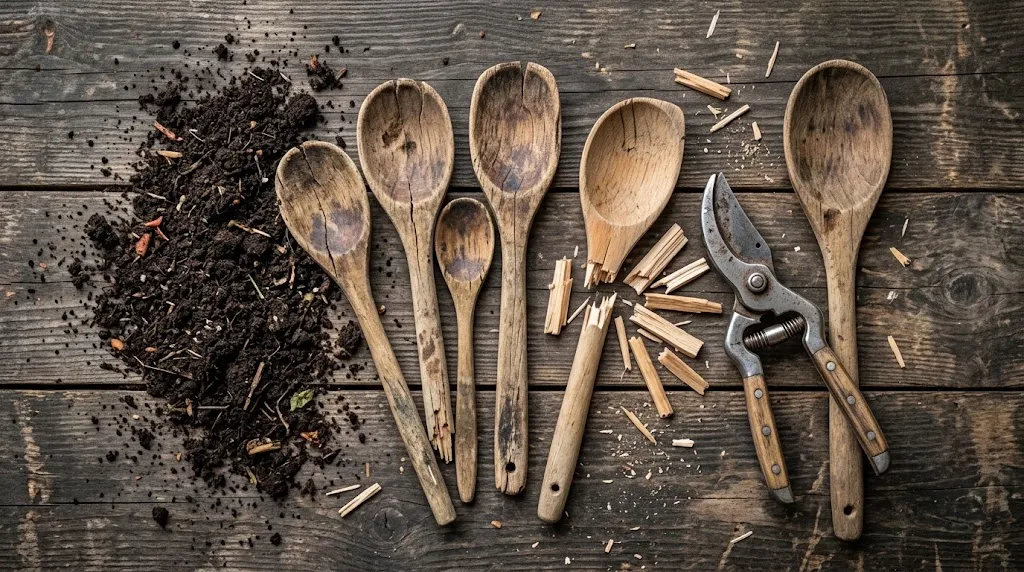
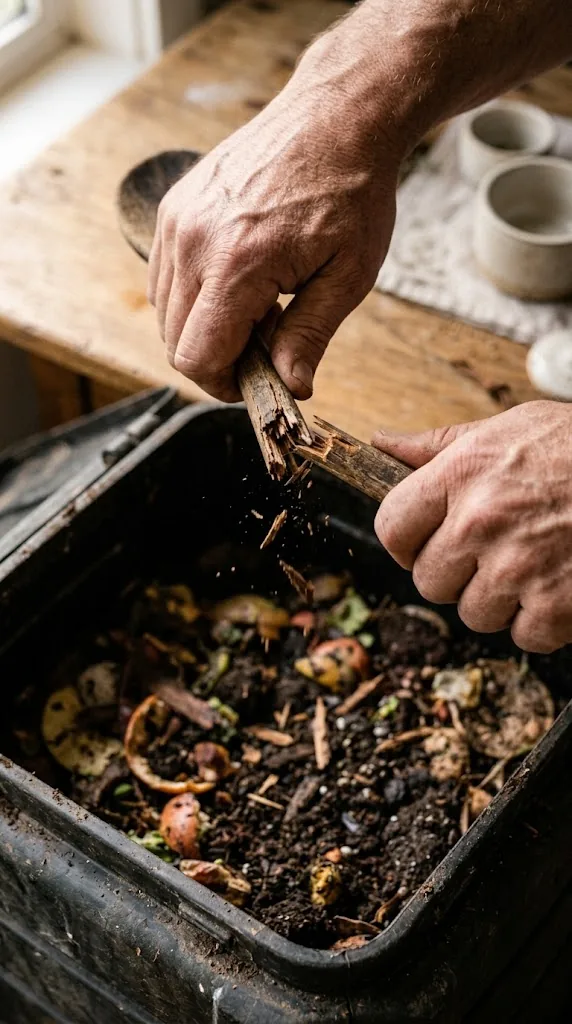
- Break or cut the spoon into smaller pieces using a saw or pruners to speed up decomposition.
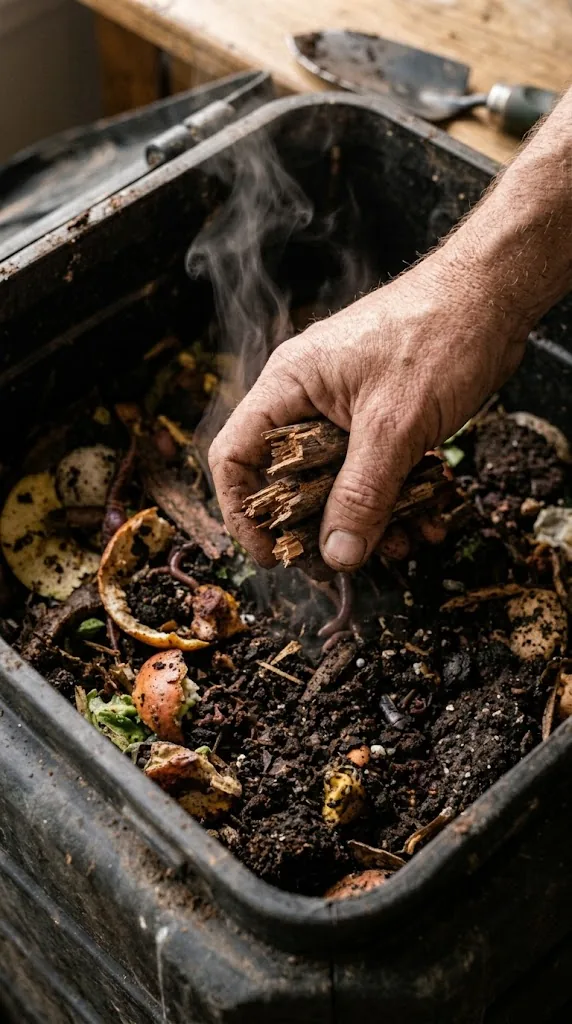
- Bury the pieces deep within the center of a hot, active compost pile to retain moisture and heat.
- Turn the pile regularly to introduce oxygen and aid the breakdown of the dense wood fibers.
How much wooden kitchen spoons can you add to compost?
You can safely add a handful of broken wooden spoon pieces to your home compost pile at any one time, ensuring they represent a minor fraction of your overall brown materials. Because dense wood breaks down slowly, pair these carbon-rich fragments with nitrogen-heavy green waste like fresh grass clippings or vegetable scraps to maintain a balanced ratio. If you notice large wooden chunks lingering unchanged for months, you have added too much wood at once.
Which types of wooden kitchen spoons can you compost?
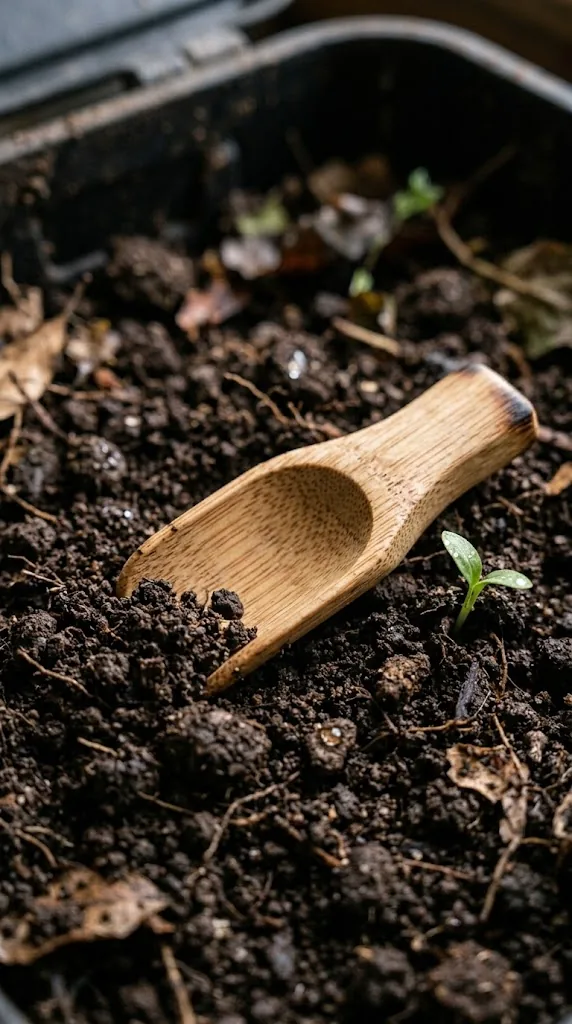
- Untreated solid hardwood spoons: Yes. These pure wood utensils break down naturally over time when chopped into small pieces and added to an active pile.
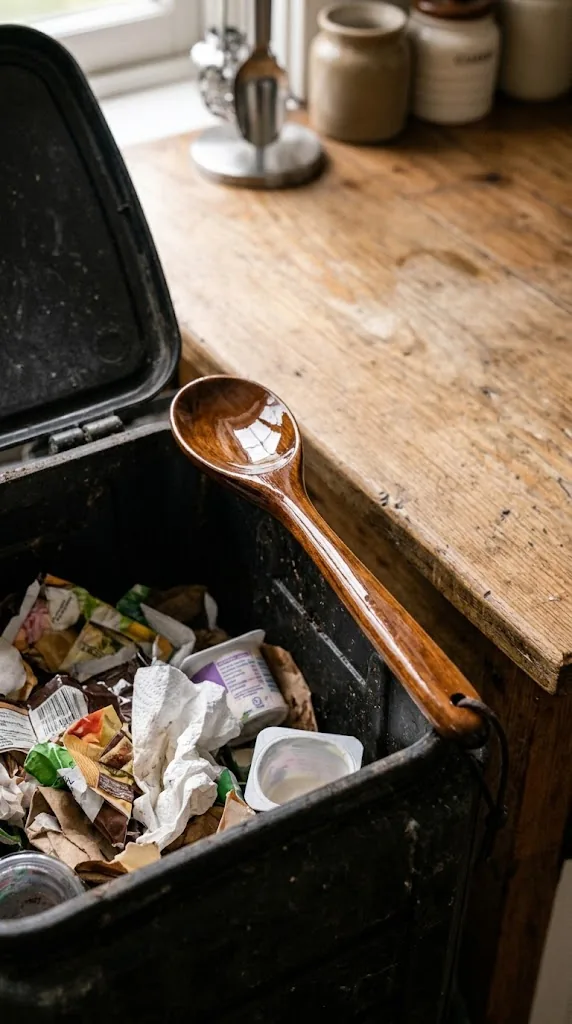
- Varnished or lacquered wooden spoons: No. Finishes, stains, and chemical sealants prevent proper decomposition and can leach toxins into your compost.
- Wooden spoons with silicone or plastic grips: No. Synthetic attachments do not biodegrade and must be completely removed before attempting to compost the wood.
- Bamboo kitchen spoons: Yes. Bamboo is technically a fast-growing grass rather than true wood and typically decomposes much faster than hardwood utensils.
Watch out for
- Do not compost spoons treated with chemical finishes, varnishes, stains, or synthetic glues.
- Avoid adding whole utensils, as they can take many years to break down entirely.
- Ensure no plastic handles or silicone attachments are mixed in with the wood.
What to do instead
- Sand down and refinish the spoon for continued kitchen use
- Upcycle the old spoon into a plant marker or craft project
- Donate undamaged wooden utensils if they are still functional
Troubleshooting wooden kitchen spoons in compost
- The wooden spoon pieces are not breaking down after several months in the pile. Wood is extremely dense and degrades slowly. Remove the large pieces, smash them into even smaller fragments, and bury them deeper in the hottest part of the pile.
- White mold is growing all over the wooden spoon fragments in the compost bin. Do not panic, as beneficial fungi naturally colonize wood to help break down tough lignin. Simply mix the fragments deeper into the pile to let them digest out of sight.
- The compost pile is becoming too dry because of the wood chunks. Wooden spoons absorb moisture as they sit in the bin. Regularly spray your compost pile with water to keep the overall moisture level equivalent to a damp sponge.
Myths about composting wooden kitchen spoons
- Myth: Throwing a whole wooden spoon directly into the compost pile will make it disappear within a few weeks. Truth: Solid wooden utensils are designed to resist moisture and wear, meaning whole spoons can take many years to rot away completely.
- Myth: All wooden kitchen utensils are completely natural and safe for any composting system. Truth: Many modern kitchen spoons feature hidden glues, chemical treatments, or synthetic coatings that make them unsuitable for organic compost.
Can wooden kitchen spoons go in a green bin or recycling?
Municipal green bins and curbside food-waste programs vary widely in their acceptance of wooden kitchen items. While some industrial facilities with high-heat commercial grinders can process small wooden utensils, many standard municipal programs reject them because they do not break down in rapid composting cycles. If your local green waste program does accept wood, you must first strip off any metal rivets, silicone grips, or plastic handles. Always check your local municipal waste guidelines before tossing them into the curbside bin.
Does composting wooden kitchen spoons attract pests?
Composting wooden kitchen spoons does not attract pests. Because untreated wood is a dense brown material that lacks the strong odors, moisture, and high sugar content typically associated with food scraps, it holds no nutritional appeal for common pests like rodents, raccoons, and flies. Furthermore, mixing small pieces of broken wooden spoons into your compost pile or using them as part of a dry covering layer over fresh kitchen waste actually helps absorb excess moisture and mask scents, effectively deterring unwanted visitors from investigating your bin.
- Break the wooden spoons into small pieces to blend seamlessly into the pile.
- Mix the wood fragments thoroughly with other dry brown materials.
- Use the wood pieces as part of a top cover layer to hide smelly food scraps.
- Ensure the spoons are completely free of food residue before adding them.
Common questions
Can I compost wooden spoons with food residue on them?
Yes, standard food residue will naturally break down in the compost. Just avoid adding spoons covered in large amounts of heavy oils or animal fats, which can attract pests.
What should I do if my wooden spoon has a stain or varnish?
If the spoon has a synthetic finish, varnish, or chemical treatment, you should throw it in the regular trash rather than composting it to prevent soil contamination.
Will bamboo spoons break down faster than hardwood spoons?
Yes, bamboo is technically a grass and generally decomposes faster than dense hardwoods like maple or beech, though it still benefits from being broken into smaller pieces.
Are wooden kitchen spoons biodegradable?
Untreated wooden spoons are biodegradable, but hardwood is slow, often 1-3 years even when broken up. Varnished or glued spoons are not good candidates.
Rules vary by town and by composting method. When in doubt, check with your local composting or waste program.