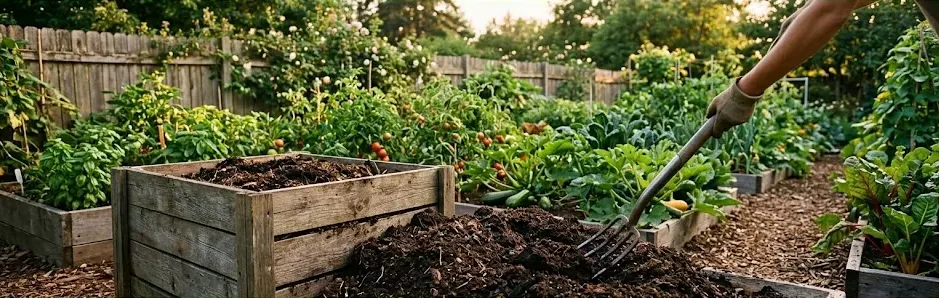
Your compost stinks, sits there doing nothing, or keeps attracting pests? Almost every problem has a simple fix. Nearly all of them come down to the balance of greens, browns, air and water. Find your symptom below and make one small change.
Quick guide: find your problem
| Problem | Cause | Fix |
|---|---|---|
| Rotten smell | Too many wet greens, not enough air | Mix in dry browns, then turn the pile |
| Will not heat up | Too small, too dry, or short on greens | Build it bigger, add greens, and water it |
| Slimy, soggy mush | Too much water, which pushes out air | Add browns, cover the pile, and improve drainage |
| Dry and dusty | Too dry, so the microbes are dormant | Water it as you turn it, and add fresh greens |
| Fruit flies | Fresh scraps left exposed on the surface | Bury scraps in the middle and cover them with browns |
| Rodents or raccoons | Meat, dairy or oily food, or an open bin | Keep those foods out, use a closed bin, and line the base with hardware cloth |
| Weeds and seedlings sprouting | Seeds survive in a cool pile | Keep seed heads out, or run a hot pile at about 130 to 160°F |
| Not sure if it is done | Still breaking down | Finished compost is dark, crumbly and smells earthy. Sift out the chunks and return them to the pile |
1. It smells rotten
A pile that smells like rotten eggs or garbage is the most common complaint. The sour smell means the pile has too many wet greens and not enough air. The bacteria inside are starved for oxygen.
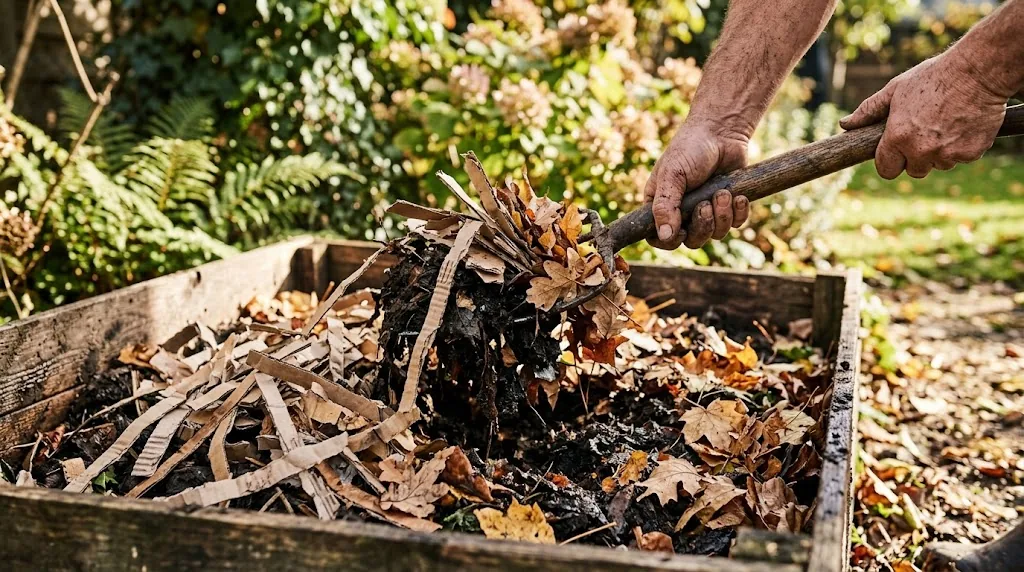
Fix: Mix in dry browns like shredded cardboard, dry leaves or paper. Then turn the pile with a fork so fresh air reaches the center.
Quick tip: Keep a bag of dry leaves or a stack of cardboard next to the bin, and add a handful every time you empty the kitchen caddy.
2. It will not heat up
A cold pile stays cool for weeks and never seems to break anything down. Usually it is too small, too dry or short on nitrogen. A pile needs to be about three feet across to hold its own heat.
Fix: Build it bigger, add a fresh layer of greens like grass clippings or coffee grounds, and water it until it feels like a wrung-out sponge.
Quick tip: A compost thermometer pushed into the center shows whether the pile is heating up. A small heap that stays cold is usually a sign it needs to be bigger.
3. It is slimy and soggy
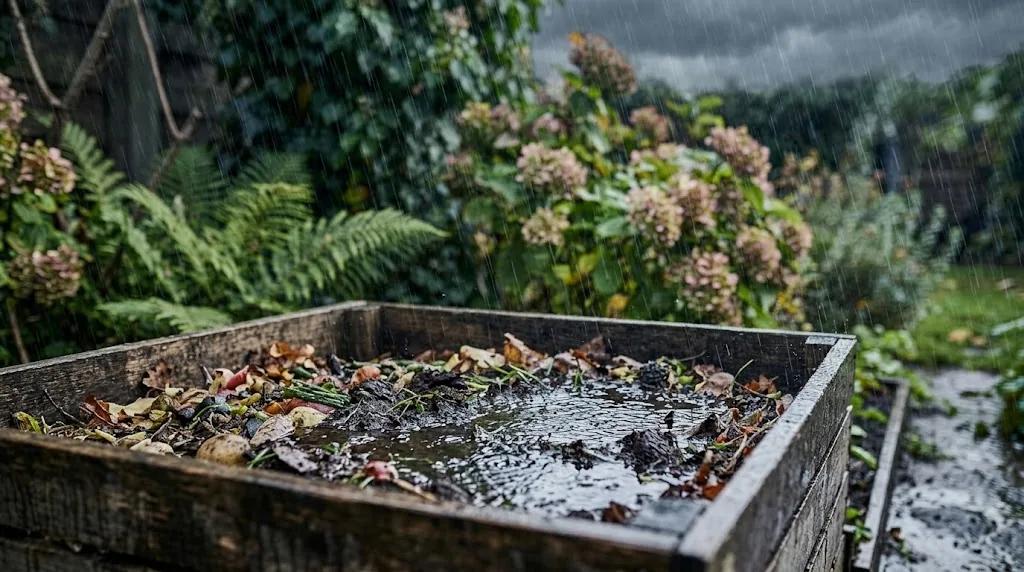
A pile that has turned into a slimy mess that sticks to everything has too much water. Water fills the spaces where air should be. This often happens after heavy rain, or when you add lots of melon rinds and other wet scraps all at once.
- Add plenty of dry browns like shredded cardboard or leaves, and mix them in.
- Cover the pile with a lid or tarp so rain stops soaking it.
- Improve drainage. Set the bin on bare soil so extra water can drain away.
Quick tip: Add wet scraps like melon rinds in small amounts, mixed with browns, rather than all in one go.
4. It is dry and dusty
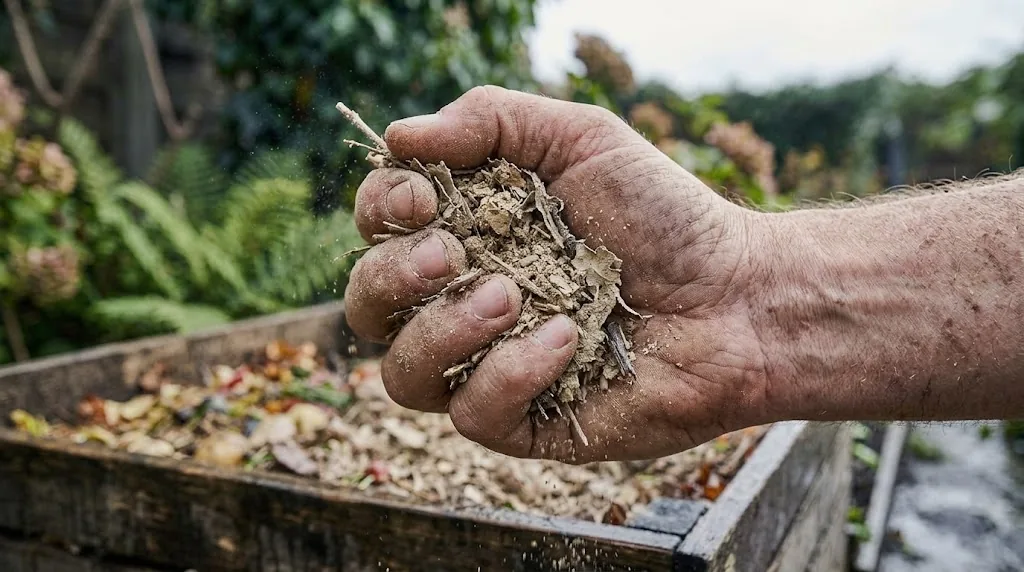
The opposite problem is a dry, dusty pile where the leaves look the same as the day you added them. Nothing is happening inside.
Check it: Grab a handful and squeeze it. If no moisture comes out at all, the microbes have gone dormant and need a drink.
Fix: Water the pile as you turn it so the moisture reaches every layer. Mix in some fresh greens to give the microbes something to eat.
5. Fruit flies and gnats
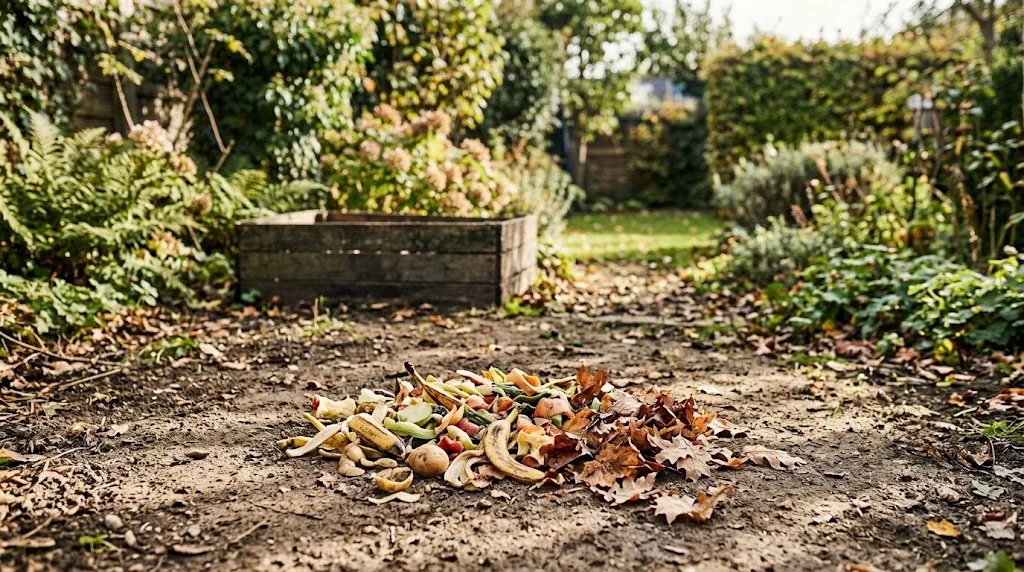
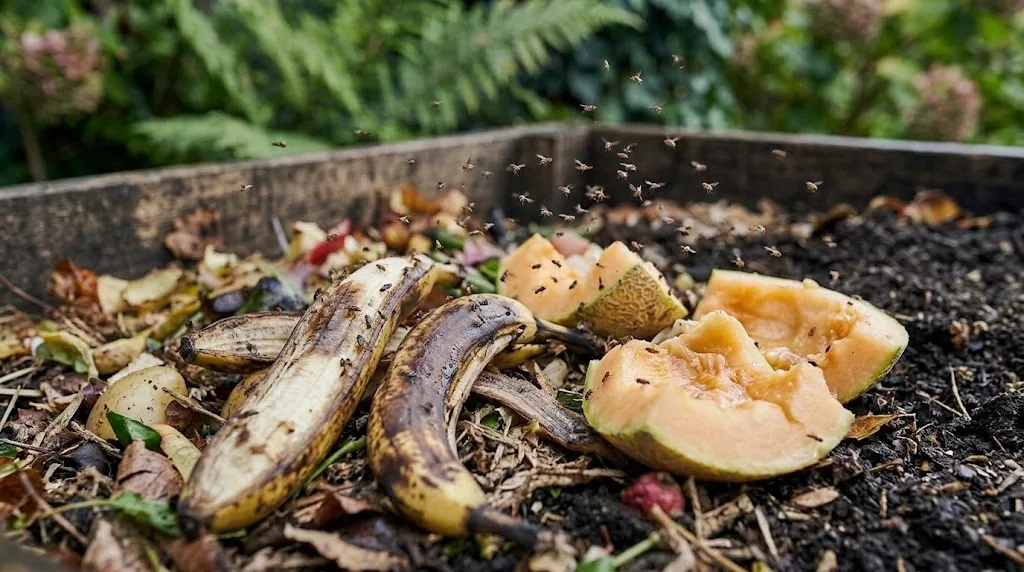
A cloud of fruit flies that bursts out every time you lift the lid usually means fresh food scraps are sitting exposed on the surface. Sweet fruit like bananas, melons and overripe peaches attracts them the most.
Fix: Bury new scraps at least a few inches deep in the middle of the pile. Then top them off with a layer of browns to seal them in.
6. Rats, mice and raccoons
Pests are the problem that worries most people. Animals dig into a bin when it holds food they like.
- Leave out meat, dairy and oily foods in a backyard pile.
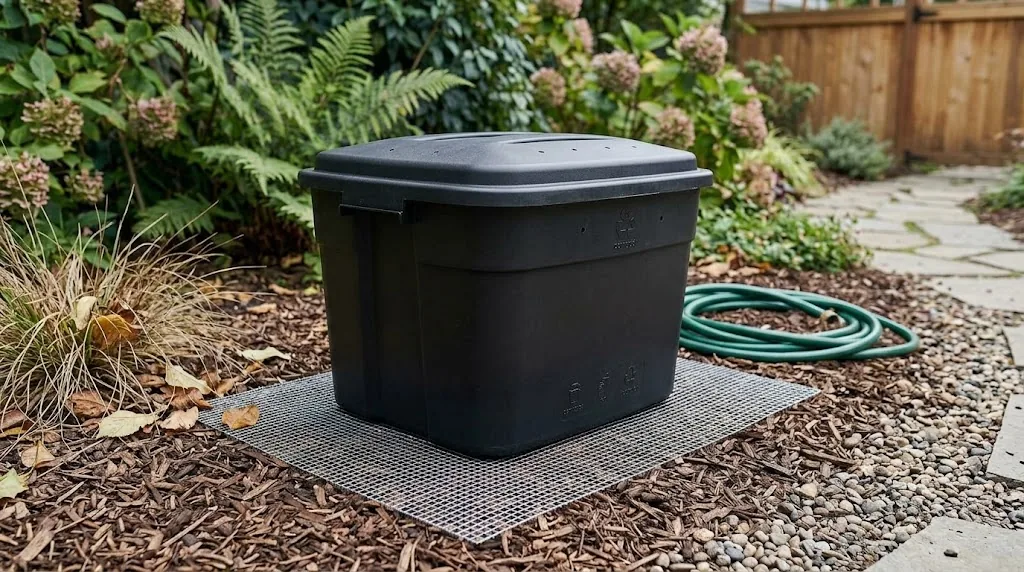
- Use a closed bin with a lid that seals.
- Line the bottom with hardware cloth, so nothing can tunnel in from below.
Quick tip: A pile that stays hot and gets turned regularly is much less inviting. Animals prefer a quiet spot that nobody disturbs.
7. Weeds and seedlings sprouting
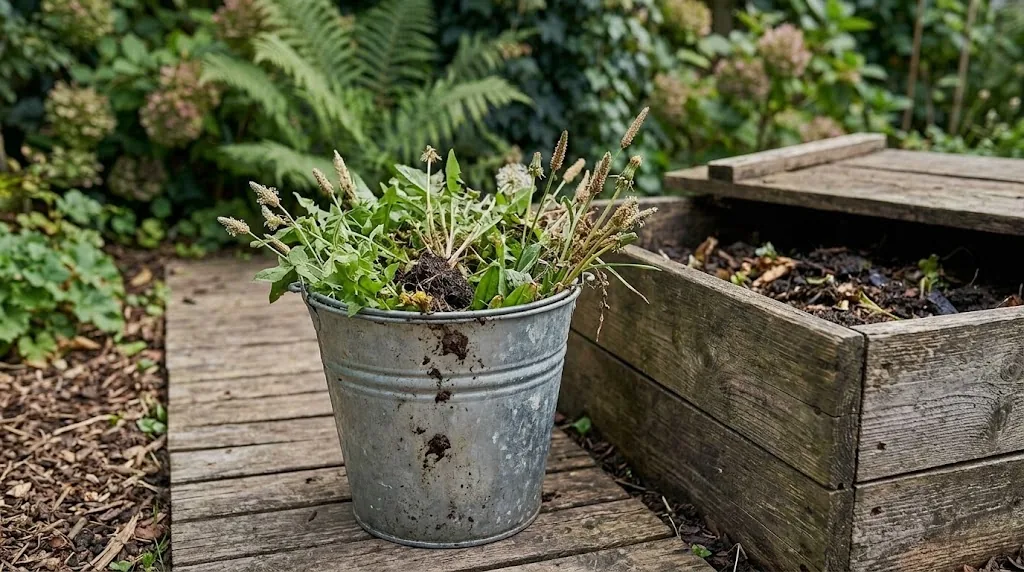
Finding tomato plants, squash vines or weeds sprouting out of your compost is common. Seeds survive in a cool pile, so they travel into your garden beds with the finished compost and sprout wherever you spread it.
Fix: Keep weeds with seed heads out of the bin. Or run a hot pile that reaches about 130 to 160°F, which kills most seeds.
8. Is it done yet?
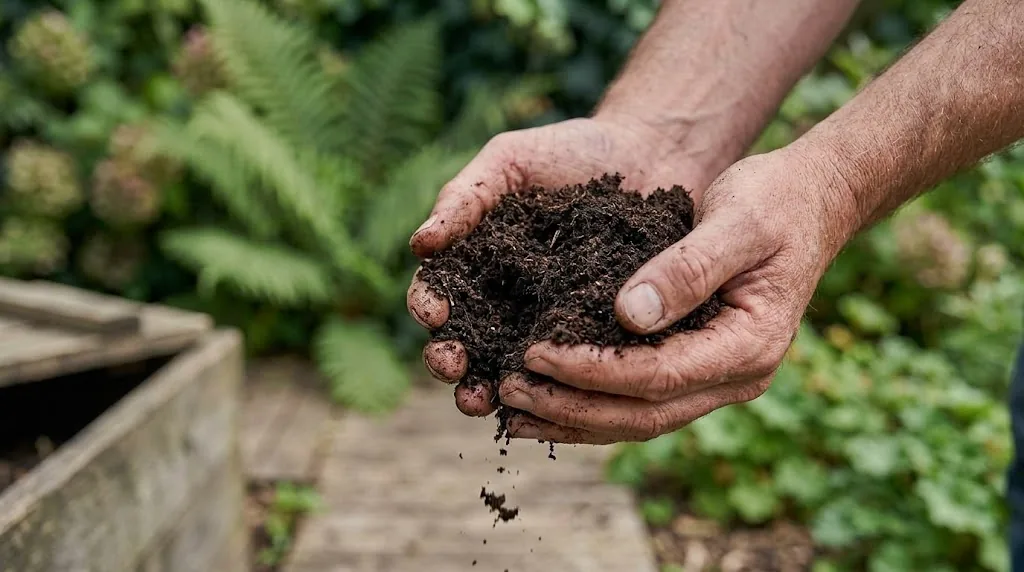
This is not really a problem, but it is the question everyone asks. Finished compost is dark brown and crumbly. It smells like a forest floor, and you should not be able to recognize the food scraps you put in.
Fix: If a few chunks remain, sift them out with a simple screen and toss them back into the pile to finish breaking down.
Frequently asked questions
Why does my compost smell like rotten eggs?
That sour smell usually means too many wet greens and not enough air. Mix in dry browns like shredded cardboard or leaves, then turn the pile with a fork.
Why is my compost pile not heating up?
It is probably too small, too dry or short on greens. Build it to about three feet across, add grass clippings or coffee grounds, and water it until it feels like a wrung-out sponge.
How do I get rid of fruit flies in my compost bin?
Bury new food scraps at least a few inches deep in the middle of the pile, then cover them with a layer of dry browns.
Can I stop rats from getting into my compost?
Yes. Keep meat, dairy and oily foods out of a backyard pile, use a closed bin, and line the bottom with sturdy hardware cloth.
How do I stop weeds from sprouting in my garden after I add compost?
Keep weeds with seed heads out of the bin. A hot pile that reaches about 130 to 160°F kills most seeds.
How do I know when compost is ready to use?
It is ready when it is dark brown, crumbly and smells like a forest floor, and you cannot recognize the scraps you added. Sift out any chunks and return them to the pile.
Related
New to composting? Start with Composting Basics. Not sure what goes in the bin? Check the compost chart.