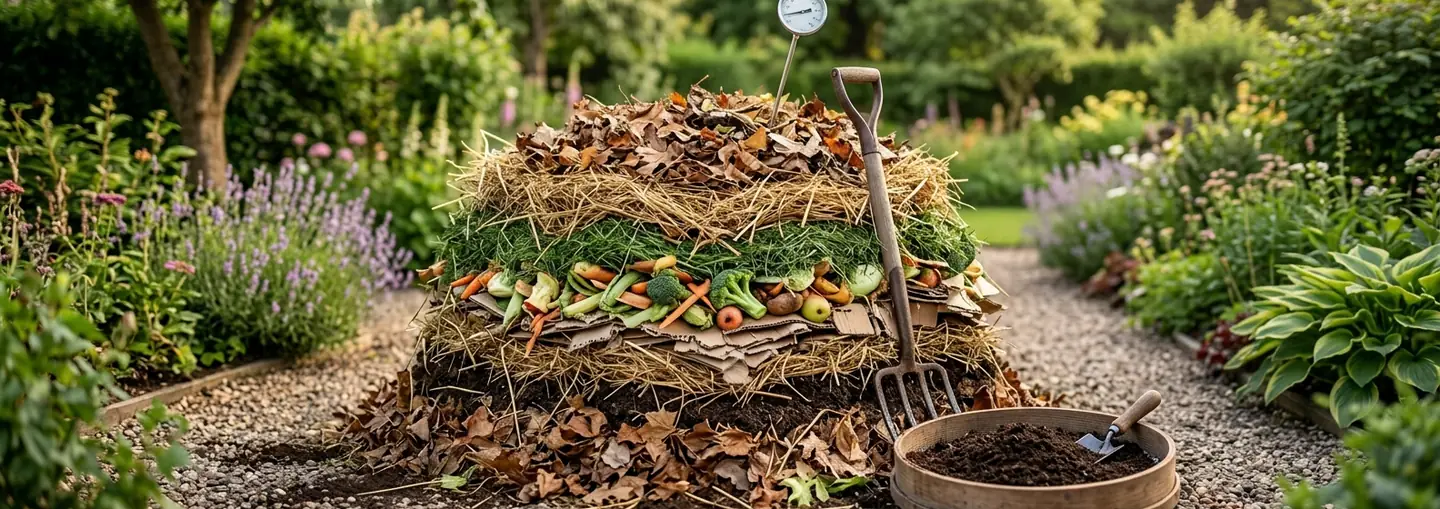
Composting turns kitchen scraps and yard waste into dark, crumbly soil food. It is not complicated, but a few basics make the difference between rich compost and a smelly, slimy pile.
How composting works
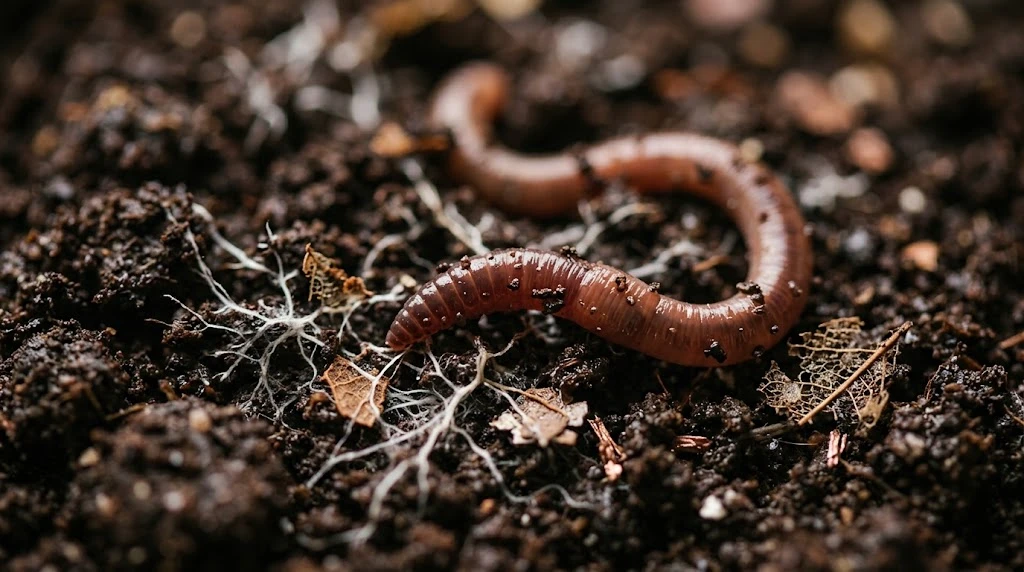
Composting is controlled rotting. Bacteria, fungi, worms and other tiny creatures eat your scraps and leave behind humus, a dark material that feeds your soil. Those microbes need four things:
- Greens for nitrogen
- Browns for carbon
- Air, so the good (aerobic) microbes can breathe
- Water, just enough to keep everything damp
Get the balance roughly right and the pile does the rest.
Greens and browns
Every pile needs a mix of two kinds of material:
- Greens (nitrogen): fruit and vegetable scraps, coffee grounds, tea leaves, fresh grass clippings, plant trimmings. Wet, and quick to break down.
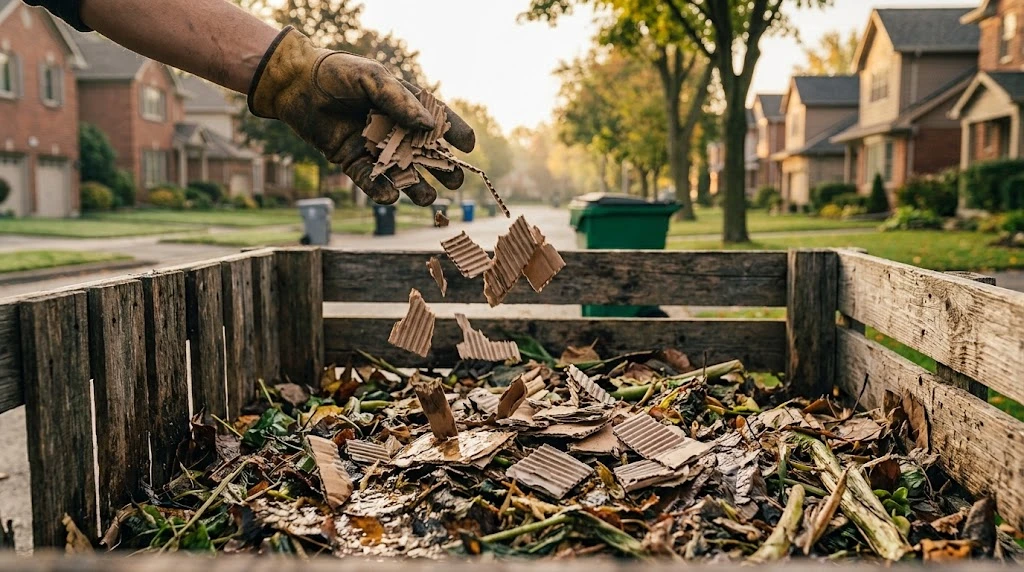
- Browns (carbon): dry leaves, straw, shredded cardboard, paper, sawdust from untreated wood. Dry, and slower to break down.
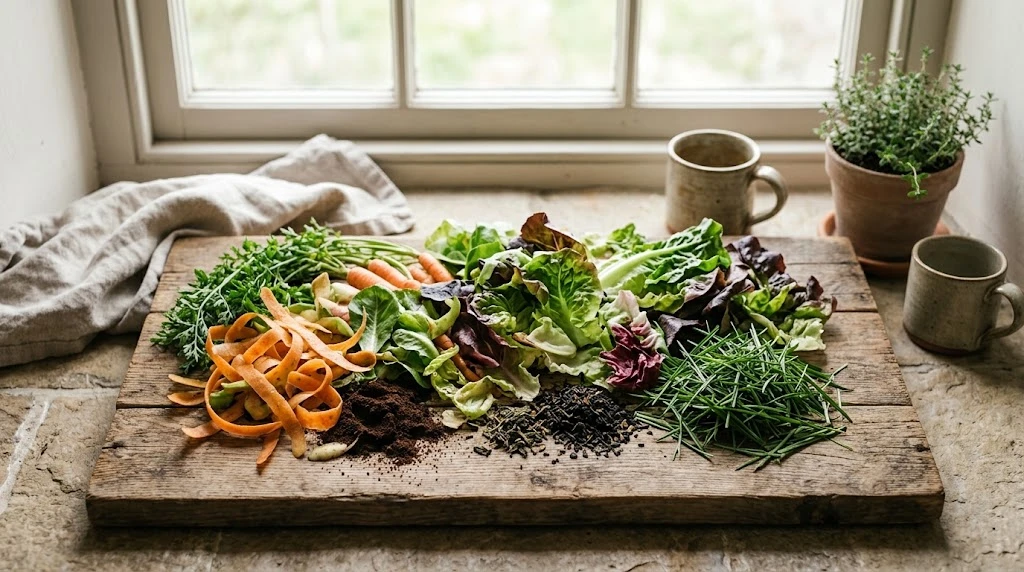
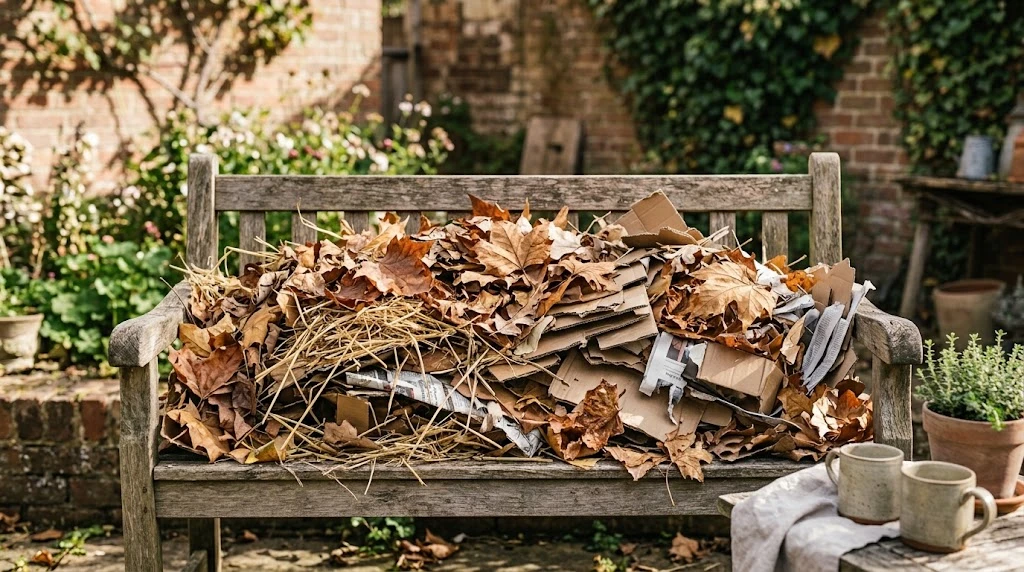
A good rule of thumb is about two to three parts browns to one part greens by volume. Too many greens and the pile turns wet and smelly. Too many browns and it just sits there.
Easy habit: every time you empty your kitchen caddy into the bin, cover the scraps with a couple of handfuls of dry leaves or shredded cardboard. It keeps the ratio about right, stops smells and keeps fruit flies away. Keep a bag of leaves or a stack of cardboard next to the bin so browns are always on hand.
Air and water
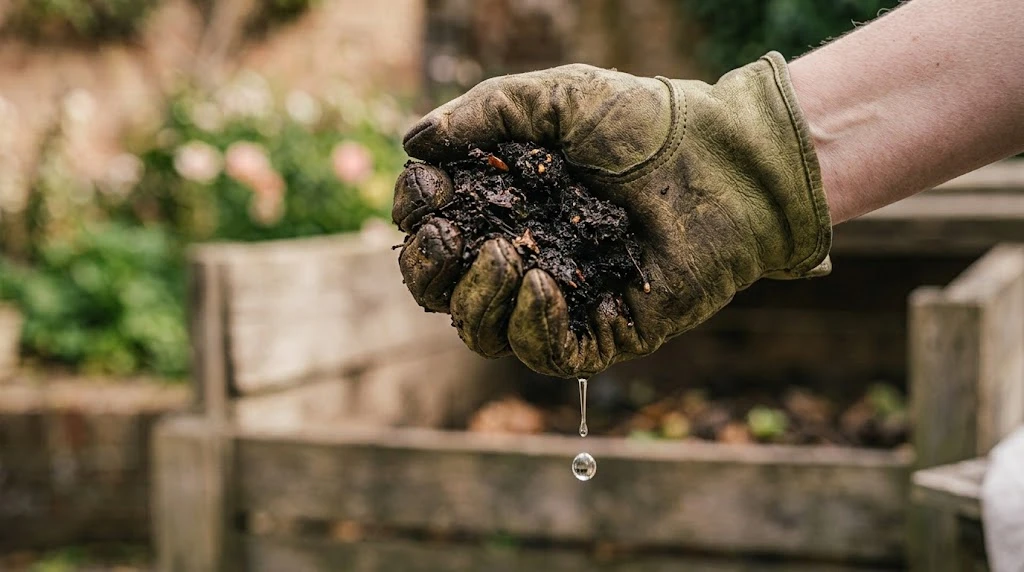
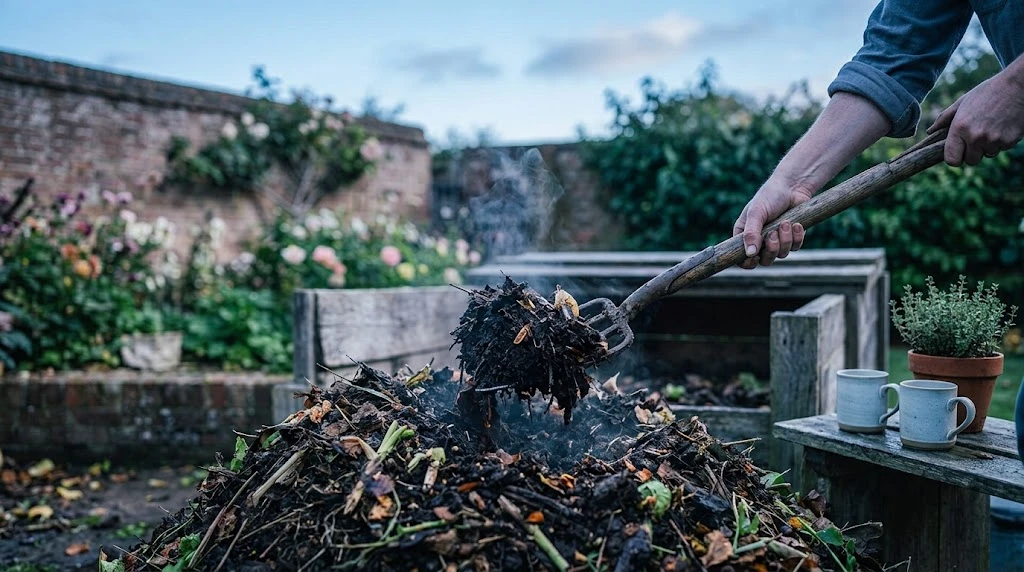
Compost needs oxygen and moisture. Keep it about as damp as a wrung-out sponge: squeeze a handful and you should get a drop or two of water, no more. Turn or fluff it every week or two with a garden fork so air reaches the middle. A pile that smells like rotten eggs usually needs more browns and more air.
Setting up your pile
- Pick a spot that is level, well drained and easy to reach from the kitchen, so you actually use it. Part sun is fine.
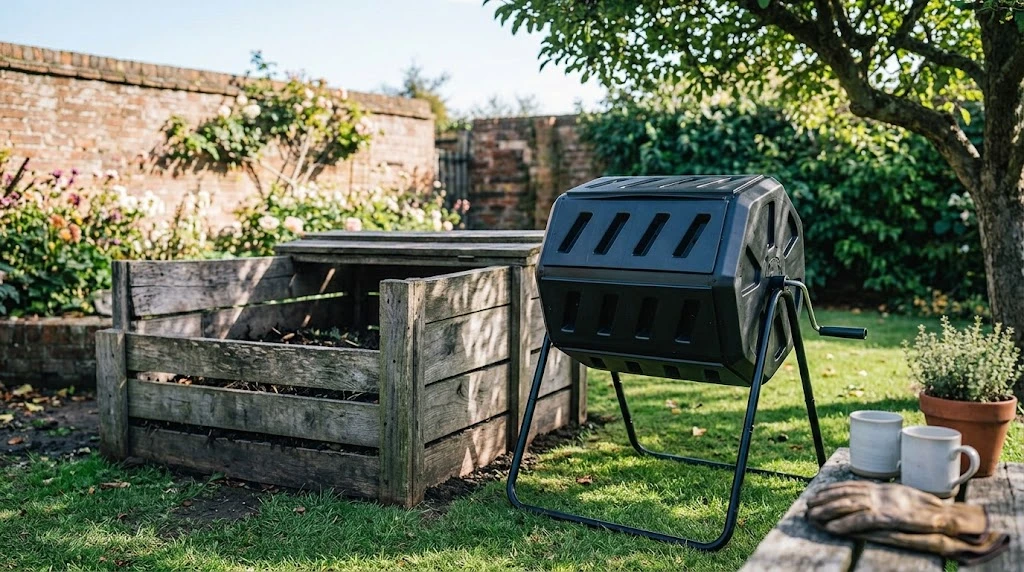
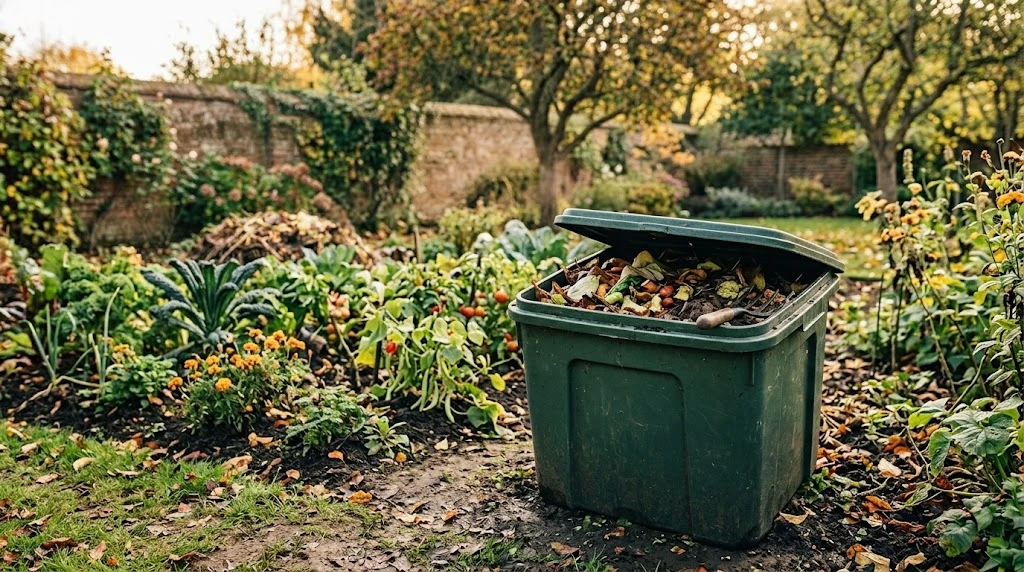
- Choose a container. A simple bin, a tumbler or even an open pile all work. Not sure which? See tumbler vs. bin and our best bins for beginners. A countertop caddy makes collecting scraps easy.
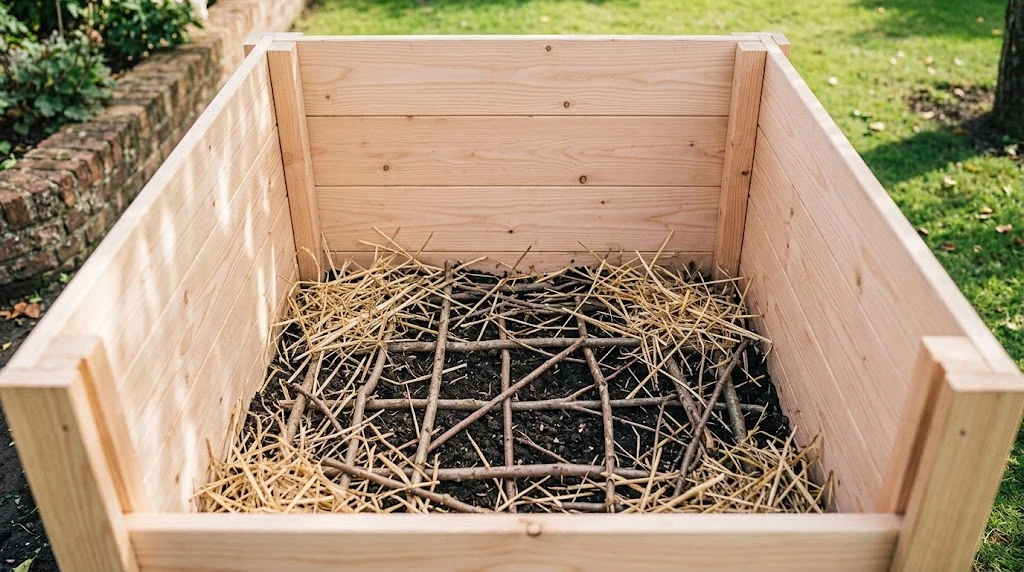
- Start with coarse browns like twigs or straw on the bottom so air can flow up through the pile.
- Add greens and browns as you go, and chop or break big pieces small. Smaller pieces break down much faster.
Hot vs. cold composting
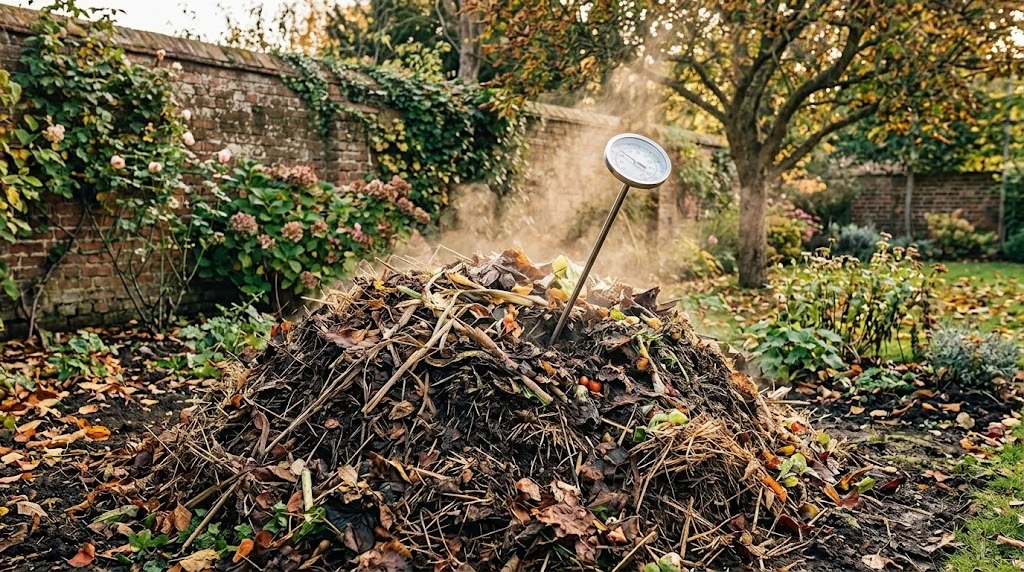
- Hot composting means building a big pile (about 3 feet on each side) all at once and turning it often. It can reach 130–160°F, kills most weed seeds and pathogens, and can finish in 1–3 months.
- Cold composting means adding scraps as you go and letting nature take its time. It is easier, but it takes 6–12 months and does not reliably kill weed seeds or disease.
Many of our answers say “sometimes” because an item that is fine in a hot pile may cause problems in a cold one.
What never goes in a home pile
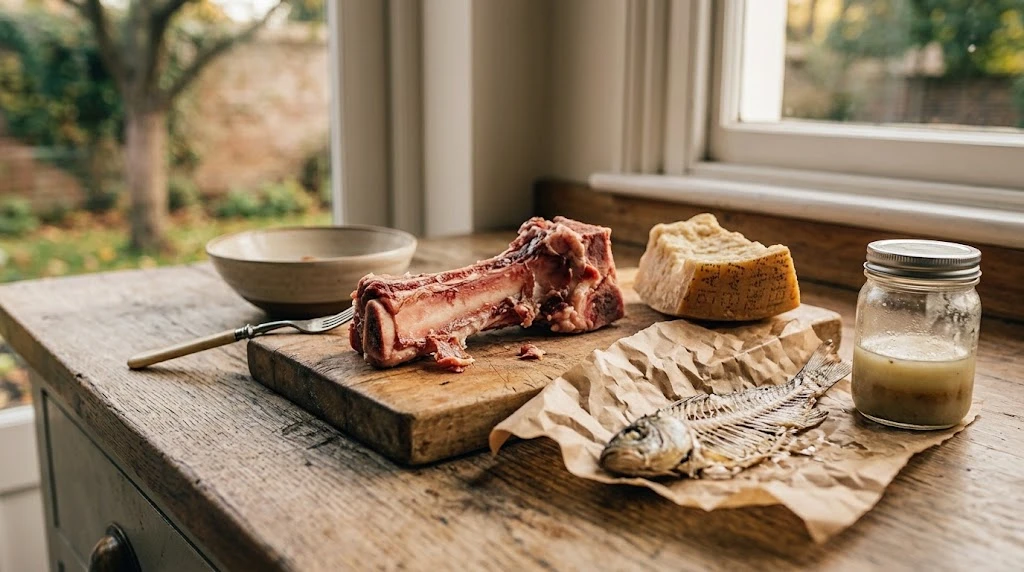
- Meat, fish, bones and dairy (they attract pests and smell; some municipal programs accept them)
- Grease and large amounts of oil
- Dog and cat waste
- Diseased plants and weeds that have gone to seed
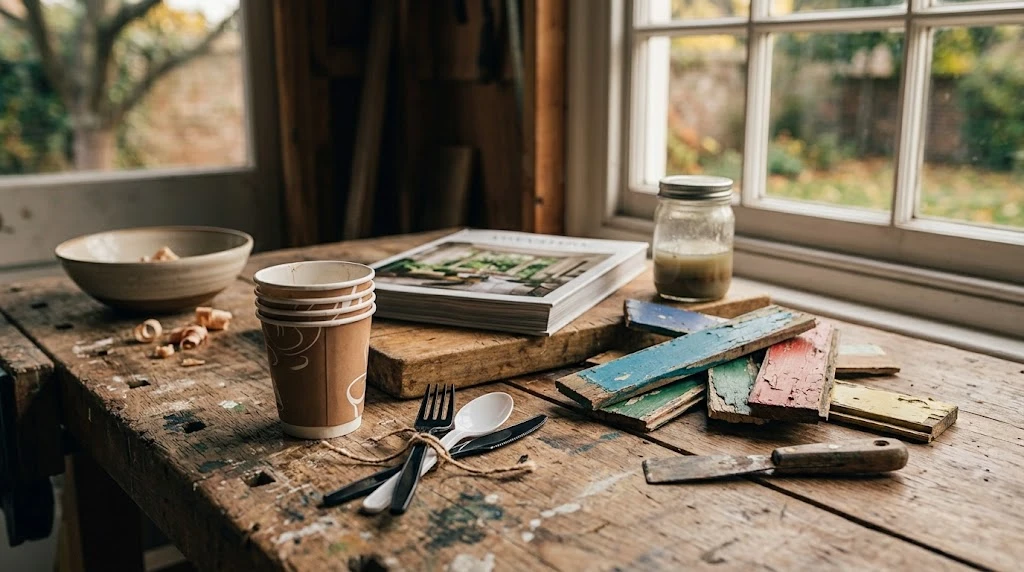
- Anything plastic, glossy or coated, including most “compostable” plastics, which need an industrial facility
- Treated or painted wood, and coal ash
Home vs. municipal composting
Industrial and municipal composting facilities run much hotter and longer than a backyard bin, so they can handle things a home pile cannot, like certified compostable cups and cutlery, and sometimes meat and dairy. Rules differ from town to town, so check what your local program accepts.
Fixing common problems
Almost every compost problem comes down to the balance of greens, browns, air and water. Find your symptom and adjust:
| Problem | Likely cause | Fix |
|---|---|---|
| Smells like rotten eggs, or slimy | Too wet, not enough air | Mix in dry browns like shredded cardboard, then turn it |
| Smells like ammonia | Too many greens | Add browns and turn |
| Not heating up | Too dry, too small, or short on greens | Add water and fresh greens, turn it, and build it bigger if you can |
| Dry and nothing is happening | Too dry or too many browns | Water it as you turn it, and add greens |
| Fruit flies or pests | Food scraps left exposed | Bury scraps in the middle, cover them with browns, and keep meat and dairy out |
When is compost ready, and how do you use it?
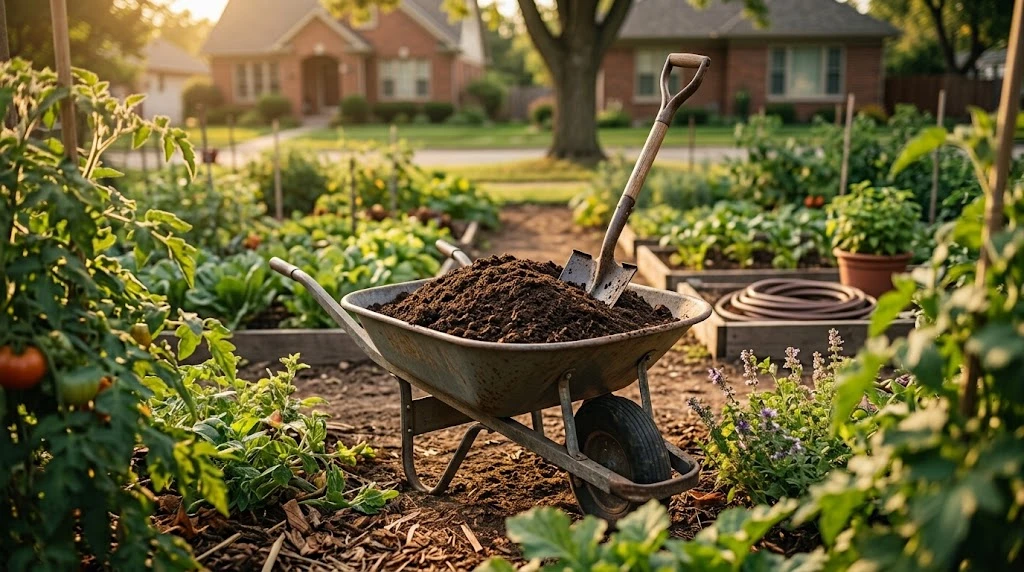
Finished compost is dark and crumbly and smells like a forest floor. You should not be able to recognize what went in, apart from a few twigs or bits of eggshell. If it still feels warm in the middle or you can pick out food scraps, give it a few more weeks.
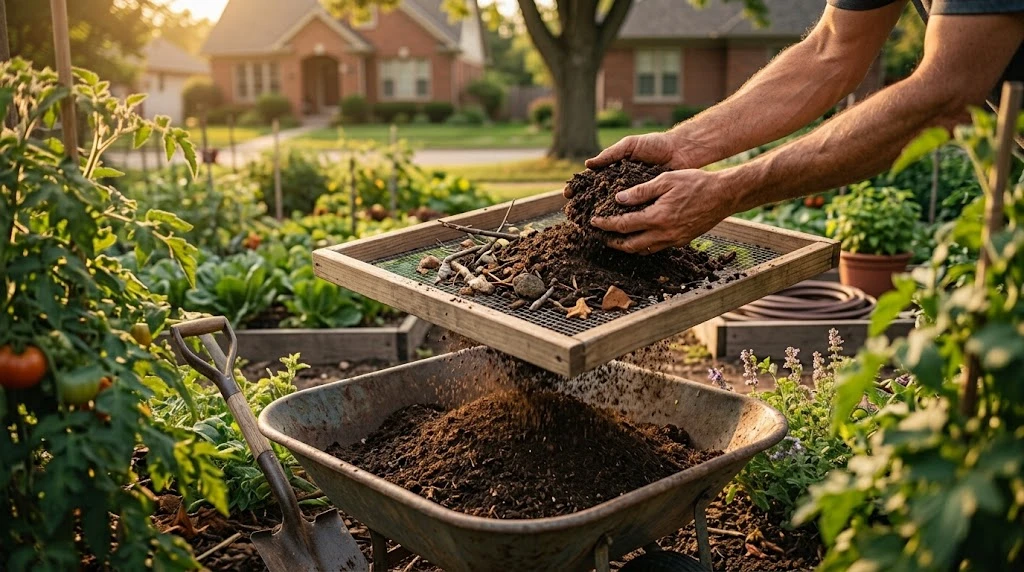
- Screen it. Sift it through a wire mesh screen and toss the chunks back into the bin to keep breaking down.
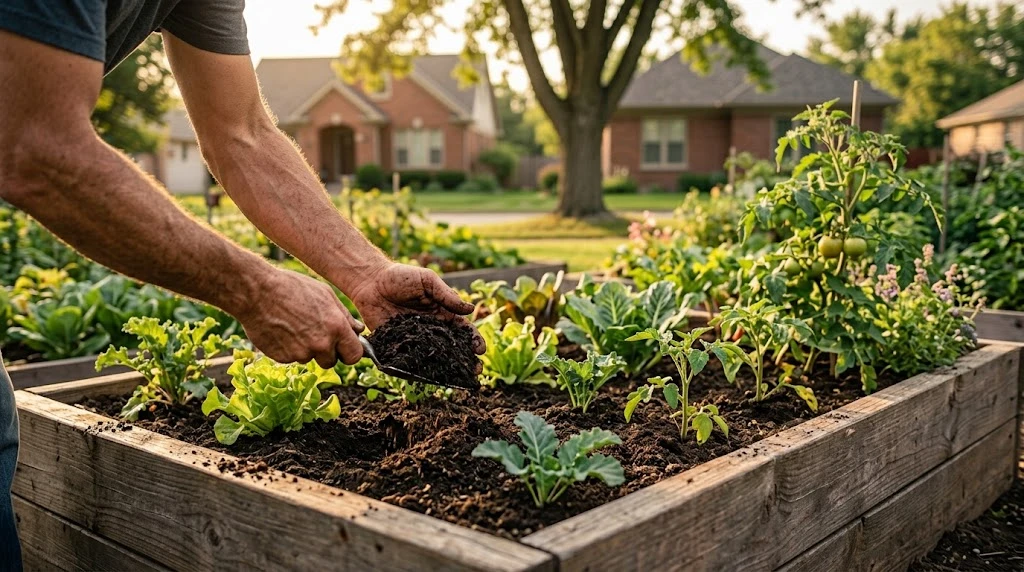
- Feed your beds. Mix it into garden soil before planting.
- Mulch. Spread an inch or two around plants, shrubs and trees.
- Pot up. Blend it into potting mix for containers.
Not sure about something?
Ask about any item on the home page, or browse every item we have answered.
Reader questions
General composting questions asked by visitors around the site and answered by our AI. Rules vary by town, so check locally when in doubt.
What should I do with my compost bin in winter when it freezes?
Composting naturally slows down or pauses during freezing winter weather as microbial activity drops. You can continue adding your kitchen scraps and yard waste to the bin, and the pile will resume breaking down once temperatures rise in the spring. Insulating your bin with straw or blankets can help retain some heat, and turning the pile may become difficult until it thaws.