
No. Batteries contain metals and chemicals that leak into soil and must never go in the bin.
Why
Batteries contain metals like lead, mercury, cadmium, or lithium that can leak and contaminate the compost and the soil. They can also catch fire in the trash or a recycling truck.
Quick facts
| Carbon to nitrogen | Not applicable |
|---|---|
| Hot pile | Does not break down |
| Cold pile | Does not break down |
| Worm bin | No · Toxic to worms and destroys bins |
| Bokashi | No · Does not ferment; contains hazardous chemicals |
| City green bin | Prohibited; take to special drop-off points |
| Prep | Do not compost; recycle safely |
| Mix with | Do not add to compost piles |
| Pest risk | Not applicable · Does not attract pests |
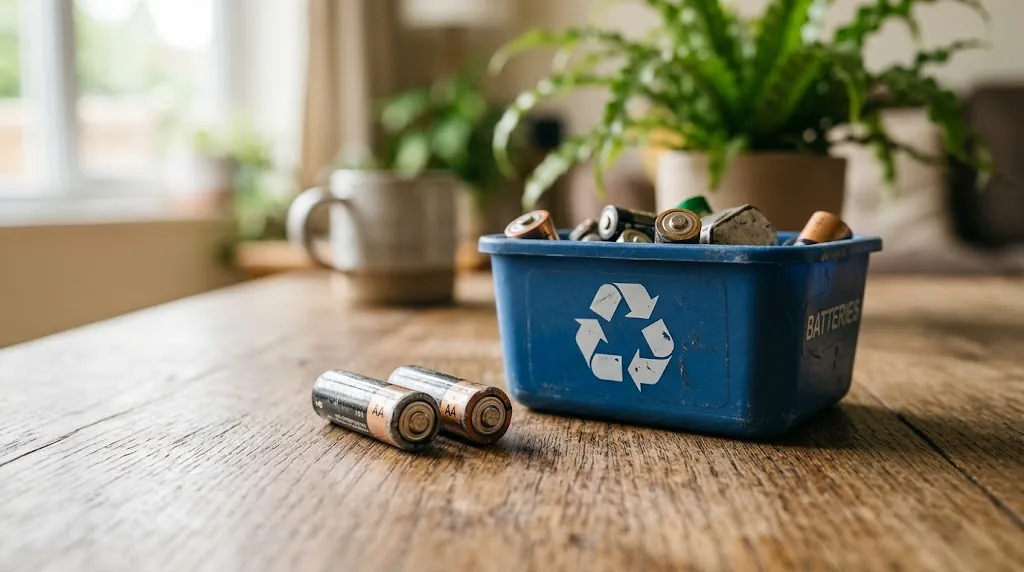
How to get rid of batteries
- Tape the terminals of lithium batteries before storing them.
- Take batteries to a store or council drop-off point that accepts them.
- Keep used batteries in a separate container until you can recycle them.
Which types of batteries can you compost?
- Alkaline batteries: No. Common household batteries like AA and AAA that contain corrosive potassium hydroxide and heavy metals.
- Lithium-ion batteries: No. Rechargeable batteries found in phones and laptops that pose a severe fire hazard in waste systems.
- Button cell batteries: No. Small coin-sized batteries used in watches and hearing aids that contain toxic mercury or lithium.
- Lead-acid batteries: No. Large automotive or deep-cycle batteries filled with toxic lead and sulfuric acid.
Watch out for
- Batteries can leak even when they seem dead.
- Lithium batteries can start fires in bins and trucks.
- Don't burn batteries or throw them in a fire pit.
What to do instead
- Use rechargeable batteries.
- Look for a battery drop-off at your local hardware or electronics store.
Myths about composting batteries
- Myth: Dead batteries are safe to throw in the dirt because they no longer hold a charge. Truth: Even fully discharged batteries contain residual chemicals and heavy metals that leach into the surrounding soil over time.
- Myth: Small household batteries are organic enough to break down naturally in a landfill or compost bin. Truth: Batteries consist entirely of synthetic chemicals, plastics, and heavy metals that do not decompose biologically.
Can batteries go in a green bin or recycling?
Municipal green bins and standard curbside food-waste collection programs strictly prohibit batteries due to the severe environmental contamination and fire risks they cause. Curbside recycling carts also reject them because they can spark and destroy sorting machinery. Instead, you must take spent batteries to designated drop-off locations at local hardware stores, electronics retailers, or municipal hazardous waste facilities. Always check your local waste management guidelines for specific drop-off rules in your area.
Common questions
Can I compost AA or AAA batteries?
No. Take them to a battery drop-off point.
Can I compost lithium batteries?
No. Lithium batteries are a fire risk and must be recycled separately.
Are batteries recyclable?
Yes, at a battery recycling point. Most stores take them.
Do batteries break down?
No. They contain metals that stay in the environment.
Rules vary by town and by composting method. When in doubt, check with your local composting or waste program.