
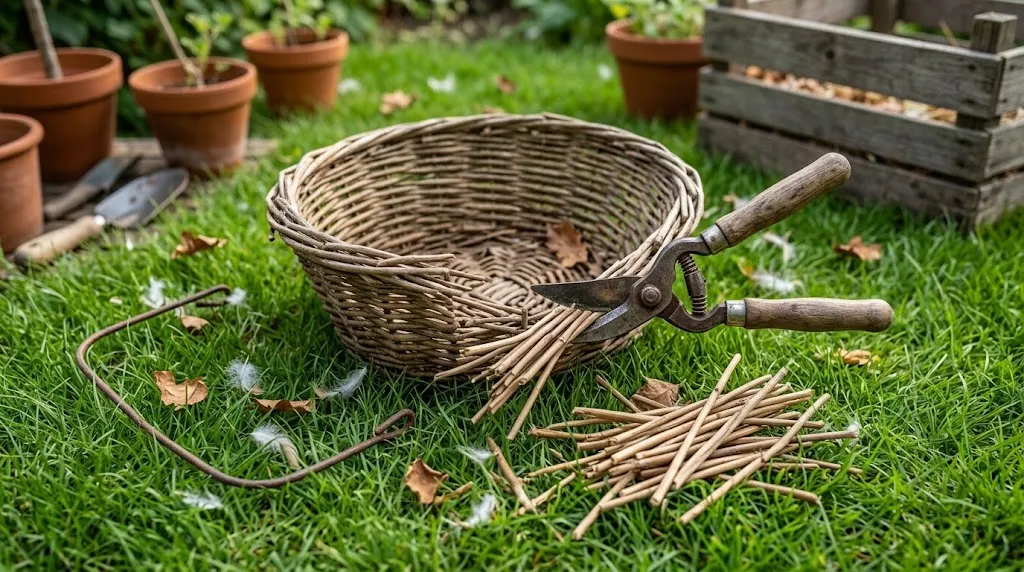
You can compost baskets only if they are made entirely of natural, untreated plant fibers like wicker, rattan, bamboo, or seagrass. If the basket contains synthetic materials, plastic coatings, or chemical finishes, it should not go in your compost.
Why
Natural fiber baskets are essentially carbon-rich brown material, similar to woody yard waste. However, many modern baskets are treated with varnishes, paints, or plastic resins to increase durability and aesthetic appeal, which can introduce toxins into your soil. Furthermore, some baskets are constructed with metal wire frames or synthetic glues that will not break down. If you are unsure about the material composition or chemical treatments, it is safer to avoid adding them to your backyard bin, as they may take years to decompose or contaminate your compost pile.
Quick facts
| Carbon to nitrogen | Varies |
|---|---|
| Hot pile | 3-12 months |
| Cold pile | 6-24 months |
| Worm bin | Sometimes · Only natural fibers, shredded finely. |
| Bokashi | Sometimes · Only untreated natural plant fibers. |
| City green bin | Accepted if natural fibers; remove non-organic parts. |
| Prep | Remove all metal, plastic, paint, and varnish. Cut into small pieces. |
| Mix with | Mix with a balanced variety of green and brown materials. |
| Pest risk | Low · Untreated natural fibers do not attract pests. |
How to compost baskets
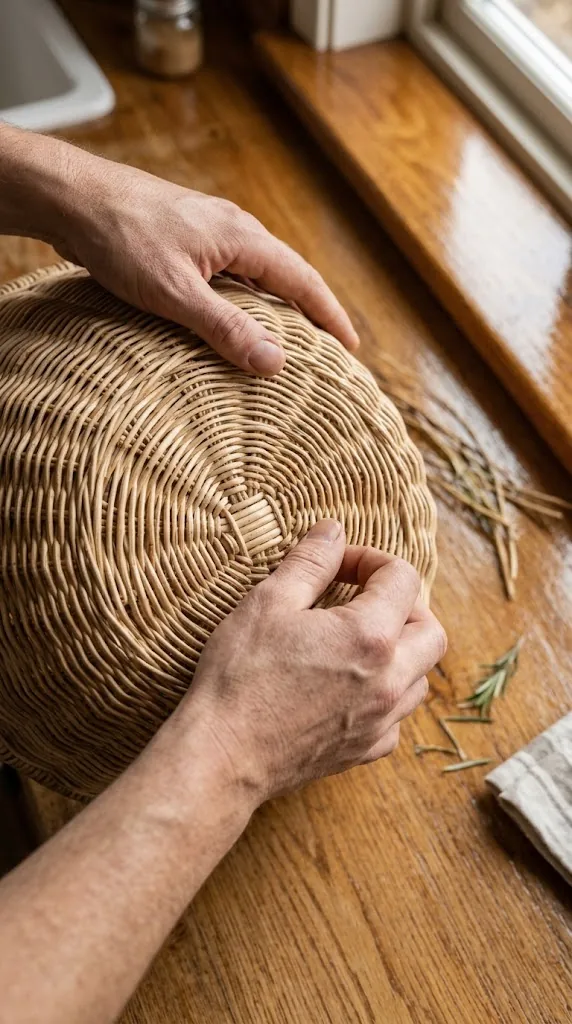
- Verify the basket is made of 100% natural fibers like willow, bamboo, or rattan.
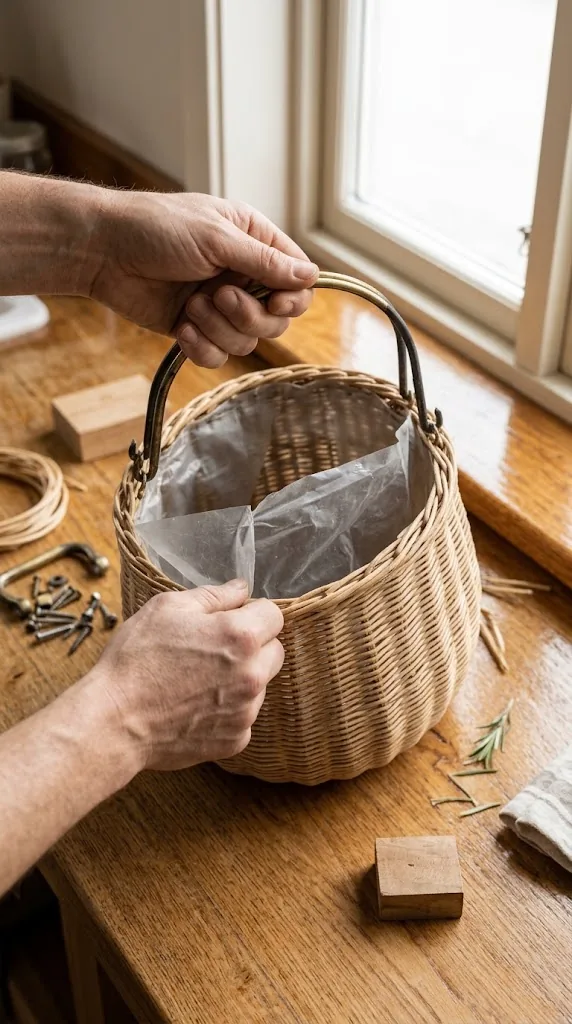
- Remove any non-compostable parts such as metal handles, plastic liners, or fabric linings.
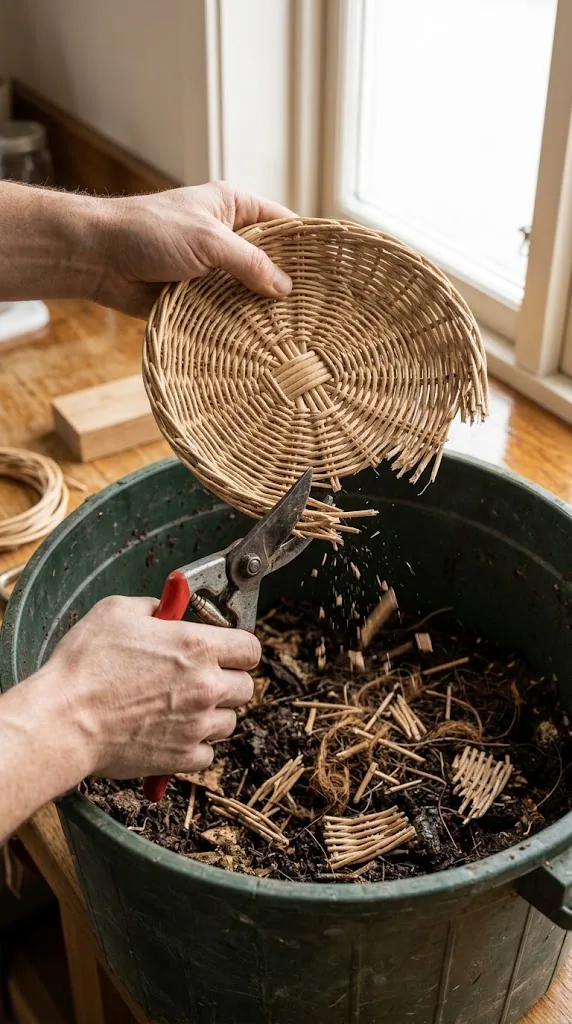
- Break the basket into smaller pieces using garden shears or a saw to speed up decomposition.
- Mix the pieces into your compost pile as a brown carbon source.
How much baskets can you add to compost?
Baskets should be treated as a slow-decomposing carbon source, making up no more than 10 percent of your total pile volume at any one time. Because they are dense and woody, they require a significant amount of nitrogen-rich green waste, such as fresh grass clippings or kitchen scraps, to balance the carbon-to-nitrogen ratio. If you notice your pile temperature dropping or the basket pieces remaining completely unchanged after several months, you have likely added too much woody material for your pile to process efficiently.
Which types of baskets can you compost?
- Wicker or Rattan: Yes. These are ideal for composting as they are purely plant-based and break down well when shredded.
- Bamboo: Yes. Bamboo is highly durable and will take longer to decompose, so it must be cut into very small pieces.
- Plastic-coated or Varnished: No. Synthetic coatings prevent moisture absorption and introduce harmful chemicals that will persist in your finished compost.
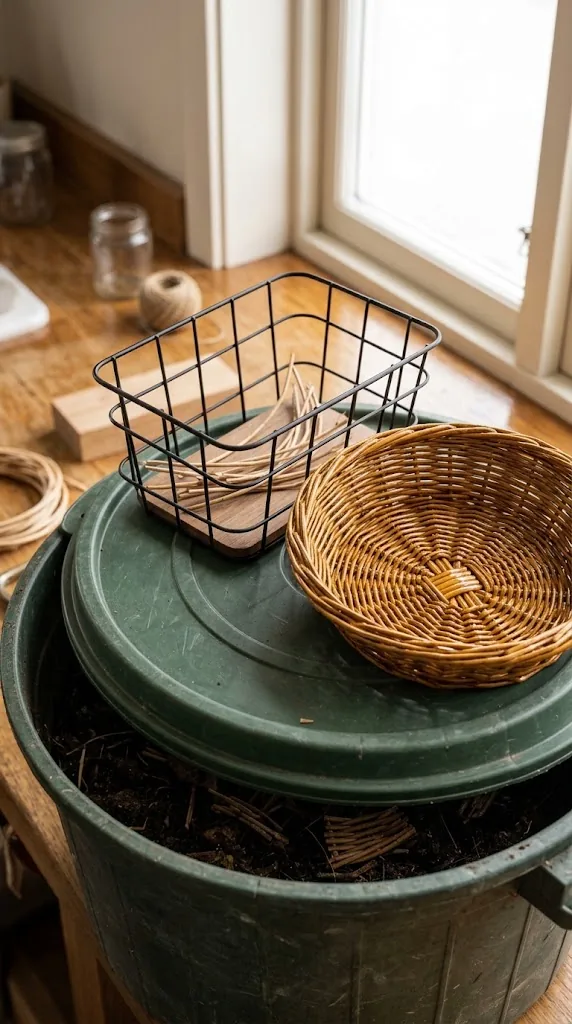
- Seagrass with Wire Frames: Sometimes. You can compost the seagrass fibers only after you have completely removed all internal metal wire supports.
Watch out for
- Avoid baskets treated with glossy varnishes, paints, or chemical wood preservatives.
- Remove all synthetic components like plastic, nylon, or metal wire.
- Do not compost baskets if you suspect they were treated with fungicides or pesticides.
What to do instead
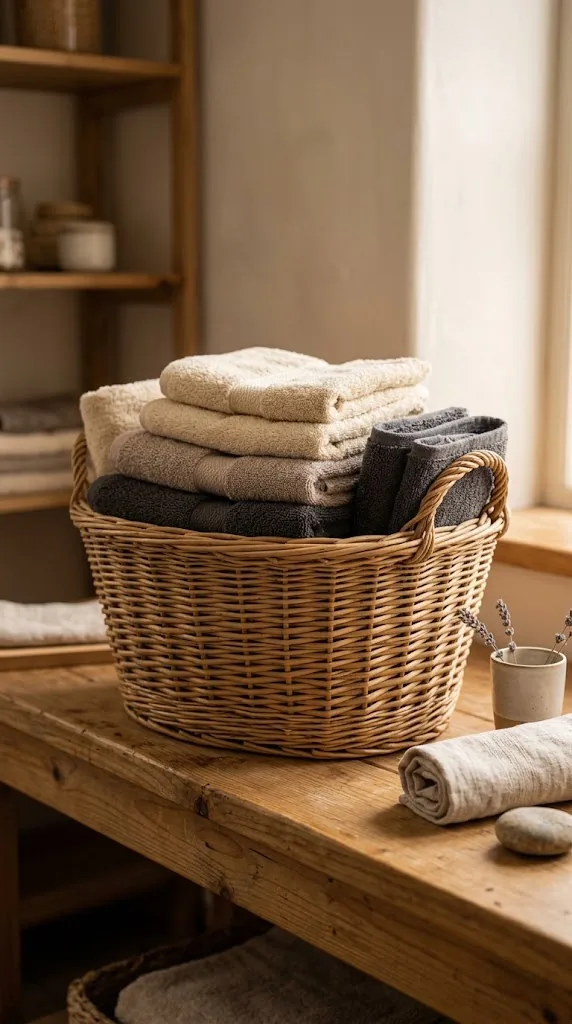
- Reuse the basket for home storage or organization.
- Donate the basket to a local thrift store if it is still in good condition.
- Check if your local waste management facility accepts woody yard waste for municipal composting.
Troubleshooting baskets in compost
- The basket pieces are not breaking down after a full season. Remove the large chunks, soak them in water to soften the fibers, and re-bury them in the hottest center of the pile.
- The basket material is matting together and blocking airflow. Break the basket into smaller, distinct segments and mix them thoroughly with loose nitrogen-rich materials to maintain pile structure.
- The basket is too hard to cut into smaller pieces. Use a heavy-duty pair of loppers or a small hand saw to safely segment the material before adding it to the bin.
Myths about composting baskets
- Myth: All woven baskets are made of natural materials. Truth: Many modern baskets are made from synthetic resins or plastic fibers designed to mimic the appearance of natural wicker.
- Myth: Baskets will rot quickly just like vegetable scraps. Truth: Baskets are woody, high-carbon materials that decompose much slower than soft green waste and require patience.
Can baskets go in a green bin or recycling?
Most municipal green waste programs accept natural fiber baskets, but you must remove all non-organic components like metal handles, plastic liners, or fabric linings first. Some facilities may classify these as woody yard waste rather than food scraps, so check your local guidelines. Curbside recycling programs generally do not accept baskets, even if they are made of natural materials, because the weave can tangle in sorting machinery. Always verify with your local waste management authority before placing them in municipal bins.
Does composting baskets attract pests?
Composting natural fiber baskets does not attract pests. Because these baskets are composed entirely of dry, carbon-rich plant material like bamboo or wicker, they contain no food residues or strong odors that would draw animals. When broken down and mixed into your compost pile, adding these materials helps create a protective cover layer that conceals food scraps and damp greens, effectively masking odors and keeping pests away from your bin.
- Break the basket into small pieces to use as a dry brown layer.
- Spread the fibrous pieces thickly over fresh food scraps to hide odors.
- Mix the natural fibers thoroughly into the pile to maintain proper aeration.
- Ensure all synthetic liners or food residues are removed before composting.
Common questions
Can I compost wicker baskets?
Yes, provided they are made of natural, untreated wicker and you have removed any non-natural attachments like plastic or metal.
What if my basket has a fabric liner?
Remove the liner before composting. If the fabric is 100% cotton or linen, it can be composted separately, but synthetic fabrics must go in the trash.
Will a bamboo basket break down quickly?
Bamboo is very durable and woody, so it will take significantly longer to break down than leaves or grass; shredding it into small pieces is essential.
Are baskets biodegradable?
Baskets woven from untreated natural fibers like willow, rattan, seagrass or wicker are biodegradable, though slowly. Varnish, paint, plastic weaves and wire frames are not.
Rules vary by town and by composting method. When in doubt, check with your local composting or waste program.