Yes
Yes. Seaweed is a great compost ingredient. Rinse off the salt first.
VerdictYes
Breaks down in1–2 months
Counts asOrganic
Why
Seaweed is rich in nutrients and breaks down quickly. Salt can build up in the soil if you add too much, so rinse it and use it in moderation.
Quick facts
| Carbon to nitrogen | About 19:1 |
|---|---|
| Hot pile | 2-4 weeks |
| Cold pile | 3-6 months |
| Worm bin | Sometimes · Rinse thoroughly to remove salt; add in small amounts. |
| Bokashi | Yes · Excellent addition; rinse salt first to protect microbes. |
| City green bin | Usually accepted; check local municipal guidelines. |
| Prep | Rinse well to remove salt and chop into small pieces. |
| Mix with | Mix with 2-3 parts dry leaves or straw. |
| Pest risk | Low · Low risk if rinsed and buried deep in the pile. |
How to compost seaweed
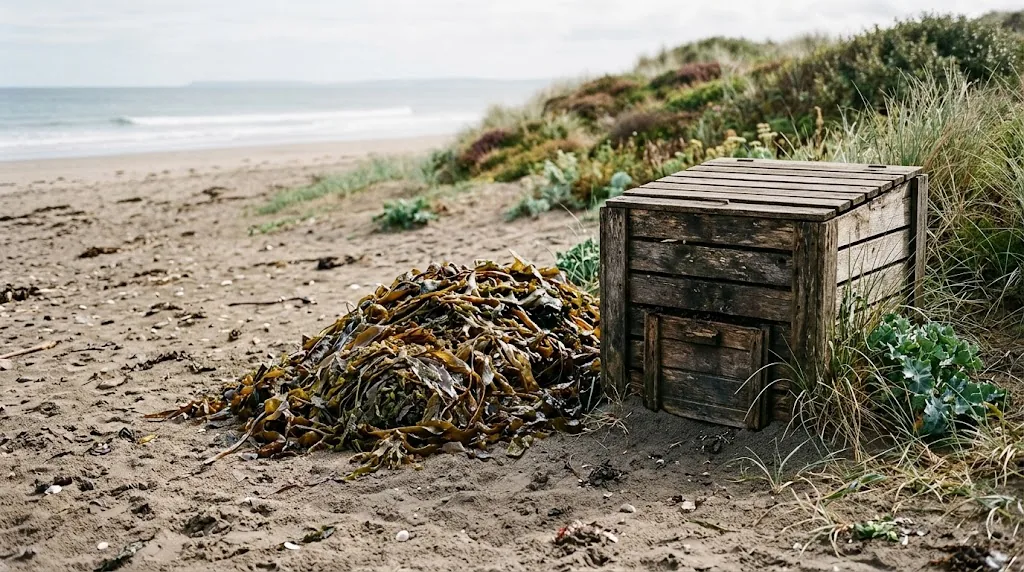
- Rinse the seaweed in fresh water to remove salt and sand.
- Chop or shred it and spread it in thin layers.
- Mix with dry leaves so the pile doesn't become too wet.
Watch out for
- Too much salt can harm plants and soil.
- Seaweed can be heavy and wet, so mix it well.
- Rotten seaweed smells strongly.
Other ways to use seaweed
- Let seaweed dry and use it as a mulch.
- Spread rinsed seaweed on beds in thin layers.
Common questions
Can I compost seaweed?
Yes. Rinse it first to remove salt.
Does seaweed add nutrients?
Yes. It has potassium, trace minerals, and some nitrogen.
Can I put seaweed straight on the garden?
Yes, in thin layers, after rinsing.
Is seaweed biodegradable?
Yes.
Rules vary by town and by composting method. When in doubt, check with your local composting or waste program.