
You can compost deer poop in a hot compost pile, but keep the finished compost away from vegetables and other edible plants unless the pile got hot enough to kill pathogens.
Why
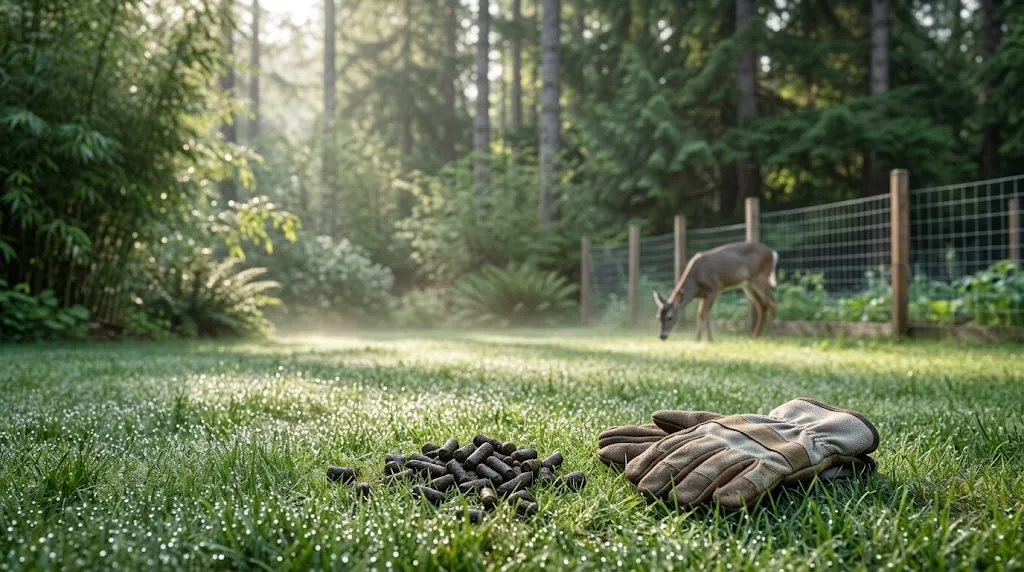
Deer are herbivores, and their small, dry pellets are similar to rabbit or goat droppings: rich in nitrogen and quick to break down. The catch is that wild deer droppings can carry bacteria like E. coli and parasites such as Giardia or Cryptosporidium, and unlike livestock manure you have no idea what the animal has been eating or whether it is healthy. A well-managed hot pile that holds 131–150°F (55–65°C) for several days kills most of these pathogens. Most backyard piles never get that hot, so if you cold compost, use the finished compost only around ornamental plants, trees and lawns.
Quick facts
| Carbon to nitrogen | Varies |
|---|---|
| Hot pile | 1-3 months |
| Cold pile | 6-12 months |
| Worm bin | Sometimes · Small amounts only; avoid if deer are sick. |
| Bokashi | Yes · Effective for rapid fermentation. |
| City green bin | Check local rules; most municipal bins reject it. |
| Prep | Spread thin to ensure heat reaches center. |
| Mix with | Mix with 3 parts carbon-rich brown material. |
| Pest risk | Medium · Cover with dry leaves to prevent flies. |
How to compost deer poop
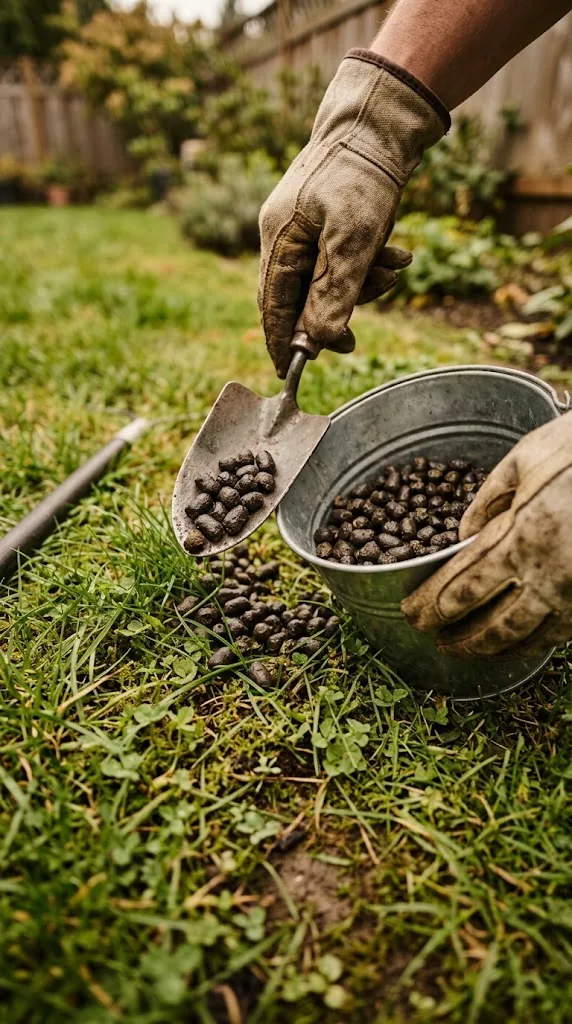
- Wear gloves and use a shovel or trowel to collect the pellets.
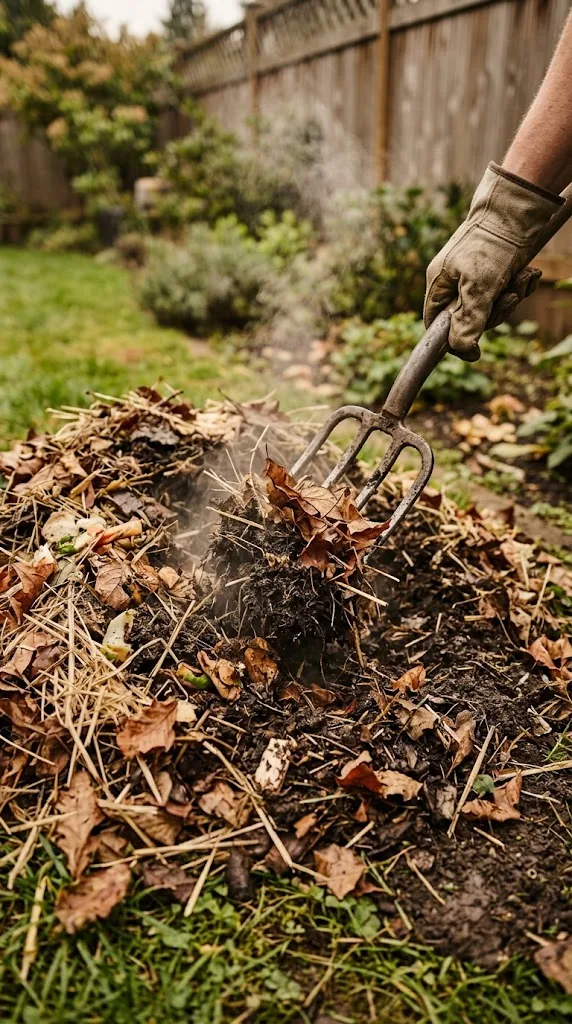
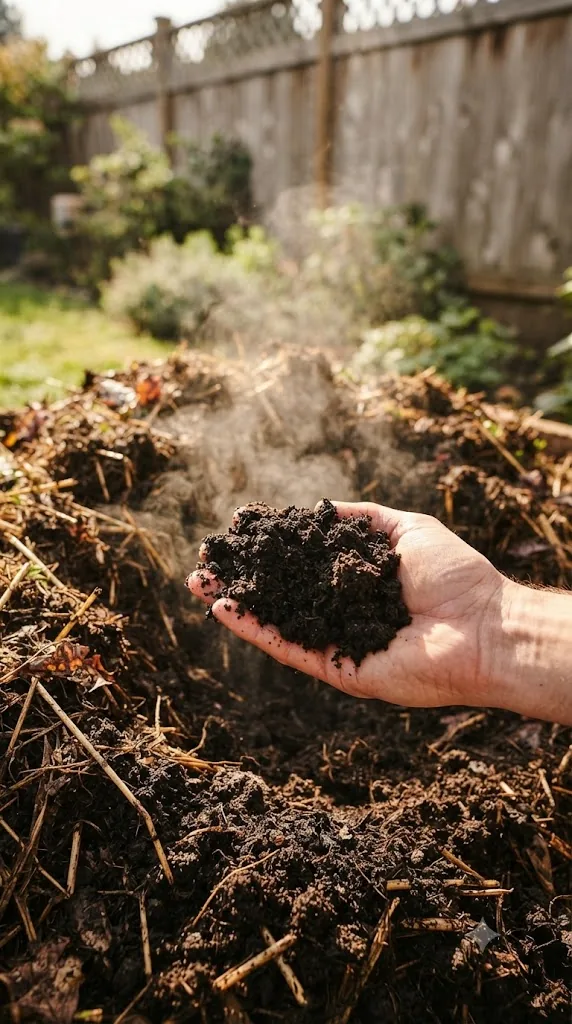
- Mix them into the center of an active hot pile along with plenty of browns like dry leaves, straw or shredded cardboard.
- Keep the pile damp like a wrung-out sponge and turn it every week or two so it stays hot.
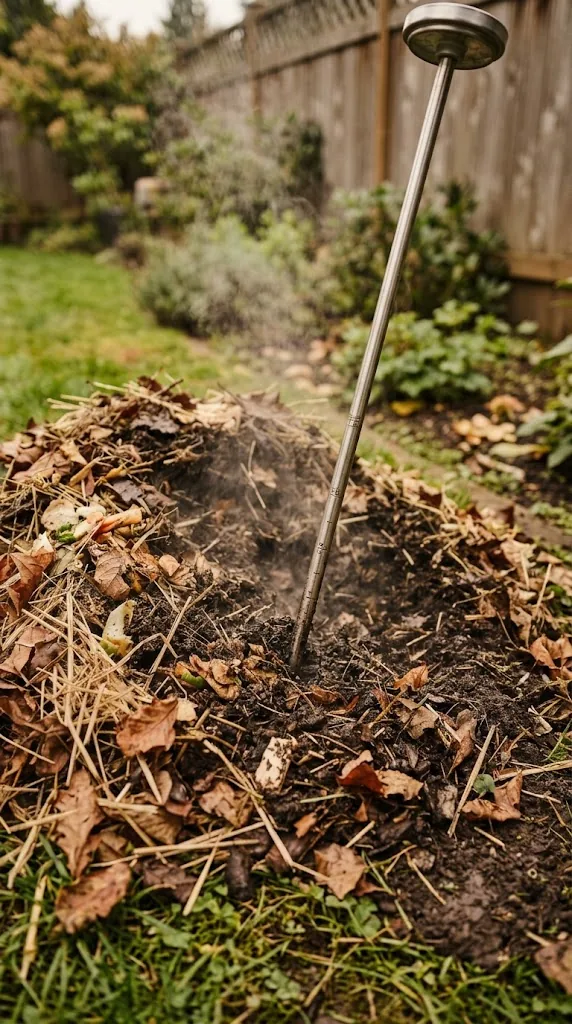
- Check the temperature with a compost thermometer, and let the finished compost cure for a few months before using it.
How much deer poop can you add to compost?
Deer poop can make up about ten percent of your total compost volume at any given time. Because these small, dry pellets act as a nitrogen source, you should mix every handful of droppings with roughly three to four parts brown materials like dry leaves or shredded paper. If you add too much deer manure at once without enough carbon, the pile will become overly soggy, dense, and prone to developing a foul, ammonia-like odor.
Which types of deer poop can you compost?
- Fresh pellets: Sometimes. Fresh droppings are rich in nitrogen but carry higher pathogen risks, so they require a properly managed hot composting process.
- Dried yard pellets: Sometimes. Older droppings found naturally in the yard are drier and break down faster, though they still need high temperatures to eliminate potential parasites.
- Manure mixed with bedding: Yes. If deer droppings are collected alongside straw or hay from an enclosure, the carbon-to-nitrogen balance is often already optimized for your pile.
Watch out for
- If your pile does not get hot, do not use the compost on vegetables, herbs or fruit.
- Wash your hands and tools after handling any animal waste.
- Keep pets and children away from droppings and the active pile.
What to do instead
- Leave droppings on lawns or under trees, where they break down on their own.
- Bury them in a non-edible part of the yard away from water sources.
- Bag them and put them in the household trash.
Troubleshooting deer poop in compost
- The pellet pile develops a strong, unpleasant ammonia smell. This indicates excess nitrogen; immediately mix in a generous layer of dry leaves, straw, or shredded cardboard to absorb the moisture and balance the carbon.
- The droppings remain intact and refuse to break down. Ensure the pile has enough moisture and turn it regularly to expose the pellets to microbial activity and maintain adequate internal heat.
- Flies or other insects gather around the manure input area. Always bury the deer pellets deep inside the center of the compost pile and immediately cover them with a thick layer of browns.
Myths about composting deer poop
- Myth: Because deer are strictly herbivores, their waste is completely safe to use immediately on all garden vegetables. Truth: Even herbivore waste can harbor harmful bacteria like E. coli and parasites, meaning hot composting or restricting use to ornamentals is necessary.
- Myth: Freezing winter temperatures will naturally sanitize wild animal manure in the compost pile. Truth: Freezing temperatures only cause pathogens to go dormant, whereas sustained internal heat is required to effectively kill them.
Can deer poop go in a green bin or recycling?
Most municipal green waste or curbside food-scrap collection programs do not accept wild animal manure due to the potential presence of pathogens and unknown contaminants. Commercial composting facilities often restrict waste to residential food scraps and yard trimmings to ensure safety standards for municipal compost products. Always check your local waste management guidelines before placing any wildlife waste into curbside organic bins, and rely on backyard burial or trash disposal if local rules prohibit it.
Does composting deer poop attract pests?
Composting deer poop does not typically attract pests like rodents or flies because the droppings are relatively dry, odorless, and herbaceous. Unlike meat, dairy, or heavily processed food scraps, herbivore manure does not emit strong aromatic cues that draw scavenging animals. Furthermore, properly incorporating these dry pellets into the center of your compost pile and covering them with a thick layer of carbon-rich browns helps hide any minor odors and keeps unwanted critters away from your bin.
- Bury the deer pellets deep inside the center of the compost pile.
- Cover the manure immediately with a thick layer of dry leaves, straw, or shredded cardboard.
- Maintain proper pile moisture to encourage rapid breakdown without drawing moisture-seeking insects.
Common questions
Is deer manure the same as cow manure?
Both come from plant-eating animals and add nitrogen to a pile. The difference is that cattle are managed livestock with a known diet and health status, while wild deer can carry a wider range of parasites, so deer droppings need a hot pile or a non-edible end use.
Can I use deer poop if I hot compost it?
Yes. If your pile holds 131–150°F (55–65°C) for at least three days and you turn it so every part gets hot, the finished compost is generally considered safe for the garden. A compost thermometer is the easiest way to check.
Is it safe to put deer poop in a worm bin?
It is better to skip it. Worm bins stay cool, so they will not kill pathogens in wild animal waste, and those can end up in your worm castings.
Is deer poop biodegradable?
Yes. Deer droppings are digested plant matter and break down in a few months. The concern is pathogens, so hot composting is safest.
Rules vary by town and by composting method. When in doubt, check with your local composting or waste program.