
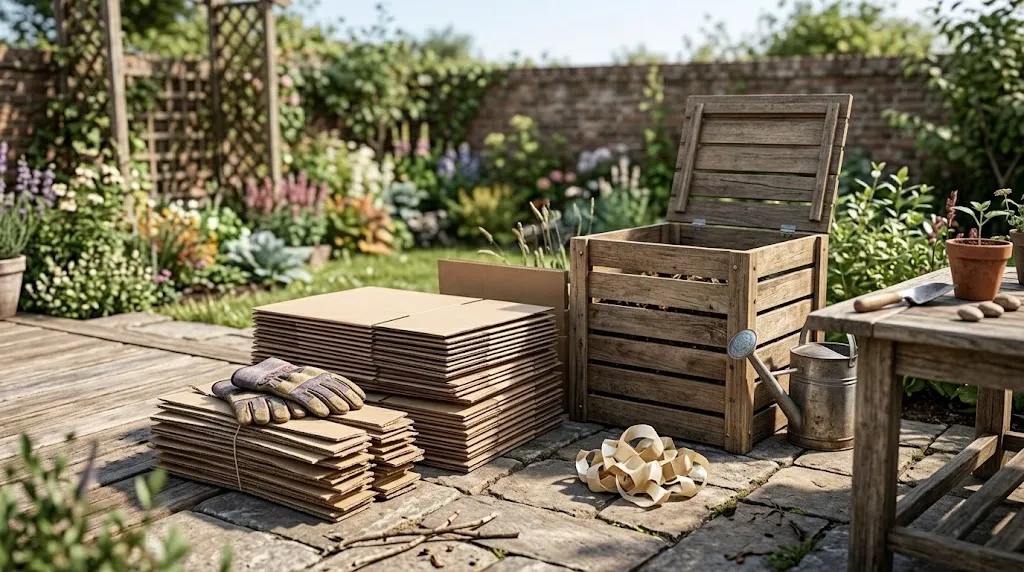
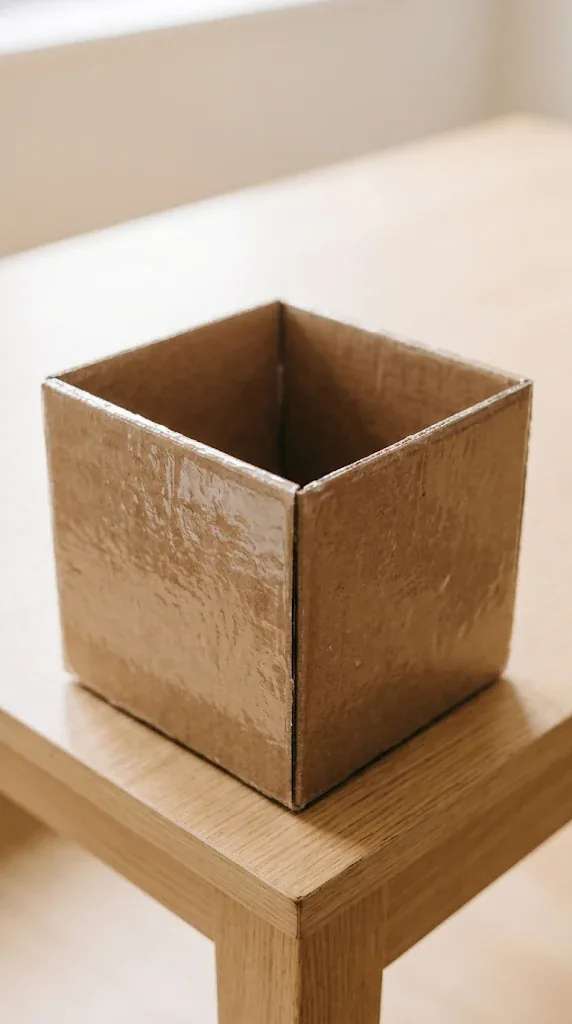
Yes, you can compost brown cardboard boxes. They are an excellent source of carbon for your compost pile.
Why
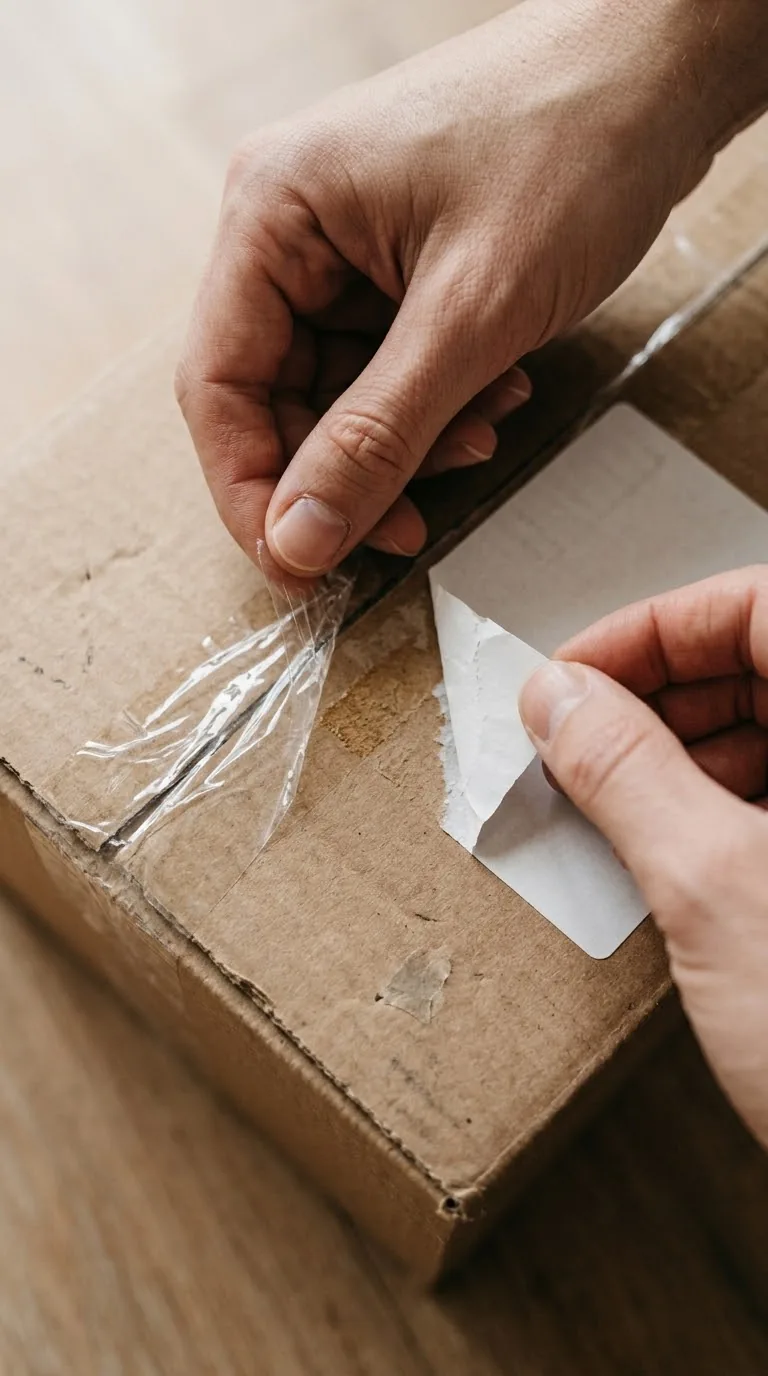
Cardboard is essentially wood pulp, making it a perfect brown material for your compost bin. It provides the necessary carbon to balance out nitrogen-rich green materials like food scraps. While it will eventually break down in a cold pile, it decomposes much faster in a hot, active compost system. Always ensure the cardboard is plain brown, as bleached or heavily dyed cardboard may contain chemicals that are not ideal for a healthy, organic compost pile. Removing plastic tape and labels is essential before adding it to your bin.
Quick facts
| Carbon to nitrogen | About 350:1 |
|---|---|
| Hot pile | 1-3 months |
| Cold pile | 6-12 months |
| Worm bin | Sometimes · Shredded or soaked well, in small amounts. |
| Bokashi | Yes · Can be used as carbon layer or base in bin. |
| City green bin | Generally accepted if flattened and clean. |
| Prep | Remove plastic tape, labels, and staples, then shred or tear. |
| Mix with | Mix with high-nitrogen greens like grass clippings. |
| Pest risk | Low · No significant pest risk if kept dry and clean. |
How to compost cardboard boxes
- Remove all plastic shipping tape, labels, and staples.
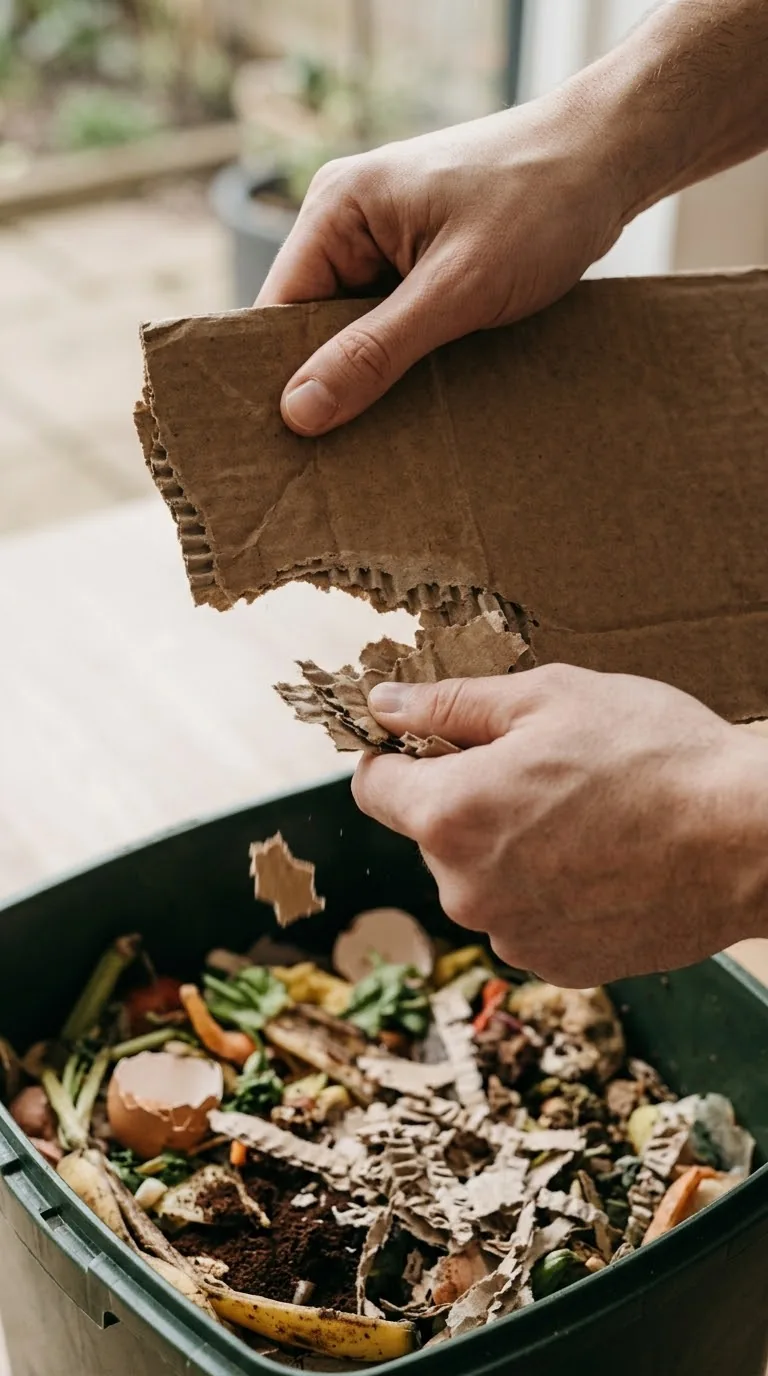
- Rip or cut the cardboard into small, manageable pieces.
- Soak the pieces in water briefly to speed up the breakdown process.
- Layer the cardboard with green materials in your compost bin.
- Turn your pile regularly to provide oxygen and encourage decomposition.
How much cardboard boxes can you add to compost?
Cardboard should generally make up about one-third of your total compost volume. Aim for a ratio of two parts brown cardboard to one part green nitrogen-rich waste like kitchen scraps or grass clippings. If you add too much cardboard at once, the pile may become too dry and decomposition will stall. If you notice the pile is not heating up or the material remains unchanged for weeks, you have likely added too much carbon and need to add more greens.
Which types of cardboard boxes can you compost?
- Corrugated shipping boxes: Yes. These are ideal for composting once all plastic tape and staples are removed.
- Glossy or wax-coated boxes: No. These often contain plastic linings or synthetic coatings that do not break down in home systems.
- Pizza boxes with heavy grease: Sometimes. Light grease is acceptable, but heavy food residue should be avoided to prevent attracting rodents.
- Bleached white cardboard: Sometimes. While technically compostable, these may contain chlorine residues that are best avoided in organic gardens.
Watch out for
- Avoid glossy or wax-coated cardboard as it may contain plastic.
- Remove all plastic tape and shipping labels first.
- Do not compost cardboard soaked in motor oil or chemicals. Light food grease is fine in small amounts.
- Large, thick pieces take much longer to break down than shredded ones.
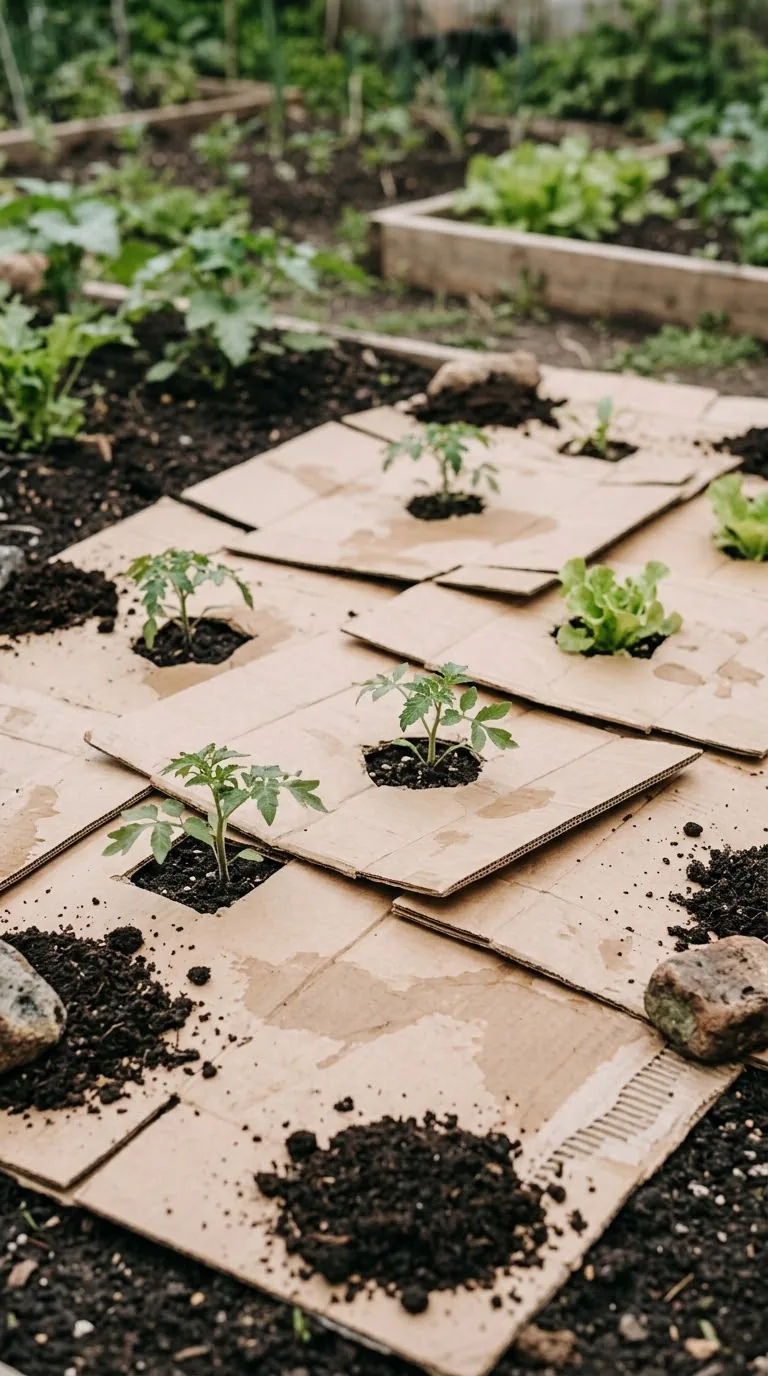
Sheet mulching with cardboard boxes
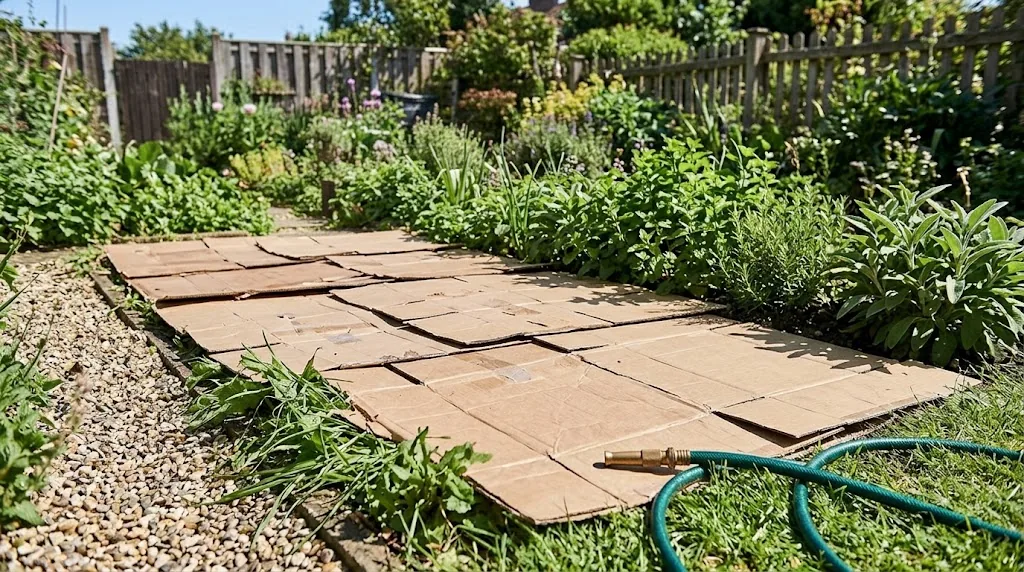
Flattened boxes make a great weed barrier. Peel off the tape and labels, lay the cardboard over a garden bed, and it will smother the weeds underneath.
Soak the cardboard down and cover it with compost or mulch. Over the season it rots into the soil, and the worms move right in.
Using cardboard to fix a wet compost bin
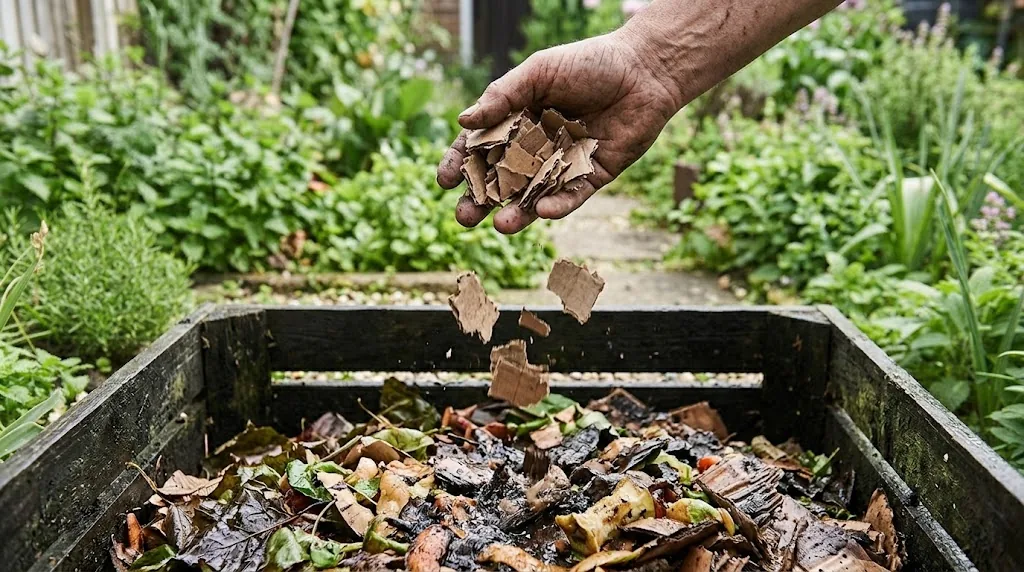
When a bin gets too wet and smelly, a handful of torn cardboard helps. The dry brown pieces soak up the extra moisture and bring the pile back into balance.
Tear the cardboard into small pieces and mix them in with the wet material, then turn the pile so air can reach the middle.
Other ways to use cardboard boxes
- Reuse the boxes for storage or moving.
- Recycle them through your local curbside program.
- Use them as a weed barrier in garden beds (sheet mulching).
Troubleshooting cardboard boxes in compost
- Cardboard is matting together and blocking airflow. Tear the cardboard into smaller pieces and mix it thoroughly with coarser materials like twigs or straw.
- The pile is drying out too quickly. Ensure you are soaking the cardboard in water before adding it to the bin to maintain proper moisture levels.
- Decomposition is taking much longer than expected. Shred the cardboard into smaller strips and increase the frequency of turning your pile to introduce more oxygen.
Myths about composting cardboard boxes
- Myth: Cardboard contains toxic inks that will poison your garden soil. Truth: Most modern shipping boxes use soy-based or water-based inks that are safe for home composting.
- Myth: Composting cardboard will cause your garden to become acidic. Truth: Cardboard has a near-neutral pH and will not significantly alter the acidity of your finished compost.
Can cardboard boxes go in a green bin or recycling?
Most municipal green waste programs accept plain cardboard boxes, but you must remove all plastic tape, labels, and staples first. If your local facility does not accept cardboard in the food-waste bin, it is almost always accepted in standard curbside recycling programs. Always flatten your boxes to save space and check your specific local waste management guidelines, as some municipalities have strict rules regarding the inclusion of paper products in organic waste streams.
Does composting cardboard boxes attract pests?
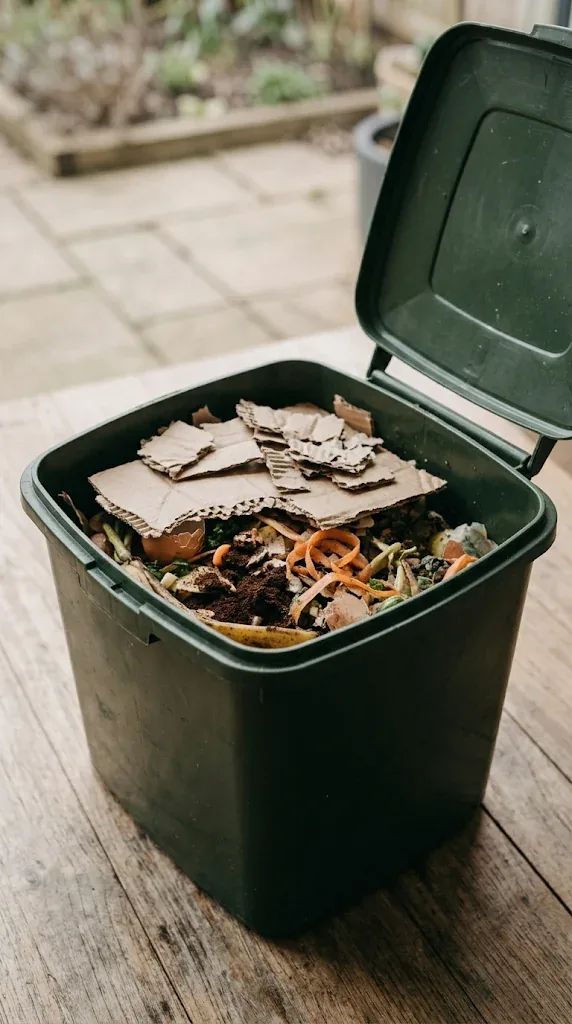
Adding plain cardboard boxes to your compost pile does not attract pests. Because cardboard is a dry carbon-rich brown material, it acts as an effective cover layer for smelly nitrogen-rich food scraps. By placing a thick layer of shredded or ripped cardboard over fresh kitchen waste, you help hide inviting food odors, absorb excess moisture, and deter common scavengers like flies, rodents, and raccoons from investigating your compost bin.
- Shred or rip cardboard into small pieces for easy layering.
- Cover all exposed food scraps with a thick layer of cardboard.
- Avoid adding cardboard that has food grease or oils that might draw animals.
- Keep your compost bin tightly covered to secure the barrier.
Common questions
Can I compost cardboard with tape on it?
No, you should always remove plastic tape and shipping labels, as these are synthetic and will not break down in your compost.
Does it matter if the cardboard is printed with ink?
Most inks on shipping boxes today are soy- or water-based and safe in small amounts, but avoid cardboard with heavy, shiny, or metallic ink coatings.
Should I shred the cardboard before adding it?
Yes, shredding or tearing cardboard into smaller pieces increases the surface area, which significantly speeds up the decomposition process.
Are cardboard boxes biodegradable?
Yes. Plain brown cardboard is wood fiber and biodegrades in about 3-6 months in a compost pile. Plastic tape, shipping labels and waxed or glossy coatings do not, so strip those off.
Rules vary by town and by composting method. When in doubt, check with your local composting or waste program.