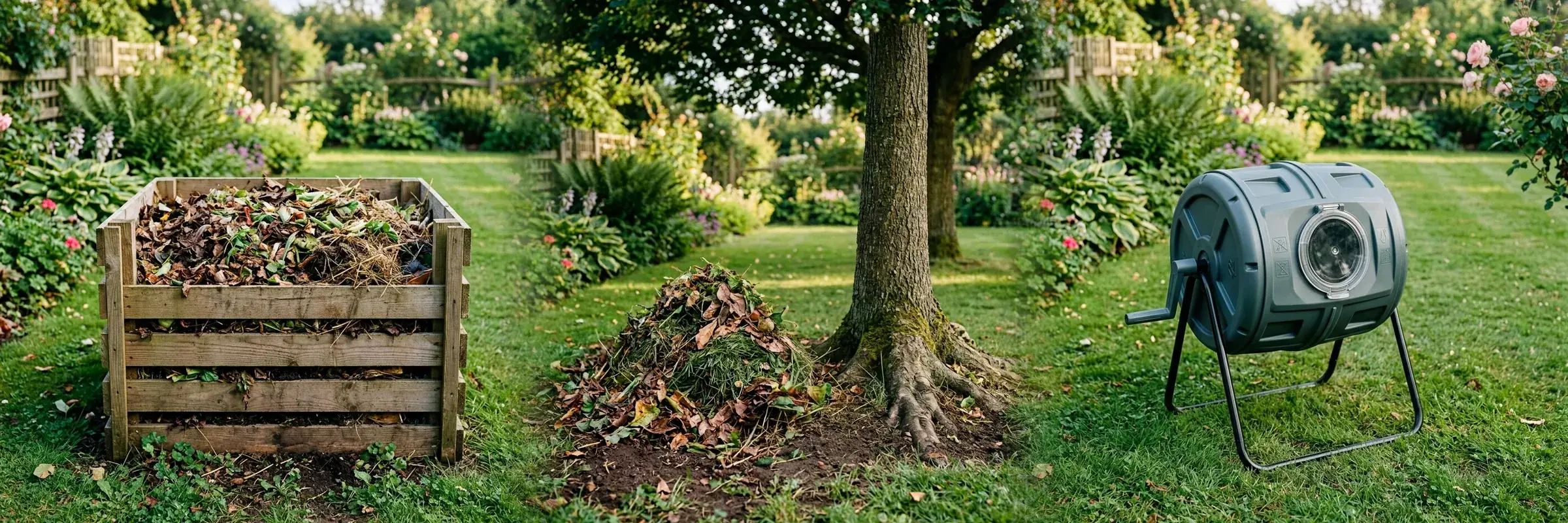
You can compost avocado skins, but they are extremely tough and take a very long time to break down in a standard backyard pile.
Why
Avocado skins contain high amounts of natural lignin and tough fibers that protect the fruit from pests and moisture loss. While organic and fully biodegradable, this tough structural defense makes them notoriously stubborn in cold backyard compost piles. They can persist for many months or even years largely unchanged unless they are chopped into small pieces. Industrial composting facilities handle them easily due to intense heat and mechanical shredders, but backyard composters need to prep them carefully.
Quick facts
| Carbon to nitrogen | About 30:1 |
|---|---|
| Hot pile | 2-4 months |
| Cold pile | 6-12 months |
| Worm bin | Sometimes · Use sparingly and chop into very small pieces first. |
| Bokashi | Yes · Excellent for bokashi as fermentation softens the tough skins. |
| City green bin | Usually accepted; check local municipal guidelines. |
| Prep | Chop into small pieces to accelerate decomposition. |
| Mix with | Mix with high-nitrogen greens to balance the carbon content. |
| Pest risk | Low · Low risk if buried deep within the compost pile. |
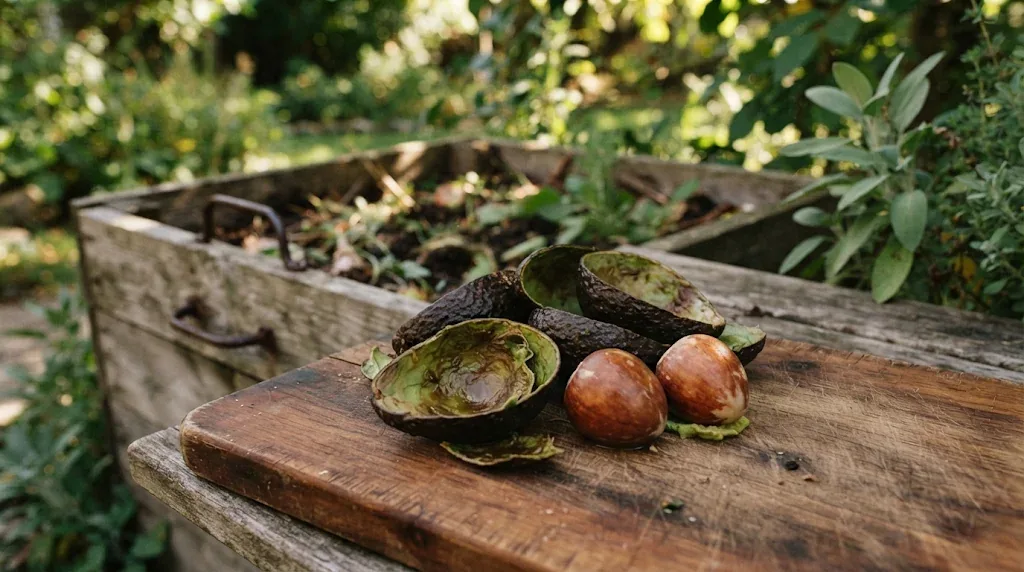
How to compost avocado skins
- Chop or shred the avocado skins into small pieces before tossing them into the bin.
- Mix the chopped skins thoroughly into the center of the pile to maintain proper aeration.
- Pair the skins with plenty of nitrogen-rich green materials to speed up the microbial breakdown.
- Turn your compost pile regularly to introduce oxygen and encourage faster decomposition.
How much avocado skins can you add to compost?
Avocado skins should be added in moderation to your home compost pile. Because they are thick and fibrous, they act similarly to brown materials despite having some moisture. Limit them to a small handful per addition and always mix them thoroughly with high-nitrogen green scraps like grass clippings or vegetable peelings. Adding too many intact skins at once will create dense layers that suffocate your pile and stop decomposition.
Which types of avocado skins can you compost?
- Whole raw skins: Sometimes. Take an extremely long time to break down unless you chop them up first.
- Finely chopped skins: Yes. Break down much faster because microbes can easily access the inner fibers.
- Guacamole-coated skins: Yes. Compostable, but the rich oils and leftover dip will attract pests if left uncovered.
Watch out for
- Leaving large, intact skins will cause them to act like shingles, repelling moisture and slowing down surrounding decay.
- Pesticide residues on conventional avocado skins can sometimes slow down microbial activity in small piles.
- Whole skins can form soggy mats that block airflow if they clump together in wet heaps.
What to do instead
- Chop them up and bury them directly in deep garden soil as a slow soil conditioner.
- Place them in your municipal curbside green waste or food scrap bin.
- Throw them in the household trash if you do not have a hot composting system.
Troubleshooting avocado skins in compost
- The skins are not breaking down at all after several months. Remove the large pieces, chop them into tiny bits with shears, and return them to the center of a hotter pile.
- Fruit flies are swarming around the avocado additions. Ensure all skins are thoroughly scraped clean of flesh and buried beneath a deep layer of finished compost or dry leaves.
- The skins are forming a slimy, impermeable mat. Break up the mat with a pitchfork, add dry brown material like shredded cardboard, and turn the pile to restore airflow.
Myths about composting avocado skins
- Myth: Avocado skins are toxic to soil and compost because of their natural oils. Truth: Avocado skins are completely non-toxic to soil microbes and plants once fully decomposed.
- Myth: You can toss whole avocado halves, pit and skin included, straight into the bin. Truth: Whole avocados contain too much mass and oil in the pit, causing them to mummify rather than compost.
Can avocado skins go in a green bin or recycling?
Most municipal green waste and industrial curbside food scrap programs readily accept avocado skins because their high-heat commercial facilities easily process tough woody materials. Before tossing them into your green bin, make sure they are free of any non-compostable stickers. Always verify your local waste management guidelines, as some regions have specific restrictions on yard versus food waste integration.
Does composting avocado skins attract pests?
Avocado skins themselves are mostly tough fiber and lack strong odors once cleaned, but any residual avocado flesh left on the inside can easily attract fruit flies, ants, and small rodents. Because the skins are bulky and take a long time to decompose, they can create pockets in the pile where pests might nest if the scraps are left exposed near the surface.
- Scrape all leftover green flesh off the interior of the skins before tossing them in.
- Chop the skins into small pieces so they do not create hollow hiding spaces for pests.
- Bury the skins deep within the active center of your compost pile rather than leaving them on top.
- Cover your additions immediately with a thick layer of carbon-rich brown material.
Common questions
Are avocado skins biodegradable?
Yes, avocado skins are entirely natural and will eventually break down completely in nature, though it takes a very long time without human intervention.
Should I peel the skin off before composting?
You are actually composting the skin itself, so you will want to separate it from the inner flesh, which breaks down much faster.
Do avocado skins attract pests?
If they still have leftover green flesh attached, they can attract fruit flies and rodents, so rinse them or bury them deep.
Can I put avocado pits in with the skins?
Avocado pits are even harder than the skins and will take years to break down unless heavily crushed, so it is usually best to keep them out of standard home bins.
Rules vary by town and by composting method. When in doubt, check with your local composting or waste program.