
You can compost eggshells easily, but whole eggs are generally discouraged in backyard piles due to pest risks. If you must compost whole eggs, ensure your system is highly secure or use a municipal food waste program.
Why
While eggshells are a fantastic addition to compost, whole eggs contain high amounts of protein and fat, which can quickly turn rancid and attract unwanted scavengers like rats, raccoons, and flies. In a standard backyard bin, whole eggs will not break down quickly enough to avoid becoming a nuisance. Industrial or municipal composting facilities reach much higher temperatures and use specialized equipment that can safely process whole eggs, making them the preferred disposal method for large quantities of spoiled or unused eggs.
Quick facts
| Carbon to nitrogen | About 12:1 |
|---|---|
| Hot pile | 1-3 months |
| Cold pile | 3-6 months |
| Worm bin | Sometimes · Crushed shells are fine; avoid whole eggs. |
| Bokashi | Yes · Whole raw or cooked eggs can be fermented. |
| City green bin | Usually accepted; check local rules |
| Prep | Crush shells or scramble/cook whole eggs first |
| Mix with | Bury deep in the pile and balance with carbon |
| Pest risk | High · Whole eggs attract rats and raccoons; bury well. |
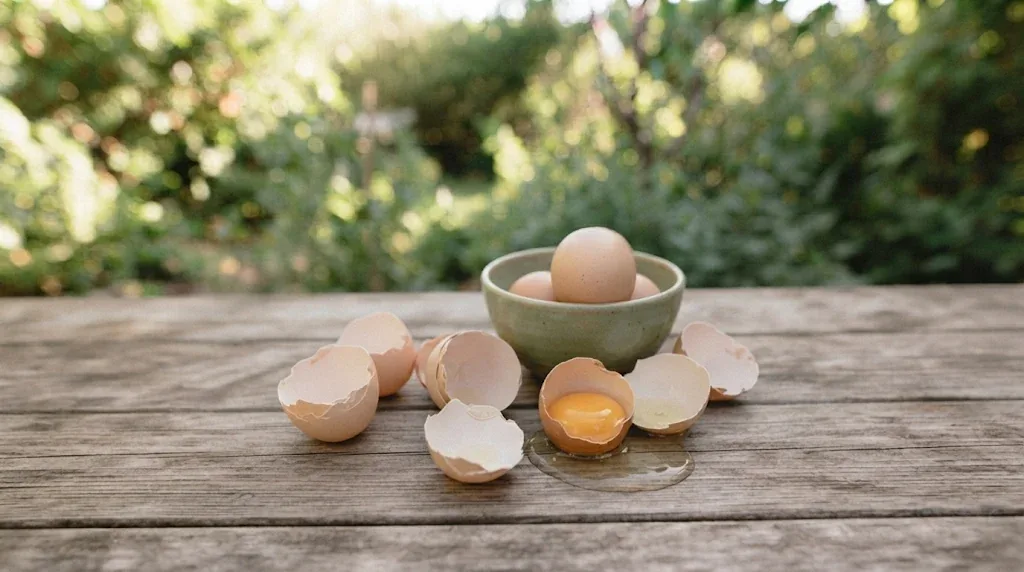
How to compost eggs
- Crack eggs and rinse shells before adding to the bin.
- Crush shells into smaller pieces to speed up decomposition.
- Bury whole eggs deep in the center of a hot pile if you choose to compost them.
- Use a secure, enclosed bin to prevent animals from digging them up.
How much eggs can you add to compost?
You should treat whole eggs as a rare addition rather than a staple. If you have a large batch of spoiled eggs, it is better to dispose of them through municipal waste. For a healthy pile, eggshells can be added regularly, but whole eggs should be limited to one or two at a time, buried deep in a hot, active pile, and only if you are confident your bin is secure against local wildlife.
Which types of eggs can you compost?
- Eggshells: Yes. These are excellent for compost and provide valuable calcium.
- Whole raw eggs: Sometimes. Only recommended for hot, secure, or industrial composting systems.
- Cooked eggs: Sometimes. Like raw eggs, these attract pests and should be handled with extreme caution.
Watch out for
- Whole eggs are a major attractant for rodents and neighborhood pets.
- Raw eggs can harbor salmonella, which may persist in cold compost piles.
- Uncrushed shells take a very long time to break down.
What to do instead
- Use in cooking or baking if still fresh.
- Donate to local food banks if near expiration.
- Check if your municipality accepts food scraps in green bins.
Troubleshooting eggs in compost
- Bad odors from the pile. Remove the rotting egg and add a thick layer of dry carbon-rich browns like leaves or straw.
- Pests digging in the bin. Stop adding protein-rich items and secure the bin with fine-gauge wire mesh.
- Shells are still visible after a year. Crush the shells into smaller fragments before adding them to the pile next time.
Myths about composting eggs
- Myth: Eggshells will instantly provide calcium to plants. Truth: Eggshells must decompose and break down into the soil before the calcium becomes accessible to plant roots.
- Myth: You can compost anything that is organic. Truth: While true, some organic items like meat, dairy, and whole eggs create significant pest and sanitation issues in home bins.
Can eggs go in a green bin or recycling?
Most municipal green waste programs accept food scraps, including whole eggs, because their industrial-scale facilities reach temperatures high enough to kill pathogens and process proteins quickly. Check your local waste management website to confirm if they accept food scraps in your curbside bin. If they do, this is the safest and most efficient way to dispose of large quantities of eggs without attracting pests to your backyard.
Does composting eggs attract pests?
Whole eggs are highly attractive to rodents, raccoons, opossums, and neighborhood dogs because they are a dense source of protein and fat. The scent of rotting eggs can travel long distances, signaling an easy meal to scavengers. Flies and maggots are also common visitors if the eggs are left near the surface. To minimize these risks, always bury food scraps deep within the pile and avoid adding whole eggs unless you have a fully enclosed, pest-proof bin.
- Always bury food scraps under at least six inches of brown material.
- Use a hardware cloth or wire mesh base to keep rodents from burrowing into the bin.
- Avoid adding meat, dairy, or whole eggs if you have had recent pest activity.
Common questions
Are eggs biodegradable?
Yes, eggs are organic matter and will eventually break down in nature, but that does not mean they are suitable for all home composting systems.
Can I compost the egg carton too?
Yes, if the carton is made of plain cardboard or molded paper pulp, it is an excellent brown material for your compost pile.
Do eggshells add calcium to my soil?
Yes, crushed eggshells are a great source of calcium for plants, though they take time to break down enough for the nutrients to become plant-available.
Will eggshells change the pH of my compost?
Eggshells are slightly alkaline, but they generally do not significantly alter the overall pH of a well-balanced, diverse compost pile.
Rules vary by town and by composting method. When in doubt, check with your local composting or waste program.