
You can compost peach pits, but they take a very long time to break down in a standard backyard bin. They are best suited for hot composting systems or municipal green waste programs.
Why
Peach pits are extremely dense, woody materials that resist microbial decomposition. In a typical backyard cold pile, a peach pit can remain intact for years, essentially acting like a rock. While they are technically organic matter, they do not contribute to the nutrient cycle in a meaningful timeframe for home gardeners. If you have a high-heat industrial composting setup or a very active, large-scale hot pile, they will eventually break down, but for most home composters, they are better off being discarded or used for craft projects.
Quick facts
| Carbon to nitrogen | Varies |
|---|---|
| Hot pile | 1-2 years |
| Cold pile | Several years |
| Worm bin | No · Too hard and woody for worms to consume |
| Bokashi | Sometimes · Only if crushed first to fit in the container |
| City green bin | Usually accepted; check local rules |
| Prep | Crush or smash thoroughly before adding |
| Mix with | Bury deep in the center of the pile |
| Pest risk | Low · Hard shell protects the interior from pests |
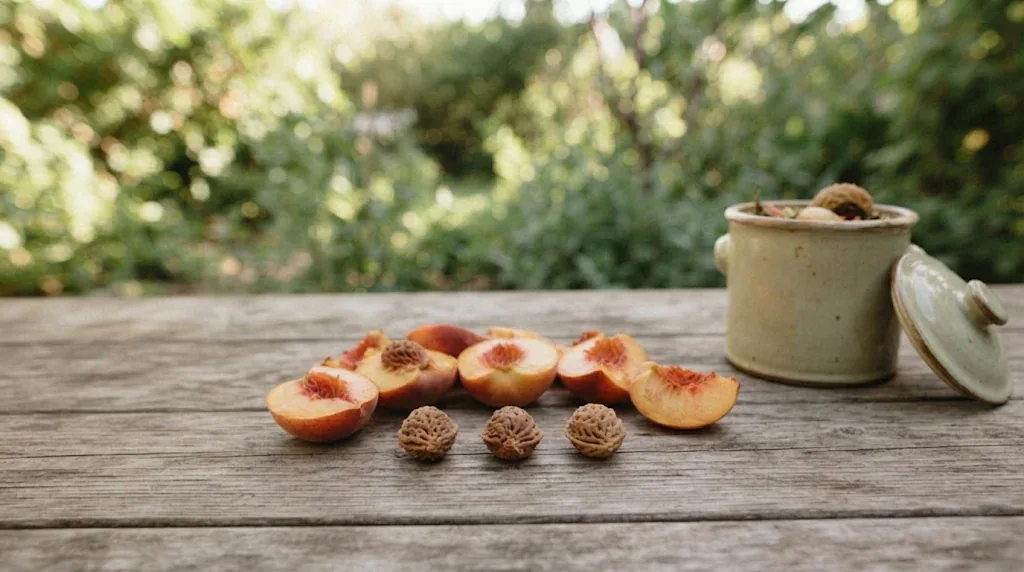
How to compost peach pits
- Clean the pit thoroughly to remove all fruit flesh.
- Dry the pits completely to prevent mold growth.
- Crush the pits with a hammer if possible to speed up decomposition.
- Bury the pits deep in the center of a hot, active compost pile.
- Remove any pits that remain intact when you turn or screen your finished compost.
How much peach pits can you add to compost?
You should only add peach pits in small quantities, as they do not contribute meaningful nutrients. A handful or two per batch is sufficient. Because they are classified as browns, they should be balanced with nitrogen-rich greens, but their slow breakdown means they won't help your pile heat up. If you notice your pile is becoming cluttered with hard, woody debris that won't disappear, stop adding them and switch to smaller, more digestible carbon sources like leaves or cardboard.
Which types of peach pits can you compost?
- Clean, dry pits: Yes. These are the safest to add as they won't attract pests or rot.
- Pits with fruit residue: No. The sugary flesh will attract fruit flies and other pests immediately.
- Crushed pits: Yes. Breaking the shell allows moisture and microbes to enter, speeding up the process.
Watch out for
- They can damage garden shredders or compost turners.
- Intact pits may sprout if the pile does not get hot enough.
- They do not provide significant nitrogen or carbon to the pile.
- Check if your local municipal facility accepts hard woody pits.
What to do instead
- Use them for DIY craft projects or jewelry.
- Add them to a municipal food waste collection bin.
- Place them in your regular trash bin.
Troubleshooting peach pits in compost
- Pits remain intact after months. This is normal; sift them out and return them to the next pile or discard them.
- Pits are sprouting. Pull the seedlings out and ensure your pile reaches higher temperatures next time.
- Pile is full of woody debris. Stop adding pits and focus on smaller, faster-decomposing carbon sources.
Myths about composting peach pits
- Myth: All organic food scraps compost at the same rate. Truth: Different materials have vastly different breakdown times; woody pits take much longer than soft leaves.
- Myth: Peach pits add valuable nutrients to soil. Truth: While they contain trace minerals, they break down so slowly that they provide little immediate benefit to your garden.
Can peach pits go in a green bin or recycling?
Most municipal green waste programs accept peach pits because they use industrial-scale composting facilities that reach much higher temperatures than home bins. These facilities can break down woody materials effectively. Always check your local waste management website to confirm if they accept fruit pits, and ensure they are free of plastic stickers or non-compostable debris before tossing them in the bin.
Does composting peach pits attract pests?
Peach pits do not typically attract pests because they lack the soft, sugary fruit flesh that draws flies, ants, or rodents. Once cleaned of all fruit residue, they are essentially inert wood. As long as you ensure no fruit remains attached to the pit, they will not contribute to pest issues in your bin.
- Wash pits thoroughly to remove all fruit pulp.
- Dry pits in the sun before adding them to the bin.
- Bury pits deep within the pile to keep them out of sight.
- Use a closed bin to prevent any potential interest from larger scavengers.
Common questions
Are peach pits biodegradable?
Yes, they are biodegradable, meaning they will eventually break down into organic matter. However, this process takes years, which is much longer than the typical composting cycle.
Will peach pits sprout in my compost?
It is possible. If your compost pile does not reach high enough temperatures to kill the seed embryo, the pit may sprout and grow into a peach tree.
Can I put peach pits in my worm bin?
No, do not add them to a vermicompost bin. Worms cannot process the hard, woody shell, and they will simply take up space.
Should I crack the pits open before composting?
Yes, cracking them exposes the inner seed to microbes and moisture, which significantly speeds up the decomposition process compared to leaving them whole.
Rules vary by town and by composting method. When in doubt, check with your local composting or waste program.