
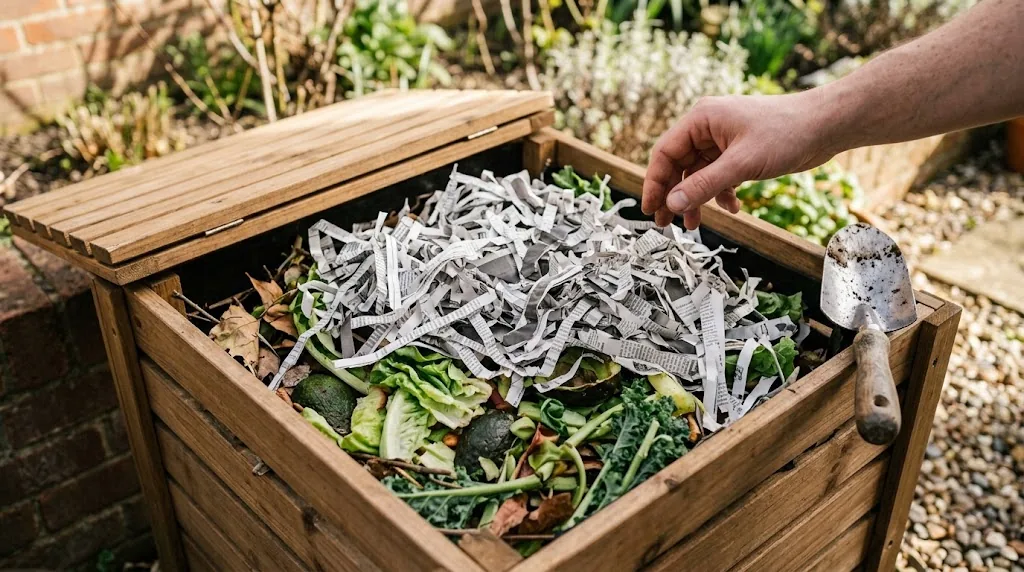
Yes, newspaper is a fantastic carbon-rich brown material for your compost bin. It breaks down quickly when shredded and mixed with wet kitchen scraps.
Why
Newspaper is made of paper fibers derived from wood, making it an excellent source of carbon to balance the nitrogen-heavy food scraps in your compost pile. While older printing inks used to contain toxic heavy metals like lead, modern newspaper publishers primarily use soy- or water-based inks that are generally safe for backyard composting. Colored inserts and glossy flyers should be avoided because their slick coatings often contain clays, plastic films, or toxic chemical dyes that do not break down cleanly in a standard home pile.
Quick facts
| Carbon to nitrogen | About 175:1 |
|---|---|
| Hot pile | 1-3 months |
| Cold pile | 3-6 months |
| Worm bin | Yes · Shred finely and moisten first. |
| Bokashi | Yes · Tear into strips to prevent clumping. |
| City green bin | Usually accepted; check local rules. |
| Prep | Shred or tear into narrow strips. |
| Mix with | Mix with nitrogen-rich green waste. |
| Pest risk | Low · No significant risk of attracting pests. |
How to compost newspaper
- Shred or tear the newspaper into thin strips to speed up decomposition and prevent matting.
- Layer the shredded paper alternately with green waste like vegetable peels and coffee grounds.
- Moisten the paper slightly as you add it so it matches the moisture of a wrung-out sponge.
- Turn your compost pile regularly to introduce oxygen and help the paper break down evenly.
How much newspaper can you add to compost?
Shredded newspaper should make up about twenty to thirty percent of your total compost pile volume, acting as a reliable brown layer to balance wet green additions. For every single bucket of kitchen scraps you add, mix in roughly two handfuls of shredded paper to maintain adequate aeration. If you notice a soggy, dense mat forming across the top of your pile or decomposition stalls entirely, you have added too much newspaper without enough moisture and nitrogen.
Which types of newspaper can you compost?
- Black and white newsprint: Yes. Standard black text pages break down quickly and safely in any home composting system.
- Glossy advertising circulars: No. These shiny inserts contain heavy clays and plastic coatings that prevent proper decomposition.
- Colored comic sections: Sometimes. Modern soy-based color prints are generally safe, but older or metallic specialty inks should be avoided.
Watch out for
- Avoid glossy magazine inserts, colored comic sections, and heavy advertising flyers.
- Do not add pages printed with metallic inks or heavy wax coatings.
- Prevent large clumps from forming, as thick layers of wet paper will mat together and block airflow.
Other ways to use newspaper
- Recycle it in your curbside paper bin
- Use it as a weed-suppressing mulch layer in the garden
- Use it as packing material for shipping or storage
Troubleshooting newspaper in compost
- Shredded newspaper is matting together into thick, soggy sheets that block airflow. Break up the clumps with a garden fork and mix the paper thoroughly with coarse yard waste or dry leaves.
- The newspaper pieces are taking months to break down and look untouched. Ensure the paper is shredded into much thinner strips and moistened to jumpstart microbial activity.
- The compost pile has become overly dry and dusty. Sprinkle water over the pile as you add dry newspaper layers to maintain the moisture level of a wrung-out sponge.
Myths about composting newspaper
- Myth: All newspaper ink is still full of toxic lead and heavy metals. Truth: Modern commercial publishers have largely phased out heavy metal pigments, relying instead on safe soy- and water-based inks.
- Myth: Newspaper will ruin garden soil because it makes the earth too acidic. Truth: While fresh paper has a neutral to slightly acidic pH, the finished compost neutralizes significantly during the decomposition process.
Can newspaper go in a green bin or recycling?
Most municipal curbside recycling programs readily accept clean newspaper for traditional paper recycling streams, which is often the preferred disposal method if your home compost bin is already at maximum capacity. Some municipal green waste or food scrap collection programs also permit shredded newspaper if it helps absorb excess moisture from organic kitchen bins. Always remove any plastic wrapping bands, rubber bands, or promotional plastic bags before placing the newspaper in municipal bins, and check your local sanitation guidelines for specific rules.
Does composting newspaper attract pests?
Composting newspaper does not attract pests. In fact, adding shredded newspaper to your compost bin serves as an excellent brown material to cover wet kitchen scraps and other odorous green waste. By creating a thick, carbon-rich barrier over decomposing food, newspaper effectively masks enticing food smells that might otherwise draw unwanted visitors such as rodents, raccoons, and flies to your pile.
- Shred newspaper into fine strips to create a dense, uniform cover layer.
- Spread a generous layer of paper completely over any fresh food scraps.
- Dampen the paper slightly so it settles and seals in odors more effectively.
- Replenish the brown layer every time you add smelly kitchen waste.
Common questions
Is newspaper biodegradable?
Yes, newspaper is entirely biodegradable because wood pulp naturally decomposes in the environment. However, biodegradable simply means it breaks down eventually, whereas backyard composting ensures it safely transforms into nutrient-rich humus without leaving harmful residues.
Can I compost colored newspaper ink?
Most modern colored inks are soy- or water-based and safe to compost in small amounts. However, heavily saturated colored pages, metallic finishes, or neon inserts may contain chemical additives that are better sent to recycling.
Should I shred newspaper before composting?
Yes, shredding or tearing newspaper into narrow strips is essential. Whole sheets easily mat together, blocking oxygen and moisture from reaching the rest of your compost pile.
Does newspaper attract pests to my compost bin?
Plain black-and-white newspaper does not attract pests. In fact, adding a dry layer of shredded newspaper on top of fresh food scraps is a great way to deter fruit flies and mask odors.
Rules vary by town and by composting method. When in doubt, check with your local composting or waste program.