Sometimes
Sometimes. Raw rice composts easily, but cooked rice can attract pests and smell.
VerdictSometimes
Breaks down in2–4 weeks
Counts asFood
Why
Uncooked rice is plant starch and breaks down. Cooked rice, especially with oil or sauces, attracts rats and flies and can go sour in a home bin.
Quick facts
| Carbon to nitrogen | About 25:1 |
|---|---|
| Hot pile | 2-4 weeks |
| Cold pile | 3-6 months |
| Worm bin | Sometimes · Small amounts only, avoid if cooked or salted. |
| Bokashi | Yes · Excellent for all types of rice. |
| City green bin | Usually accepted; check local municipal guidelines. |
| Prep | Ensure rice is plain and unseasoned. |
| Mix with | Mix with high-carbon materials like dry leaves or straw. |
| Pest risk | High · Cooked rice attracts rodents; bury deep or avoid entirely. |
How to compost rice
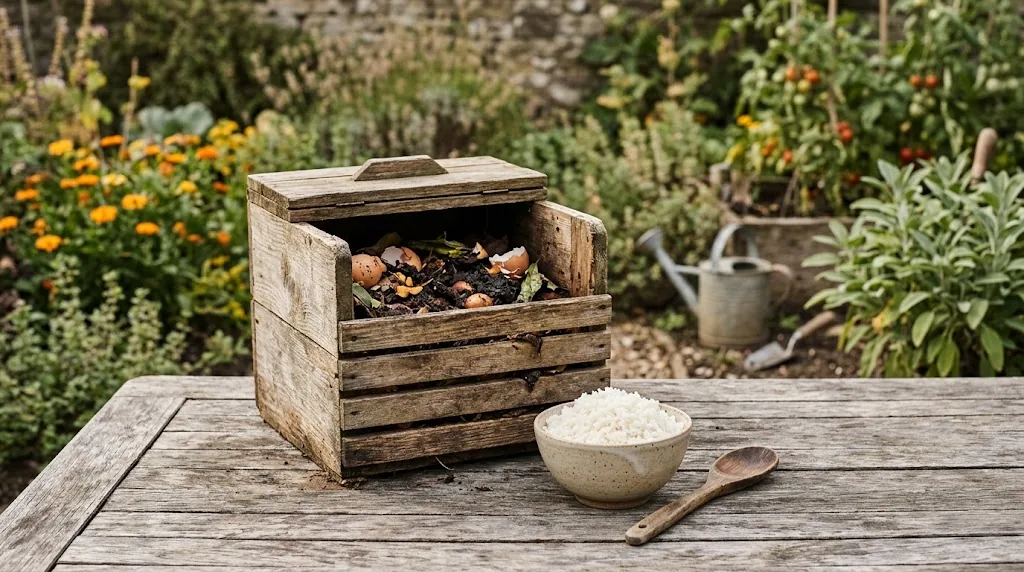
- Add raw rice in small amounts and mix it into the pile.
- Bury cooked rice under other material so pests don't find it.
- Keep the pile moist and turned.
Watch out for
- Cooked rice can attract rodents and flies.
- Rice with oil or sauce can smell.
- Leftover rice that's gone sour should go in the trash.
What to do instead
- Feed leftover rice to chickens if they're kept nearby.
- Freeze cooked rice and use it in a meal.
Common questions
Can I compost leftover rice?
It's better to avoid cooked rice, which can attract pests.
Can I compost raw rice?
Yes, in small amounts.
Does rice attract rats?
Cooked rice can, especially if it's left on the surface of the pile.
Is rice biodegradable?
Yes, it breaks down, but it's not always pest-free.
Rules vary by town and by composting method. When in doubt, check with your local composting or waste program.