
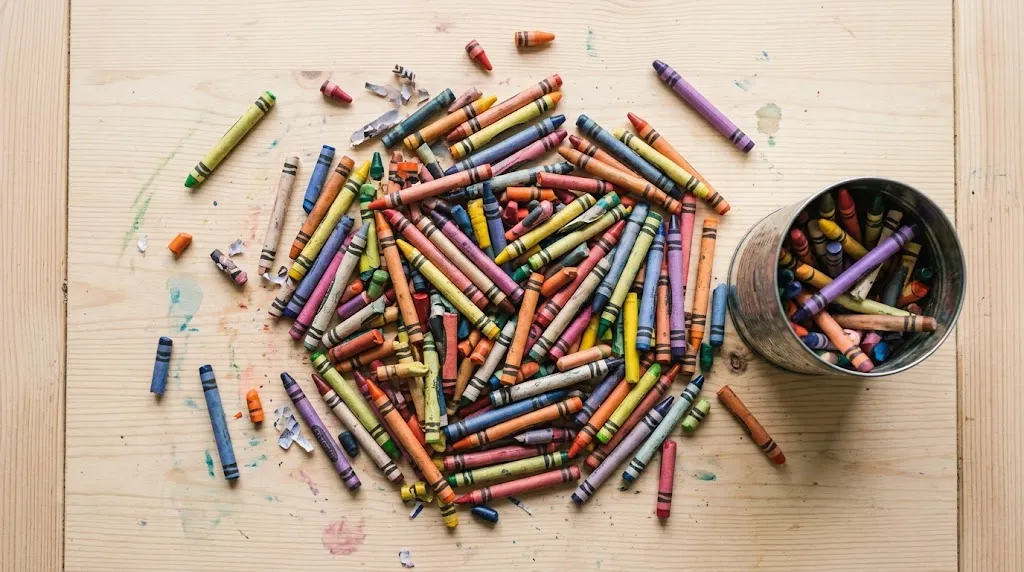
No, you cannot compost traditional crayons because they are made of petroleum-based paraffin wax and synthetic pigments that do not biodegrade naturally.
Why
Standard crayons are manufactured using paraffin wax, which is derived from petroleum, along with various chemical colorants. Microorganisms in your compost pile cannot break down these synthetic materials, meaning the wax will remain in your soil indefinitely. Furthermore, the synthetic pigments and heavy metals sometimes found in colorful dyes can leach into your compost, potentially contaminating your garden soil and posing a risk to plants and beneficial soil organisms. Even if labeled non-toxic, they belong in the trash.
Quick facts
| Carbon to nitrogen | Not applicable |
|---|---|
| Hot pile | Does not break down |
| Cold pile | Does not break down |
| Worm bin | No · Petroleum wax is toxic to worms. |
| Bokashi | No · Bokashi microbes cannot break down petroleum wax. |
| City green bin | Not accepted in municipal compost bins |
| Prep | Do not compost |
| Mix with | None |
| Pest risk | Not applicable · Does not attract pests. |
How to get rid of crayons
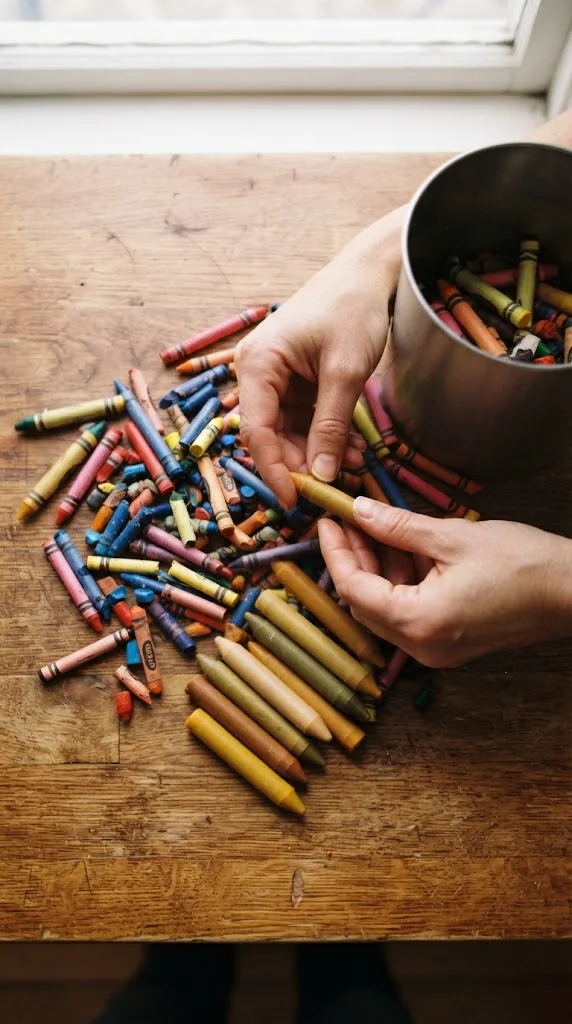
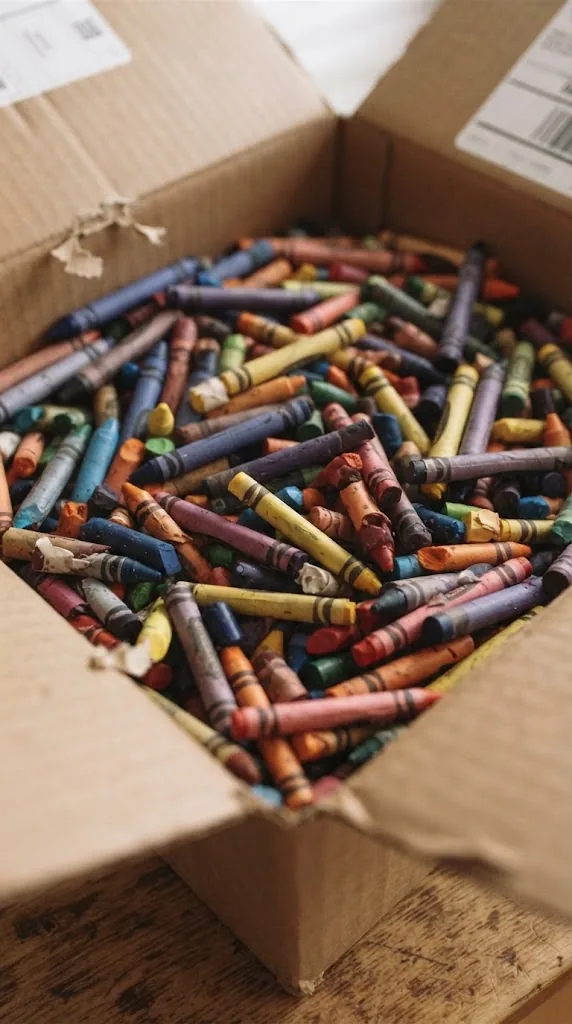
- Sort through your art supplies to separate standard wax crayons from soy or beeswax alternatives.
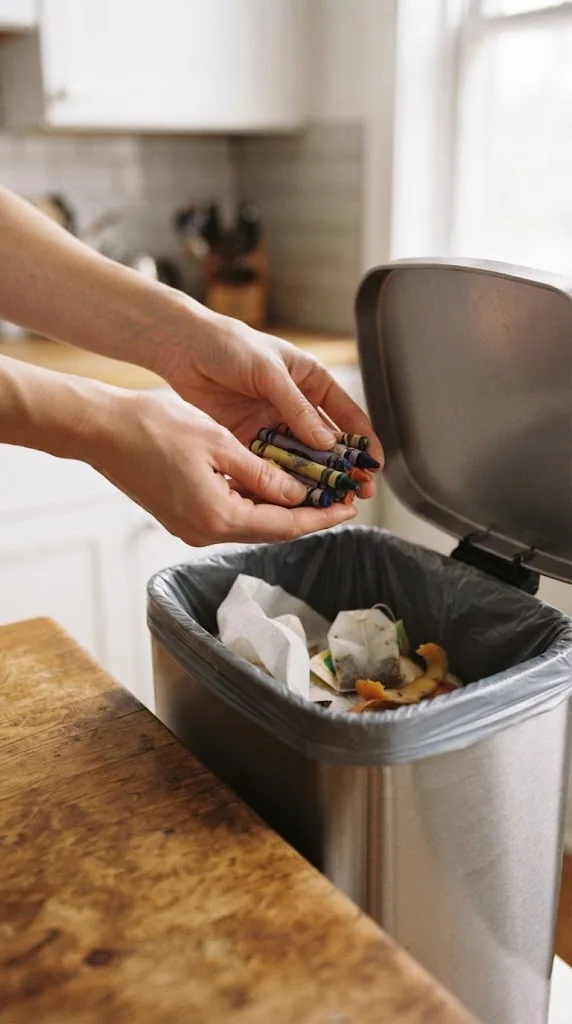
- Place the non-compostable wax crayons into your regular household trash bin.
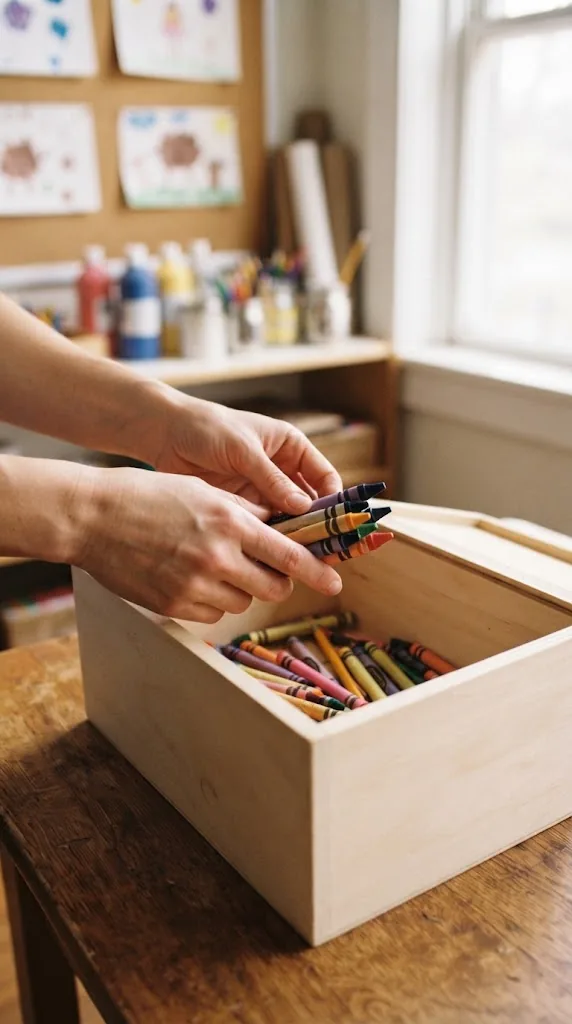
- Consider dropping off unwanted crayons at local schools, daycares, or community centers if they are still usable.
- Look into specialty mail-in recycling programs that melt down old crayons to create new ones.
Which types of crayons can you compost?
- Standard paraffin crayons: No. These are made from petroleum-based wax and synthetic dyes that do not break down.
- Soy-based crayons: Sometimes. While soy is natural, these often contain synthetic binders and heavy colorants unless certified home-compostable.
- Beeswax crayons: Sometimes. Pure beeswax is biodegradable, but commercial variants frequently include non-compostable pigments and additives.
Watch out for
- Do not put crayons in a backyard or municipal compost bin.
- Avoid melting old crayons into molds if you plan to use them around food-contact surfaces.
- Keep broken crayon pieces away from pets and wildlife, as paraffin wax can cause digestive blockages.
What to do instead
- Donate gently used crayons to local schools, charities, or art programs.
- Send them to specialized crayon recycling initiatives.
- Throw them in the standard household garbage.
Myths about composting crayons
- Myth: Crayons marked non-toxic are safe to compost. Truth: Non-toxic simply means the item is safe for children to handle, but it does not mean soil microorganisms can break down the materials.
- Myth: Peeling the paper off a crayon makes the wax compostable. Truth: While the paper wrapper is compostable, the underlying petroleum-based wax core will still remain in your soil indefinitely.
Can crayons go in a green bin or recycling?
Municipal green bins and industrial food-waste composting facilities almost universally reject traditional crayons. The petroleum-based paraffin wax and heavy chemical pigments contaminate commercial compost streams, as sorting facilities cannot effectively screen out small wax fragments. You should remove any paper labels if you wish to recycle them through specialized take-back programs, but standard wax crayons ultimately belong in your household trash bin. Always check local waste management rules before placing alternative art supplies into green waste collections.
Common questions
Can you compost soy-based or beeswax crayons?
While soy and beeswax are natural materials, most commercial crayons of this type still contain synthetic binders and heavy dyes. It is generally safer to avoid composting them unless the manufacturer explicitly certifies the entire crayon as home-compostable.
What happens if a crayon accidentally ends up in the compost?
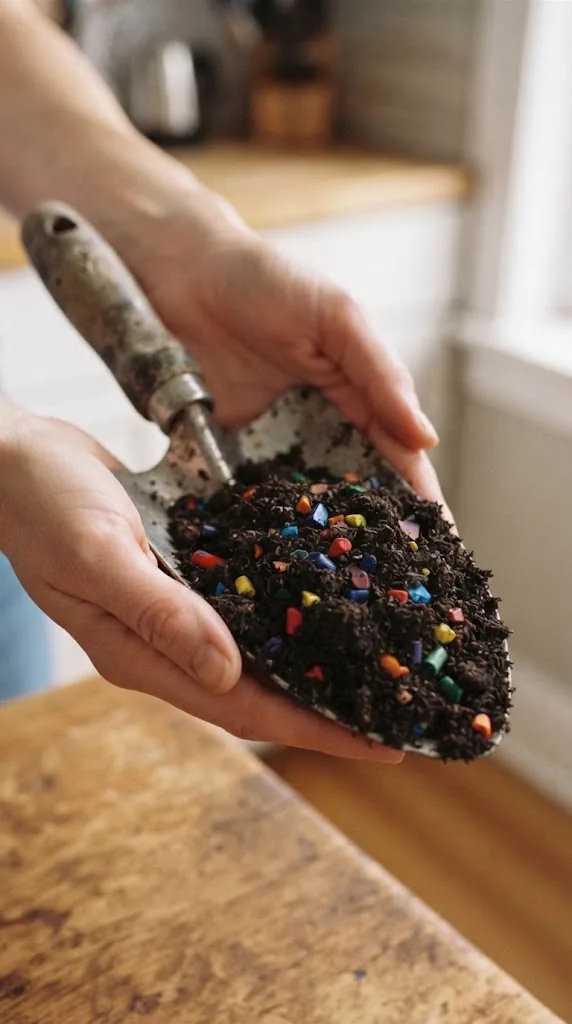
A single small crayon will not ruin your entire pile, but it will not break down either. You will likely find small, colorful wax fragments in your finished compost that you will need to manually pick out before using the soil.
Are there eco-friendly alternatives to traditional crayons?
Yes, several companies manufacture crayons using 100 percent pure beeswax, soy wax, and plant-based or mineral pigments. While these are more natural, always check the packaging for specific disposal and composting guidelines.
Are crayons biodegradable?
Standard crayons are not. They are paraffin wax and synthetic pigment. Some soy or beeswax crayons are biodegradable, but slowly.
Rules vary by town and by composting method. When in doubt, check with your local composting or waste program.