
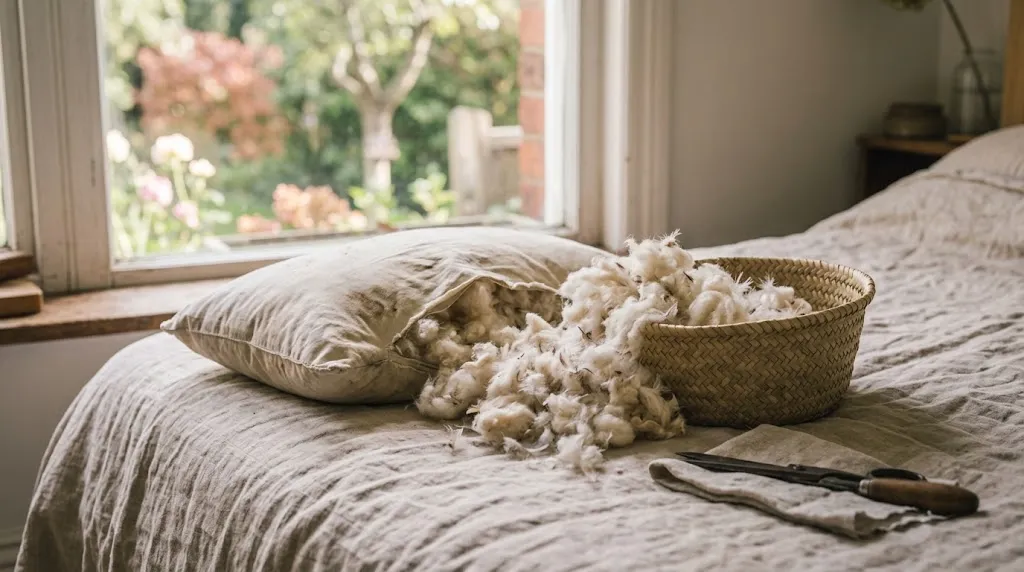
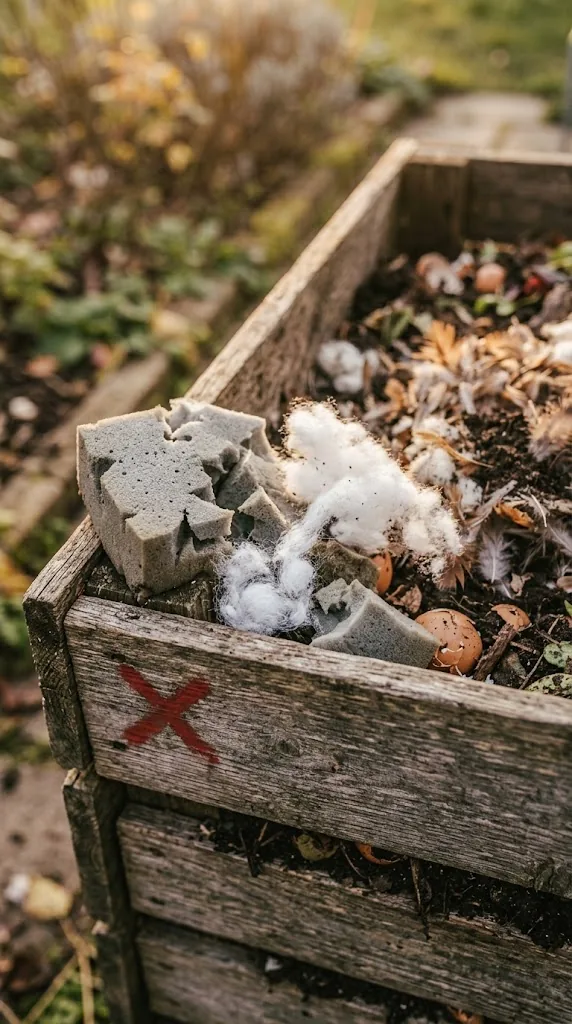
You can compost pillow stuffing only if it is made entirely from natural fibers like cotton, wool, or feathers. Synthetic fills like polyester and memory foam will not break down and must be kept out of your bin.
Why
Whether pillow stuffing can be composted depends entirely on its material composition. Natural fills such as 100 percent cotton, wool, feathers, or down are organic matter that microorganisms can break down successfully in a compost pile. However, the vast majority of modern pillows use synthetic polyester fiberfill, acrylic, or polyurethane foam. These synthetic materials are petroleum-based plastics that will not biodegrade, meaning they will persist in your compost for decades as microplastics and ruin your finished soil.
Quick facts
| Carbon to nitrogen | Varies |
|---|---|
| Hot pile | 3-6 months |
| Cold pile | 6-12 months |
| Worm bin | Sometimes · Only natural fibers like cotton, feather, or wool. |
| Bokashi | Sometimes · Accepts natural fibers, but polyester will not break down. |
| City green bin | Check local rules; usually rejected if polyester. |
| Prep | Remove casing, identify material, and cut into small pieces. |
| Mix with | Mix natural fibers well with carbon-rich brown materials. |
| Pest risk | Low · Unlikely to attract pests unless soiled with food. |
How to compost pillow stuffing
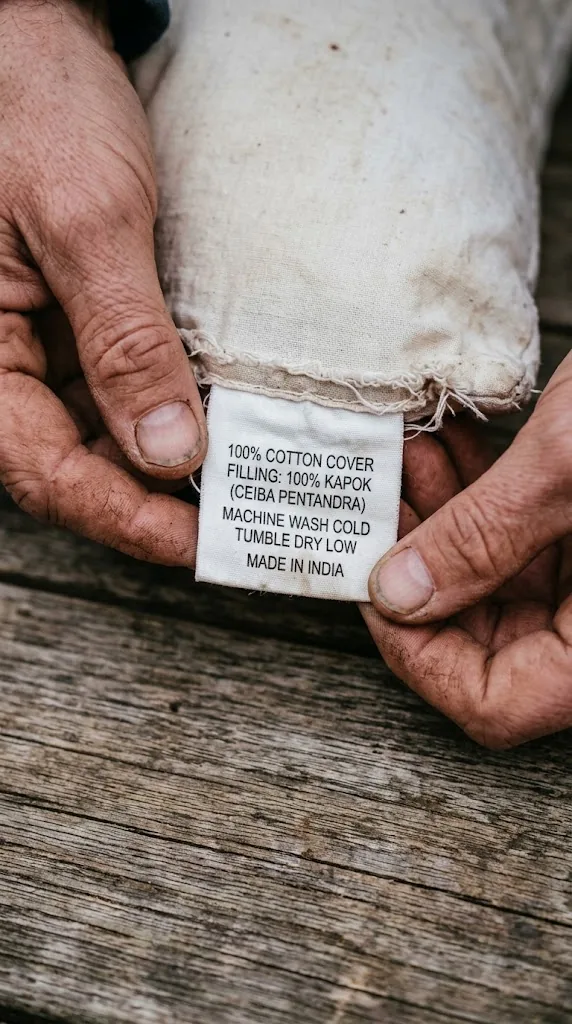
- Check the tag on the pillow to verify the exact material composition before doing anything.
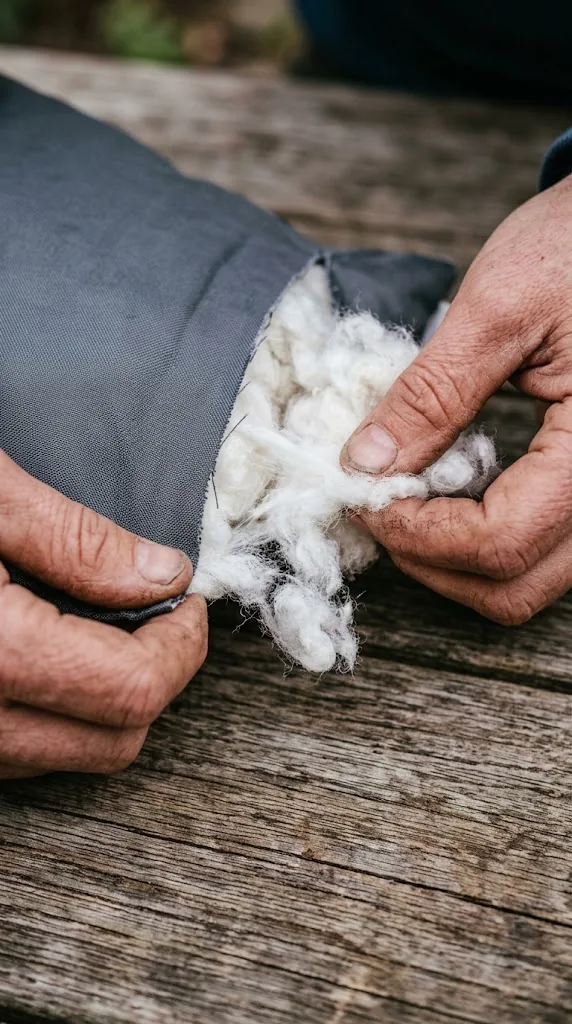
- Separate natural fills like cotton or feathers completely from any synthetic shell or lining fabric.
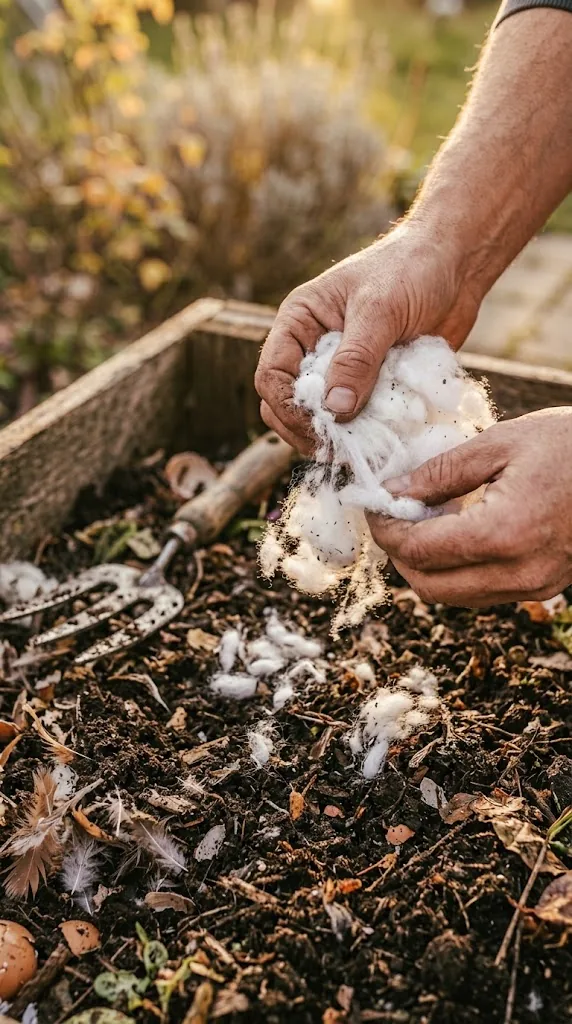
- Pull or shred dense natural stuffing apart into smaller clumps so it incorporates easily into the pile.
- Mix the natural stuffing thoroughly into your active compost heap to ensure even moisture distribution.
How much pillow stuffing can you add to compost?
Natural pillow stuffing should be added in moderation, making up no more than five to ten percent of your total pile volume at any one time. Because cotton, wool, and feathers act primarily as carbon-rich brown materials, you should pair them with high-nitrogen greens like fresh grass clippings or kitchen scraps to maintain a proper decomposition balance. If you notice the fluffy material clumping into dense, dry mats that repel moisture, you have added too much without enough mixing.
Which types of pillow stuffing can you compost?
- 100 percent cotton fill: Yes. Pure cotton fibers break down reliably within a few months when shredded and mixed well into a balanced compost pile.
- polyester fiberfill: No. Synthetic polyester is a plastic derivative that never degrades naturally and will contaminate your finished garden compost with persistent microfibers.
- memory foam and polyurethane: No. Foam fills are chemically treated plastics that resist microbial breakdown completely and release toxic residues as they age.
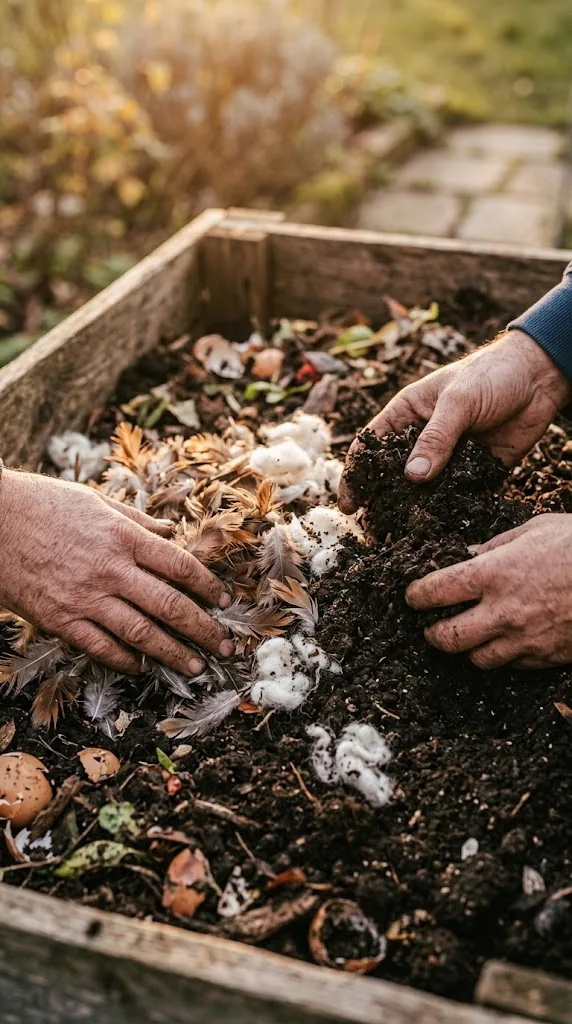
- feather and down: Sometimes. Animal-based fills decompose successfully over time, but they must be buried deep inside a hot pile to prevent strong odors and pest attraction.
Watch out for
- Never add synthetic polyester fiberfill, nylon, or foam to your compost bin.
- Skip stuffing treated with chemical flame retardants, and remove any synthetic threads or zippers before adding natural stuffing.
- Feather and down stuffing can attract rodents and pests if not buried deeply inside a hot compost pile.
What to do instead
- Donate gently used pillows to local animal shelters for bedding.
- Repurpose natural or synthetic stuffing to pad homemade crafts, draft stoppers, or pet beds.
- Check local textile recycling programs that accept clean household linens and pillows.
Troubleshooting pillow stuffing in compost
- Stuffing forms large, impermeable mats that shed water and fail to decompose. Pull the clumped fibers apart completely by hand or shred them thoroughly before adding them to ensure moisture can penetrate.
- Feather and down stuffing starts to emit a strong, unpleasant animal odor. Turn the compost pile immediately and bury the feathery material deeper into the hot core where aerobic bacteria can neutralize the scent.
- Natural stuffing breaks down at an extremely slow pace. Chop or tear the fibers into smaller pieces and add nitrogen-rich green materials alongside water to speed up microbial activity.
Myths about composting pillow stuffing
- Myth: All biodegradable pillow stuffing will break down at the exact same speed in a home compost bin. Truth: While loose cotton fibers break down relatively quickly, heavy wool batts and dense feather clumps require significantly more time and moisture to fully decompose.
- Myth: Removing the outer fabric shell is unnecessary if you are going to chop up the entire pillow anyway. Truth: Most pillow shells contain synthetic sewing threads and durable fabrics that do not break down, so you must separate the internal filling completely.
Can pillow stuffing go in a green bin or recycling?
Municipal green bins and curbside food-waste collection programs generally do not accept pillow stuffing of any kind, whether natural or synthetic. Industrial and municipal composting facilities are designed to process organic food scraps and yard trimmings rather than textiles, fibers, or bedding materials, which can tangle sorting machinery. If your local program specifically allows natural textiles, you must completely remove all plastic linings, zippers, and synthetic threads before tossing the item into the bin, though checking your municipality specific waste guidelines first is essential.
Does composting pillow stuffing attract pests?
Feather and down pillow stuffing can attract pests such as rodents like rats and mice, as well as scavenging animals and domestic pets. These creatures are drawn to the natural protein and scent remnants found in organic animal-based fills. Because feathers and down provide insulation and have a distinct organic aroma, hungry pests will readily dig into an open compost pile to investigate and feed on the material.
- Bury the natural feather or down stuffing deep within the center of the active compost pile rather than leaving it exposed on the surface.
- Cover the stuffed material thoroughly with a thick layer of carbon-rich browns, such as dry leaves or wood chips, to mask any appealing scents.
- Use a fully enclosed, rodent-resistant compost tumbler or bin with a secure lid to physically block pests from accessing the pile.
- Keep synthetic fills, treated materials, and non-compostable fabric shells completely out of your bin to prevent unnecessary pest interest.
Common questions
Can I compost memory foam pillow stuffing?
No. Memory foam is made of polyurethane, which is a synthetic plastic material that does not decompose and will contaminate your compost.
Are feather pillow inserts safe for backyard composting?
Yes, feathers are high in nitrogen and will break down naturally, though they decompose slowly and should be buried deeply to deter pests.
What should I do if my pillow stuffing is a cotton and polyester blend?
Blended materials should not be composted because the synthetic fibers will remain behind as plastic pollution in your finished compost.
Is pillow stuffing biodegradable?
Natural stuffing like cotton, wool, kapok, buckwheat hulls or feathers is biodegradable. Polyester fiberfill and foam are plastic and are not.
Rules vary by town and by composting method. When in doubt, check with your local composting or waste program.