
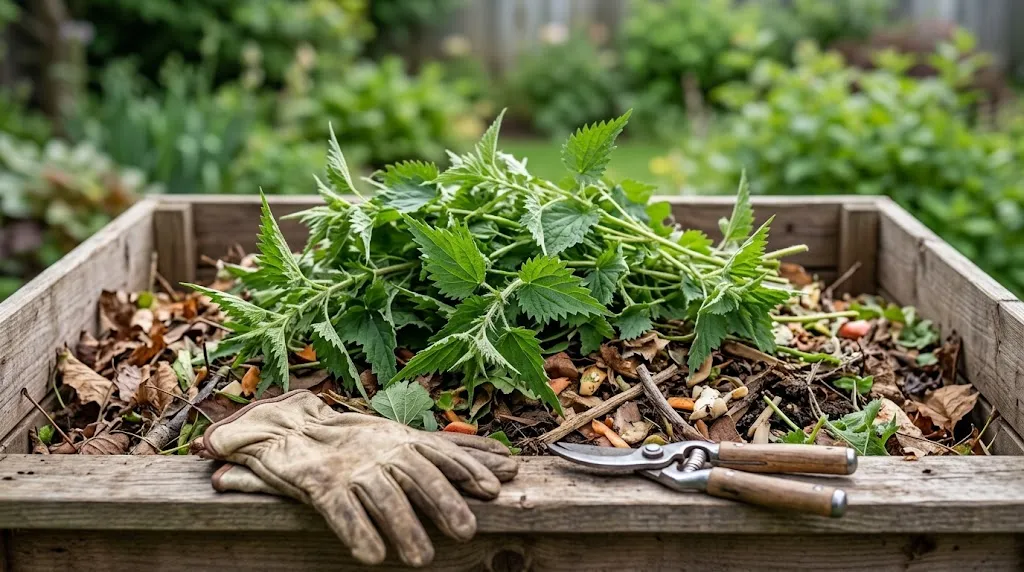
Yes, nettles are an excellent addition to your compost pile. They act as a powerful nitrogen-rich green material that can actually help speed up the decomposition process.
Why
Nettles are considered a 'green' material because they are high in nitrogen and trace minerals. When added to a compost pile, they act as a natural activator, helping to heat up the pile and break down tougher carbon-heavy materials like woody prunings or dry leaves. While they can be painful to handle due to their stinging hairs, these hairs break down quickly during the composting process and pose no threat once decomposed. They are a fantastic way to recycle nutrients back into your garden soil.
Quick facts
| Carbon to nitrogen | About 15:1 |
|---|---|
| Hot pile | 2-4 weeks |
| Cold pile | 2-4 months |
| Worm bin | Sometimes · Let wilt or dry out first to remove stings. |
| Bokashi | Yes · Ferments safely without issues. |
| City green bin | Generally accepted in yard waste bins. |
| Prep | Wear gloves and chop or crush to deactivate stings. |
| Mix with | Mix with dry carbon materials like leaves or straw. |
| Pest risk | Low · Green waste does not typically attract pests. |
How to compost nettles
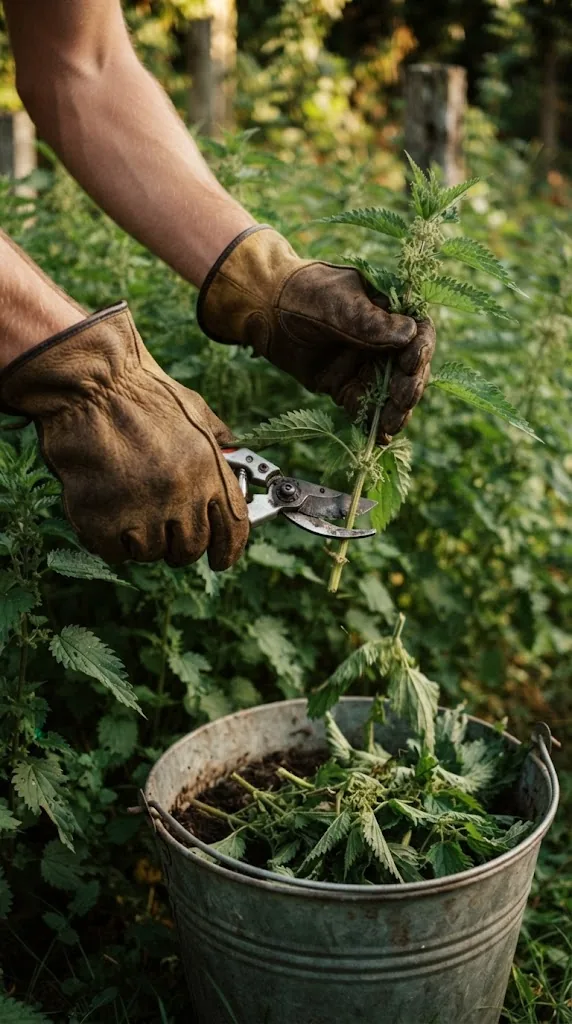
- Wear thick gardening gloves to protect your skin from stings while harvesting.
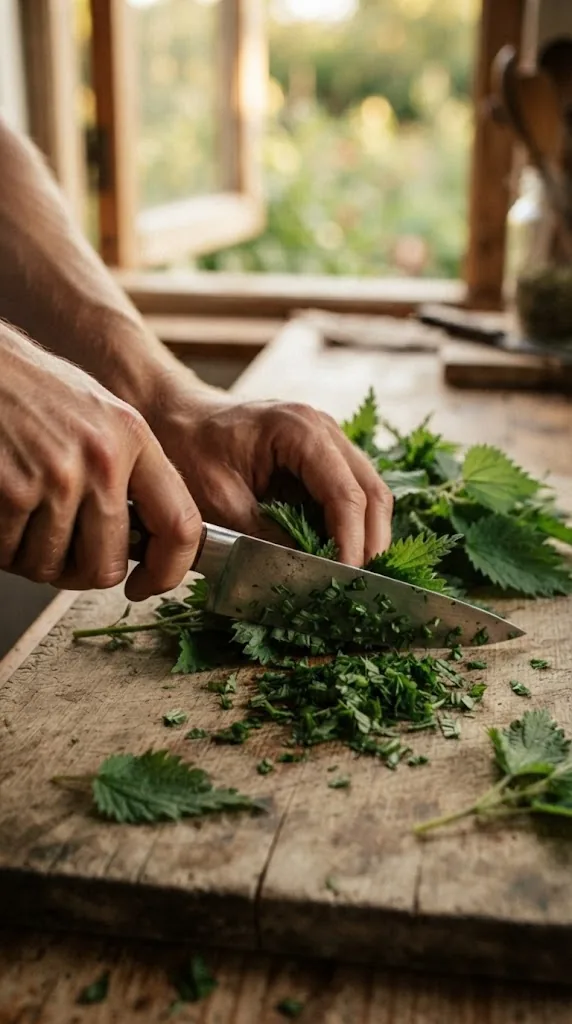
- Chop the nettles into smaller pieces to help them break down faster.
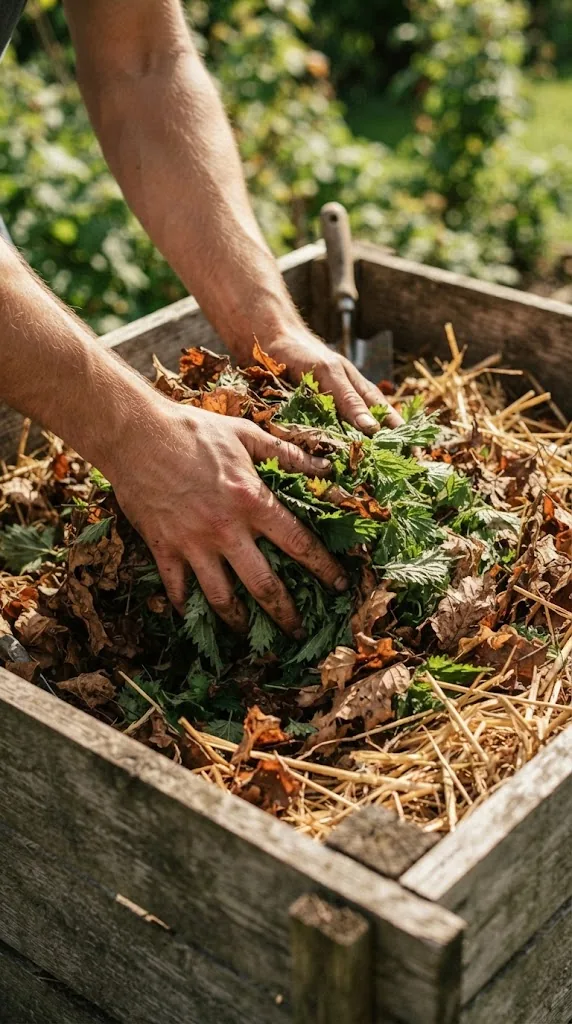
- Mix the nettles thoroughly with brown materials like straw, wood chips, or dried leaves.
- Ensure the pile remains moist but not waterlogged to encourage microbial activity.
How much nettles can you add to compost?
Stinging nettles can make up about ten to fifteen percent of a standard home compost pile. Because they are a potent nitrogen-rich green material, you should layer them evenly with an equal or greater volume of carbon-heavy brown materials like dry leaves, shredded cardboard, or straw to maintain a balanced C:N ratio. If you add too much at once without enough browns, the pile can become dense, slimy, and sluggish, and you may notice a foul, ammonia-like odor.
Which types of nettles can you compost?
- Young spring nettles: Yes. These tender shoots are exceptionally high in nitrogen and break down rapidly within weeks.
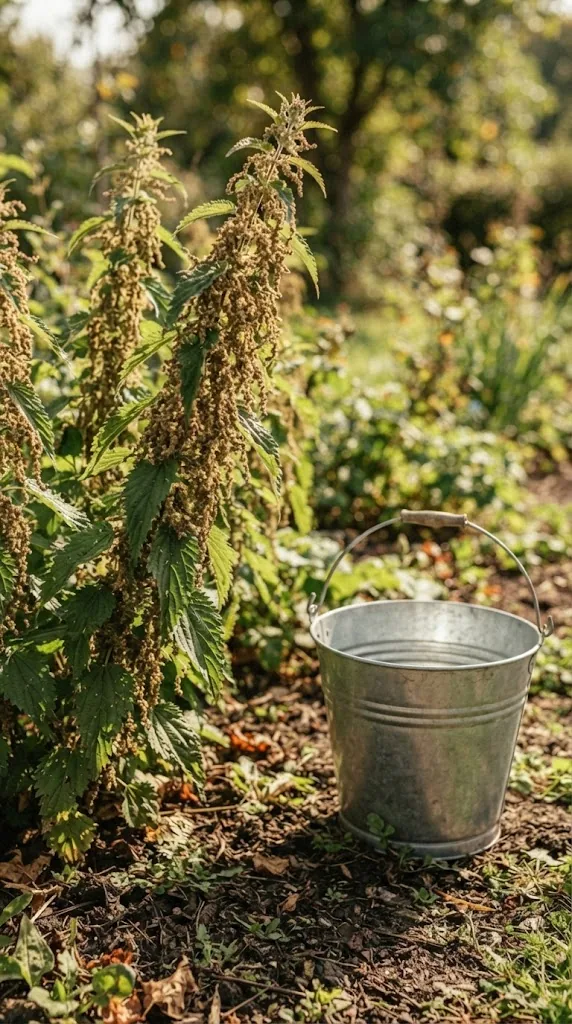
- Mature flowering nettles: Sometimes. They are still usable for compost, but you must cut them before seeds form to prevent unwanted garden weeds.
- Dried nettles: Yes. Dehydrated nettles act more like a brown material due to lower moisture content and can be stored easily.
- Nettle roots with soil: Sometimes. Roots can survive in cool piles and resprout, so only add them if you manage a hot compost system.
Watch out for
- Avoid adding nettles that have already gone to seed, as the seeds may survive the composting process and sprout in your garden later.
- Handle with care using gloves to avoid skin irritation from the stinging hairs.
- Do not add roots if you are concerned about them spreading, though they usually die in a hot pile.
Other ways to use nettles
- Use them to make a nutrient-rich liquid plant fertilizer.
- Add them directly to a garden bed as a mulch.
- Dry them for use in herbal teas or medicinal infusions.
Troubleshooting nettles in compost
- Nettles mat together into a slimy, wet clump. Turn the pile thoroughly and mix in dry brown materials like straw or wood shavings to improve aeration.
- The compost pile develops an unpleasant rotting smell. This indicates excess moisture and nitrogen; add more dry carbon materials and turn the pile to increase oxygen flow.
- Nettle plants begin sprouting inside the compost bin. Ensure the pile reaches a high internal temperature during decomposition, or avoid adding mature stems containing viable seeds and roots.
Myths about composting nettles
- Myth: The stings will remain active in finished compost and sting your hands when you use it. Truth: The stinging hairs are delicate structures made of silica and formic acid that break down completely during the decomposition process, leaving the finished compost completely safe to touch.
- Myth: Nettles are too acidic and will ruin the pH balance of your garden soil. Truth: While fresh nettle juice is slightly acidic, the composting process neutralizes the material into a balanced, nutrient-rich amendment that benefits most garden plants.
Can nettles go in a green bin or recycling?
Most municipal green waste and curbside yard-trimming programs gladly accept stinging nettles alongside other garden refuse. You should place them loosely in your green bin or yard waste bag, ensuring they are not tightly compacted so collection crews can empty the bin easily. Shake off any excessive amounts of clinging garden soil and remove any thick plastic ties or plant tags if present. Always check your local municipal guidelines first, as some areas restrict invasive weeds or plants with mature seeds from local yard waste programs.
Does composting nettles attract pests?
Composting nettles does not attract pests. Because they are a green, nitrogen-rich yard waste rather than a food scrap, they do not emit the strong food odors that typically draw rodents, flies, and other unwanted animals. Furthermore, when you mix freshly chopped nettles into your compost pile and use them as part of a balanced layer over carbon materials, they help maintain a healthy, odorless decomposition process that naturally keeps pests away.
- Mix nettles thoroughly into the interior of the pile rather than leaving them exposed on top.
- Cover fresh green layers with a blanket of dry brown materials like leaves or straw.
- Chop the nettles into smaller pieces to ensure they break down quickly without forming smelly clumps.
Common questions
Will the stinging hairs survive in my compost?
No, the stinging mechanism is destroyed once the plant material begins to decompose and break down.
Can I compost nettle roots?
Yes, but be careful. If your compost pile does not get hot enough, the roots may remain viable and could regrow when you spread the compost.
Should I let nettles wilt before adding them to the bin?
It is not necessary. Wilted nettles can still sting, so keep your gloves on. The stinging hairs only stop working once the leaves are fully dried or have started to break down in the pile.
Are nettles biodegradable?
Yes. Nettles are soft, nitrogen-rich greens and biodegrade in about 1-3 months. They even help speed up the rest of the pile.
Rules vary by town and by composting method. When in doubt, check with your local composting or waste program.