
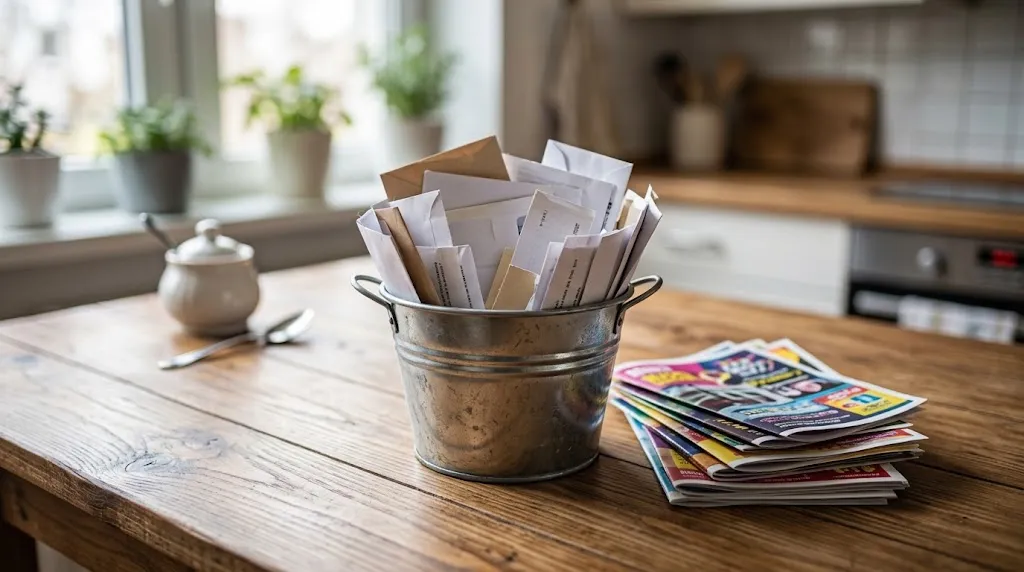
You can compost some junk mail, but it depends on the type of paper, inks, and coatings used. Plain, uncoated paper is safe, while glossy or plastic-coated items should be avoided.
Why
Junk mail is a broad category that includes everything from simple envelopes to complex, multi-material advertisements. While plain paper and cardboard are excellent carbon-rich 'browns' for your compost pile, many modern mailers use synthetic coatings, plastic windows, or heavy metallic inks that do not break down and may introduce toxins into your soil. If the paper feels waxy, glossy, or has a plastic-like sheen, it is best to recycle it instead of composting it to ensure your finished compost remains free of microplastics and chemical contaminants.
Quick facts
| Carbon to nitrogen | Varies |
|---|---|
| Hot pile | 1-3 months |
| Cold pile | 6-12 months |
| Worm bin | Sometimes · Small amounts of plain paper only |
| Bokashi | Sometimes · Plain paper only; avoid glossy or plastic |
| City green bin | Usually accepted; check local rules |
| Prep | Remove plastic windows, staples, and glossy inserts |
| Mix with | Mix with nitrogen-rich green waste |
| Pest risk | Low · Keep dry to avoid attracting pests |
How to compost junk mail
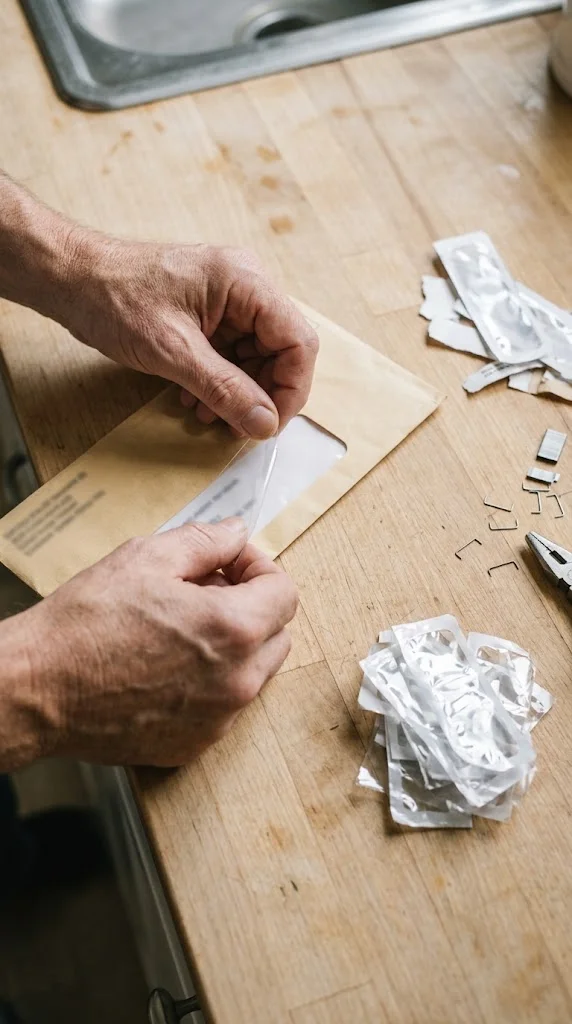
- Remove all plastic windows, staples, and adhesive strips.
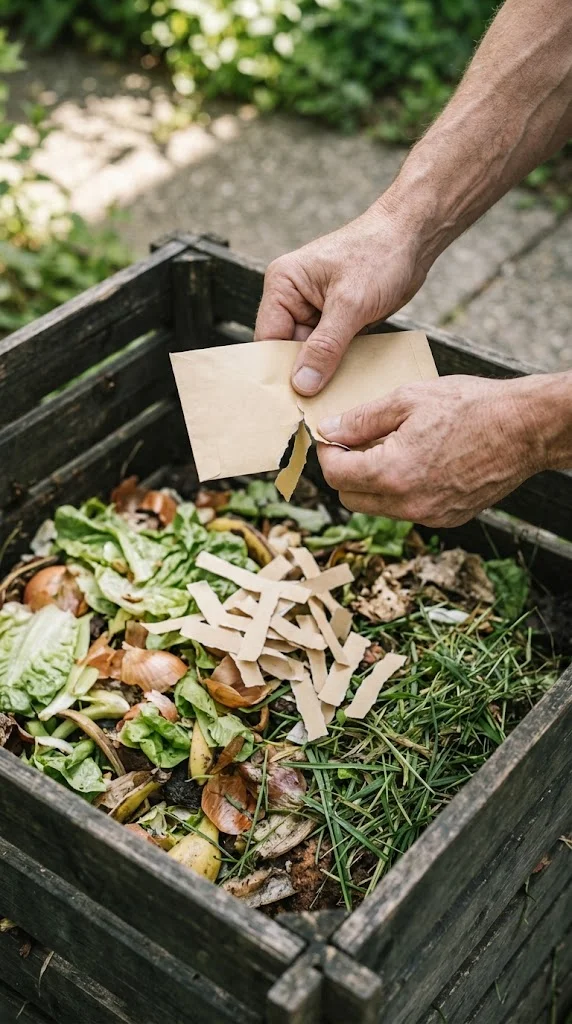
- Tear the paper into smaller pieces to speed up decomposition.
- Mix the paper thoroughly with nitrogen-rich green materials.
- Moisten the pile to ensure the paper breaks down efficiently.
How much junk mail can you add to compost?
You can safely add junk mail as a carbon-rich brown layer, making up roughly ten to twenty percent of your total pile volume. Always mix each handful thoroughly with nitrogen-rich green materials like fresh grass clippings or kitchen scraps to maintain proper aeration. If you notice the mail is clumping together into soggy, impenetrable mats or slowing down the overall decomposition rate, you have added too much at once and need to turn the pile while adding drier materials.
Which types of junk mail can you compost?
- Plain uncoated envelopes: Yes. These break down easily and provide great carbon content as long as you remove any adhesive glue strips first.
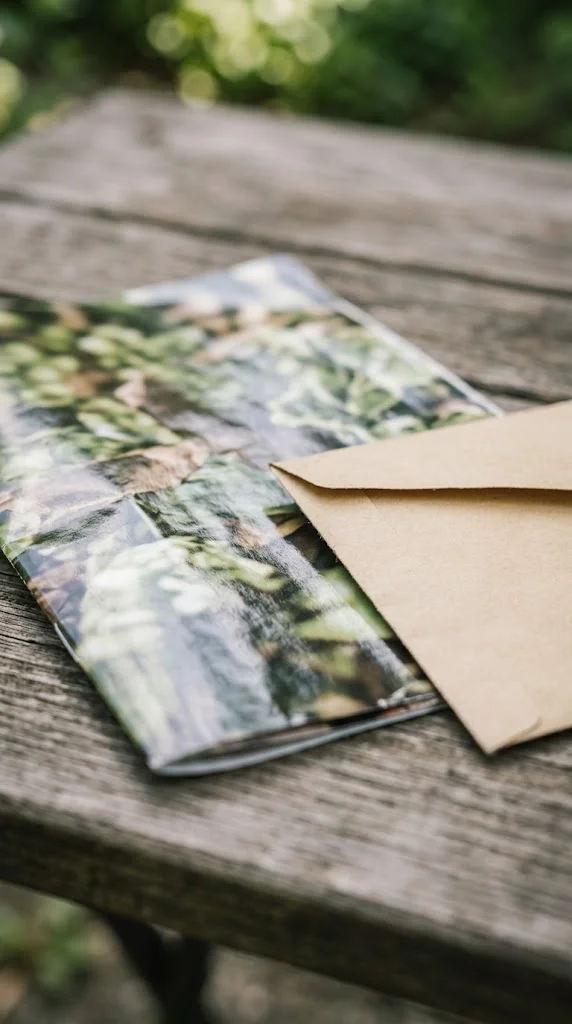
- Glossy promotional catalogs: No. The shiny coatings and heavy clay or plastic treatments prevent proper breakdown and leave behind synthetic residue.
- Envelopes with plastic windows: Sometimes. Safe to use only after you completely tear away and discard the clear plastic window film.
Watch out for
- Avoid glossy, shiny, or waxy paper coatings.
- Remove plastic address windows and heavy plastic attachments.
- Be wary of heavy metallic or neon inks.
- Do not add if you are unsure about the paper's chemical treatment.
What to do instead
- Recycle in your curbside paper bin.
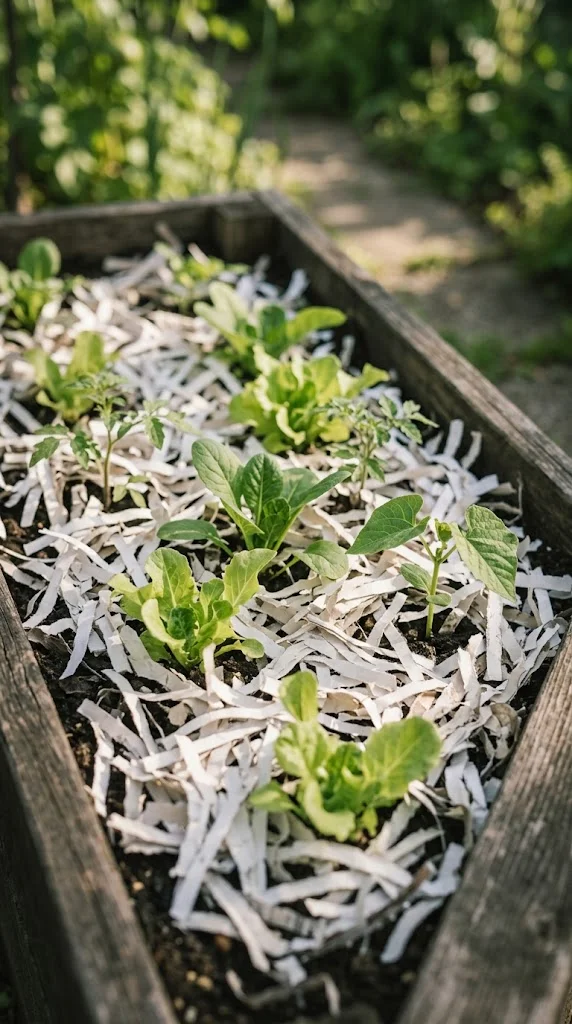
- Shred for animal bedding or garden mulch.
- Use as a weed barrier in garden beds.
Troubleshooting junk mail in compost
- Paper matting together into wet sheets Tear the paper into smaller strips and mix it thoroughly throughout the entire pile instead of dumping it in large flat clumps.
- Extremely slow breakdown Shred the mail finer, ensure the pile stays consistently damp like a wrung-out sponge, and add more nitrogen greens to speed up microbial activity.
Myths about composting junk mail
- Myth: All colored paper and bright inks are toxic to compost piles. Truth: Most modern commercial printing inks are soy- or water-based and safe to compost, though heavy metallic or neon inks should still be avoided.
- Myth: Leaving plastic windows on envelopes is fine because worms will eat around them. Truth: Plastic windows do not degrade and will persist in your finished compost as microplastics that pollute your garden soil.
Can junk mail go in a green bin or recycling?
Most municipal green waste programs accept plain paper junk mail alongside yard trimmings and food scraps, but you must remove all plastic windows, adhesive tape, and metal staples first. Curbside paper recycling bins are also widely available for clean, dry paper advertisements. Always check your local municipal waste management guidelines to confirm whether mixed paper and coated flyers are permitted in your specific green waste program before tossing them in.
Does composting junk mail attract pests?
Composting junk mail does not attract pests. Because plain paper and cardboard serve as excellent carbon-rich brown materials, adding them to your pile helps absorb excess moisture and effectively covers food scraps and other smelly items. This thick barrier hides food odors from rodents, flies, and other unwanted animals, keeping your compost system secure and pest-free while promoting a healthy breakdown process.
- Shred or tear junk mail into fine pieces to create a dense cover layer.
- Place a thick layer of paper over fresh food scraps to mask food odors completely.
- Mix the paper thoroughly into the pile so it integrates with nitrogen-rich greens.
- Remove all glossy coatings, plastics, and tape before adding the paper to the bin.
Common questions
Can I compost envelopes with plastic windows?
No, you should peel off the plastic window before composting the paper envelope, as the plastic will not break down.
Is glossy magazine-style junk mail safe?
It is generally discouraged because the glossy finish often contains clay or plastic coatings that can persist in your compost.
Does the ink on junk mail harm the compost?
Most modern soy-based inks are safe, but heavy-duty commercial inks can contain chemicals that are best kept out of your garden soil.
Is junk mail biodegradable?
Plain paper junk mail is biodegradable in a few months. Glossy flyers, plastic address windows, cards and foil inserts are not, so pull those out first.
Rules vary by town and by composting method. When in doubt, check with your local composting or waste program.