
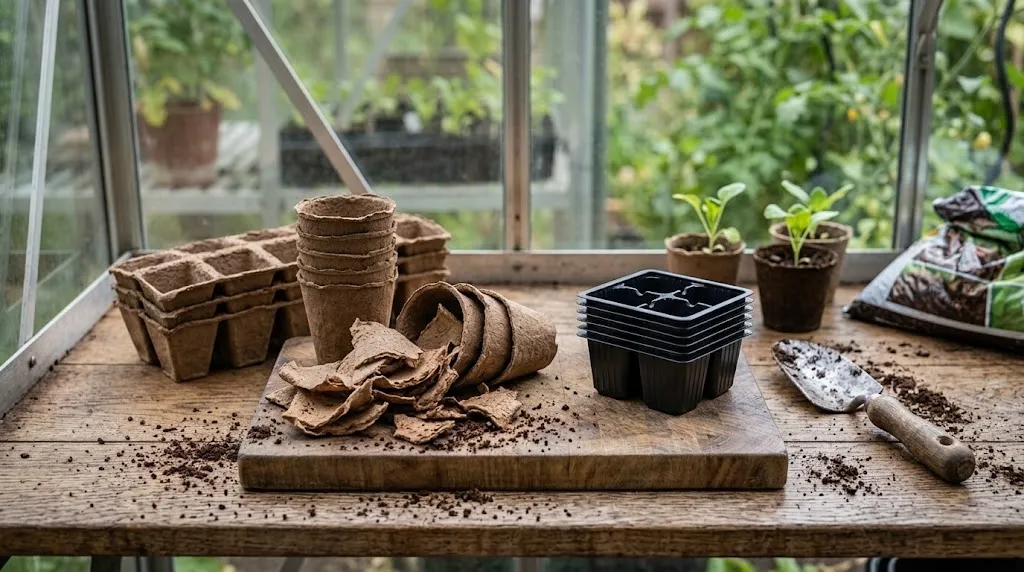
You can compost seed trays if they are made from paper, peat, or certified compostable plant-based materials. Plastic seed trays cannot be composted.
Why
Whether seed trays can go into your compost bin depends entirely on what they are manufactured from. Traditional black plastic nursery trays are made of rigid petroleum-based plastics that will never break down and will only fragment into persistent microplastics. On the other hand, molded fiber, compressed paper, and peat seed trays are fully organic and will safely degrade in a home composting system. If your trays are labeled as certified compostable bioplastics, they usually require commercial composting facilities to break down properly rather than a standard backyard heap.
Quick facts
| Carbon to nitrogen | Varies |
|---|---|
| Hot pile | 2-4 months |
| Cold pile | 6-12 months |
| Worm bin | Sometimes · Paper and fiber trays only; avoid plastic. |
| Bokashi | Sometimes · Paper and fiber trays are fine. |
| City green bin | Check local rules; plastic is never accepted. |
| Prep | Shred or chop into small pieces. |
| Mix with | Mix with nitrogen-rich food scraps. |
| Pest risk | Low · Cover with finished compost to prevent flies. |
How to compost seed trays
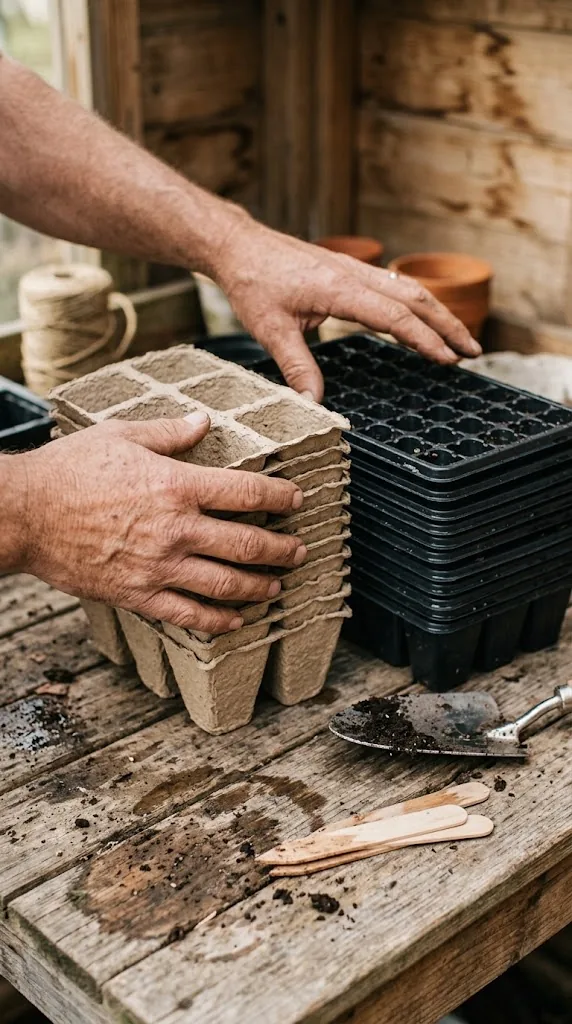
- Sort your seed trays by material, separating plastic from paper and fiber trays.
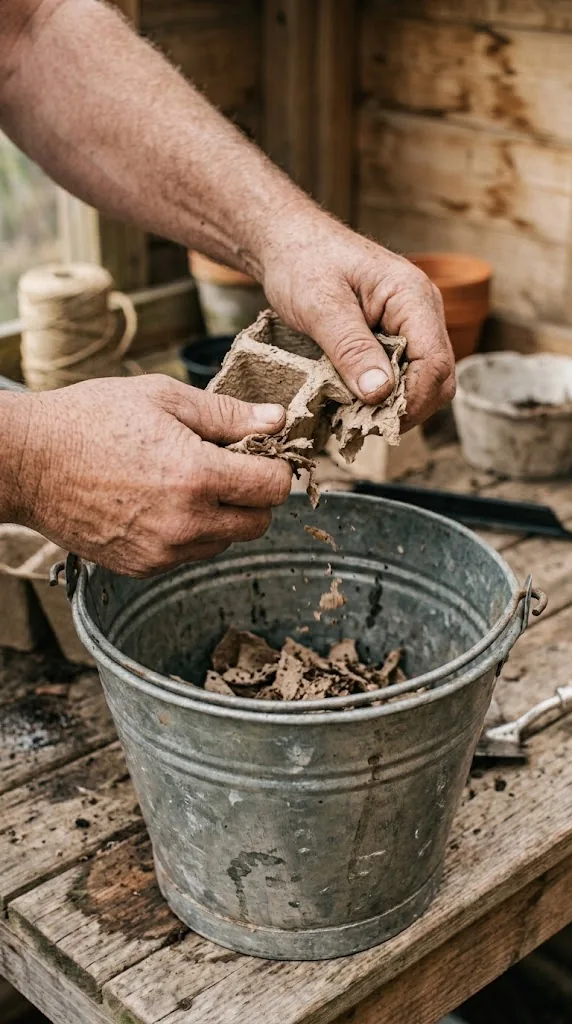
- Tear or crush paper and peat seed trays into smaller pieces to speed up decomposition.
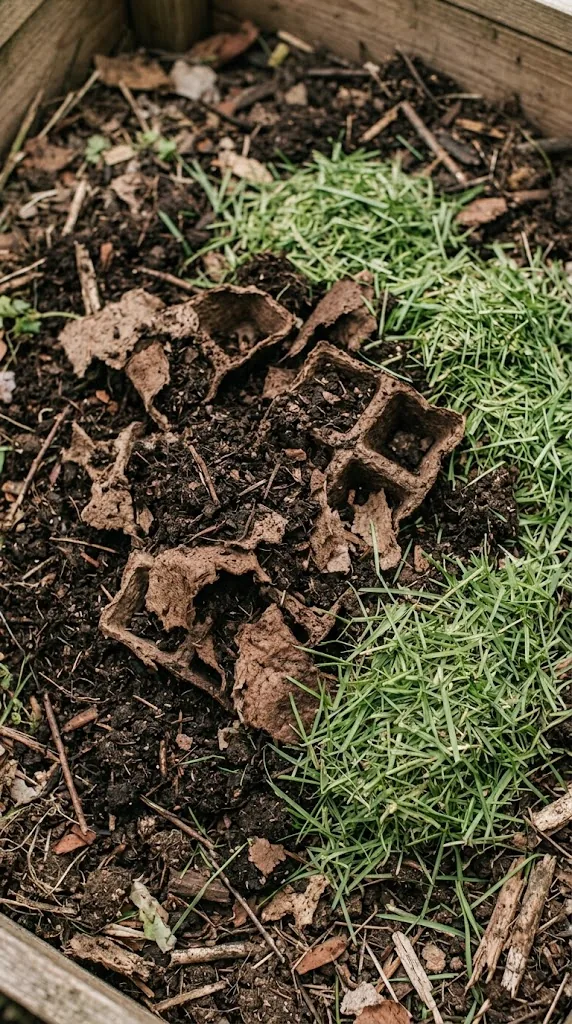
- Mix the shredded fiber trays into your compost pile, balancing them with green nitrogen-rich materials.
- Rinse and save plastic seed trays for reuse next season, or check local recycling rules.
How much seed trays can you add to compost?
Seed trays made from paper or peat act as a brown carbon source and should make up no more than ten to fifteen percent of your total pile volume. Pair these dry, fibrous materials with nitrogen-rich greens like fresh grass clippings or kitchen scraps to maintain a healthy decomposition balance. If you add too much at once, the pile may dry out excessively, causing breakdown to stall completely.
Which types of seed trays can you compost?
- Black Plastic Trays: No. Rigid petroleum-based plastic trays never break down organically and will only fragment into persistent microplastics inside your pile.
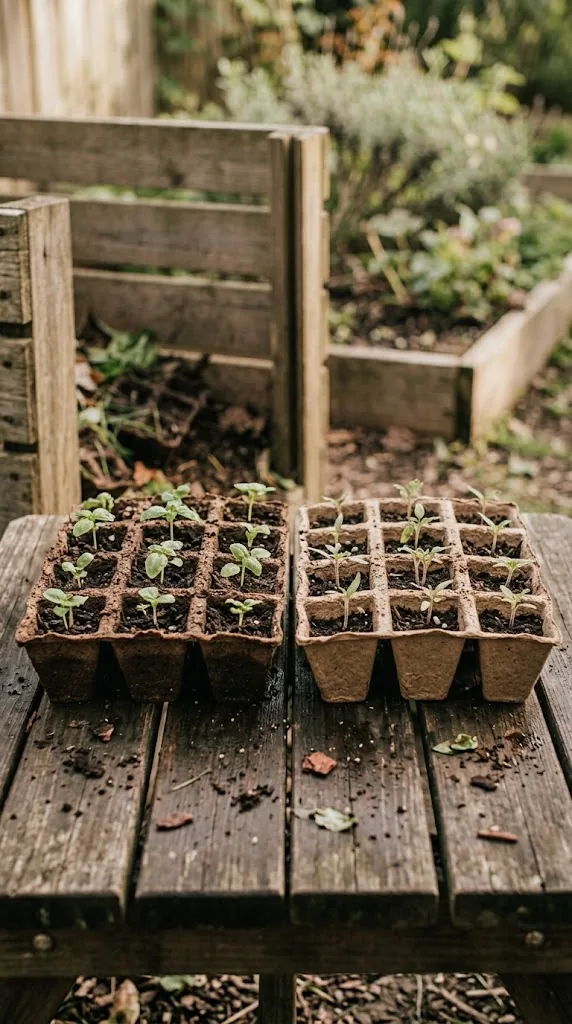
- Paper and Fiber Trays: Yes. Molded paper and cardboard seed trays are fully organic and will safely degrade in a standard home composting system within a few months.
- Peat Pots: Yes. Compressed peat moss trays decompose naturally, though harvesting peat can impact fragile wetland ecosystems.
- Bioplastic Compostable Trays: Sometimes. Certified compostable plant-based starch trays usually require high-heat industrial facilities and rarely break down completely in a backyard bin.
Watch out for
- Do not put standard plastic seed trays in your compost bin.
- Avoid trays treated with chemical pesticides, fungicides, or synthetic glues.
- Watch out for bioplastic or starch-based trays that require industrial composting conditions.
What to do instead
- Reuse plastic seed trays for multiple growing seasons.
- Recycle rigid plastic trays if accepted by your local municipal program.
- Donate extra plastic trays to local gardeners, schools, or community nurseries.
Troubleshooting seed trays in compost
- The trays form a dense, impenetrable mat that blocks airflow in the pile. Tear or aggressively crush the seed trays into small pieces before mixing them thoroughly throughout the compost rather than stacking them together.
- Paper and fiber trays are taking many months to show any signs of decomposition. Pre-soak the trays in water before adding them and ensure they stay embedded in moist, nitrogen-rich green layers to accelerate microbial breakdown.
- Fuzzy mold appears on the surface of decomposing peat or paper trays. This is a normal part of the fungal breakdown process for carbon materials and requires no action unless the pile becomes overly compacted.
Myths about composting seed trays
- Myth: All seed trays labeled as plant-based or biodegradable can safely go into a backyard compost bin. Truth: Many bioplastics require the elevated temperatures of industrial composting facilities and will remain intact in a home pile.
- Myth: Composting paper seed trays will attract rodents and household pests to your garden. Truth: Because these dry, carbon-rich trays contain no food residue, they actually help absorb odors when layered over fresh kitchen scraps.
Can seed trays go in a green bin or recycling?
Municipal green bins and yard-waste collection programs often accept paper, fiber, and peat seed trays, provided you completely strip away any plastic labels, tags, or metal fasteners first. Rigid plastic trays are almost never accepted in organic waste streams and must either be reused, donated, or sorted into local curbside recycling bins if municipal guidelines permit rigid nursery plastics.
Does composting seed trays attract pests?
Composting paper, fiber, or peat seed trays does not attract pests. Because these materials are dry, carbon-rich, and free of food residue, they do not emit the strong odors that typically draw rodents, flies, and other unwanted animals. Furthermore, tearing or shredding these trays and using them as a dry brown layer over fresh food scraps helps absorb moisture and neutralize smells, effectively hiding attractive food odors and keeping pests away from your bin.
- Tear or crush the seed trays into smaller pieces before adding them to your pile.
- Layer the shredded tray material directly over fresh, smelly food scraps to act as a odor-blocking cover.
- Mix the paper and fiber pieces thoroughly into the pile to maintain a balanced carbon-to-nitrogen ratio.
Common questions
Can I compost plastic seed trays if I break them into small pieces?
No. Breaking plastic into smaller pieces only creates microplastics that contaminate your soil and compost. Only organic materials like paper, cardboard, and peat can be safely composted.
Are peat seed trays safe for organic gardening?
Yes, peat trays are organic and break down nicely in soil and compost. However, some gardeners prefer alternative materials because harvesting peat moss can impact fragile peat bog ecosystems.
How can I tell if my seed trays are compostable?
Check the manufacturer packaging or the tray itself for explicit labels such as certified home compostable or made from 100 percent recycled paper. If it feels like rigid plastic and has no labeling, assume it is not compostable.
Are seed trays biodegradable?
Paper, coir, peat and wood fiber trays are biodegradable in a few months. Standard black plastic trays are not, and even some ‘biodegradable’ bioplastic trays need industrial composting.
Rules vary by town and by composting method. When in doubt, check with your local composting or waste program.