
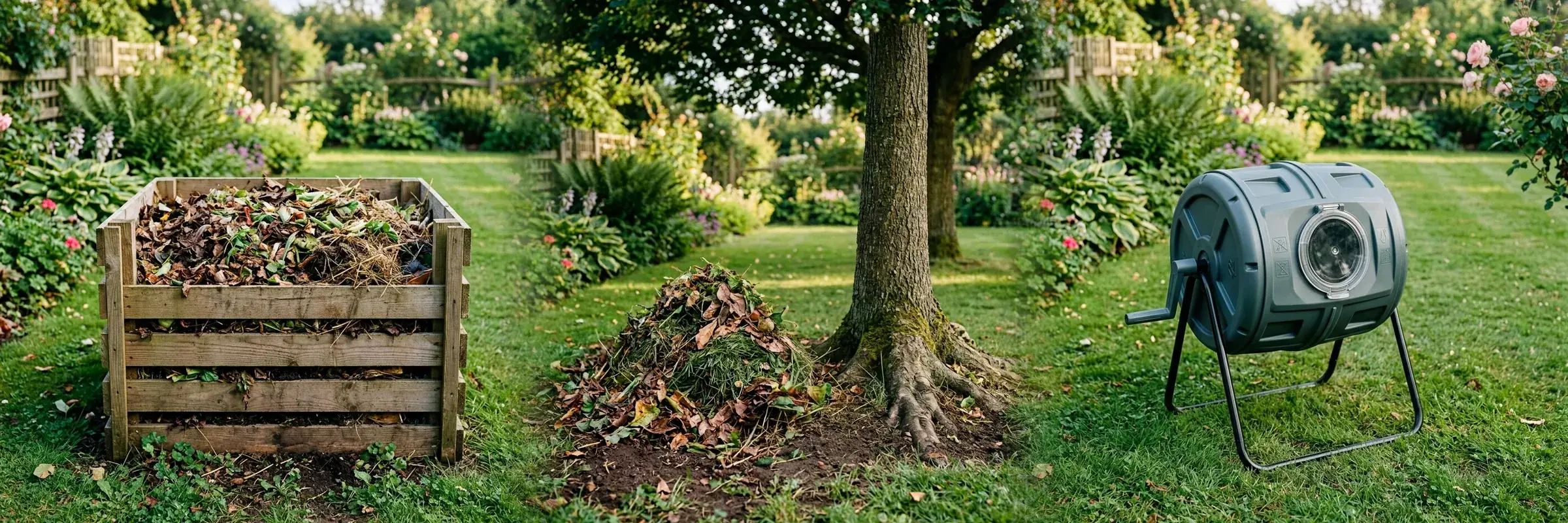
Yes, leaves are one of the best materials for home composting and serve as a primary source of carbon for your pile.
Fallen leaves are free fertilizer
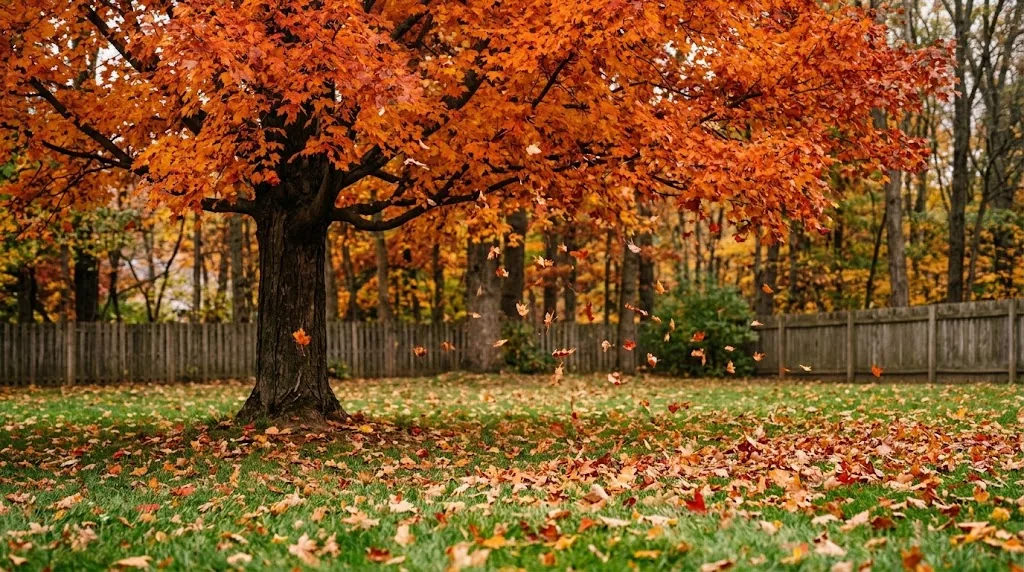
A big tree sends its roots deep and wide, reaching minerals that shallow garden roots never touch. Over the summer it moves many of those minerals into its leaves: by some estimates, fallen leaves hold 50 to 80 percent of the minerals a tree pulls from the soil, including calcium, magnesium, potassium and trace minerals. When the leaves rot down in your compost, those nutrients go right back into your garden.
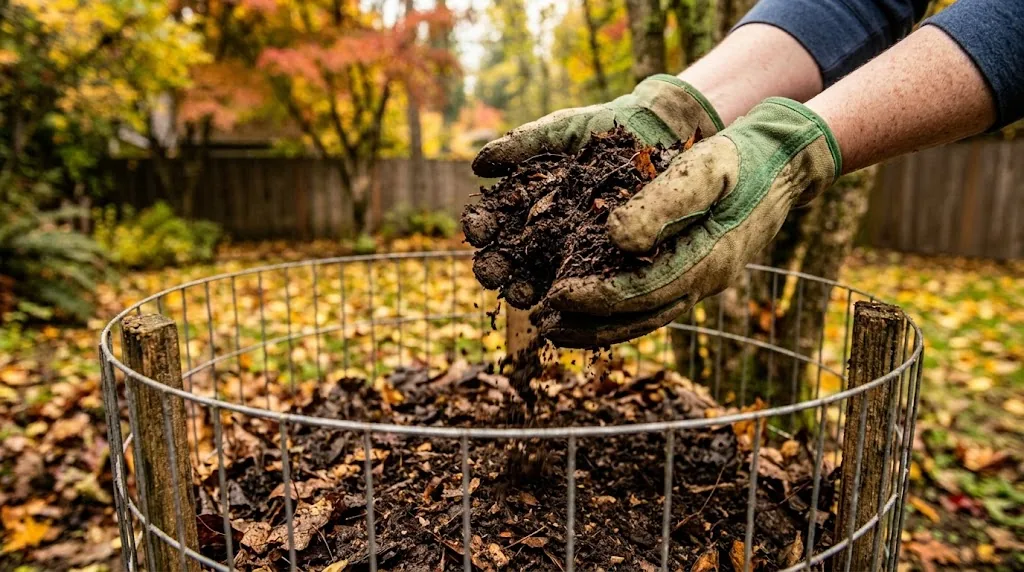
So bagging leaves for the curb means throwing out a free load of fertilizer. A single large shade tree can drop hundreds of pounds of leaves each autumn, enough brown material to feed a compost pile all year. Shred them, keep a few bags of dry leaves beside the bin for summer, and turn any extras into leaf mold: pile damp leaves in a wire cage or open bags, and in about one to two years fungi turn them into dark, crumbly leaf mold that holds water beautifully.
Quick facts
| Carbon to nitrogen | Varies |
|---|---|
| Hot pile | 1-3 months |
| Cold pile | 6-12 months |
| Worm bin | Sometimes · Small amounts, shredded |
| Bokashi | No · Too bulky for fermentation |
| City green bin | Accepted; check local rules |
| Prep | Shred with a lawnmower and avoid matting |
| Mix with | Mix with green nitrogen-rich materials |
| Pest risk | Low · Keep dry and covered to deter pests |
Why
Leaves are rich in carbon, making them the ultimate brown material to balance out nitrogen-rich green waste like kitchen scraps. While whole leaves can sometimes mat together and block airflow if added in a massive, wet clump, shredding them or mixing them thoroughly with grass clippings and food waste creates an ideal environment for aerobic microbes. They break down naturally over time, adding valuable organic matter and humus to your finished compost, which helps improve soil structure and moisture retention in your garden.
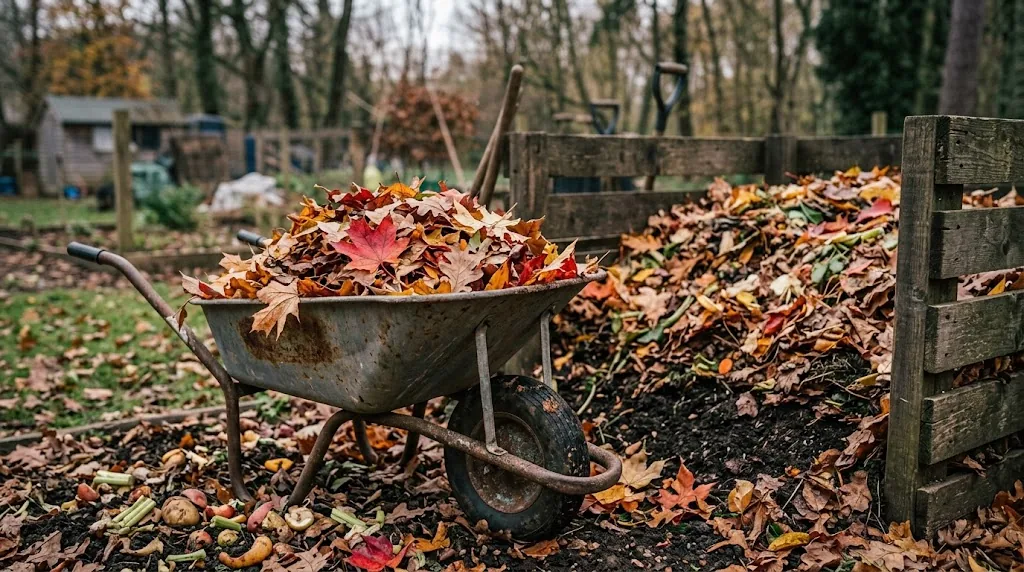
How to compost leaves
- Collect dry fallen leaves from your yard.
- Shred the leaves using a lawnmower or leaf shredder to speed up decomposition.
- Layer the shredded leaves alternately with green materials like vegetable scraps and grass clippings.
- Turn the pile periodically and keep it as moist as a wrung-out sponge.
How much leaves can you add to compost?
Leaves are the backbone of a healthy compost pile, and you can safely use them to make up 50 to 75 percent of your total volume. Because they are a carbon-rich brown material, always pair them with an equal volume of nitrogen-rich green waste like grass clippings or kitchen scraps. If you notice your pile becoming cold, dry, or failing to break down, you have likely added too many leaves without enough moisture or nitrogen to fuel the microbial activity.
Which types of leaves can you compost?
- Deciduous leaves: Yes. These are the gold standard for compost piles as they break down relatively quickly and provide excellent carbon.
- Evergreen needles: Sometimes. Pine and spruce needles are highly acidic and take a very long time to decompose, so they should be added sparingly.
- Diseased leaves: No. Leaves showing signs of fungal infections or powdery mildew should be discarded in municipal waste to prevent spreading pathogens to your garden.
- Leaf mold: Yes. Partially decomposed leaves are a fantastic soil amendment that improves water retention and soil structure.
Watch out for
- Avoid adding massive layers of wet leaves all at once, as they can mat down and block oxygen.
- Keep out leaves from black walnut trees, which contain juglone that can inhibit plant growth.
- Ensure leaves are free from chemical herbicide or pesticide treatments before adding them to food-gardening compost.
Other ways to use leaves
- Use whole leaves as winter mulch around perennial garden beds
- Mow them directly into your lawn to naturally fertilize the turf
- Put them out for municipal yard waste collection
Troubleshooting leaves in compost
- Leaves are matting together and creating a slimy, anaerobic layer. Break up the clumps with a pitchfork and mix in coarser materials like straw or wood chips to improve airflow.
- The pile is not heating up or breaking down. The carbon-to-nitrogen ratio is likely too high; add more green materials like grass clippings or kitchen scraps to jumpstart the process.
- Leaves are blowing away before they can be incorporated. Lightly dampen the leaves with a hose as you add them to the pile to help them settle and stay in place.
Myths about composting leaves
- Myth: All leaves are safe to compost in any quantity. Truth: Some leaves, such as those from black walnut or eucalyptus trees, contain natural compounds that can inhibit the growth of other plants.
- Myth: You must remove all leaf stems before composting. Truth: While stems take longer to break down than the leaf blades, they will eventually decompose and do not need to be removed.
Can leaves go in a green bin or recycling?
Most municipal yard waste programs readily accept leaves, often requiring them to be placed in paper lawn bags or loose in designated bins. Avoid using plastic bags, as these are frequently rejected by processing facilities. Before setting them out, ensure you have removed any non-compostable debris like plastic ties, rocks, or metal. Always check your local municipality website for specific seasonal collection schedules, as some cities only pick up yard waste during peak spring and autumn months.
Does composting leaves attract pests?
Composting leaves does not attract pests. In fact, adding dry leaves to your pile is a great way to keep pests away. Because leaves act as a carbon-rich brown material, they are commonly used to cover and bury food scraps, kitchen waste, and other smelly items. This thick layer of leaves masks food odors that might otherwise draw animals like rodents, raccoons, and insects, while also maintaining proper aeration and preventing the excess moisture that often invites unwanted bugs.
- Keep a pile of dry leaves next to your compost bin for easy access.
- Cover all fresh kitchen scraps immediately with a generous layer of shredded leaves.
- Ensure food waste is buried several inches deep beneath the brown layer.
- Turn the pile regularly to accelerate breakdown and discourage nesting.
Common questions
Are leaves biodegradable?
Yes, leaves are fully biodegradable and will break down naturally in the environment without human intervention, though composting accelerates the process significantly.
Do I have to shred leaves before composting?
You do not have to shred them, but whole leaves tend to mat together and take much longer to decompose. Shredding them drastically increases the surface area for microbes to work.
Can I compost diseased leaves?
It is generally safer to avoid adding heavily diseased leaves to a cold backyard compost pile, as pathogens can survive and reinfect your garden later. Hot composting can kill diseases, but it requires careful temperature management.
Are all tree leaves safe to compost?
Most deciduous tree leaves are great, but avoid black walnut leaves due to their natural growth-inhibiting compounds. Pine needles can also be used, but they are acidic and should be added in moderation.
Rules vary by town and by composting method. When in doubt, check with your local composting or waste program.