
Yes
Yes. Lettuce breaks down quickly and adds nitrogen to your pile.
VerdictYes
Breaks down in2–4 weeks
Counts asFood
Why
Lettuce is green, leafy, and soft, so it breaks down fast. It's a good nitrogen source, but it can get slimy if it's left in big piles.
Quick facts
| Carbon to nitrogen | About 25:1 |
|---|---|
| Hot pile | 1-2 weeks |
| Cold pile | 1-3 months |
| Worm bin | Yes · Chop finely; avoid large quantities at once. |
| Bokashi | Yes · Drain excess moisture before fermenting. |
| City green bin | Usually accepted; check local rules. |
| Prep | Chop and mix with dry materials. |
| Mix with | Mix with dry leaves or shredded cardboard. |
| Pest risk | Low · Bury under brown material to prevent flies. |
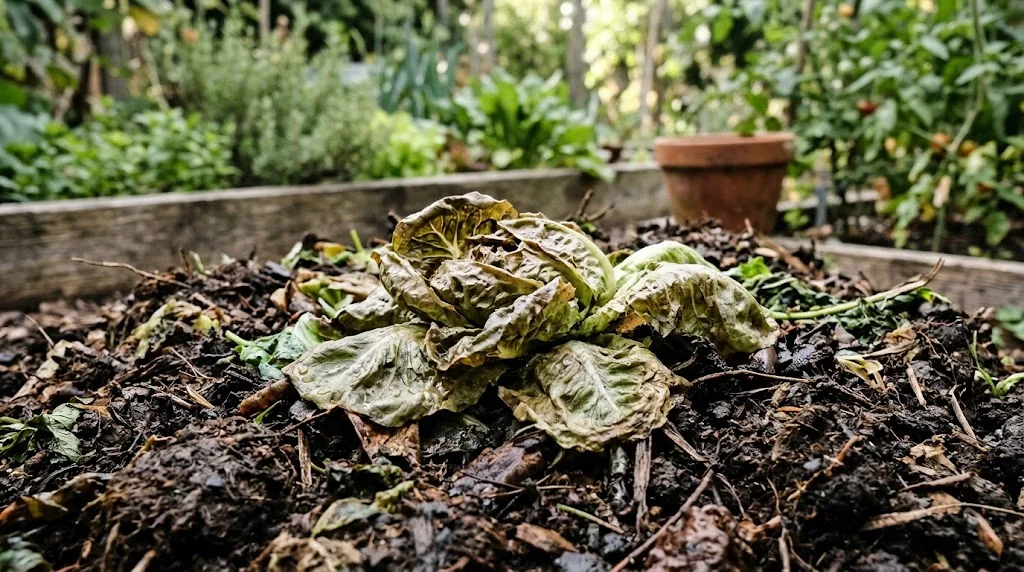
How to compost lettuce
- Chop the lettuce or tear the leaves up.
- Mix it with dry material like leaves or shredded paper.
- Bury it under brown material to prevent smell.
Watch out for
- Slimy, rotting lettuce can smell if it's not mixed in.
- Don't add lettuce with dressing or oil.
- Rotting lettuce can attract flies.
Other ways to use lettuce
- Feed scraps to a worm bin.
- Use lettuce that's too wilted for salads as chicken feed.
Common questions
Can I compost wilted lettuce?
Yes. Wilted lettuce composts well.
Does lettuce attract flies?
Not if it's buried under dry material.
Can I compost bagged salad?
Only if the bag is compostable. Most plastic bags aren't.
Is lettuce biodegradable?
Yes. It breaks down completely.
Rules vary by town and by composting method. When in doubt, check with your local composting or waste program.