
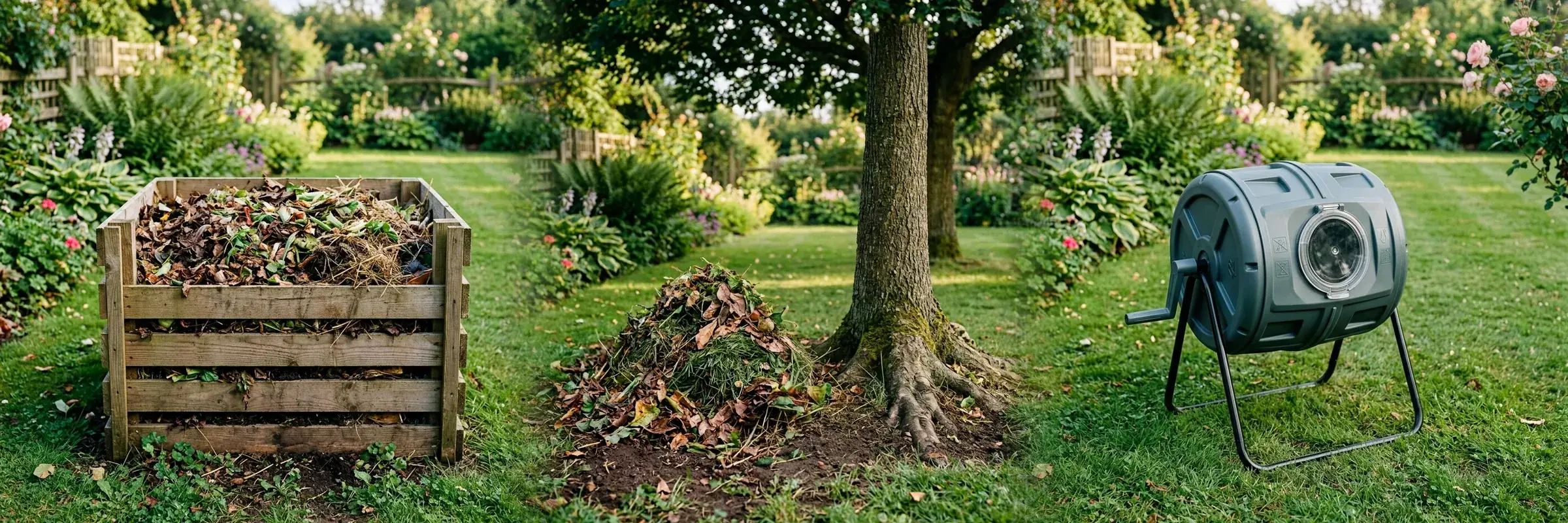
Yes, coffee grounds are an excellent addition to your compost pile and act as a nitrogen-rich green material.
Why
Coffee grounds are rich in nitrogen, which provides essential energy for the microorganisms that break down organic matter in your compost pile. Even though they are dark in color, they are considered a green material due to their high nitrogen content. They also have a neutral pH and are quickly consumed by earthworms. You can add them in large quantities, but it is best to mix them thoroughly with dry carbon materials like dried leaves or shredded cardboard to prevent compaction and maintain proper airflow.
Quick facts
| Carbon to nitrogen | About 20:1 |
|---|---|
| Hot pile | 1-3 months |
| Cold pile | 3-6 months |
| Worm bin | Sometimes · Use sparingly to avoid high acidity levels. |
| Bokashi | Yes · Excellent addition to the fermentation process. |
| City green bin | Usually accepted; check local municipal guidelines. |
| Prep | No preparation needed; add directly. |
| Mix with | Balance with carbon-rich materials like dry leaves or straw. |
| Pest risk | Low · Low risk if buried deep within the pile. |
How to compost coffee grounds
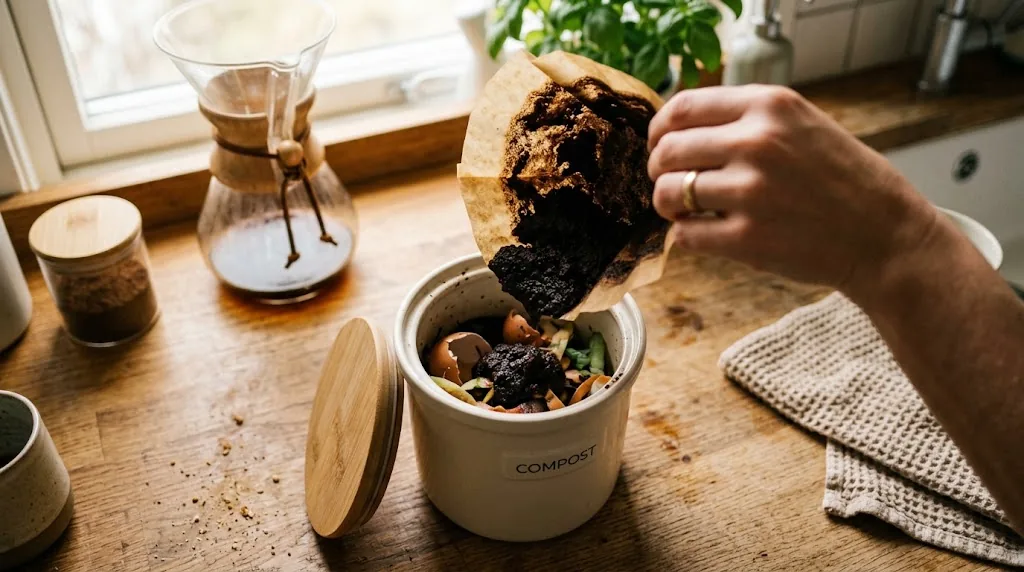
- Dump used coffee grounds directly into your backyard compost bin or collection container.
- Mix the grounds thoroughly with brown materials like shredded paper or dry leaves to balance the carbon-to-nitrogen ratio.
- Add paper coffee filters right along with the grounds since they break down easily.
- Turn the pile regularly to aerate and speed up the decomposition process.
How much coffee grounds can you add to compost?
Coffee grounds can make up about ten to twenty percent of your total compost pile volume. Because they are dense and nitrogen-rich greens, always pair every bucket of grounds with an equal or greater amount of dry carbon materials like shredded cardboard or autumn leaves. If you notice a sour, ammonia-like odor or see slimy clumps forming, you have likely added too much without enough airflow or browns.
Which types of coffee grounds can you compost?
- Paper Filters: Yes. Standard unbleached paper filters break down rapidly and add valuable carbon to balance the dense grounds.
- K-Cup Pods: Sometimes. Only the inner grounds are compostable. You must cut open the plastic or aluminum pod, empty the contents, and discard the shell separately.
- Instant Coffee Powder: Yes. Unused instant coffee dissolves easily and adds nitrogen, but use sparingly to avoid introducing too much concentrated moisture at once.
- Flavored Grounds: Sometimes. Natural flavor extracts are fine in small amounts, but heavy synthetic oils and chemical additives can disrupt beneficial microbial activity.
Watch out for
- Do not dump a massive, thick clump of grounds into the pile, as they can mat together and block airflow.
- Avoid using flavored syrups or cream mixed in with the grounds.
Other ways to use coffee grounds
- Sprinkle a thin layer around garden plants as a soil amendment.
- Add them to your worm composting bin as a feeding supplement.
- Mix them into potting soil to improve moisture retention.
Troubleshooting coffee grounds in compost
- Grounds form a waterproof mat on top of the pile. Break up the clumpy layers with a garden fork and mix the grounds thoroughly with dry brown materials.
- White fuzzy mold appears over the coffee surface. This is usually beneficial actinomycetes breaking down the organic matter; simply turn the pile to aerate it.
- The compost pile develops a sour, swampy smell. The pile is too wet and compacted. Add dry carbon and turn frequently to restore proper oxygen flow.
Myths about composting coffee grounds
- Myth: Coffee grounds make your compost and garden soil dangerously acidic. Truth: Used coffee grounds are actually mostly neutral in pH because the acids are extracted into your brewed coffee.
- Myth: You can dump massive bags of leftover cafe grounds directly into a home bin all at once. Truth: Dumping large volumes without mixing causes severe compaction and suffocates the aerobic microbes required for composting.
Can coffee grounds go in a green bin or recycling?
Most municipal green waste and curbside food scrap collection programs gladly accept coffee grounds along with paper filters. You should remove any plastic packaging, foil seals, or rigid plastic pods before tossing them into your municipal bin. Because local composting facilities utilize different processing technologies and equipment capabilities, always check your specific municipal waste guidelines to confirm what is allowed.
Does composting coffee grounds attract pests?
Composting coffee grounds does not attract pests. In fact, adding coffee grounds to your compost pile helps deter pests. When used as a top layer to cover fresh food scraps and other odor-emitting materials, coffee grounds help mask appealing smells. This prevents unwanted visitors such as rodents, raccoons, and insects from being drawn to your bin, keeping your composting process secure and pest-free.
- Spread a thick layer of coffee grounds directly over fresh, smelly food scraps.
- Mix the grounds thoroughly with dry brown materials to eliminate strong odors.
- Ensure your compost bin has a tightly fitting lid to further deter animals.
Common questions
Are coffee grounds biodegradable?
Yes, coffee grounds are entirely biodegradable and will naturally break down over time in the environment, though composting them speeds up the process significantly.
Are coffee grounds too acidic for compost?
Despite popular belief, brewed coffee grounds are nearly pH neutral because the acid is extracted during the brewing process. They will not significantly alter the pH of a balanced compost pile.
Can I put coffee filters in the compost with the grounds?
Yes, paper coffee filters are compostable and can go straight into the bin along with your grounds, whether they are unbleached paper or standard white filters.
Will coffee grounds attract pests to my compost?
Used coffee grounds generally do not attract pests unless they are mixed with leftover milk, sugar, or dairy products from specialty coffee drinks.
Rules vary by town and by composting method. When in doubt, check with your local composting or waste program.