
Sometimes
Sometimes. Plain paper plates compost, but plates with a plastic or wax coating don't.
VerdictSometimes
Breaks down in1–3 months if uncoated
Counts asPaper
Why
Paper plates made from plain paper break down quickly. Many have a plastic or wax coating to stop grease, and that coating doesn't break down in a home pile.
Quick facts
| Carbon to nitrogen | About 350:1 |
|---|---|
| Hot pile | 1-3 months |
| Cold pile | 3-6 months |
| Worm bin | Sometimes · Plain ones only, cut into strips |
| Bokashi | Sometimes · Plain ones only, shredded |
| City green bin | Accepted if plain; check local rules for coated ones |
| Prep | Scrape off food residue and tear into pieces |
| Mix with | Mix with high-nitrogen green materials |
| Pest risk | Low · Remove all leftover food scraps to prevent attracting pests |
How to compost paper plates
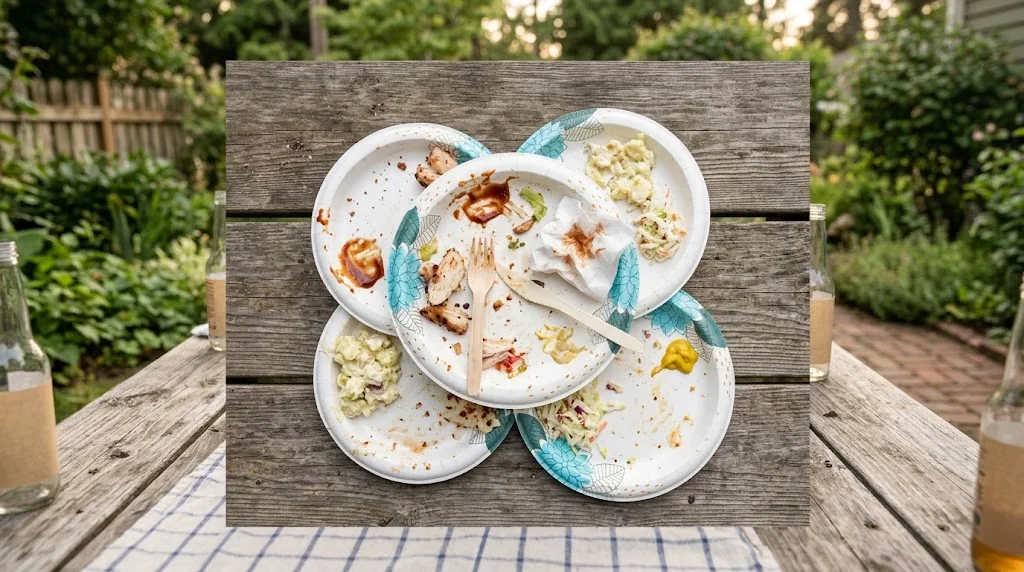
- Check whether the plate feels waxy or coated.
- Tear the plates into small pieces.
- Mix them into the pile with leaves or shredded paper.
Watch out for
- Don't compost plates with plastic or wax coatings.
- Greasy plates can attract pests, so scrape off food first.
- Plates with printed ink may add chemicals.
What to do instead
- Use reusable plates when you can.
- Use plain uncoated plates for compost, and send the rest to the trash.
Common questions
Are paper plates compostable?
Plain uncoated paper plates are. Coated plates usually aren't.
How do I know if a plate is coated?
If it feels waxy or water doesn't soak in, it's probably coated.
Can I compost greasy plates?
Yes, but scrape off the food and tear them up first to avoid pests.
Are paper plates biodegradable?
Plain ones are. Coated ones only partly break down.
Rules vary by town and by composting method. When in doubt, check with your local composting or waste program.