
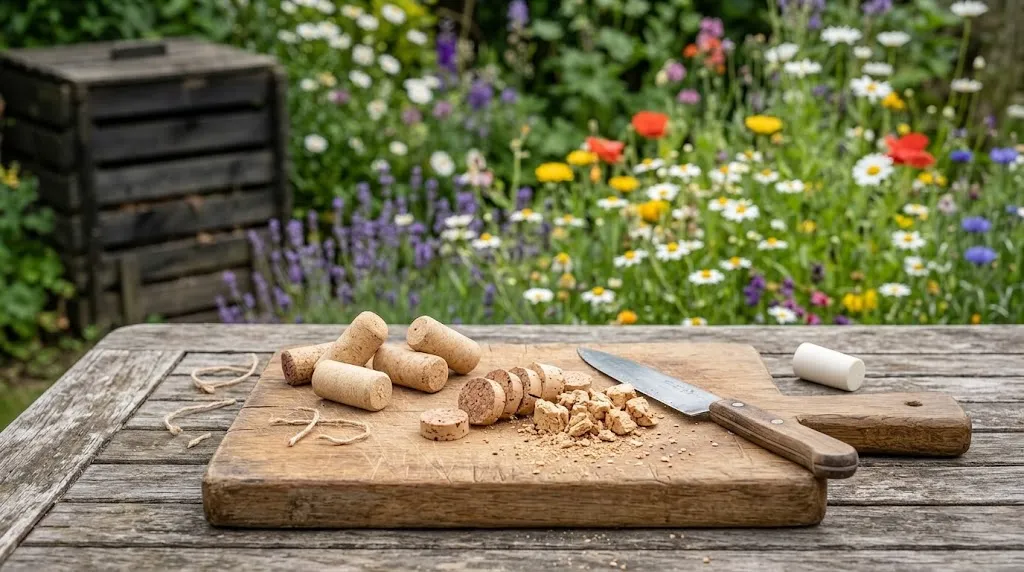
Natural corks can be composted if they are chopped into small pieces, but synthetic plastic corks cannot.
Why
Natural wine corks are made from the bark of the cork oak tree, making them an organic, carbon-rich material. However, because they are dense and harvested to resist moisture, they take an extremely long time to break down in a standard backyard compost pile. To successfully compost them, you must chop or shred them into very small pieces first. Synthetic corks, which are often made of plastic polymers or foams, will never biodegrade and must be kept out of your compost bin entirely.
Quick facts
| Carbon to nitrogen | About 100:1 |
|---|---|
| Hot pile | 1-2 years |
| Cold pile | 3-5 years |
| Worm bin | Sometimes · Only natural cork, finely chopped or shredded |
| Bokashi | No · Corks do not ferment well in bokashi systems |
| City green bin | Usually accepted only if made of natural cork |
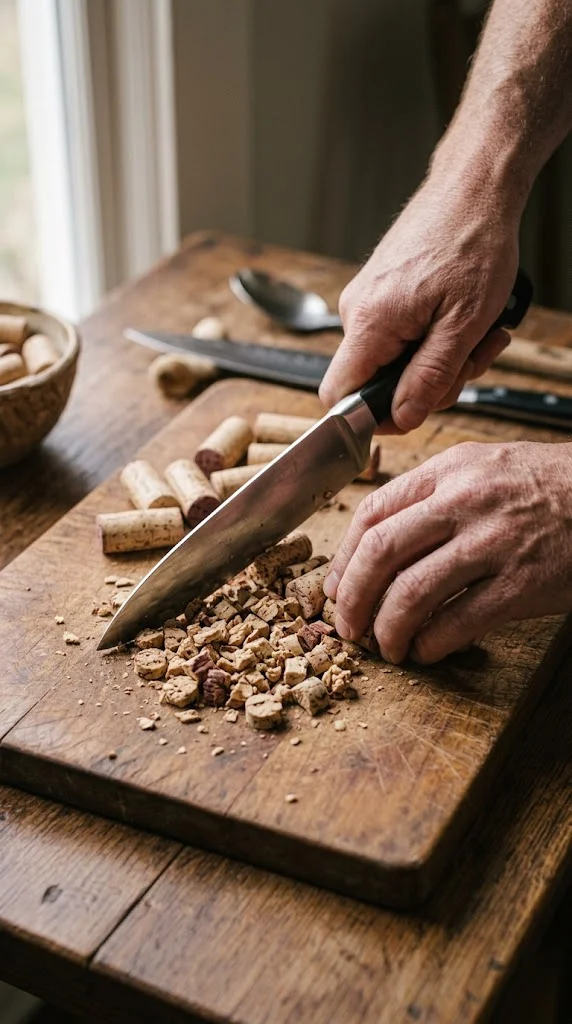
| Prep | Slice into very thin pieces or grind |
| Mix with | Mix well with nitrogen-rich green waste |
| Pest risk | Low · No attraction, but plastic fakes will persist indefinitely |
How to compost wine corks
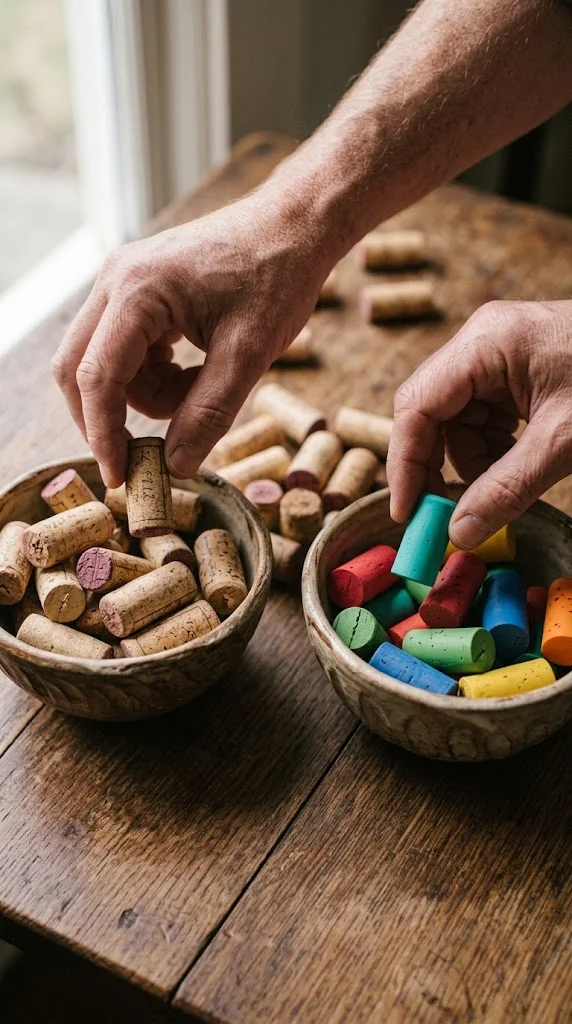
- Sort your corks and separate natural corks from synthetic plastic ones.
- Chop, shred, or grind natural corks into tiny pieces to speed up decomposition.
- Add the crushed cork pieces to your carbon-rich brown materials in the compost pile.
- Turn the pile regularly to keep aeration high and monitor moisture levels.
How much wine corks can you add to compost?
Natural wine corks should make up no more than two to five percent of your total compost pile volume. Because they are extremely dense and carbon-rich browns, adding too many whole or large pieces will slow down the overall decomposition rate and create air pockets. Pair crushed corks with nitrogen-rich greens like fresh grass clippings or vegetable scraps. If you notice the pile drying out excessively or stubborn chunks persisting for over a year without breaking down, you have added too much.
Which types of wine corks can you compost?
- Natural cork: Sometimes. Made from oak tree bark, these are fully biodegradable but require fine chopping or grinding to break down within a reasonable timeframe.
- Synthetic plastic cork: No. Composed of petroleum-based polymers and foams, these will never biodegrade and must be kept out of your compost pile.
- Wax-dipped cork: Sometimes. These natural corks feature a decorative wax coating that resists moisture. You must shave or peel off the wax layer before composting the underlying cork.
- Sparkling wine mushroom cork: Sometimes. These feature a natural cork body glued to a compressed agglomerated cork top. They are safe to compost only after being thoroughly chopped into small pieces.
Watch out for
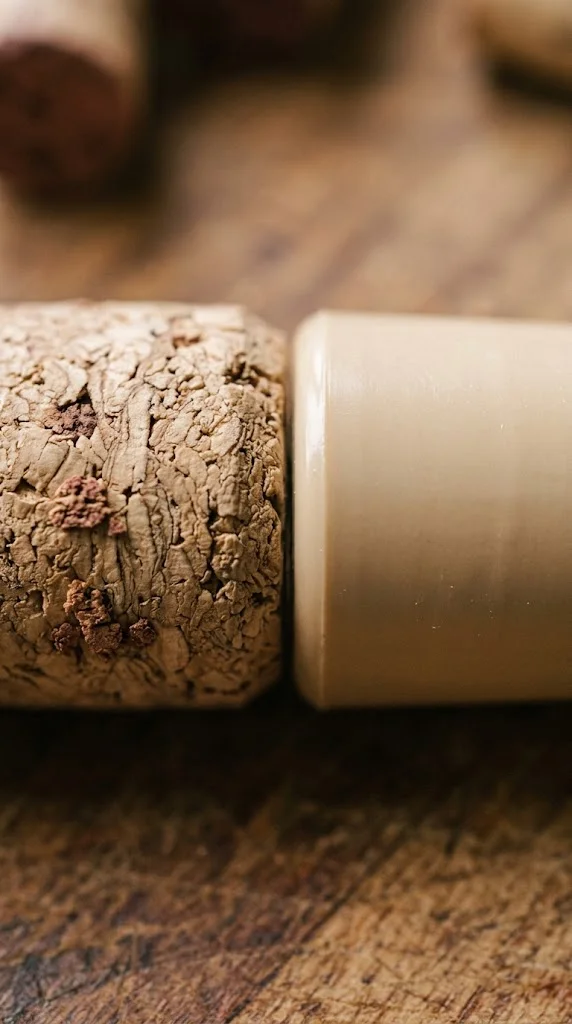
- Synthetic corks look like real cork but are made of plastic and will not break down.
- Whole, unchopped natural corks can take several years to decompose in a compost bin.
- Avoid composting corks that have been treated with heavy chemical seals, wax, or artificial colorants.
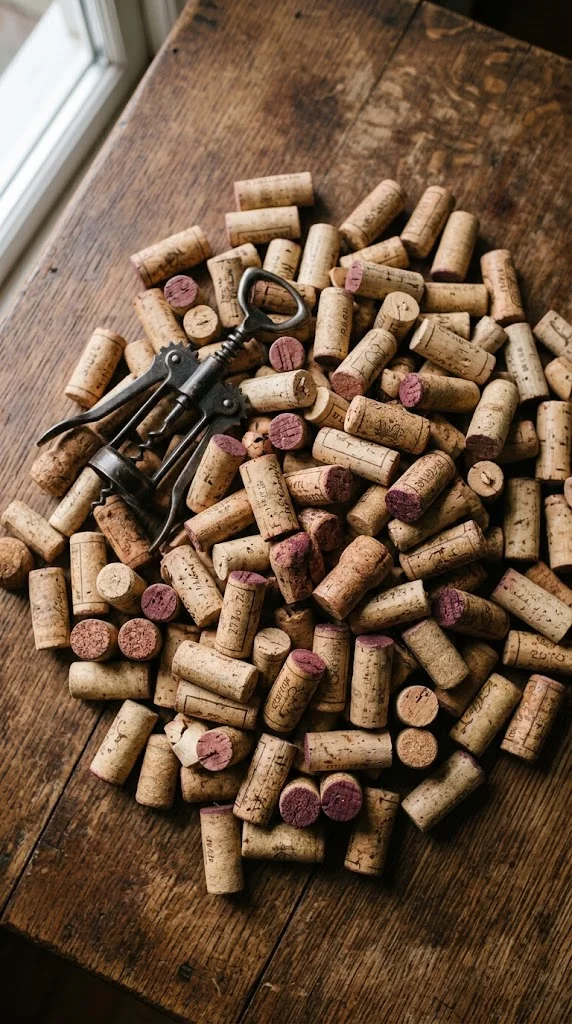
What to do instead
- Drop them off at a specialized cork recycling program like ReCork.
- Reuse them for DIY craft projects, gardening markers, or home decor.
- Throw them in the household trash if they are synthetic plastic.
Troubleshooting wine corks in compost
- Cork pieces are not breaking down after many months. The pieces were likely added in too large of chunks. Sift the pile, pull out the intact corks, and run them through a garden shredder or chop them finely.
- Cork layers are causing the compost pile to dry out too quickly. Corks act like sponges and absorb surrounding moisture. Ensure you are mixing them thoroughly with wet green materials and watering the pile regularly.
- Plastic corks accidentally mixed into finished compost. Screen your finished compost through a hardware cloth mesh before spreading it in the garden to catch and remove any lingering synthetic fragments.
Myths about composting wine corks
- Myth: Throwing a few whole wine corks into the bottom of a potted plant helps with drainage. Truth: Whole natural corks do not drain water effectively and take years to decompose, potentially creating a soggy pocket that attracts fungal gnats.
- Myth: All cork-like stoppers found in modern wine bottles are made from real tree bark. Truth: A significant percentage of wine closures on the market today are actually molded plastic or plant-based bioplastics that look identical to genuine cork.
Can wine corks go in a green bin or recycling?
Most municipal green waste or curbside food-waste collection programs do not accept wine corks, whether natural or synthetic, because they do not break down fast enough during industrial composting cycles. Facilities generally sort them out as contamination. Never place synthetic plastic corks in your municipal green bin. For natural corks, it is always best to check your specific local municipal rules first, as regional programs vary, or utilize dedicated mail-in recycling initiatives instead.
Does composting wine corks attract pests?
Composting wine corks does not attract pests. Natural corks are made from dense tree bark and do not contain the strong food odors, sugars, or moisture that typically draw animals like rodents, raccoons, and flies. By chopping up these carbon-rich corks and mixing them into your compost pile or using them as a top cover layer over food scraps, you help absorb excess moisture and neutralize smells. This effective layering technique hides the scent of more alluring waste, keeping scavengers away from your bin.
- Sort out and discard any synthetic plastic corks before adding materials to your bin.
- Chop natural corks into tiny pieces to help them integrate smoothly into the pile layers.
- Scatter crushed cork pieces generously over fresh food scraps to act as a scent-blocking brown layer.
- Turn your compost pile regularly to maintain proper aeration and discourage pests from nesting.
Common questions
Can I throw whole wine corks straight into my compost bin?
It is not recommended. Whole natural corks are water-resistant and dense, meaning they will take many years to break down unless you chop or shred them first.
How can I tell if my wine cork is natural or synthetic?
Natural corks have a rough, granular texture and are typically lightweight with natural imperfections. Synthetic corks feel smoother, more rubbery or plastic-like, and often feature seamless molded edges.
Do wine corks act as greens or browns in compost?
Natural wine corks act as a brown material because they are made of dry tree bark, providing carbon to balance out wet nitrogen-rich food scraps.
Are wine corks biodegradable?
Natural cork is biodegradable, but slowly, often 1-3 years whole. Synthetic corks are plastic and are not biodegradable even though they look similar.
Rules vary by town and by composting method. When in doubt, check with your local composting or waste program.