
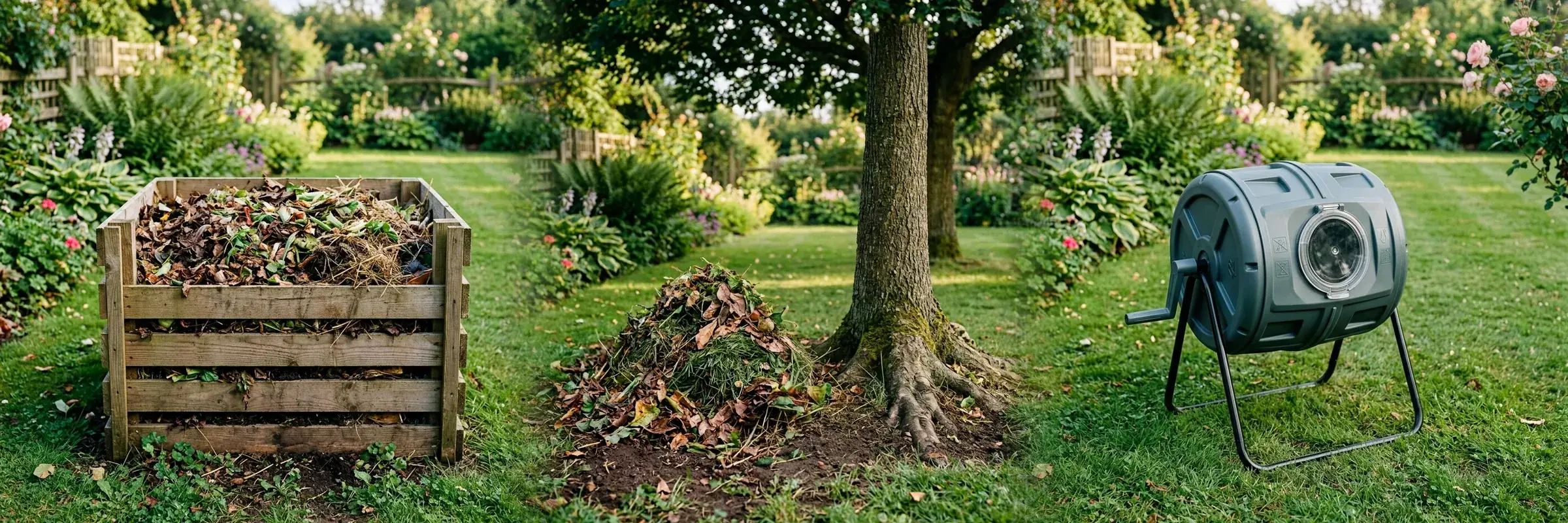
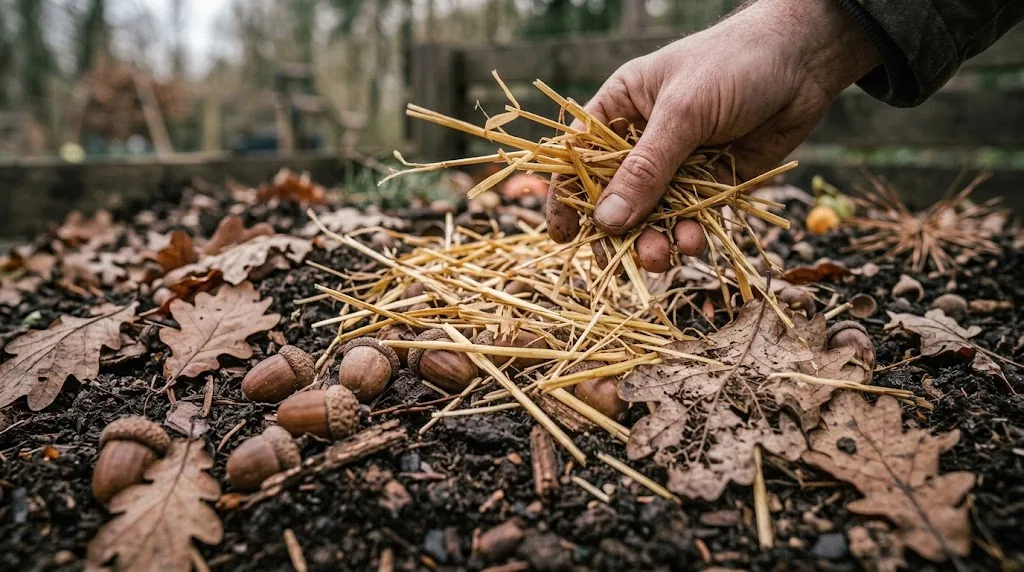
Yes, straw is a fantastic brown carbon material for your compost pile. It adds great structure and helps balance out wet nitrogen-rich food scraps.
Why
Straw consists mainly of dry, hollow plant stalks left over after harvesting grain. It is a classic brown material that provides an excellent source of carbon. Because of its tubular structure, straw creates tiny air pockets throughout your compost pile, which prevents the material from compacting and promotes the aerobic decomposition necessary for a healthy, odor-free system. While it breaks down slowly in a cold pile due to its tough lignin content, it decomposes much faster in a well-managed hot compost pile or when chopped into smaller pieces.
Quick facts
| Carbon to nitrogen | About 80:1 |
|---|---|
| Hot pile | 1-3 months |
| Cold pile | 6-12 months |
| Worm bin | Sometimes · Use small amounts as bedding if chopped fine. |
| Bokashi | Yes · Can be used as a layer or bulking agent. |
| City green bin | Usually accepted; check local rules |
| Prep | Chop into smaller pieces to speed breakdown |
| Mix with | Mix with high nitrogen greens like fresh grass clippings |
| Pest risk | Low · Unlikely to attract pests unless contaminated with food |
How to compost straw
- Chop or break long stalks into smaller lengths of two to four inches to speed up decomposition.
- Layer the straw alternately with wet green materials like kitchen scraps or fresh grass clippings.
- Maintain adequate moisture by watering the pile so the straw feels like a damp wrung-out sponge.
- Turn the pile every few weeks to introduce oxygen and help the tough stalks break down.
How much straw can you add to compost?
Straw can make up about a third to half of your total pile volume when building layers. Because it is a concentrated carbon source, you should pair it with equal parts wet green materials like fresh grass clippings or nitrogen-rich kitchen scraps. If you add too much straw without enough moisture and greens, the pile will dry out completely, decomposition will stall entirely, and the stubborn stalks will remain unchanged for months.
Which types of straw can you compost?
- Wheat straw: Yes. This is the most common agricultural straw and makes an exceptional carbon source for home compost piles.
- Barley straw: Yes. Barley straw breaks down at a similar rate to wheat straw and adds great structural porosity to the pile.
- Hay: Sometimes. Hay contains mature seed heads and nutrient-rich grasses that act more like greens, which can sprout weeds if not composted in a hot pile.
- Herbicide-treated straw: No. Straw sprayed with persistent aminopyralid herbicides will retain chemical residues that destroy garden tomatoes and vegetables.
Watch out for
- Ensure the straw has not been treated with persistent agricultural herbicides that can survive composting and kill garden plants.
- Avoid confusing straw with hay, as hay contains mature seed heads that will sprout weeds in your garden.
- Keep the layers mixed well to prevent the straw from matting into thick, dry clumps that repel water.
Other ways to use straw
- Use it as garden mulch to suppress weeds and retain soil moisture
- Spread it in animal coops or runs as clean bedding
- Apply it as a protective winter blanket for sensitive perennial plants
Troubleshooting straw in compost
- The straw mats together into dense, waterproof sheets that prevent moisture from reaching the center of the pile. Break apart thick clumps by hand and thoroughly mix the straw with wetter green materials while watering the pile.
- The straw takes many months to show any signs of decomposition in a cold bin. Chop the long stalks into smaller two-inch pieces with shears or a mower before adding them to increase surface area.
- The compost pile remains completely dry and inactive despite adding plenty of water. Add more nitrogen-rich green waste and turn the dry straw layers while hosing them down until they reach a sponge-like dampness.
Myths about composting straw
- Myth: Straw and hay are the exact same thing and can be used interchangeably in the garden and compost pile. Truth: Straw is the hollow, dry stalk left after grain harvest with low nutrients, whereas hay is harvested grass packed with seeds and high nitrogen content.
- Myth: Putting straw in your compost pile will inevitably attract mice and other nesting rodents. Truth: Properly managed, chopped, and damp straw actually deters pests by acting as a dense, odorless cover layer over food scraps.
Can straw go in a green bin or recycling?
Municipal green bins and yard waste programs typically accept clean straw during seasonal yard trimming collections. You must ensure the straw is free from plastic twine, synthetic baling wire, and persistent chemical herbicides before placing it in your curbside bin. Because local regulations regarding agricultural byproducts vary widely by region, always check your local waste management guidelines to confirm accepted materials.
Does composting straw attract pests?
Composting straw does not attract pests. In fact, adding straw to your compost pile helps deter unwanted critters like rodents and insects. Because straw is a dry, carbon-rich brown material, it serves as an excellent cover layer for fresh food scraps and other smelly green materials. By placing a thick layer of straw over food waste, you effectively mask food odors and create a physical barrier that keeps flies and scavenging animals away from the most enticing parts of your pile.
- Use a generous layer of straw to completely cover fresh kitchen scraps every time you add food to the pile.
- Chop the straw into smaller pieces to ensure it packs closely together without forming large hollow gaps where rodents could nest.
- Keep the straw damp so it compresses slightly and maintains a dense barrier against surface-dwelling insects and scavengers.
Common questions
Is straw biodegradable?
Yes, straw is fully biodegradable because it is an all-natural plant material derived from cereal grains. Microorganisms in the environment will naturally break it down over time.
What is the difference between straw and hay for composting?
Straw is the hollow, dry stalk of grain crops and is rich in carbon with few seeds. Hay is made from dried grasses grown for forage, meaning it contains many viable seeds that will sprout weeds in your compost.
Can I put straw straight into my garden instead of composting it?
Yes, straw makes an excellent sheet mulch or ground cover around vegetables and flower beds. It suppresses weeds and retains soil moisture without needing to go through a compost pile first.
Why is my straw taking so long to break down?
Straw contains high levels of tough lignin and lacks nitrogen, which slows down microbial activity. Adding nitrogen-rich greens, chopping the straw into smaller pieces, and keeping the pile moist will speed up the process.
Rules vary by town and by composting method. When in doubt, check with your local composting or waste program.