
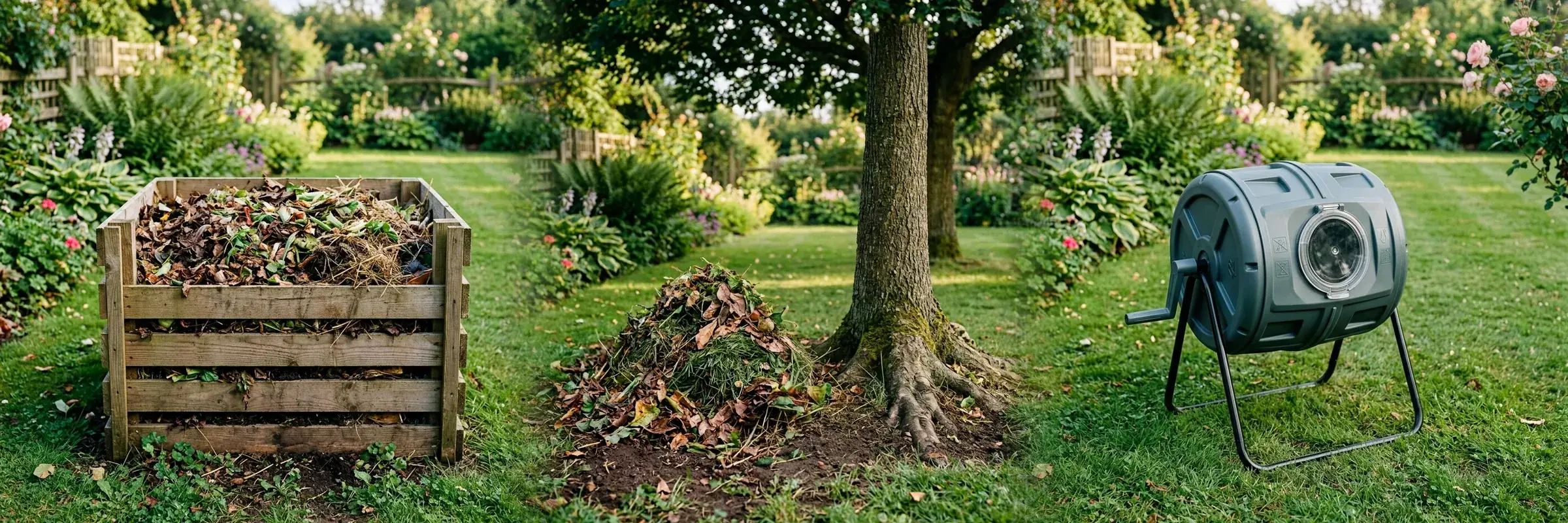
Yes, you can compost acorns, but they take a very long time to break down whole and contain tannins that can slow down microbial activity in large quantities.
Why
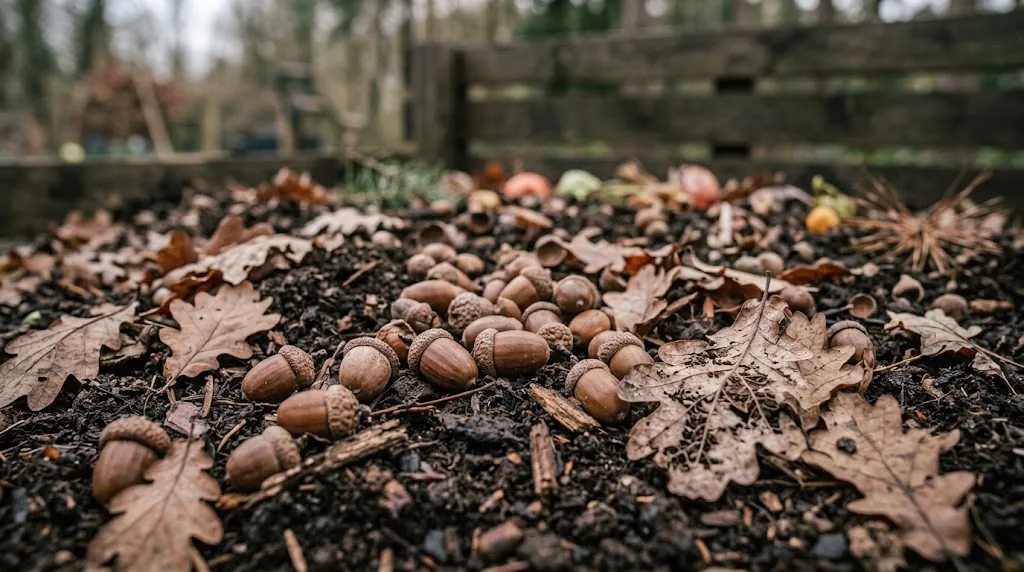
Acorns are rich in carbon and contain natural tannins that act as a mild preservative, which protects them from decomposing quickly. Because of their hard outer shells, whole acorns can persist in a compost pile for years. To successfully compost them, you should crush, crack, or grind them into smaller pieces to expose the nutrient-rich meat inside and allow moisture to penetrate. Mixing them thoroughly into a balanced, active pile will help neutralize their impact and speed up their eventual breakdown.
Quick facts
| Carbon to nitrogen | Varies |
|---|---|
| Hot pile | 3-6 months |
| Cold pile | 1-2 years |
| Worm bin | Sometimes · Small amounts if crushed; tannins can harm worms. |
| Bokashi | Yes · Ferments well, but crush first to speed breakdown. |
| City green bin | Usually accepted; check local rules |
| Prep | Crush or chop finely to remove hard shells. |
| Mix with | Mix with high-nitrogen greens to offset slow breakdown. |
| Pest risk | Low · Bury in the pile to avoid attracting rodents. |
How to compost acorns
- Crush or smash the hard shells with a hammer or run them over with a lawnmower.
- Soak them in water for a few days to leach out excess tannins if you have a massive batch.
- Layer the crushed acorns into your compost pile, alternating with nitrogen-rich greens.
- Turn the pile regularly to keep oxygen flowing and accelerate the breakdown process.
How much acorns can you add to compost?
Acorns should make up no more than five percent of your total compost volume at any given time. Because they are a dense brown material, balance every single cup of crushed acorns with equal parts nitrogen-rich greens like fresh grass clippings or vegetable scraps. If you notice the pile developing a sour smell or slowing down significantly in temperature, you have likely added too many whole nuts or tannins at once, requiring you to add more greens and turn the pile.
Which types of acorns can you compost?
- Raw whole acorns: Sometimes. Whole acorns take years to decompose due to their hard shells. You must crack them open before adding them to your pile.
- Crushed or ground acorns: Yes. Crushing exposes the inner meat to moisture and microbes, reducing breakdown time to under a year. Mix them thoroughly into the center of the pile.
- Tannin-leached acorns: Yes. Soaking acorns in water removes excess bitter tannins that otherwise inhibit microbial activity. This makes them much safer for sensitive compost environments.
- Moldy or rotting acorns: Sometimes. Fungus-covered acorns from the ground are fine to compost in moderation. However, avoid adding massive quantities covered in toxic molds to prevent microbial imbalance.
Watch out for
- Whole acorns will survive a standard compost bin almost indefinitely.
- Large amounts of fallen oak leaves and acorns can make your compost too acidic.
- Loose acorns can attract squirrels, rodents, and other wildlife to your compost bin.
What to do instead
- Spread whole acorns in natural wooded areas as wildlife food.
- Scatter them thinly across garden beds as a natural mulch layer.
- Throw them in the yard waste bin for municipal pickup.
Troubleshooting acorns in compost
- Acorns are sprouting and growing tiny oak trees inside the compost pile. Turn your pile more frequently to expose the sprouting seeds to heat, or crush the acorns more thoroughly before adding them to destroy the germ.
- The compost pile is becoming overly acidic and killing beneficial earthworms. Add a handful of agricultural lime or wood ash to neutralize the excess pH caused by heavy concentrations of oak tannins.
- Rodents are digging into the bin looking for the nuts. Bury the crushed acorns deep in the middle of the active pile and ensure your bin has a secure, locking lid.
Myths about composting acorns
- Myth: Acorns are toxic to soil and will permanently ruin your garden if composted. Truth: While high in tannins, these natural compounds dilute and break down rapidly in a healthy, active compost ecosystem without causing lasting harm.
- Myth: You can toss a bucket of whole acorns onto the top of the pile and walk away. Truth: Whole acorns will sit intact on the surface for years unless you physically crush the shells and bury them within the pile.
Can acorns go in a green bin or recycling?
Most municipal green waste programs and curbside organic collection bins readily accept acorns along with standard yard trimmings and leaves. You do not need to remove the hard shells or crush them for municipal facilities, as commercial industrial composters utilize high temperatures and heavy machinery that process hard mast easily. Always check your local waste management guidelines to confirm whether yard waste bins accept fallen tree nuts in your specific municipality.
Does composting acorns attract pests?
Loose acorns can attract wildlife to your compost bin, particularly squirrels, mice, rats, and other rodents. These animals are naturally drawn to nuts as a calorie-dense food source and can easily sniff them out, especially when the acorns are cracked or crushed to speed up decomposition. If left exposed on the surface of the pile, you are likely to invite unwanted critters looking for an easy meal.
- Bury crushed acorns deep inside the center of the compost pile rather than leaving them on top.
- Cover the acorns thoroughly with a thick layer of nitrogen-rich greens or finished compost to mask their scent.
- Use a secure, enclosed compost bin with tight-fitting lids to physically block rodents from getting in.
Common questions
Are acorns biodegradable?
Yes, acorns are completely biodegradable and will naturally decompose in the environment over time without leaving harmful synthetic residues.
Can I put whole acorns in my compost bin?
You can, but their hard shells and bitter tannins mean they will take several years to break down entirely. Crushing them first is strongly recommended.
Do acorns make compost too acidic?
In large quantities, the tannins in acorns can slightly raise the acidity of your pile, but a standard backyard bin with a balanced mix of materials easily handles them.
Will acorns attract pests to my compost?
Yes, squirrels and mice love acorns and might dig into your compost bin to find them if they are left exposed on the surface.
Rules vary by town and by composting method. When in doubt, check with your local composting or waste program.