
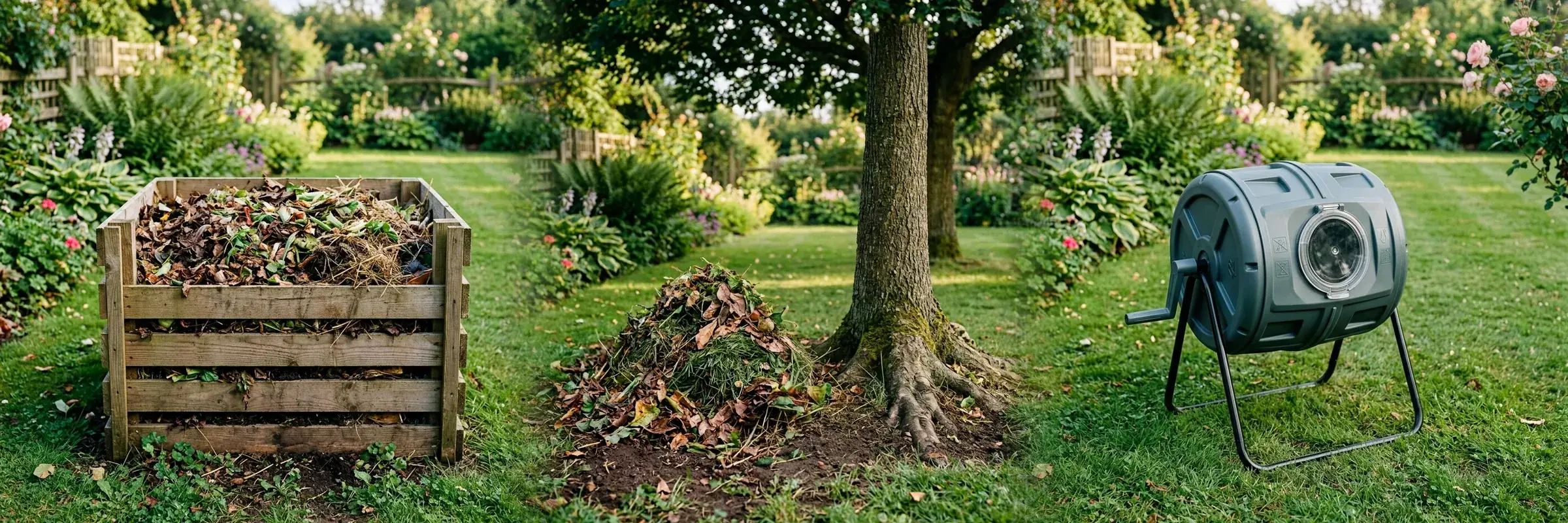
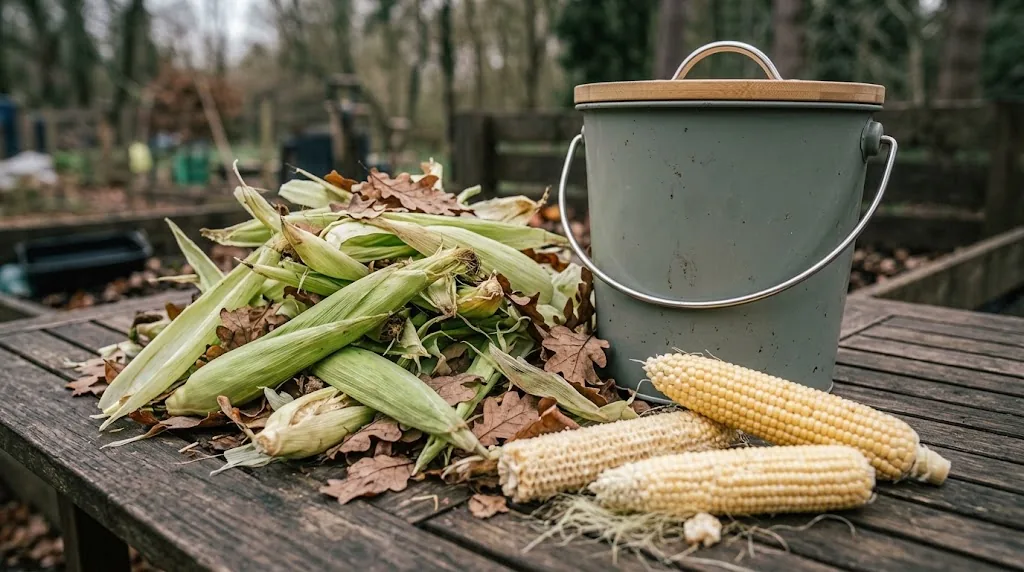
Yes, you can compost corn husks. They add great carbon-rich material to your pile, though they do take some time to break down fully.
Why
Corn husks are high in tough plant fibers like lignin and cellulose, which makes them a classic brown material for your compost bin. Because they are fibrous and dry out quickly, whole husks can take quite a while to degrade in a cold, passive pile. Chopping them into smaller pieces and keeping them well-moistened will speed up the process significantly. They are completely natural and safe for both backyard systems and municipal green waste collection.
Quick facts
| Carbon to nitrogen | About 60:1 |
|---|---|
| Hot pile | 2-4 months |
| Cold pile | 6-12 months |
| Worm bin | Sometimes · Shred finely and add in small amounts |
| Bokashi | Yes · Chop finely to fit into the bucket well |
| City green bin | Usually accepted; check local rules |
| Prep | Chop or shred into smaller pieces |
| Mix with | Mix with high-nitrogen green materials |
| Pest risk | Low · Cover with browns to deter flies |
How to compost corn husks
- Remove any silk or debris from the husks before adding them to your bin.
- Chop or shred the husks into smaller pieces to accelerate the decomposition process.
- Mix the husks thoroughly with nitrogen-rich greens like food scraps or fresh grass clippings.
- Maintain adequate moisture in the pile to help soften the tough fibrous material.
How much corn husks can you add to compost?
Corn husks make an excellent brown material, and a home compost pile can easily handle several large handfuls per week. They should comprise roughly twenty to thirty percent of your total bin volume to maintain proper carbon balance. Pair them with nitrogen-rich greens like fresh grass clippings or vegetable scraps. If you add too much without enough moisture or greens, the pile will dry out completely and decomposition will stall entirely.
Which types of corn husks can you compost?
- Fresh green husks: Yes. Fresh husks contain slightly more moisture than dried ones and break down a bit faster.
- Dried husks: Yes. Dried husks act purely as a brown carbon source and need extra moisture to soften.
- Husks with silk attached: Yes. The silky threads decompose very quickly, though very thick clusters can occasionally clump together.
- Husks wrapped around cooked tamales: No. Cooked tamale husks often contain lard, oil, or meat residues that attract rodents and create foul odors.
Watch out for
- Whole, unshredded husks can take many months to break down and may form matting layers in the bin.
- Ensure husks are free of any chemical pesticide residues if sourced from conventional farms.
- Pest attraction is low, but dry husks can occasionally harbor insects until they soften.
Other ways to use corn husks
- Use dried corn husks for traditional crafts like doll-making or tamale wrappers.
- Shred them to use as a weed-suppressing mulch directly in your garden beds.
- Place them in your municipal yard waste or green bin pickup.
Troubleshooting corn husks in compost
- Husks are not breaking down and remain unchanged for months. Chop the husks into smaller pieces and turn the pile regularly to increase oxygen exposure.
- Husks are matting together and forming airless clumps. Tear the husks apart by hand and thoroughly mix them with wetter greens like food scraps.
- The compost pile is drying out around the husks. Sprinkle water over the husks as you add them and maintain consistent moisture levels across the entire bin.
Myths about composting corn husks
- Myth: Corn husks take years to decompose just like wood chips. Truth: While they are tough and fibrous, chopped corn husks usually break down fully within a few months.
- Myth: You cannot compost corn husks because they are too hard. Truth: They are completely organic plant matter and will eventually soften and break down in any healthy compost system.
Can corn husks go in a green bin or recycling?
Municipal green waste collection programs and curbside organic recycling bins generally accept corn husks without any issues. Before tossing them into your local yard waste bin, make sure to shake off any excess dirt, string, or food residues that might be attached. Because regional composting facilities vary in their processing capabilities and equipment, it is always a good idea to check your local municipal waste guidelines first.
Does composting corn husks attract pests?
Composting corn husks does not attract pests. Because they are a dry, fibrous carbon material, adding them to your compost pile helps by covering food scraps and other smelly items. This protective brown layer conceals odors that would otherwise draw unwanted insects or animals to your bin, keeping your composting system secure and pest-free.
- Use chopped husks to create a thick cover layer over fresh food scraps.
- Mix the husks thoroughly into the pile to ensure they do not form dry pockets.
- Keep the compost adequately moistened so the material breaks down smoothly without drawing insects.
Common questions
Are corn husks biodegradable?
Yes, corn husks are completely biodegradable and will naturally decompose in the environment over time, though backyard composting conditions greatly speed this process up.
Should I chop corn husks before composting?
Yes, cutting or tearing husks into smaller strips prevents them from matting together and exposes more surface area to beneficial microbes, helping them break down much faster.
Can I compost corn silk along with the husks?
Yes, corn silk is tender and breaks down very quickly in a compost pile, acting more like a green material due to its higher moisture content.
Do dried corn husks make good brown material?
Yes, dry husks are excellent carbon sources that help balance out wet, nitrogen-heavy food scraps in your compost tumbler or pile.
Rules vary by town and by composting method. When in doubt, check with your local composting or waste program.