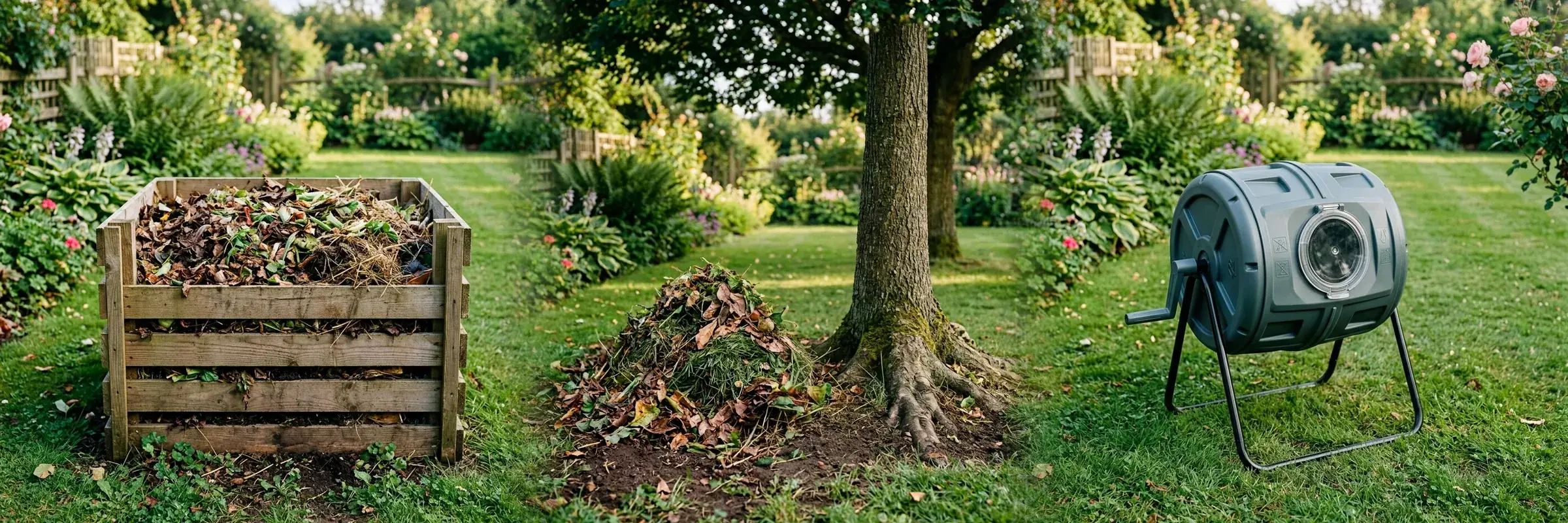
Yes, garlic skins are excellent additions to your compost pile. They are dry, carbon-rich materials that break down relatively quickly.
Why
Garlic skins are essentially dry plant matter, making them a perfect 'brown' material for your compost heap. Because they are thin and papery, they have a high surface-area-to-volume ratio, which allows microorganisms and fungi to colonize and break them down much faster than woody stems or thick cardboard. They add valuable organic matter to your pile without significantly increasing the risk of odors or pest attraction, provided they are mixed in properly with your nitrogen-rich 'green' waste to maintain a healthy carbon-to-nitrogen balance.
Quick facts
| Carbon to nitrogen | About 30:1 |
|---|---|
| Hot pile | 1-2 months |
| Cold pile | 3-4 months |
| Worm bin | Yes · Great dry bedding material in moderation |
| Bokashi | Yes · Can be added to the bucket easily |
| City green bin | Usually accepted; check local rules |
| Prep | No special prep needed, keep dry |
| Mix with | Mix with wet green waste to balance moisture |
| Pest risk | Low · Dry and papery, unlikely to attract pests |
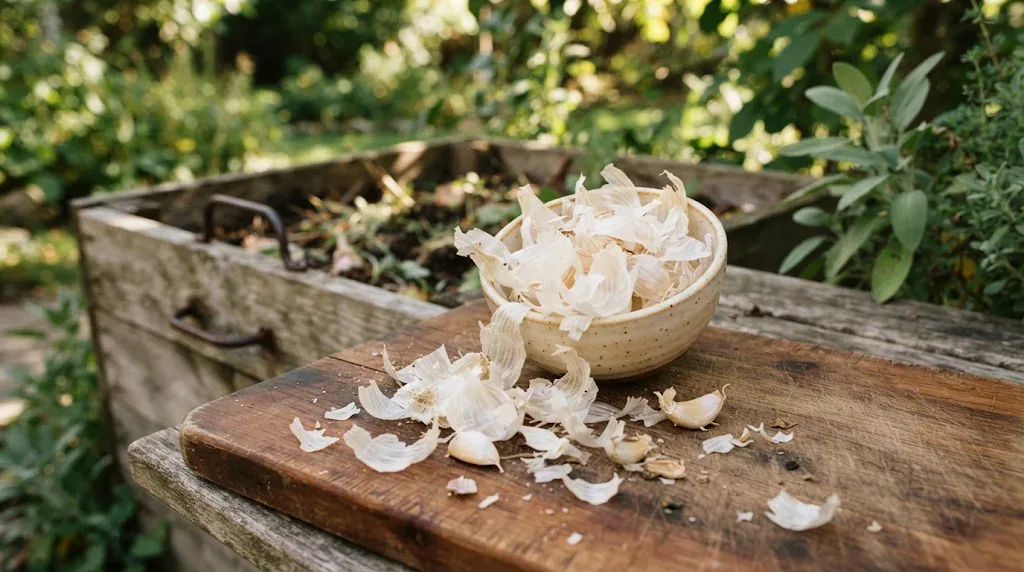
How to compost garlic skins
- Collect skins in a kitchen scrap container.
- Mix them into the center of your compost pile.
- Ensure they are covered by moister green materials.
- Turn the pile regularly to incorporate them.
How much garlic skins can you add to compost?
You can add as many garlic skins as you generate in your kitchen without worry. They are a lightweight brown material, so they won't overwhelm your pile's structure. If you have a large volume, simply mix them in with your grass clippings or vegetable scraps to maintain a good balance. There is no risk of adding 'too much' as long as you continue to provide enough nitrogen-rich greens to keep the decomposition process active and healthy.
Which types of garlic skins can you compost?
- Dried skins: Yes. The ideal form for composting as they are light and carbon-rich.
- Garlic cloves: Sometimes. Can be composted but should be crushed to prevent sprouting.
- Garlic stems: Yes. These are tougher and take longer to break down than the skins.
Watch out for
- Avoid adding whole garlic bulbs that have sprouted.
- Ensure the skins are free of plastic mesh bags.
- Do not add skins if they are heavily contaminated with oils or dressings.
Other ways to use garlic skins
- Use them to make homemade vegetable stock.
- Add them to your garden soil as a mulch.
- Place them in your municipal green waste bin.
Troubleshooting garlic skins in compost
- Skins blowing away Mix them deep into the pile or cover with a layer of soil.
- Slow breakdown Ensure the pile has enough moisture and nitrogen-rich greens.
Myths about composting garlic skins
- Myth: Garlic kills beneficial compost bacteria. Truth: Garlic has mild antimicrobial properties, but it is not strong enough to harm the diverse ecosystem of a healthy compost pile.
- Myth: Garlic skins attract rats. Truth: Garlic skins are dry and scentless to most pests, making them an unlikely target for rodents.
Can garlic skins go in a green bin or recycling?
Most municipal green waste programs accept garlic skins without issue. They are considered standard organic food waste. Check your local guidelines to ensure they don't have specific restrictions on food scraps, but generally, these are perfectly safe for industrial composting facilities. Always remove any plastic mesh bags or rubber bands before tossing them into your curbside bin, as these contaminants are not accepted.
Does composting garlic skins attract pests?
Garlic skins do not attract pests. Because they are dry and contain very little sugar or moisture, they are not a food source for common compost pests like fruit flies or rodents. In fact, adding dry materials like garlic skins to your pile helps absorb excess moisture from food scraps, which can actually help prevent the damp, anaerobic conditions that often draw unwanted visitors to your bin.
- Mix skins thoroughly with wet food scraps.
- Keep your compost bin lid closed tightly.
- Use skins as a dry top layer to cover fresh greens.
Common questions
Are garlic skins biodegradable?
Yes, garlic skins are fully biodegradable and will eventually break down in nature, though composting them in a controlled bin is much faster.
Will garlic skins make my compost smell like garlic?
No, the small amount of sulfur compounds in the skins is not enough to affect the overall scent of a well-managed, aerobic compost pile.
Can I put whole garlic cloves in the compost?
It is better to crush or chop them first, as whole cloves may sprout or take a very long time to decompose.
Do garlic skins repel pests in the compost?
While garlic is often used as a natural pest repellent in gardens, the skins in a compost pile are generally too diluted to act as a significant deterrent.
Rules vary by town and by composting method. When in doubt, check with your local composting or waste program.