
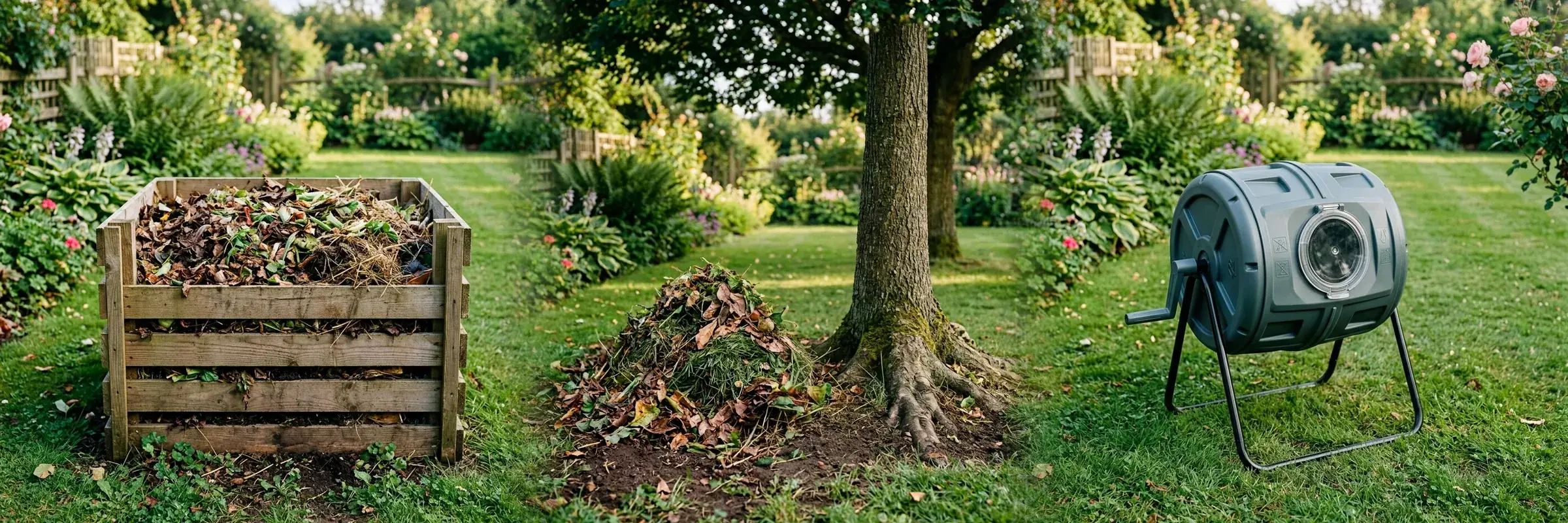
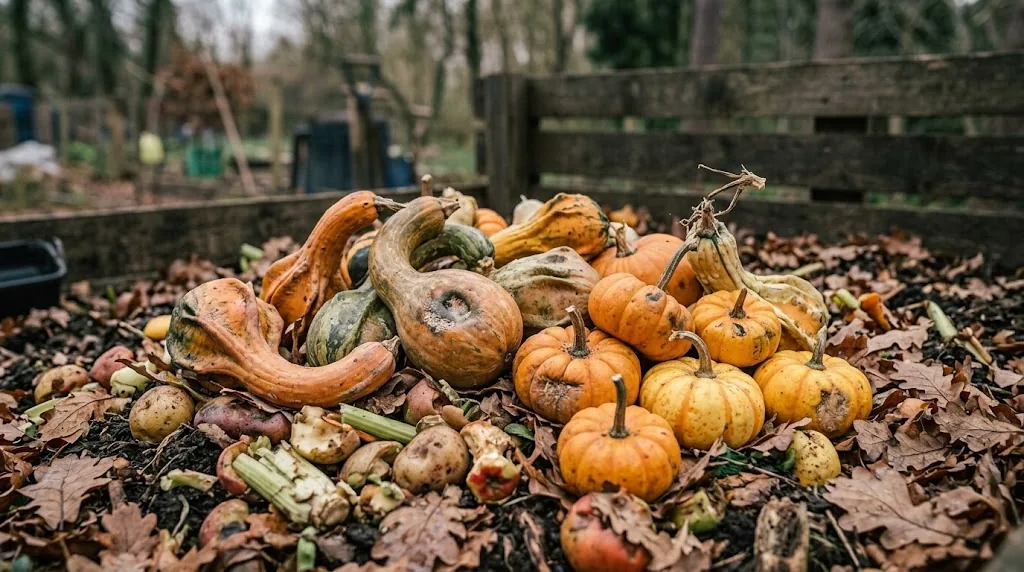
You can compost gourds, but whole ornamental gourds take a very long time to break down unless you chop them up first.
Why
Gourds are rich in moisture and nitrogen, making them a great green addition to your compost pile. However, their tough outer shells and thick rinds act as a natural defense against moisture loss and microbial invasion. If you throw whole gourds into a backyard bin, they can easily sit intact for months without rotting. To speed up the process, you need to break the hard exterior by cutting, crushing, or shredding them into smaller pieces before adding them to a hot pile.
Quick facts
| Carbon to nitrogen | About 30:1 |
|---|---|
| Hot pile | 2-4 months |
| Cold pile | 6-12 months |
| Worm bin | Sometimes · Chop finely and add in small amounts only. |
| Bokashi | Yes · Chop into smaller pieces to speed up fermentation. |
| City green bin | Usually accepted; check local rules regarding whole gourds. |
| Prep | Slice into thin pieces and remove any paint or wax. |
| Mix with | Balance with dry brown leaves or shredded paper. |
| Pest risk | Medium · Burry deep inside the pile to prevent attracting rodents. |
How to compost gourds
- Cut the gourds into small pieces or chunks using a sharp knife or garden shears.
- Remove any remaining seeds if you do not want volunteer gourd plants sprouting in your pile.
- Mix the pieces thoroughly with dry brown materials like autumn leaves or wood chips.
- Keep the pile moist and turn it regularly to encourage microbial breakdown.
How much gourds can you add to compost?
You can safely add gourds to your pile as long as they do not exceed 10 to 15 percent of the total volume at any one time. Because they are high-moisture greens, always balance each bucket of chopped gourd with two parts dry, carbon-rich browns like shredded cardboard or dry leaves. If your pile starts to smell like rotting fruit or becomes excessively slimy and anaerobic, you have added too much at once and should immediately mix in more dry materials.
Which types of gourds can you compost?
- Ornamental gourds: Sometimes. These are often treated with preservatives or wax, so ensure they are raw and untreated before adding them to your bin.
- Edible winter squash: Yes. Common varieties like butternut or acorn squash break down faster than thick-shelled ornamental types if chopped into small pieces.
- Dried gourds: Sometimes. Once fully dried and hardened, these act more like browns than greens and will take a very long time to decompose.
Watch out for
- Do not compost gourds that have been treated with shellac, paint, glitter, or chemical preservatives.
- Whole gourds left intact will attract rodents and other pests.
- Moldy ornamental gourds can release spores, so wear a mask if chopping many at once.
What to do instead
- Save them for autumn seasonal crafts and holiday decorations.
- Feed unpainted gourds to chickens or livestock after chopping.
- Place them in your municipal green waste bin if they accept large yard items.
Troubleshooting gourds in compost
- Unwanted sprouting Remove all seeds before composting or ensure your pile reaches high thermophilic temperatures to kill the embryos.
- Slow decomposition Use a hammer or garden spade to smash the gourds into smaller fragments to increase the surface area for microbes.
- Pest attraction Bury the pieces deep in the center of the pile and cover them with at least six inches of finished compost or dry leaves.
Myths about composting gourds
- Myth: All gourds are safe for compost. Truth: Gourds treated with synthetic paints, glues, or chemical sealants contain toxins that should never enter a compost system.
- Myth: Gourds will rot quickly on their own. Truth: Their thick, waxy rinds are designed by nature to resist decay, meaning they require physical intervention to break down in a reasonable timeframe.
Can gourds go in a green bin or recycling?
Most municipal green waste programs accept gourds, but you must remove all non-compostable decorations first. This includes glitter, ribbons, plastic pins, and any painted surfaces, as these contaminants can ruin entire batches of municipal compost. Always check your local waste management website to confirm if they allow large, whole items or if they require them to be chopped to a specific size. If your city does not accept food waste, these items should be placed in your regular trash bin.
Does composting gourds attract pests?
Throwing whole, intact gourds into your compost pile will definitely attract pests like rodents, raccoons, and insects. Because their tough outer shells prevent quick decomposition, these large items sit in the bin for months, offering a stable food source and hiding spot. Animals are easily drawn to the rich moisture and lingering sugars inside the thick rinds, especially as the fruit begins to soften and decay over time.
- Chop or crush the gourds into small pieces to speed up breakdown.
- Never leave whole gourds sitting on top of the pile where animals can easily reach them.
- Bury the chopped pieces deep inside the compost pile.
- Cover the green material thoroughly with a thick layer of dry brown materials.
Common questions
Are gourds biodegradable?
Yes, all gourds are naturally biodegradable and will eventually break down over time in the environment.
Can I compost painted or waxed gourds?
No, you should never compost gourds that have been painted, varnished, or coated in artificial wax because these chemicals contaminate your compost.
Will gourd seeds grow in my compost pile?
Yes, gourd seeds are very hardy and frequently survive backyard composting to sprout in your garden beds later.
Should I remove the seeds before composting gourds?
It is recommended to scoop out the seeds if you want to prevent them from germinating in your finished compost.
Rules vary by town and by composting method. When in doubt, check with your local composting or waste program.