
Yes, you can compost pineapple tops. They are a great source of nitrogen for your compost pile.
Why
Pineapple tops are essentially plant matter, making them an excellent 'green' material for your compost bin. Because they are fibrous and dense, they take longer to break down than soft fruit scraps like banana peels. In a standard backyard compost pile, they will eventually decompose, but you can speed up the process by chopping them into smaller pieces before adding them. They provide valuable nitrogen and moisture, helping to balance out your carbon-rich 'brown' materials like dried leaves or cardboard.
Quick facts
| Carbon to nitrogen | About 40:1 |
|---|---|
| Hot pile | 2-4 months |
| Cold pile | 6-12 months |
| Worm bin | Sometimes · Chop finely and add in small quantities only. |
| Bokashi | Yes · Excellent for bokashi; chop into small pieces first. |
| City green bin | Usually accepted; check local municipal guidelines. |
| Prep | Remove leaves, chop base into small, thin pieces. |
| Mix with | Balance with nitrogen-rich grass clippings or manure. |
| Pest risk | Low · Bury deep in the pile to avoid attracting fruit flies. |
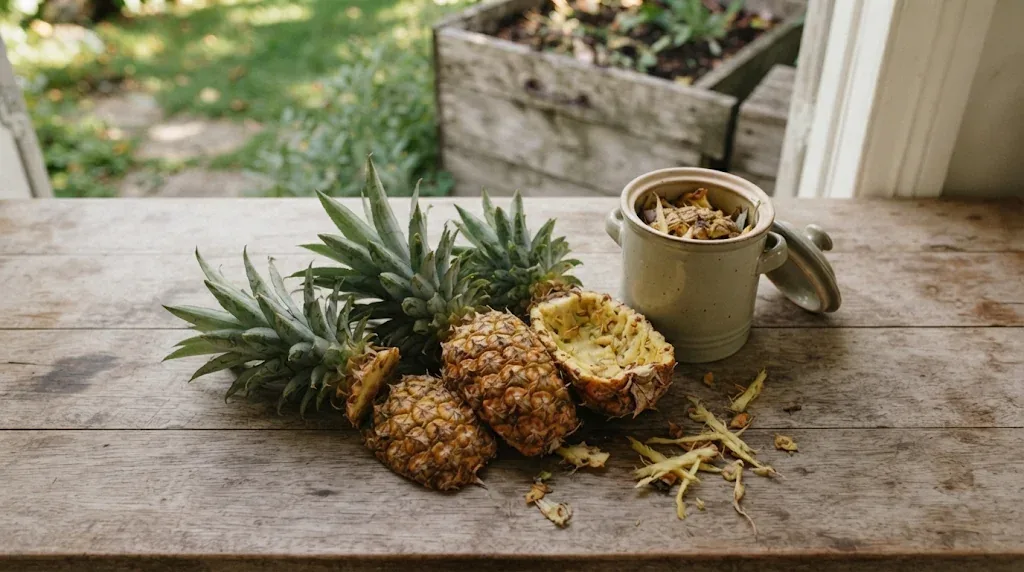
How to compost pineapple tops
- Chop the tops into smaller, 1-inch pieces to increase surface area.
- Bury the pieces deep within the center of your compost pile.
- Mix them thoroughly with carbon-rich materials like straw or shredded paper.
- Turn your pile regularly to ensure adequate aeration for decomposition.
How much pineapple tops can you add to compost?
You can add pineapple tops in moderation, ideally making up no more than 10-15% of your total green waste at one time. Because they are dense and fibrous, adding too many at once can cause the pile to become overly wet or compacted, which slows down the aerobic process. Always balance them with a generous amount of carbon-rich browns to maintain proper airflow and moisture levels. If you notice a sour smell, you have added too much green material.
Which types of pineapple tops can you compost?
- Fresh tops: Yes. The ideal form for composting as they are nutrient-rich.
- Dried/browned tops: Yes. These act more like a brown material and break down faster.
- Sticker-covered tops: No. You must remove all plastic stickers before adding to the pile.
Watch out for
- The leaves are tough and fibrous, which can lead to slow breakdown.
- Large, whole tops may sprout if the pile is not hot enough.
- Avoid adding if the leaves have been treated with heavy pesticides.
Other ways to use pineapple tops
- Propagate them in water to grow a new pineapple plant.
- Use them as a decorative element in a garden bed.
- Check if your local municipal green bin program accepts yard waste.
Troubleshooting pineapple tops in compost
- Slow decomposition Chop the tops into smaller pieces and ensure the pile is moist.
- Unpleasant odors Add more dry browns like cardboard to absorb excess moisture.
- Sprouting Ensure your pile reaches a higher temperature or chop the base thoroughly.
Myths about composting pineapple tops
- Myth: Pineapple acidity ruins compost. Truth: The acidity is neutralized quickly by the overall volume of the pile.
- Myth: Pineapple tops are too tough to compost. Truth: They break down perfectly fine given enough time and proper moisture.
Can pineapple tops go in a green bin or recycling?
Most municipal green waste programs accept pineapple tops as they are considered standard yard or food waste. Before tossing them in your curbside bin, ensure you have removed any plastic produce stickers or rubber bands. Check your local municipality's website to confirm if they accept all food scraps, as some programs are restricted to yard trimmings only. If your city does not accept food waste, backyard composting remains the best way to divert them from the landfill.
Does composting pineapple tops attract pests?
Pineapple tops can attract fruit flies, ants, and occasionally rodents if they are left exposed on the surface of your pile. Because they contain residual sugars and moisture, they are a target for pests looking for a quick meal. The key to preventing this is to ensure the material is fully covered by a layer of 'brown' materials like dry leaves or wood chips, which masks the scent and creates a physical barrier.
- Always bury the tops at least 6 inches deep in the pile.
- Cover the area with a thick layer of dry leaves or straw.
- Use a lidded compost bin to keep larger pests out.
- Chop the tops to help them decompose faster, reducing the time they are attractive to pests.
Common questions
Are pineapple tops biodegradable?
Yes, they are biodegradable, meaning they will naturally decompose over time into organic matter.
Will pineapple tops attract fruit flies?
Like most fruit scraps, they can attract fruit flies if left on the surface, so always bury them deep.
Can I put the whole top in the bin?
You can, but it will take much longer to break down; chopping is highly recommended.
Do I need to remove the stickers first?
Yes, always remove any plastic produce stickers, as they are not compostable.
Rules vary by town and by composting method. When in doubt, check with your local composting or waste program.