
You can compost tea bags only if they are made entirely from natural fibers like paper, silk, or cotton without plastic seals.
Why
Many modern commercial tea bags are sealed with polypropylene, a plastic that does not break down during the composting process and leaves tiny plastic fragments in your finished compost. While the tea leaves inside and paper bags made purely of plant cellulose decompose quickly in a standard backyard pile, synthetic meshes and plastic glues persist indefinitely. Therefore, you must verify the manufacturer's materials before tossing them into your bin, or simply cut them open to empty the loose leaves directly into your pile and throw away the residual pouch.
Quick facts
| Carbon to nitrogen | Varies |
|---|---|
| Hot pile | 1-2 months |
| Cold pile | 3-6 months |
| Worm bin | Yes · Small amounts only; ensure no plastic mesh remains. |
| Bokashi | Yes · Excellent for fermentation; check for plastic liners. |
| City green bin | Usually accepted; check local rules. |
| Prep | Remove staples and any plastic mesh or tags. |
| Mix with | Mix with plenty of carbon-rich brown materials. |
| Pest risk | Low · Tea leaves are fine; avoid adding too many wet bags. |
How to compost tea bags
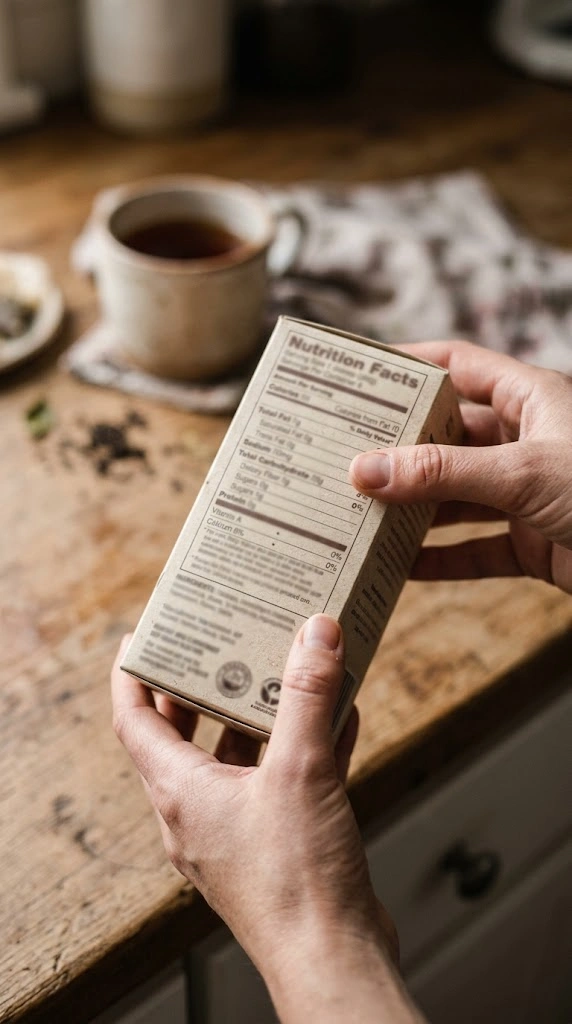
- Check the manufacturer label to ensure the tea bags are 100% plastic-free and staple-free.
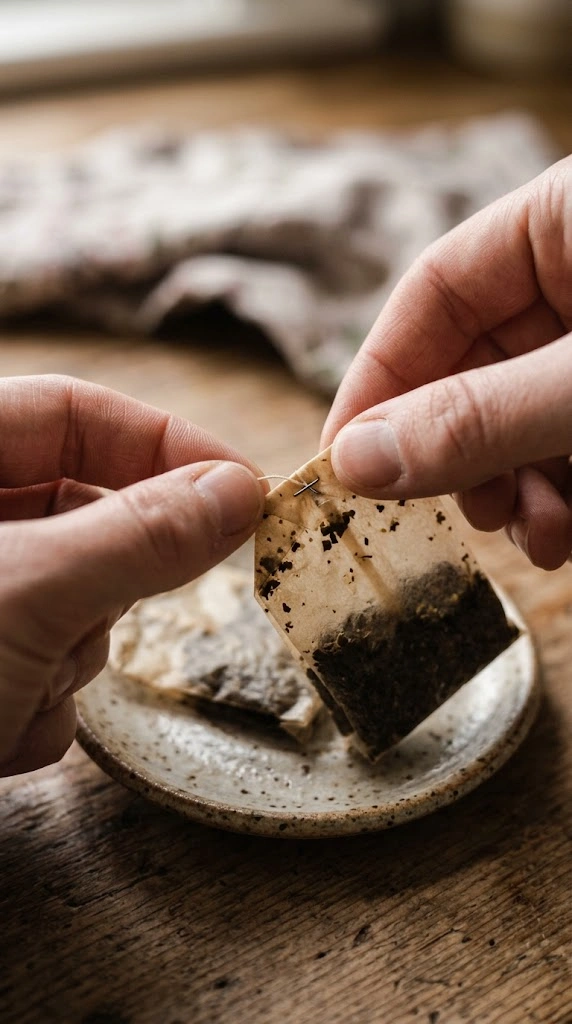
- Remove metal staples and any synthetic strings before adding them to the compost bin.
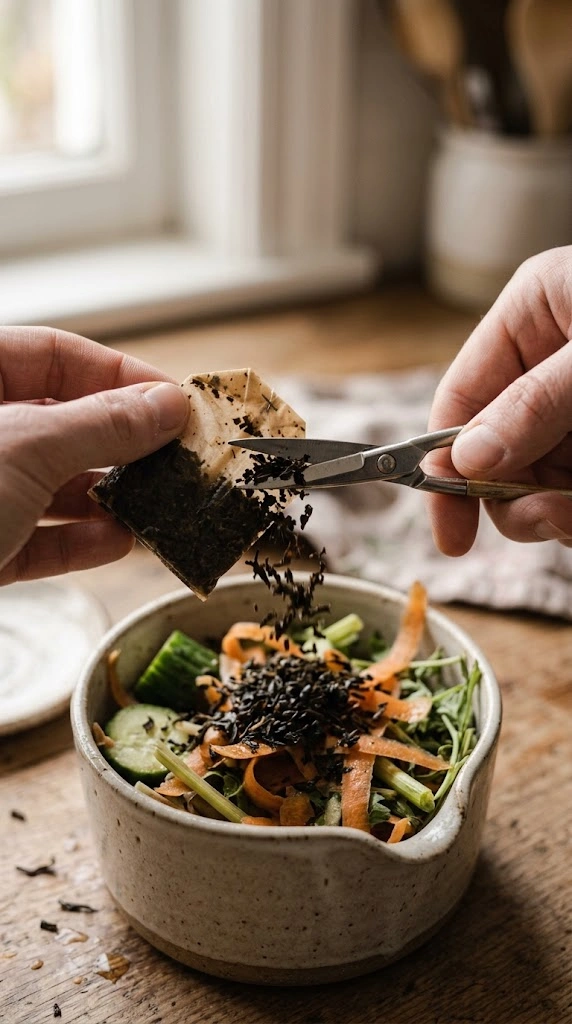
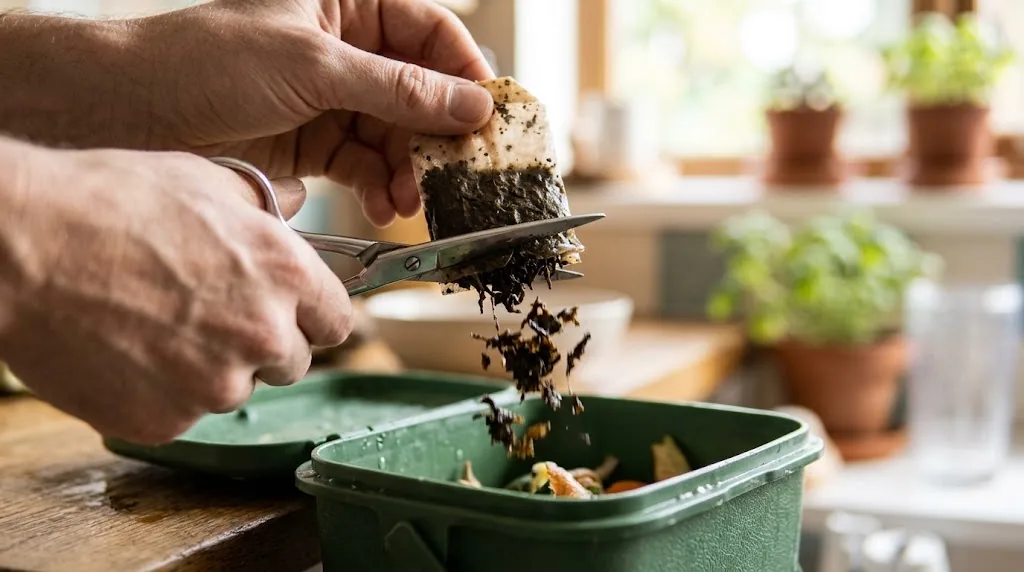
- Cut open commercial tea bags and empty the loose tea leaves into your compost.
- Bury the loose leaves and paper bag fragments deep within your pile to speed up breakdown.
How much tea bags can you add to compost?
You can add tea bags as a nitrogen-rich green component, but they should not exceed 10 percent of your total pile volume to maintain proper aeration. For every handful of tea bags, mix in two handfuls of carbon-rich browns like shredded cardboard or dry leaves. If your pile begins to smell like ammonia or becomes slimy, you have added too many nitrogenous materials; immediately add more dry carbon sources and turn the pile to restore oxygen levels.
Which types of tea bags can you compost?
- Unbleached paper bags: Yes. These are typically made from plant fibers and break down efficiently in most home composting systems.
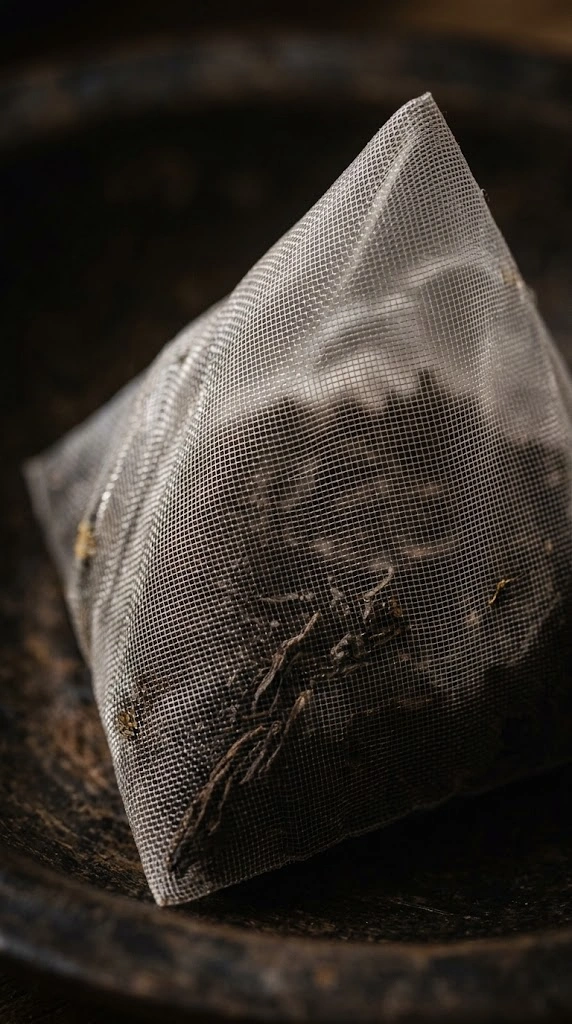
- Silky pyramid bags: No. Most of these are constructed from nylon or polyester mesh which will not decompose and will persist in your soil for years.
- PLA corn-based mesh: Sometimes. While technically bio-based, these often require high-heat industrial composting conditions and rarely break down in a standard backyard pile.
- Stapled paper bags: Sometimes. These are safe to compost provided you manually remove the metal staple first to prevent it from ending up in your garden beds.
Watch out for
- Beware of plastic sealants made from polypropylene that prevent the bag from fully breaking down.
- Keep silky pyramid-shaped bags out entirely: most are nylon or plastic mesh, not just the string.
- Avoid glossy tags or foil packaging that cannot be composted.
How to tell if a tea bag has plastic
- Read the box. Look for “plastic-free” or “home compostable”. “Biodegradable” alone is vague, so check the brand’s website.
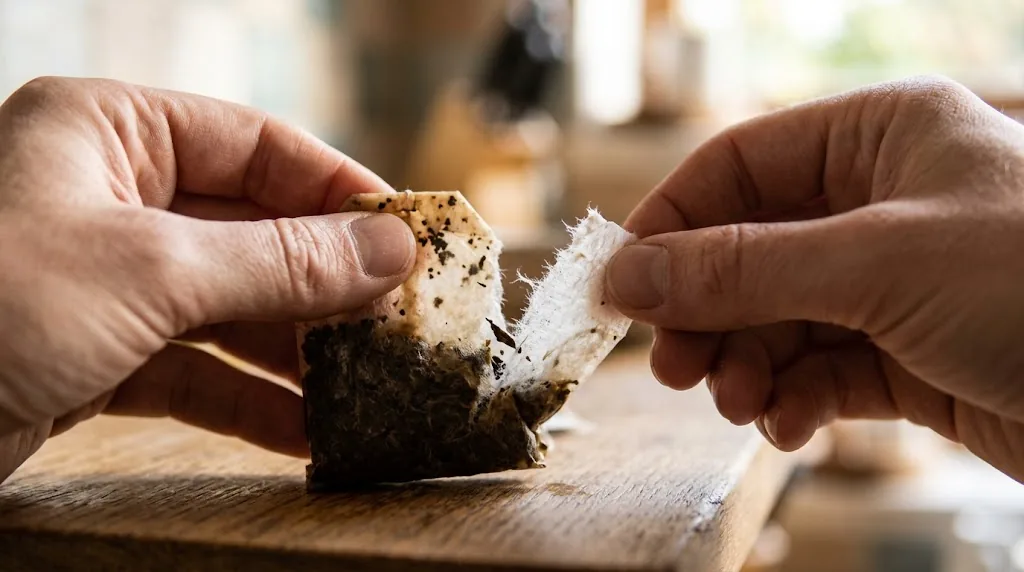
- Do the tear test. Plain paper tears easily with a fuzzy edge. If the bag stretches, or the edge looks shiny and stringy, it has plastic in it.
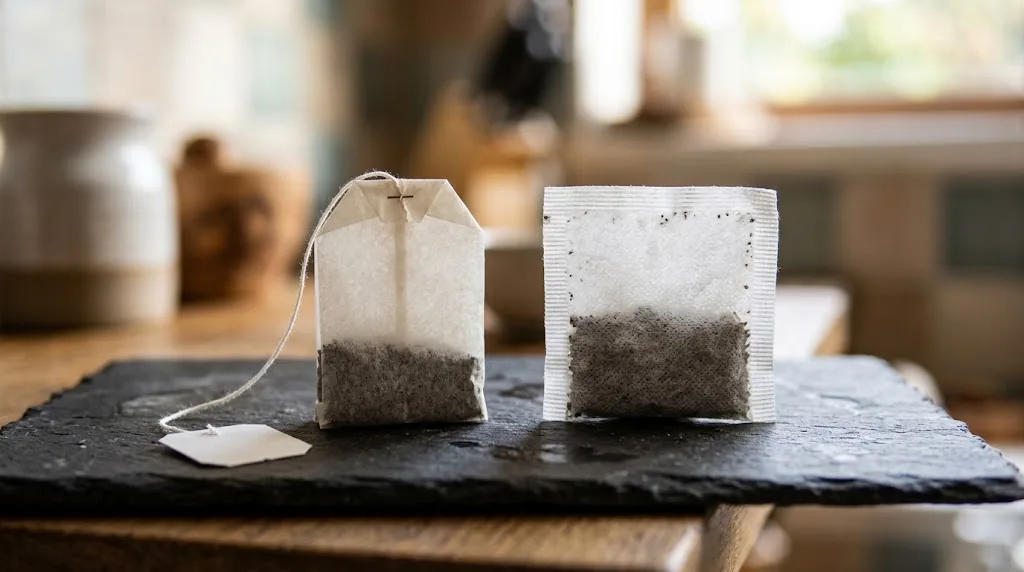
- Look at the seal. Folded, stapled bags are usually just paper. Crimped, pressed edges are often heat-sealed with polypropylene.
- Silky pyramid bags are often nylon or PET mesh. PLA “corn” mesh usually needs an industrial facility and lasts for years in a backyard pile.
What to do instead
- Empty loose tea leaves into the compost and put the plastic bag wrapper in the trash
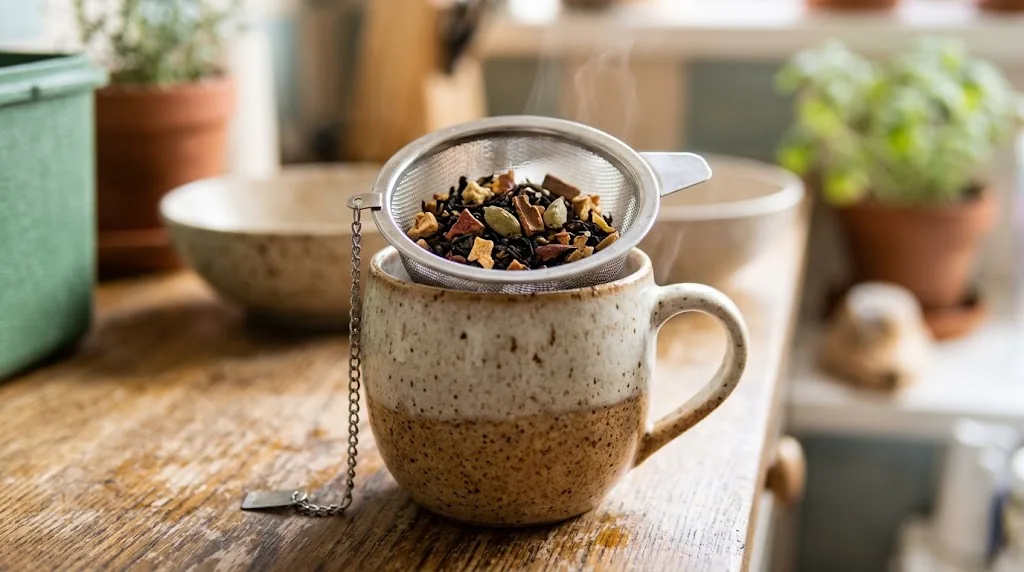
- Use loose leaf tea with a reusable metal strainer to eliminate waste entirely
Troubleshooting tea bags in compost
- Bags are matting together and blocking airflow. Break up the clumps with a pitchfork and mix them thoroughly with bulky carbon materials like straw or wood chips.
- The pile is developing a sour, acidic odor. Tea leaves are slightly acidic; ensure you are balancing them with enough alkaline materials like garden soil or wood ash.
- Bags are not breaking down after several months. The bag likely contains hidden plastic binders; sift them out of the finished compost and discard them in the trash.
Myths about composting tea bags
- Myth: All tea bags labeled as biodegradable are safe for home compost. Truth: Many bags labeled biodegradable are only designed to break down in high-temperature industrial facilities, not backyard piles.
- Myth: The tea leaves inside are the only part that matters. Truth: While the leaves are excellent compost, the bag material itself can introduce microplastics into your soil if it is not 100 percent natural fiber.
Can tea bags go in a green bin or recycling?
Many municipal green waste programs accept tea bags, but rules vary significantly by region. Some facilities have advanced processing that can handle certified compostable materials, while others strictly prohibit all tea bags due to plastic contamination. Always remove staples, strings, and tags before placing them in your curbside bin. Check your local waste management website to confirm if they accept food-soiled paper products, as some municipalities prefer you to dispose of non-certified bags in the regular trash.
Does composting tea bags attract pests?
Composting tea bags generally does not attract pests. Because spent tea leaves are primarily wet plant matter rather than high-protein or heavily scented food waste, they do not inherently draw unwanted critters like rodents or flies. Furthermore, when you add tea bags to your compost pile and cover them adequately with a thick layer of dry brown materials, they help conceal the odors of other decomposing scraps and maintain a balanced, pest-deterrent environment.
- Bury used tea bags deep within the center of the compost pile.
- Cover all fresh additions immediately with a layer of carbon-rich brown materials.
- Ensure your compost bin has a secure lid to completely block animal access.
Common questions
Are pyramid tea bags compostable?
Most pyramid-style tea bags are made from nylon, silk-like plastic, or plant-based PLA plastic and are not home compostable. Always check the packaging to confirm their exact material composition.
Should I remove the staple from the tea bag?
Yes, you should remove the small metal staple before composting. While a few staples will not ruin your compost, accumulating large amounts of metal in your garden soil is not ideal.
Can I compost tea bags with milk or sugar in them?
It is best to avoid composting tea bags that have had dairy or large amounts of sweetener added, as these can attract pests like rodents and flies to your backyard bin.
Are tea bags biodegradable?
The tea leaves are, and plain paper bags are too. Many bags are sealed with polypropylene plastic, and silky pyramid bags are often nylon or PLA mesh, which does not break down at home.
Rules vary by town and by composting method. When in doubt, check with your local composting or waste program.