
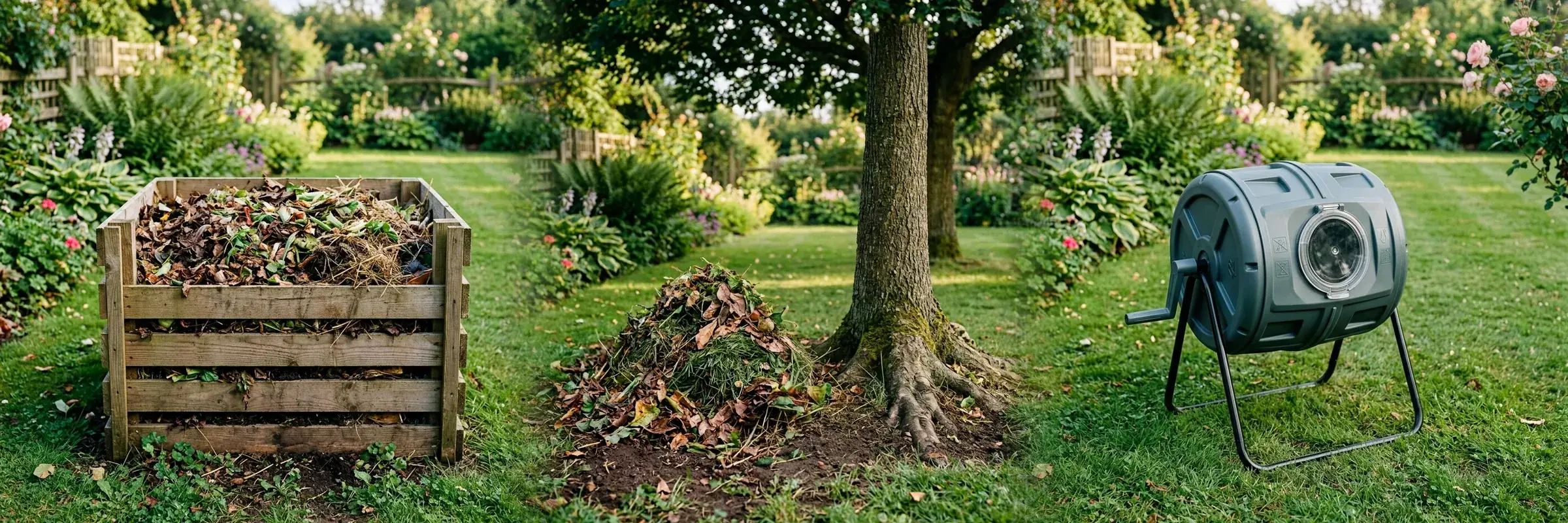
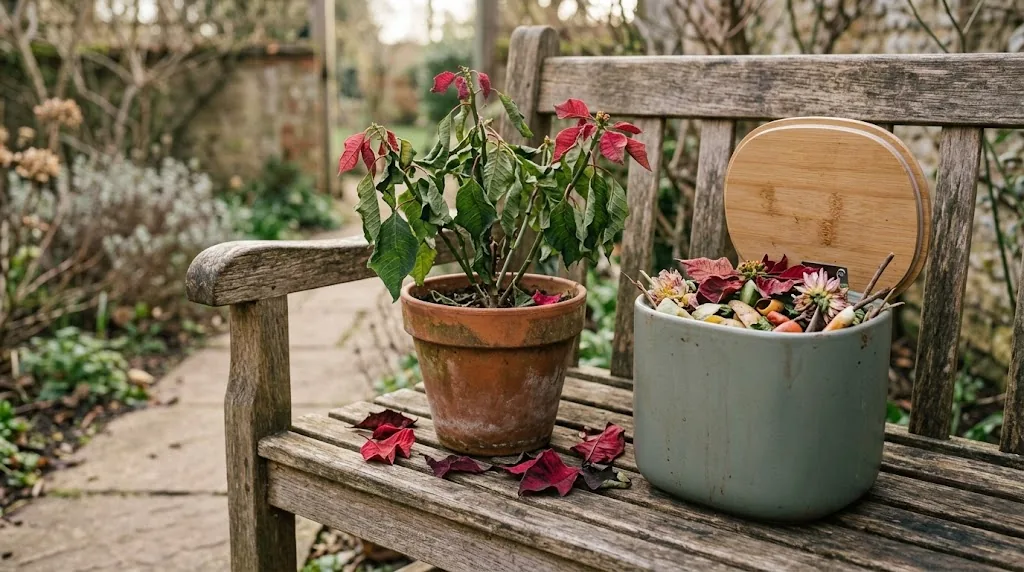
Yes, you can compost poinsettias, but you need to be careful with any glitter, pesticides, or decorative wrapping attached to them.
Why
Poinsettias are plant matter and will naturally break down in a compost pile. However, commercial holiday plants are often treated with systemic pesticides to prevent pests or growth regulators to keep them compact. These chemicals can disrupt the microbial life in your compost bin. Additionally, store-bought poinsettias frequently feature glitter, artificial snow, foil sleeves, or plastic pots that must be entirely removed before composting.
Quick facts
| Carbon to nitrogen | Varies |
|---|---|
| Hot pile | 1-3 months |
| Cold pile | 3-6 months |
| Worm bin | Sometimes · Remove chemically treated leaves first. |
| Bokashi | Yes · Ferments safely before soil burial. |
| City green bin | Usually accepted; check local rules. |
| Prep | Remove glitter, foil, and pesticide-heavy leaves. |
| Mix with | Mix with brown yard waste. |
| Pest risk | Low · Bury deeply to deter insects. |
How to compost poinsettias
- Remove all foil wrappers, plastic pots, ribbons, and decorative picks.
- Inspect the plant for glued-on glitter or synthetic flocking and discard those parts in the trash.
- Chop or break the stems and leaves into smaller pieces to speed up decomposition.
- Mix the plant material well into your compost pile, balancing it with plenty of brown materials like dry leaves.
How much poinsettias can you add to compost?
You can safely add one or two whole poinsettia plants to a standard backyard compost pile at a time. Because they are considered green nitrogen-rich material, ensure you balance each plant with at least two to three times its volume in dry brown materials like shredded cardboard or straw. If you notice your pile becoming slimy or emitting a sour odor, you have likely added too much green material and should immediately increase your brown carbon inputs to restore balance.
Which types of poinsettias can you compost?
- Natural greenhouse poinsettias: Yes. These are the safest to compost as they have not been treated with heavy decorative coatings or synthetic dyes.
- Glitter-coated poinsettias: No. The plastic microplastics in craft glitter will contaminate your soil permanently and should be kept out of the compost.
- Pesticide-treated commercial plants: Sometimes. These can be composted if the resulting soil is used only for ornamental landscaping rather than vegetable gardens.
- Dried or dead poinsettias: Yes. Once fully dried, these act more like brown material and help add structure to your pile.
Watch out for
- Poinsettia sap can be a skin irritant, so wear gloves when handling and chopping the plant.
- Avoid composting poinsettias heavily coated in craft glitter, as plastic microparticles will persist in your soil.
- Be cautious of chemical pesticides used by commercial greenhouses if you plan to use the finished compost on food crops.
What to do instead
- Put them in your municipal yard waste collection program
- Prune them back and attempt to re-bloom them indoors for the next holiday season
- Dispose of them in your household trash if they were heavily treated with chemical pesticides
🎄 Holiday cleanup? See the full Christmas composting list: trees, wrapping paper, poinsettias and leftovers.
Troubleshooting poinsettias in compost
- Slow decomposition of woody stems Use garden shears to chop the thick main stems into one-inch segments to increase surface area for microbes.
- White mold growth on stems This is usually a sign of beneficial fungi breaking down cellulose; simply turn the pile to increase aeration.
- Poinsettia sap irritation Always wear thick gardening gloves when handling the plant to prevent the milky latex sap from contacting your skin.
Myths about composting poinsettias
- Myth: Poinsettias are deadly poisonous to all living things in the compost. Truth: While the sap can cause skin irritation, the plant is not lethal to compost worms or beneficial soil bacteria.
- Myth: You can compost the decorative foil wrapper if it is thin enough. Truth: Decorative foil is almost always plastic-coated or metallic and will never break down, so it must be removed.
Can poinsettias go in a green bin or recycling?
Most municipal yard waste programs accept poinsettias, but you must strip away all non-organic components first. Remove the plastic pot, foil sleeve, wire stakes, and any ribbons before placing the plant in your green bin. Some cities prohibit plants treated with heavy pesticides from their industrial composting facilities, so check your local waste management website. If you cannot confirm the chemical history of your plant, placing it in your regular household trash is the safest way to prevent chemical contamination.
Does composting poinsettias attract pests?
Composting poinsettias does not naturally attract pests like rodents, raccoons, or flies to your bin. Because they are woody ornamental plants rather than sweet food scraps, they carry no powerful food odors that draw critters. Additionally, mixing chopped poinsettias into your pile and using them as part of the overall brown and green layer helps bury smelly food wastes, effectively masking their odors and keeping unwanted pests away from your composting setup.
- Chop the stems and leaves into smaller pieces to help them integrate quickly.
- Mix the plant material deeply into the pile instead of leaving it exposed on top.
- Cover all fresh green materials with a thick layer of dry brown matter.
- Remove all decorative foil and plastic packaging before adding the plant.
Common questions
Are poinsettias biodegradable?
Yes, poinsettias are fully biodegradable and will eventually break down naturally in the environment because they are organic plant material.
Are poinsettias toxic to compost worms?
While poinsettias have a reputation for being toxic, the milky sap is generally only a mild irritant and will not harm a healthy, active compost pile or its worm population in small quantities.
Can I compost a poinsettia with glitter on it?
No, you should never compost plants covered in plastic glitter. The tiny plastic particles will remain in your compost forever and contaminate your garden soil.
Should I let the poinsettia dry out before composting?
It is not necessary to dry out the plant, but chopping fresh stems and leaves into smaller pieces helps them break down much faster.
Rules vary by town and by composting method. When in doubt, check with your local composting or waste program.